
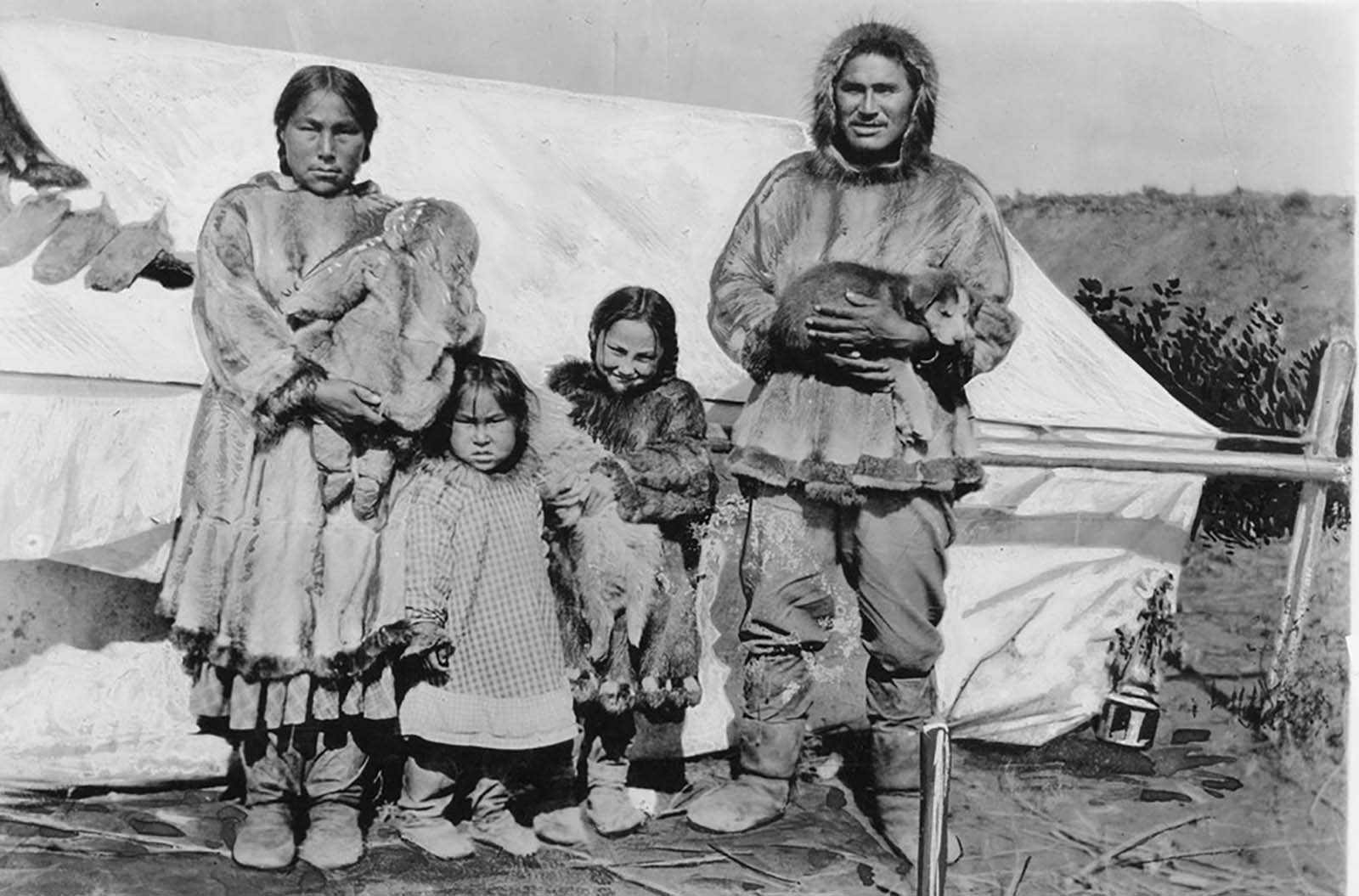
At the turn of the twentieth century, one woman carried a camera into one of the most remote and unforgiving landscapes on Earth, and what she brought back changed how the outside world understood the people who had long called it home.
These photographs, intimate and unhurried, offer a window into a way of life shaped entirely by the Arctic itself, a civilization built not in spite of the cold, but because of it.
The Inuit have inhabited the far northern reaches of Alaska, Canada, Siberia, and Greenland for thousands of years, their origins tracing back to Alaska’s coastal communities before spreading across the circumpolar world.
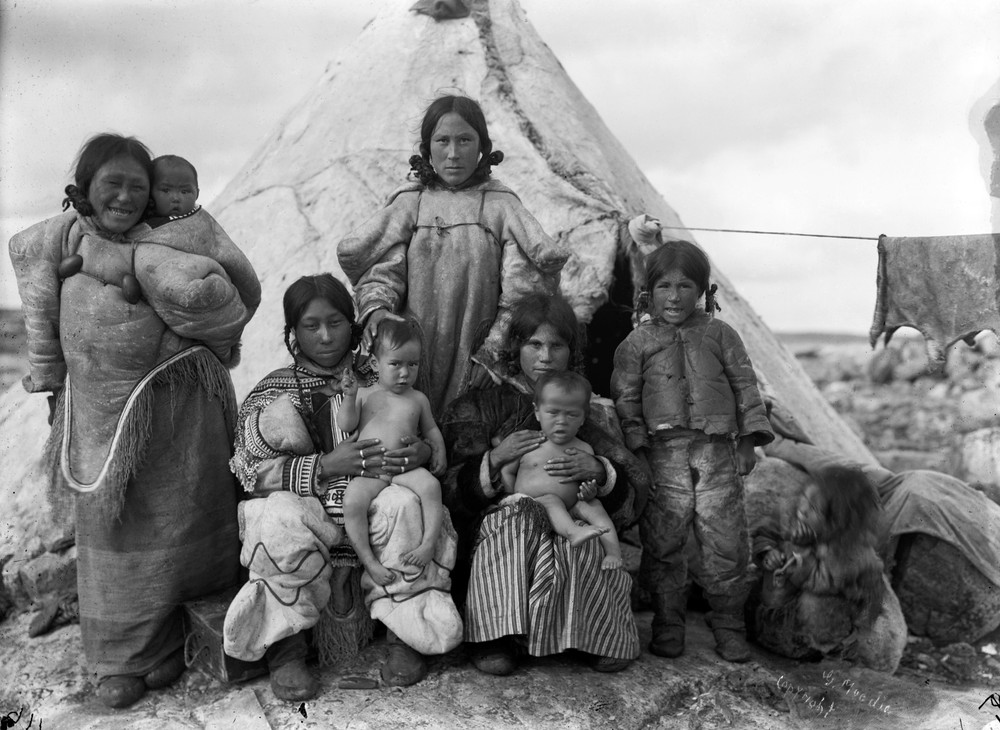
Inuit women and children at summer camp, Fullerton Harbour, Nunavut, August 1906.
Every aspect of traditional Inuit life, from shelter and clothing to food and travel, evolved in direct response to the demands of the Arctic tundra. Theirs was not a life of hardship endured, but of mastery achieved.
Shelter in the frozen north required ingenuity that few outsiders could imagine. With neither wood nor mud readily available across the tundra, the Inuit turned to the very environment that challenged them.
In winter, they constructed warm and surprisingly sturdy homes from compacted snow and ice, structures known in the Inuit language as igloos, the word simply meaning “home.”
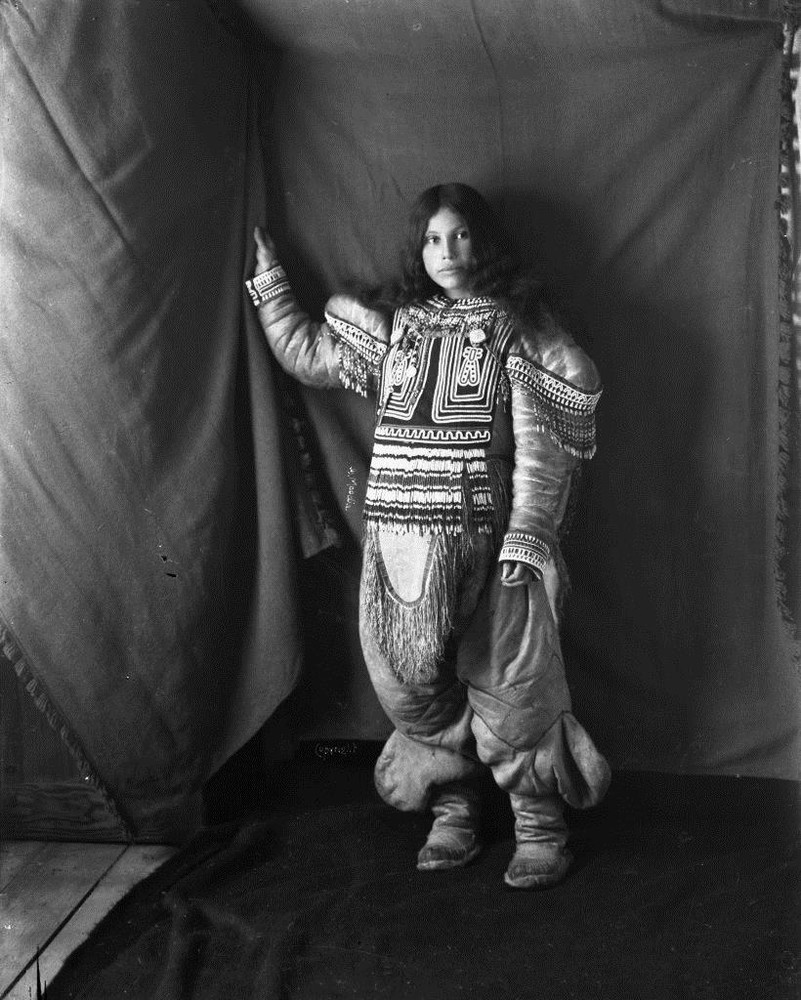
Inuit woman, Kootucktuck, in her beaded attigi. Fullerton Harbour, Nunavut, February 1905.
When the brief Arctic summer arrived, these same communities built seasonal dwellings from animal skins stretched over frames of driftwood or whalebone, lightweight and practical shelters that could be assembled and moved as needed.
Clothing was no less a feat of engineering. To survive temperatures that could kill within hours, the Inuit crafted layered garments from caribou and seal skin, producing shirts, trousers, boots, hats, and the now-iconic anorak.
Inner linings drawn from the furs of polar bears, arctic foxes, and rabbits added critical insulation, creating clothing systems so effective that modern cold-weather gear still borrows their principles.
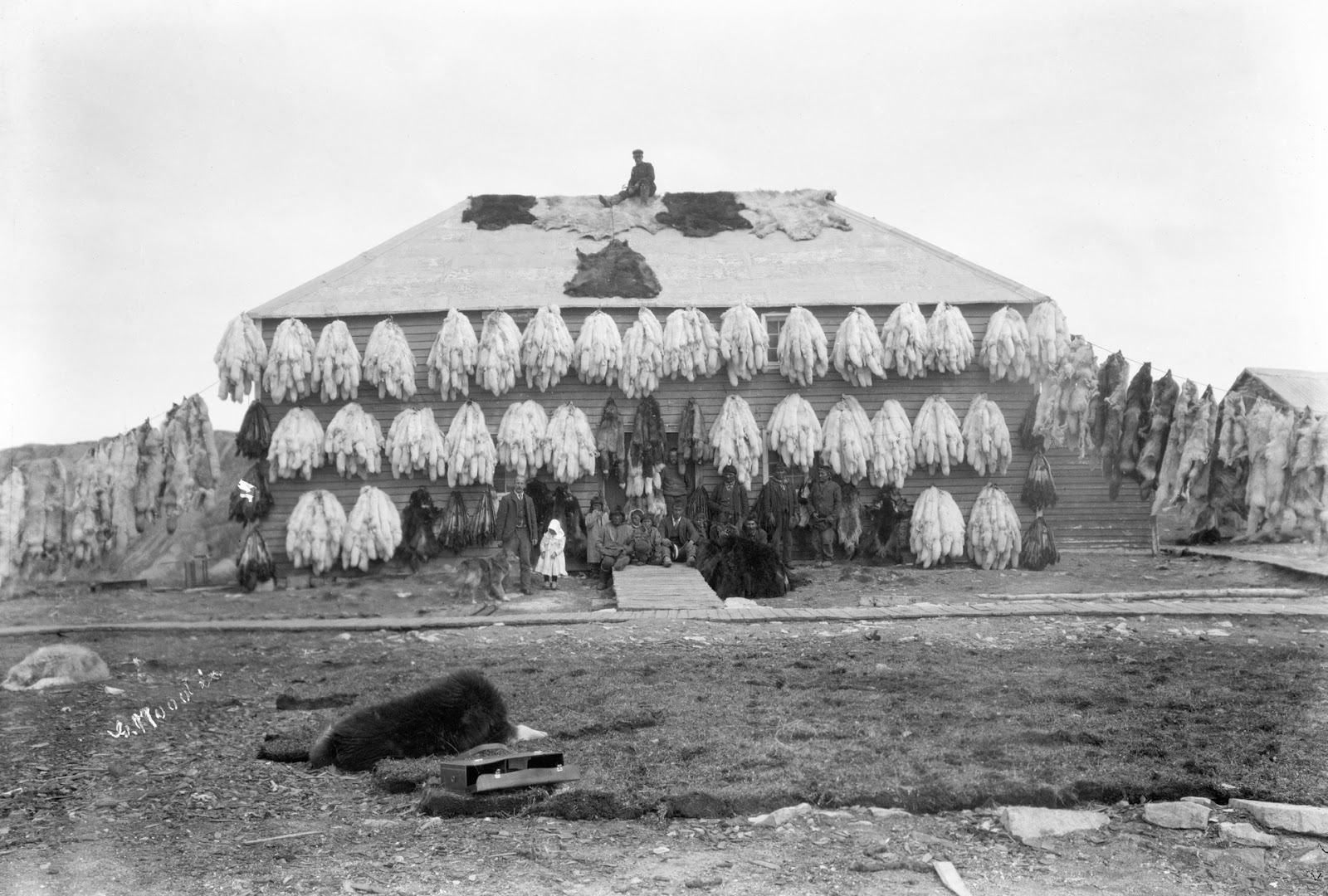
Hudson Bay Company store covered with furs, Churchill, Manitoba, circa 1906-09.
Food, too, came entirely from the land and sea. With virtually no vegetation available, the Inuit diet centered on seal, walrus, caribou, whale, and fish.
Hunters pursued seals across the ice or from kayaks, the nimble single-person boats perfectly suited to Arctic waters.
Larger prey, including whales, were taken from umiaks, broad communal boats that required coordinated crew effort.
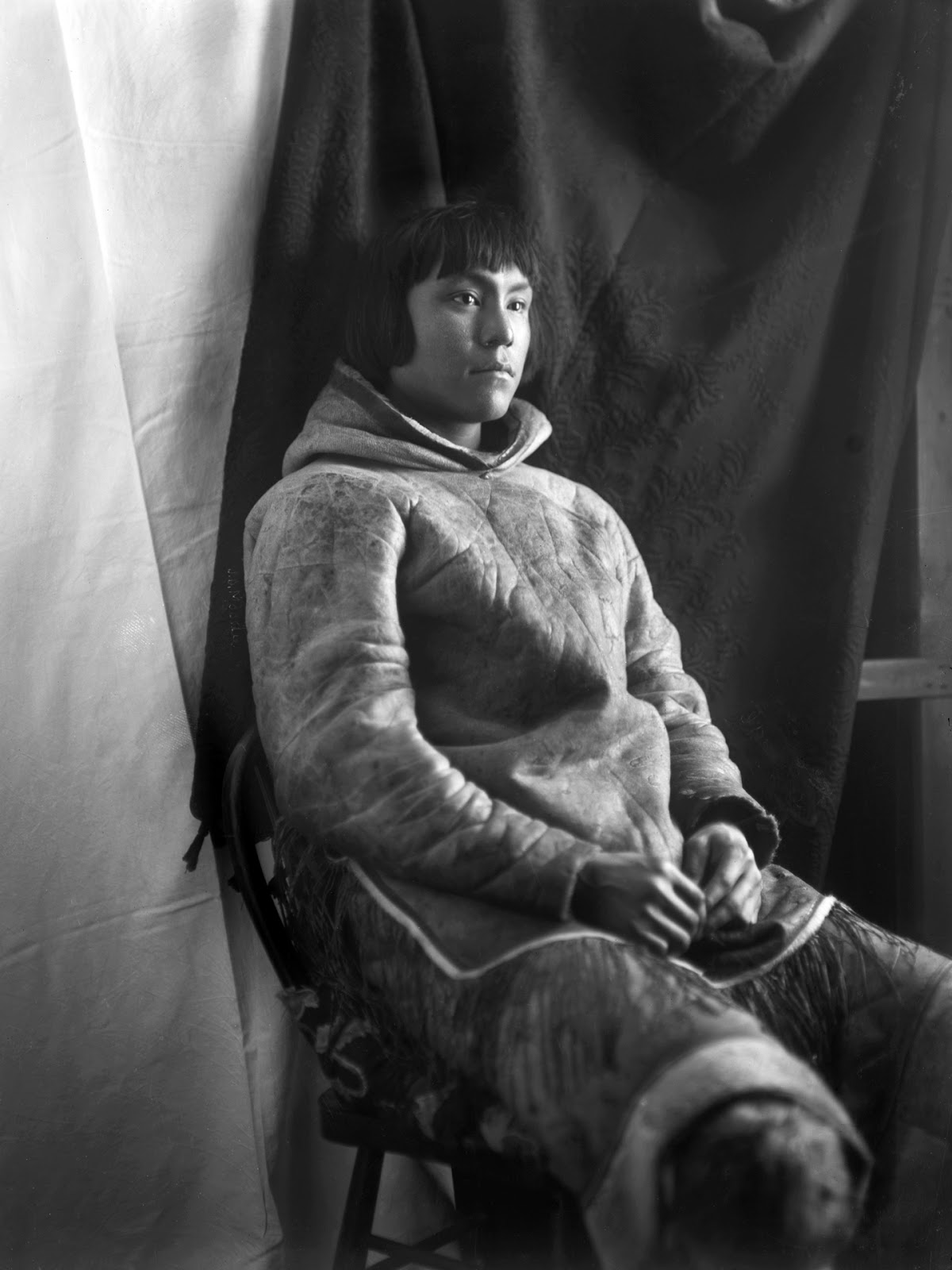
Inuit man, Kingnuck, of the Kinepetoo tribe, Fullerton Harbour, Nunavut, February 5, 1905.
On land during the summer months, hunters tracked caribou with bows and arrows, while dog sleds served as the primary means of overland travel across the frozen terrain.
Life was organized around the family unit, with spiritual traditions rooted in animism, a belief that all living things and natural forces possessed a spirit worthy of respect.
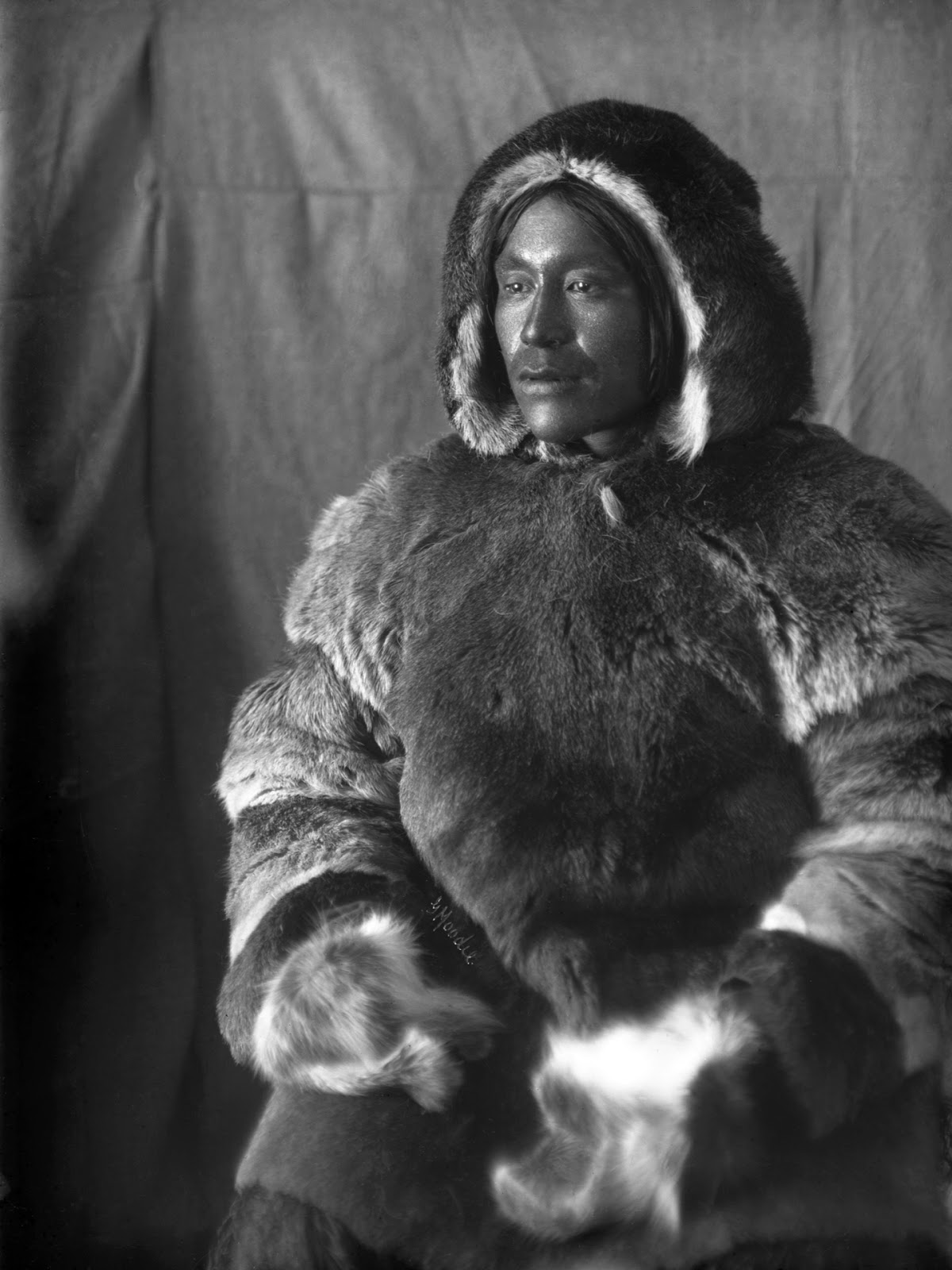
Inuit man, Toopealock, of the Kinepetoo, Fullerton Harbour, Nunavut, c.1904-05.
It was into this world that Geraldine Moodie arrived in the early 1900s, camera equipment in tow.
Already celebrated as western Canada’s first professional female photographer, Moodie had built her reputation through portrait studios in Alberta and Saskatchewan throughout the 1890s.
Her husband, Douglas Moodie, was a senior officer with the North-West Mounted Police, and when he was assigned to establish a detachment at Fullerton Harbour on the western shore of Hudson Bay, Geraldine chose to accompany him.
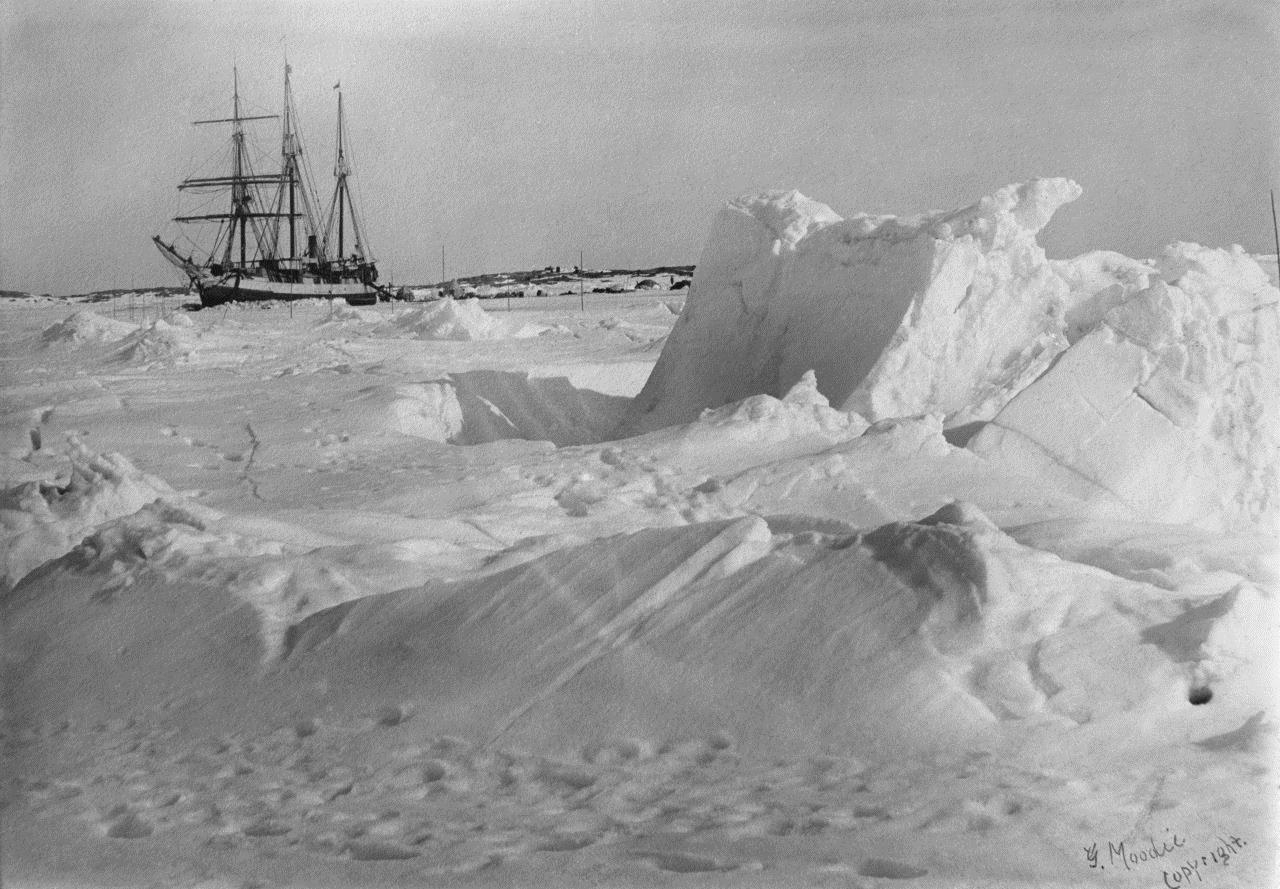
DGS Arctic frozen in the ice, Fullerton Harbour, Nunavut, April 1905.
The two proved to be an extraordinarily complementary pair. While Douglas, trained in photography by his wife, turned his lens toward the landscape and the work of the Mounted Police, Geraldine set up a studio inside the detachment house and began photographing the local Inuit community with a rare and respectful intimacy
Her portraits were not the detached curiosities that often defined outside observation of indigenous peoples during that era. They were considered, human, and close.
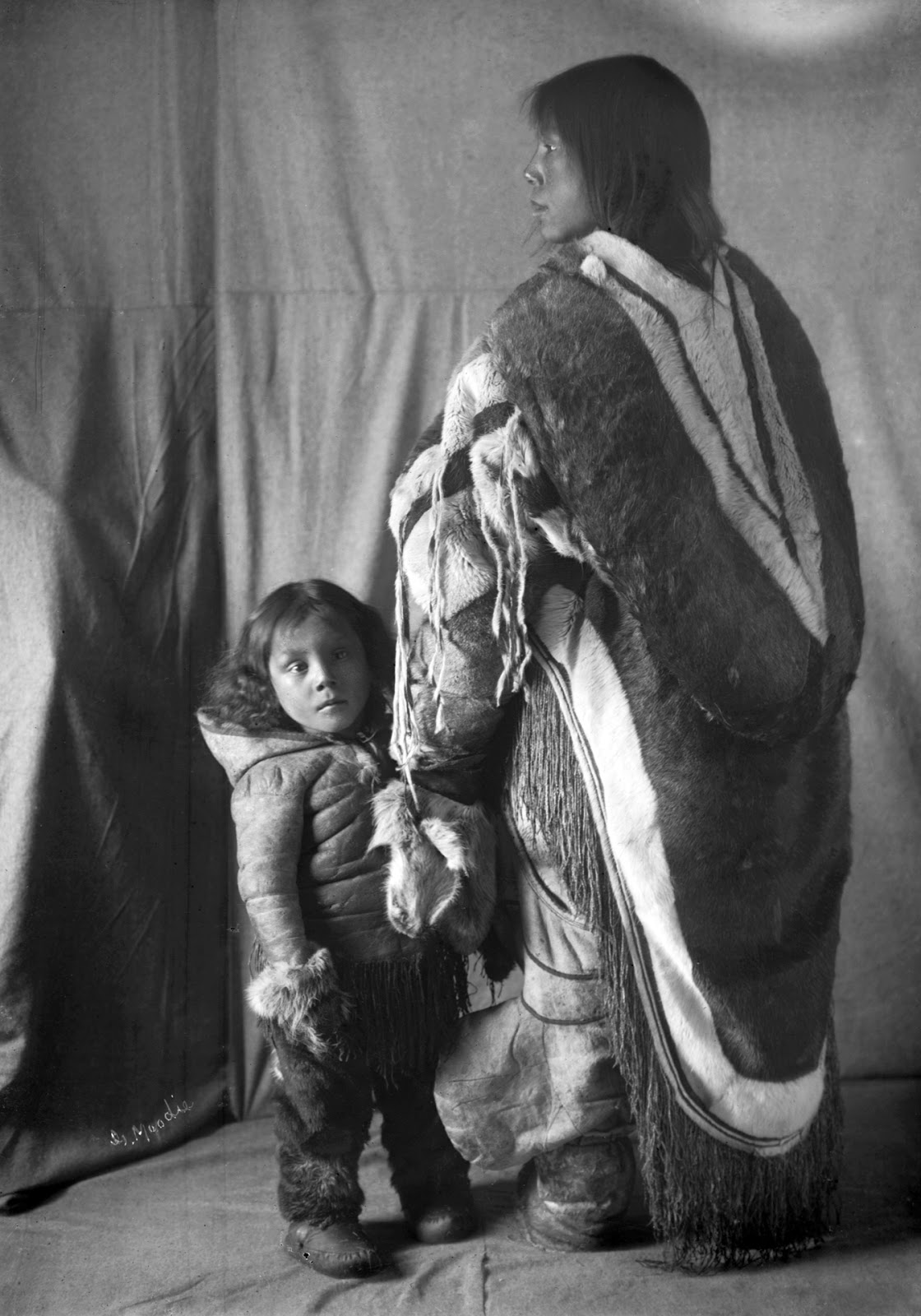
Inuit woman, Mirkiook, and her child, Fullerton Harbour, Nunavut, c.1905.
The landscape itself left a deep impression on her. “Words cannot describe this wonderful coast,” she wrote in her diary, reflecting on a terrain that seemed to strip away all pretense.
She described the unbroken expanse of snow and ice, the shifting northern lights, a scene she found both beautiful in sunlight and quietly unsettling after dark.
Her technical challenges were as remarkable as her subjects. The relentless Arctic glare initially defeated her attempts at a proper exposure.
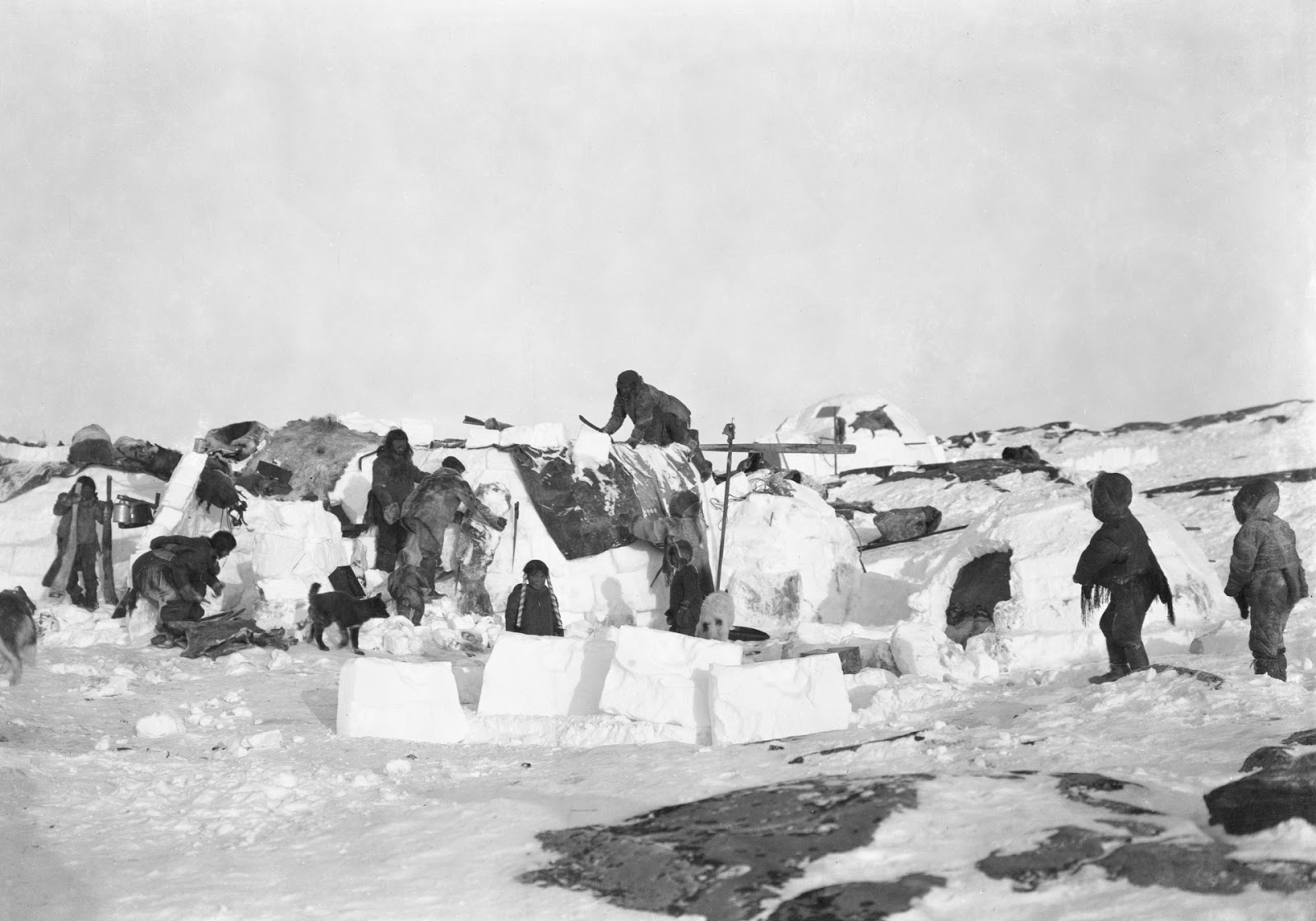
Inuit igloos, Fullerton Harbour, Nunavut, c. October 1903.
Through patient experimentation under varying light conditions, she discovered that shooting in bright afternoon sun with her lens stopped well down, allowing strong shadows to define the landscape, finally produced the crisp negatives she had been seeking.
It was a solution born entirely from persistence and observation, qualities that define both her photography and the people she so carefully documented.
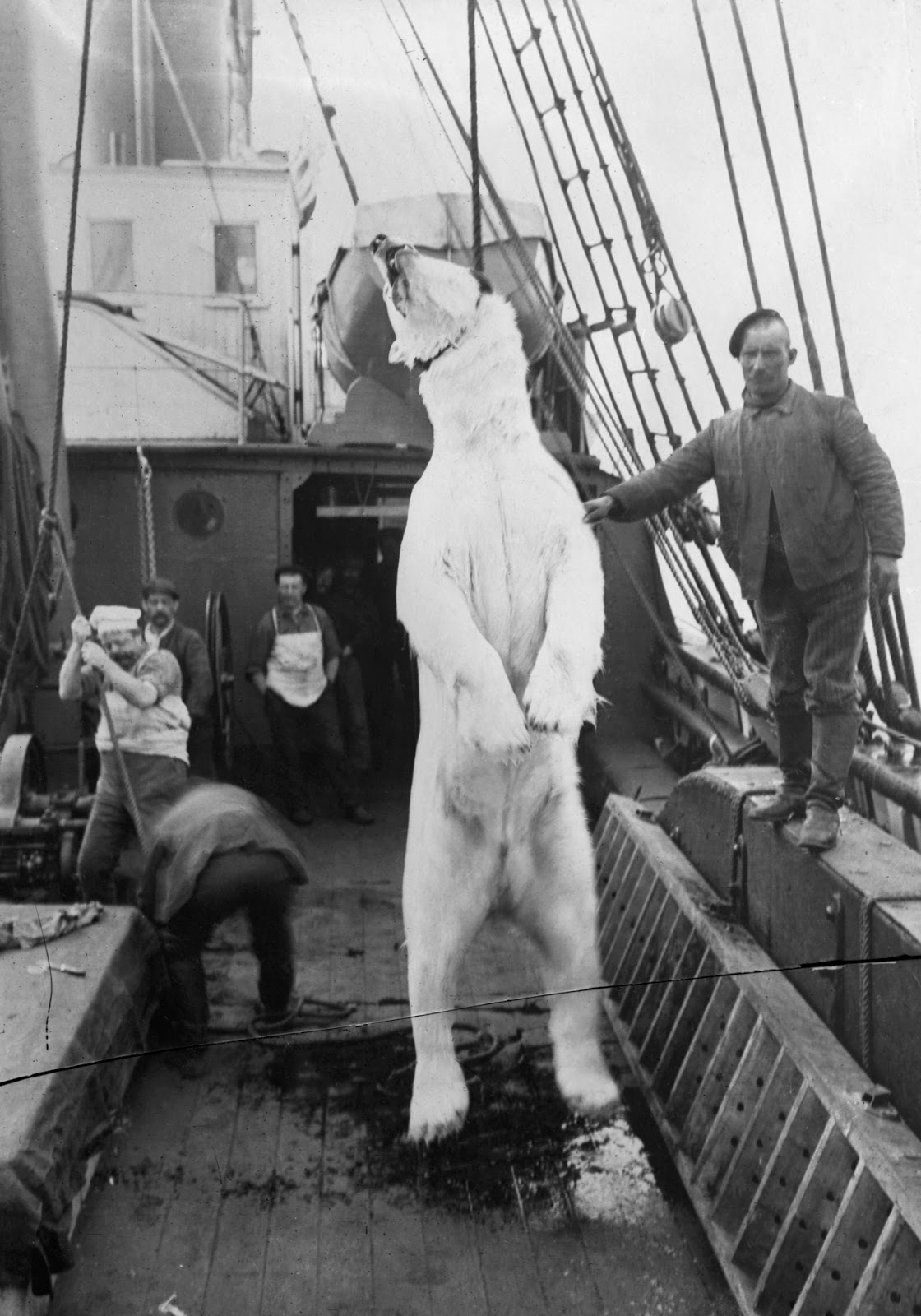
Loading a polar bear carcass on to Neptune, Hudson Bay, Nunavut, July 20, 1904.
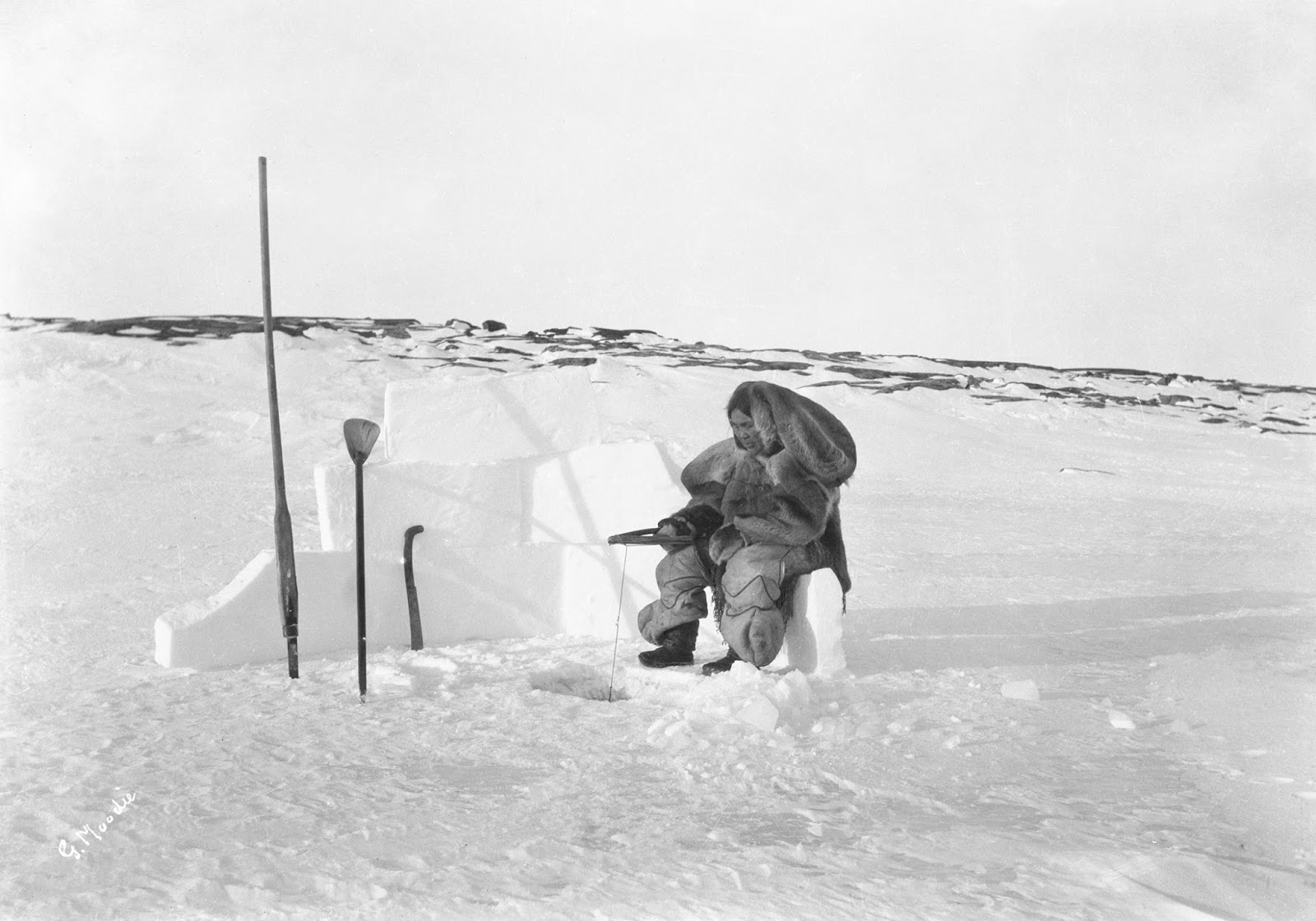
Inuit woman ice fishing, Fullerton Harbour, Nunavut, 1905.
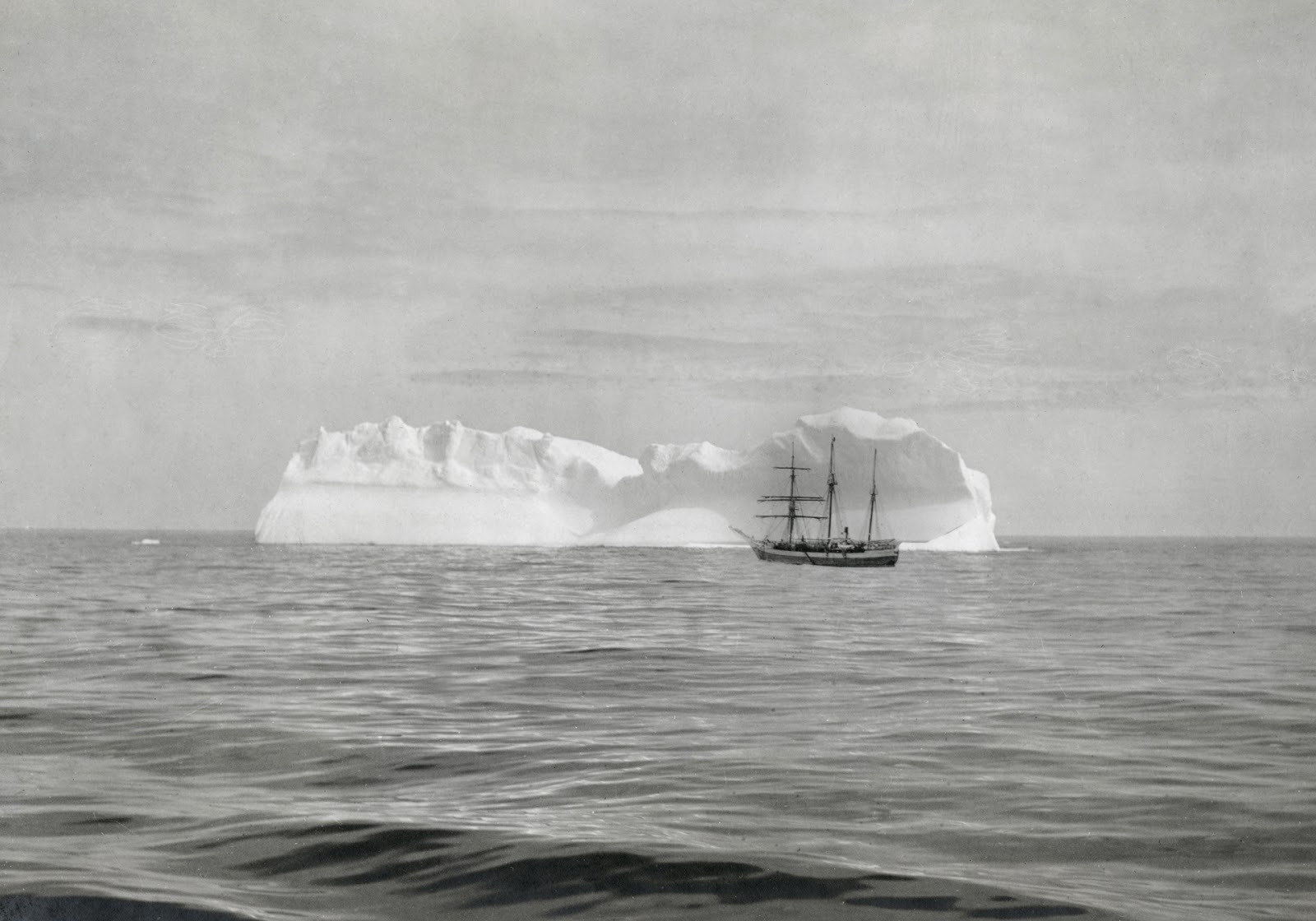
Dominion Government steamer Arctic in front of an iceberg, at the mouth of Hudson Strait, Nunavut, c.1904.
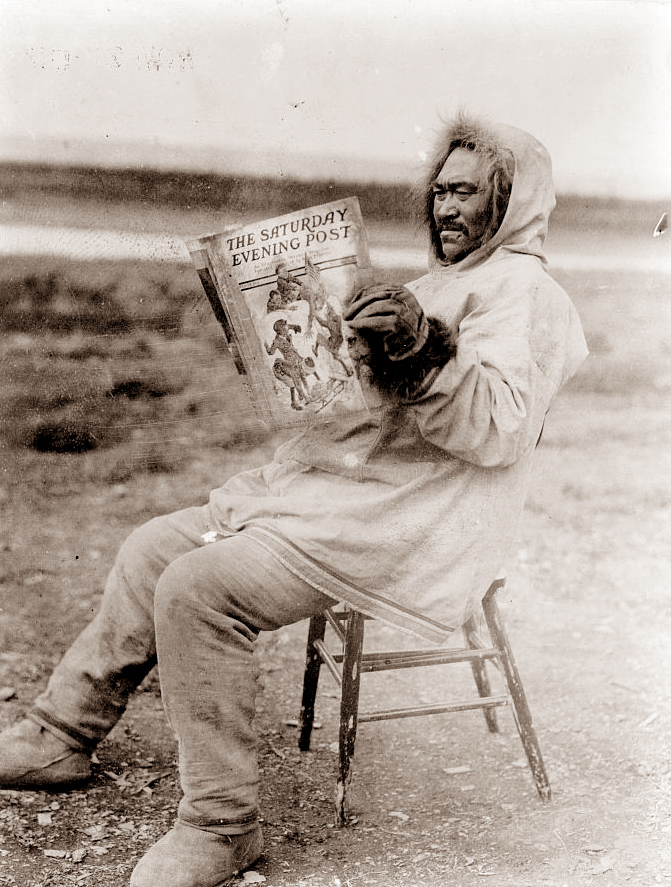
Inuit Man reading a copy of the Saturday Evening Post, 1913.
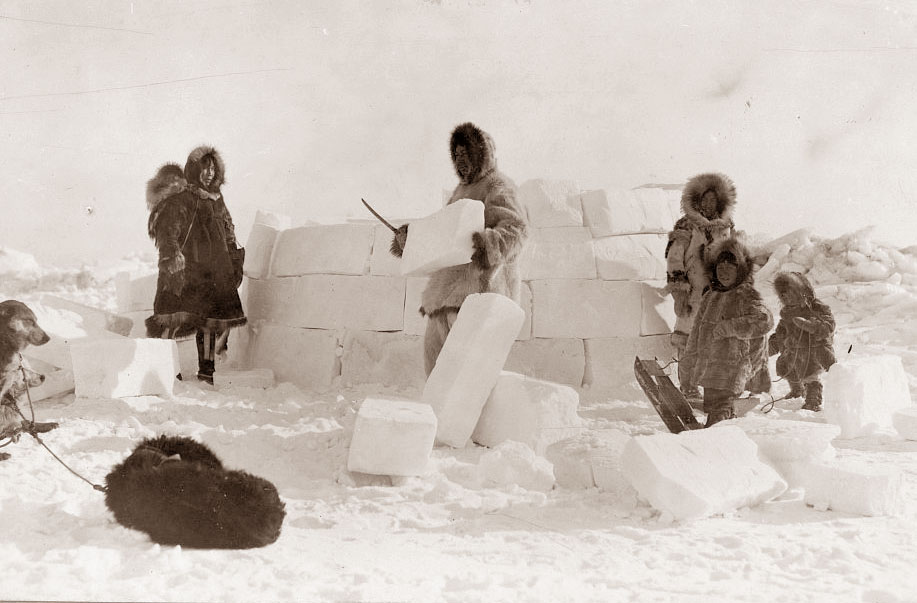
An Inuit Family building an igloo, 1924
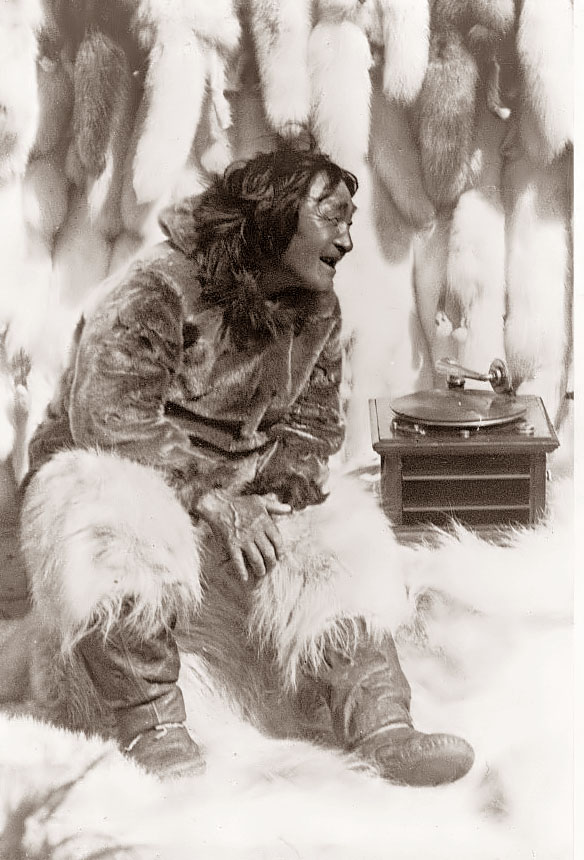
An Inuit man enjoying some music on a record player, 1922.
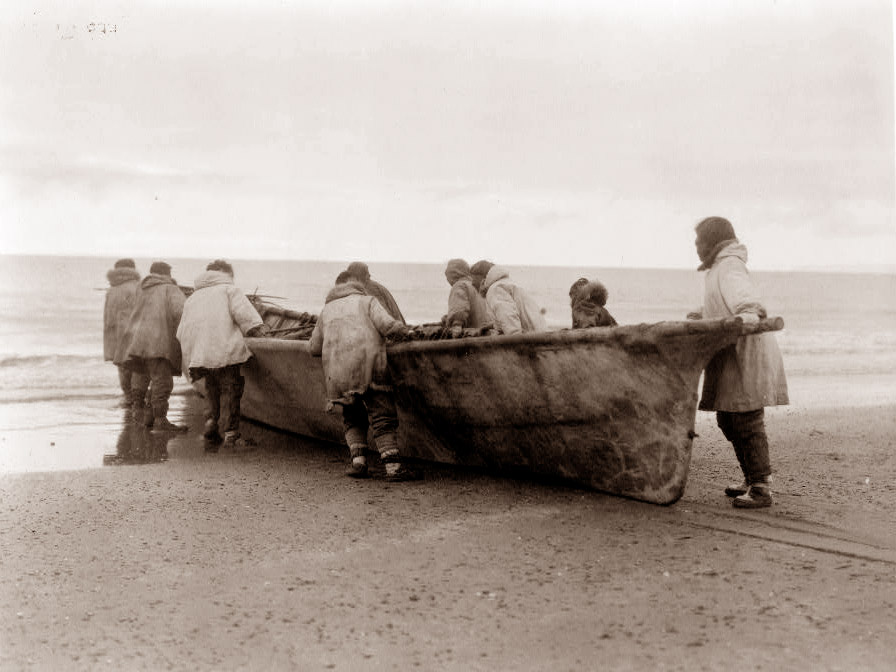
A group of Inuit Whalers, 1929.
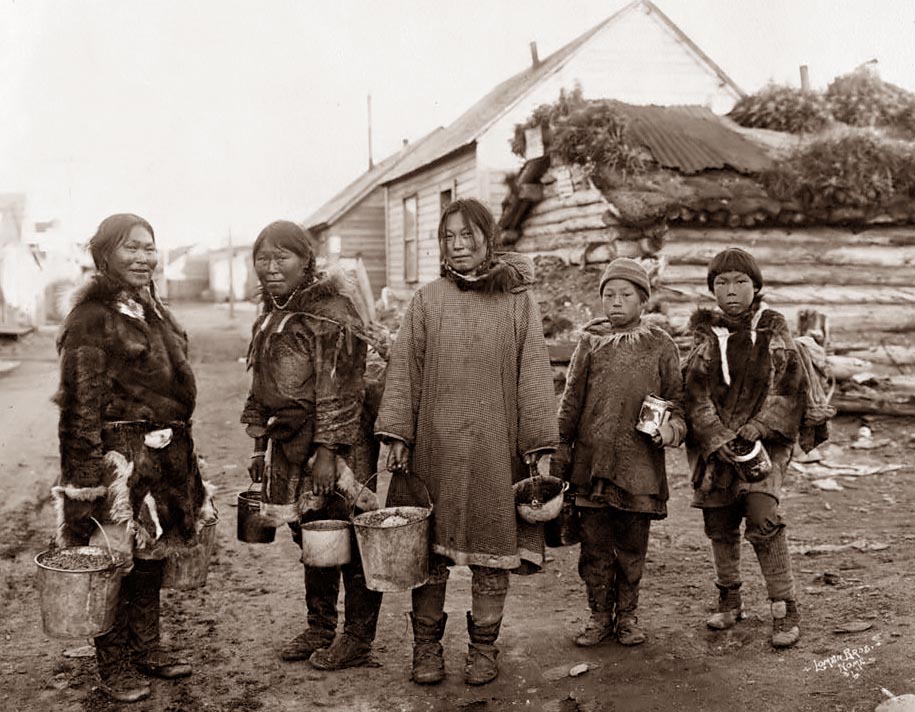
Inuit Berry Pickers. The picture was taken near Nome, Alaska in the early 1900s.
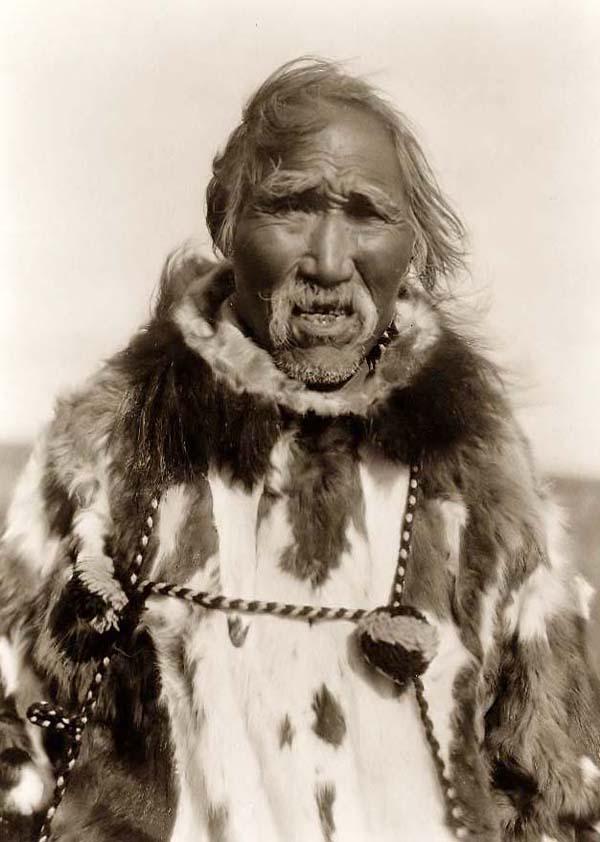
Portrait of an old Inuit man, 1929.
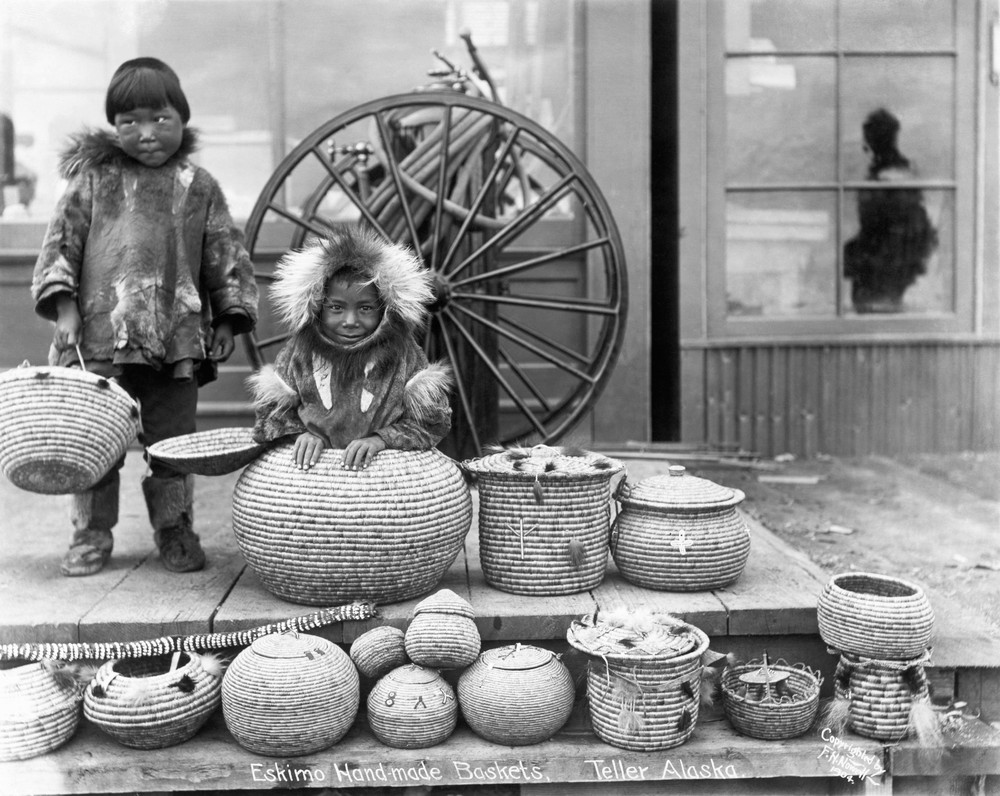
The Klondike Goldrush. Eskimo handmade baskets, Teller, Alaska, with two native Eskimo boys, 1904.
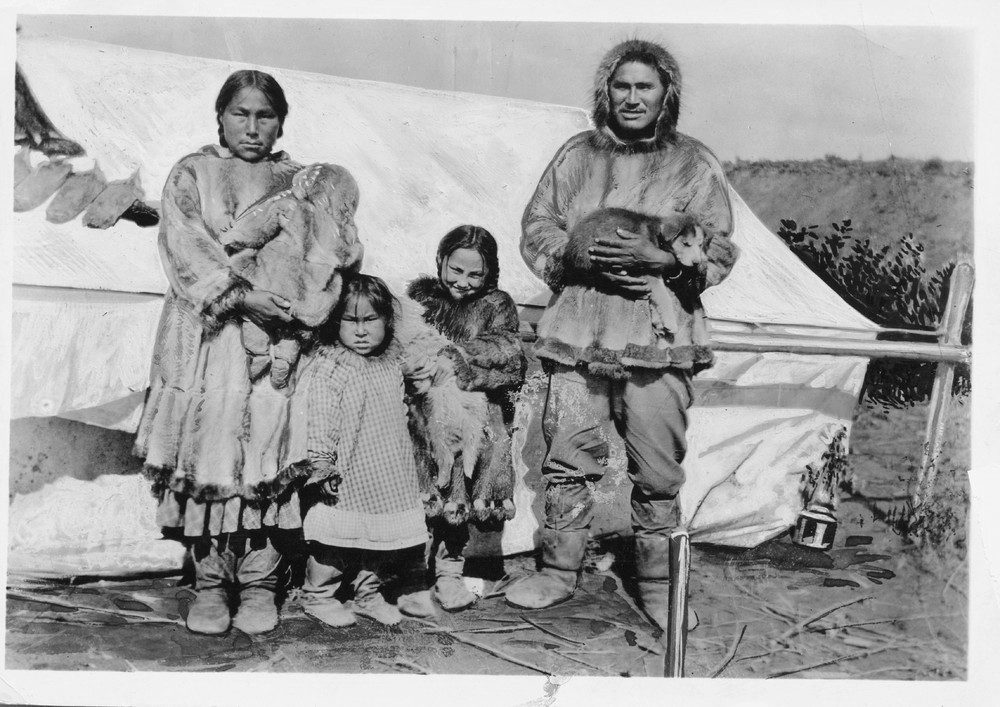
An Eskimo family living near the Mackenzie River, Canada.
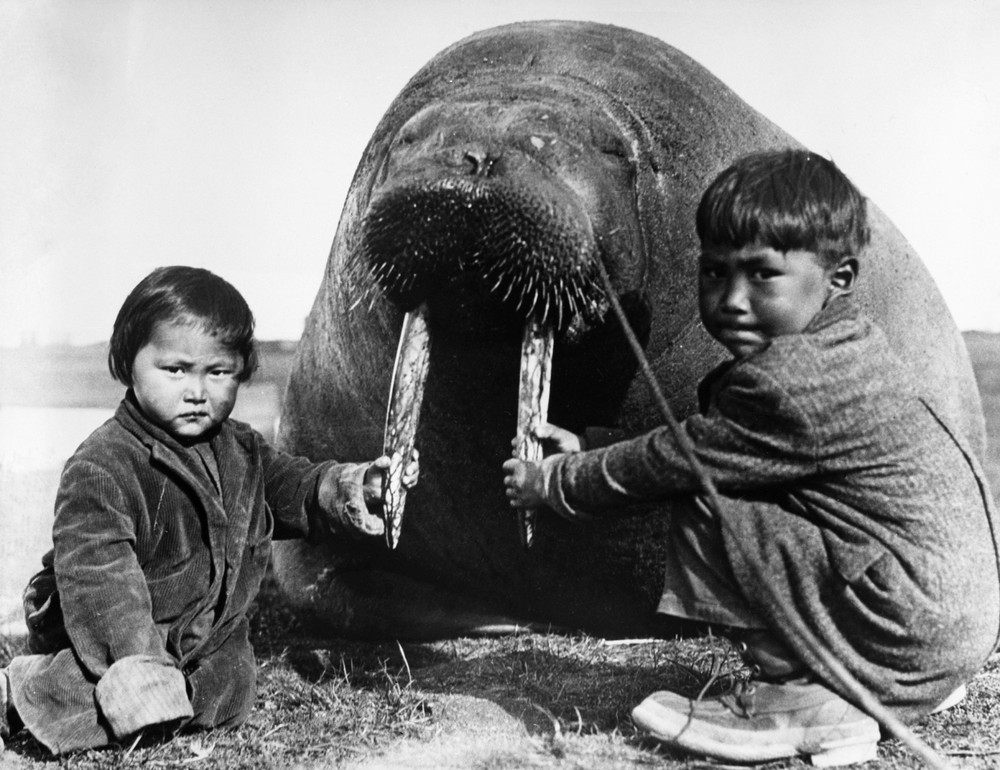
Two Inuit children at Point Barrow, Alaska, holding the tusks of a large walrus, probably killed for food, circa 1930.
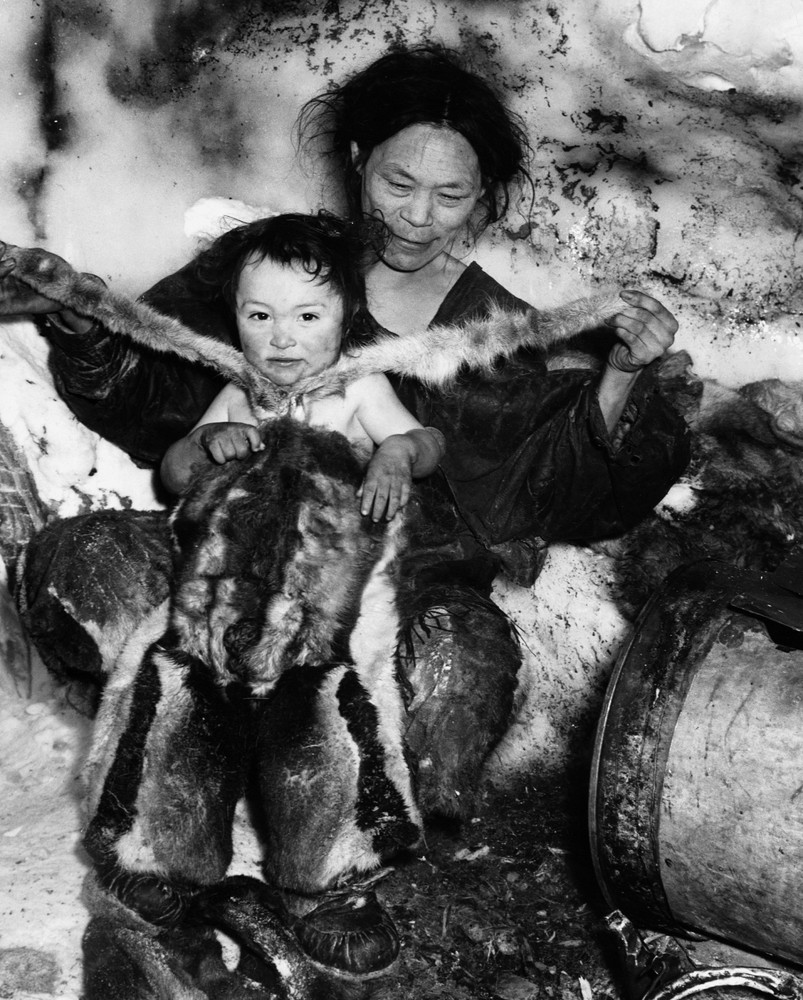
An Inuit mother dresses her young child in a fur snowsuit.
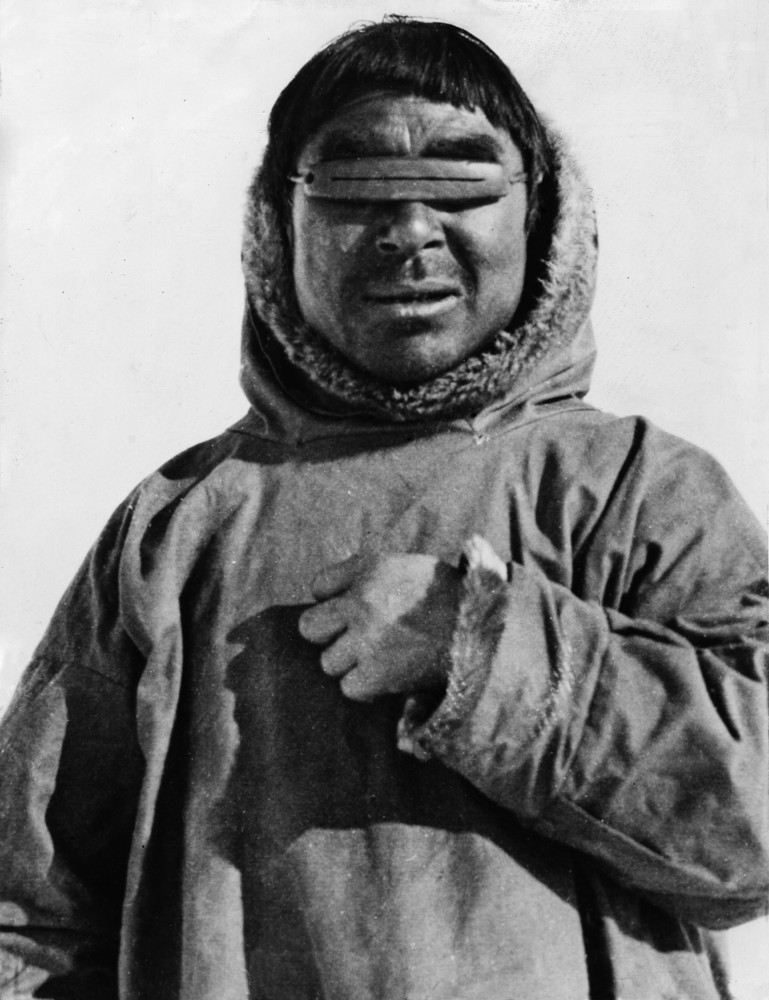
Inuit (Eskimo) with snow goggles, 20th century. Yellowknife, Prince Of Wales Northern Heritage Centre.
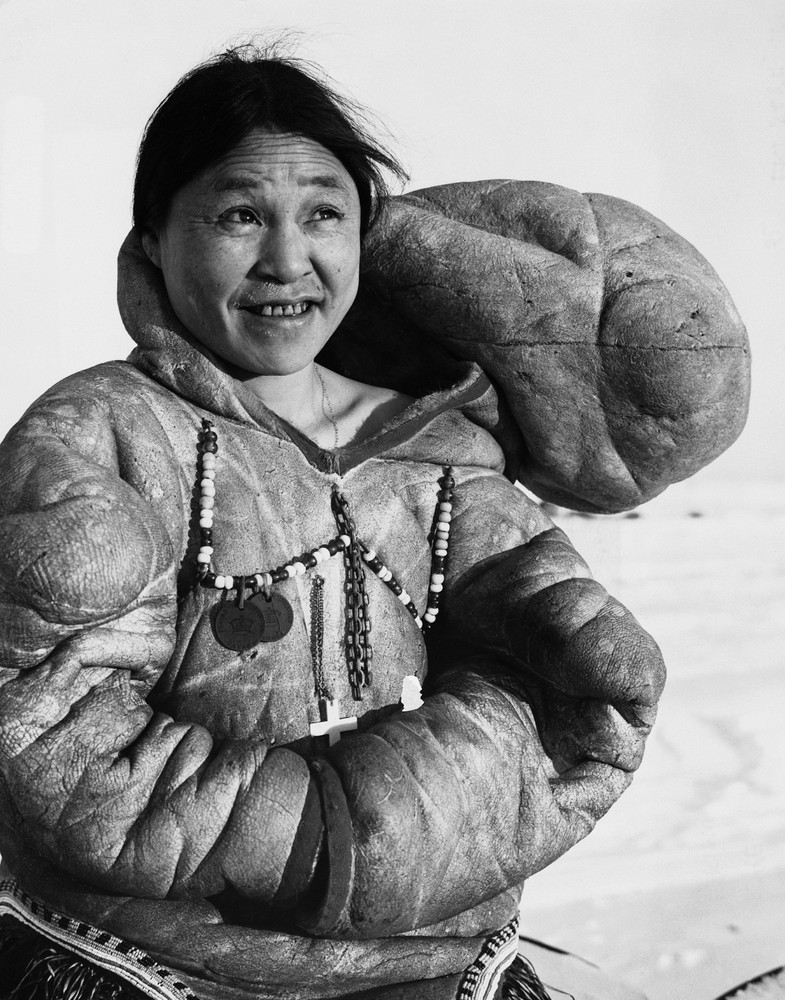
Eskimo woman wears the tall, floppy hood of her tribe. Eskimos are more properly referred to as Inuits. The term Eskimo is considered derogatory.
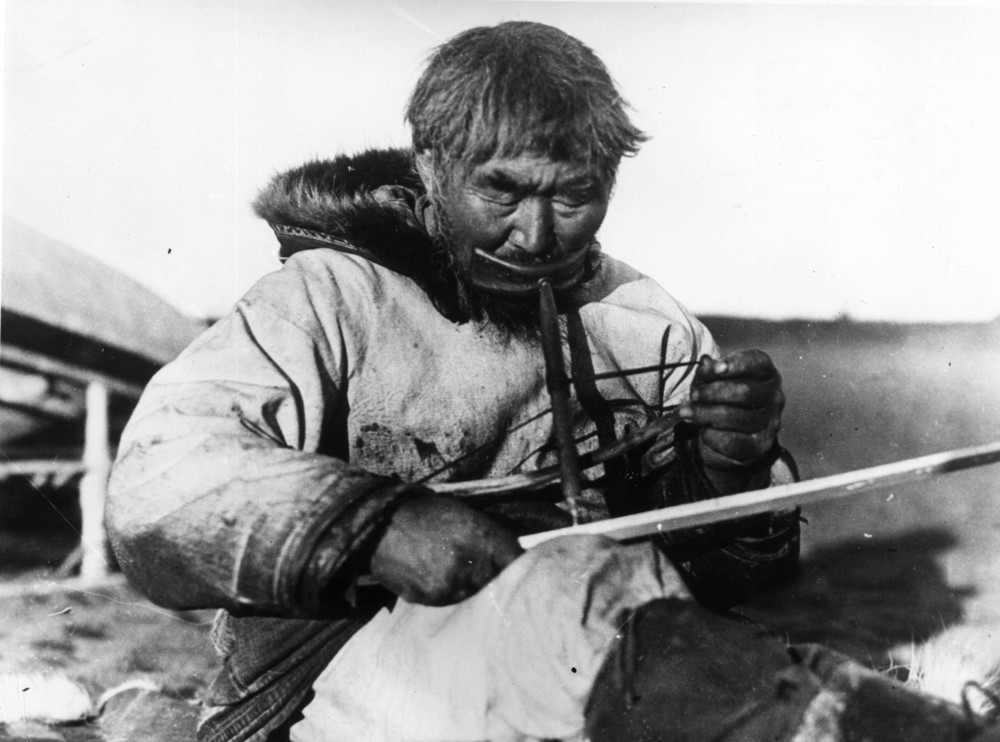
An Inuit carpenter at work using a traditional bow drill which he holds with his mouth and turns with a string, circa 1910.
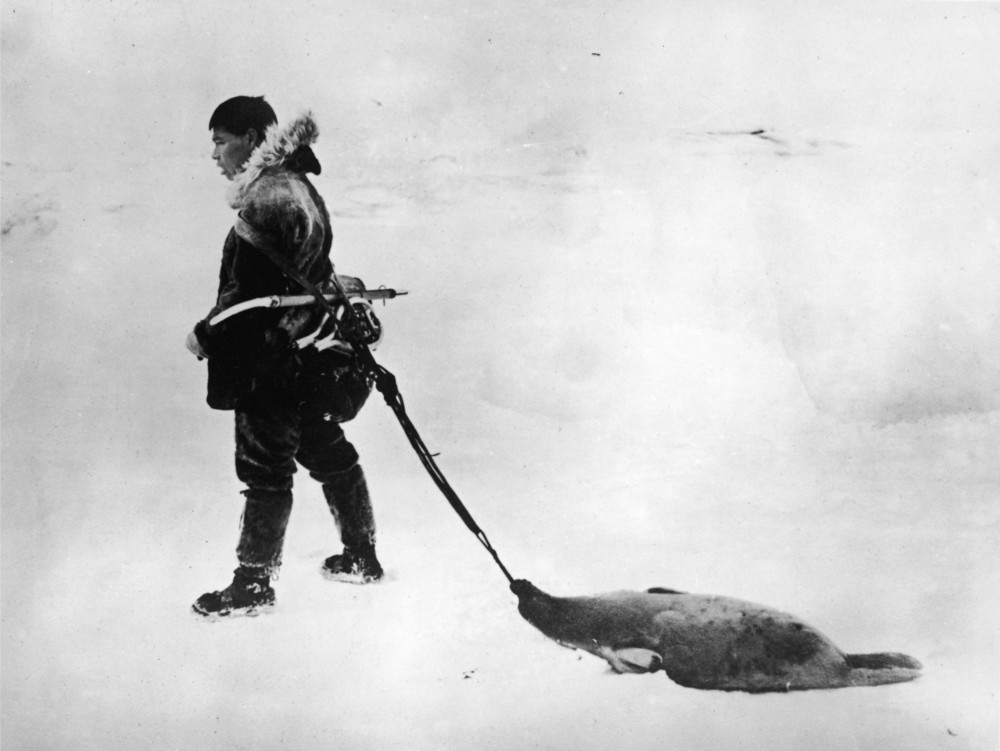
An Inuit hunter in Canada drags the carcass of a seal behind him, March 1924.
(Photo credit: Wikimedia Commons).