
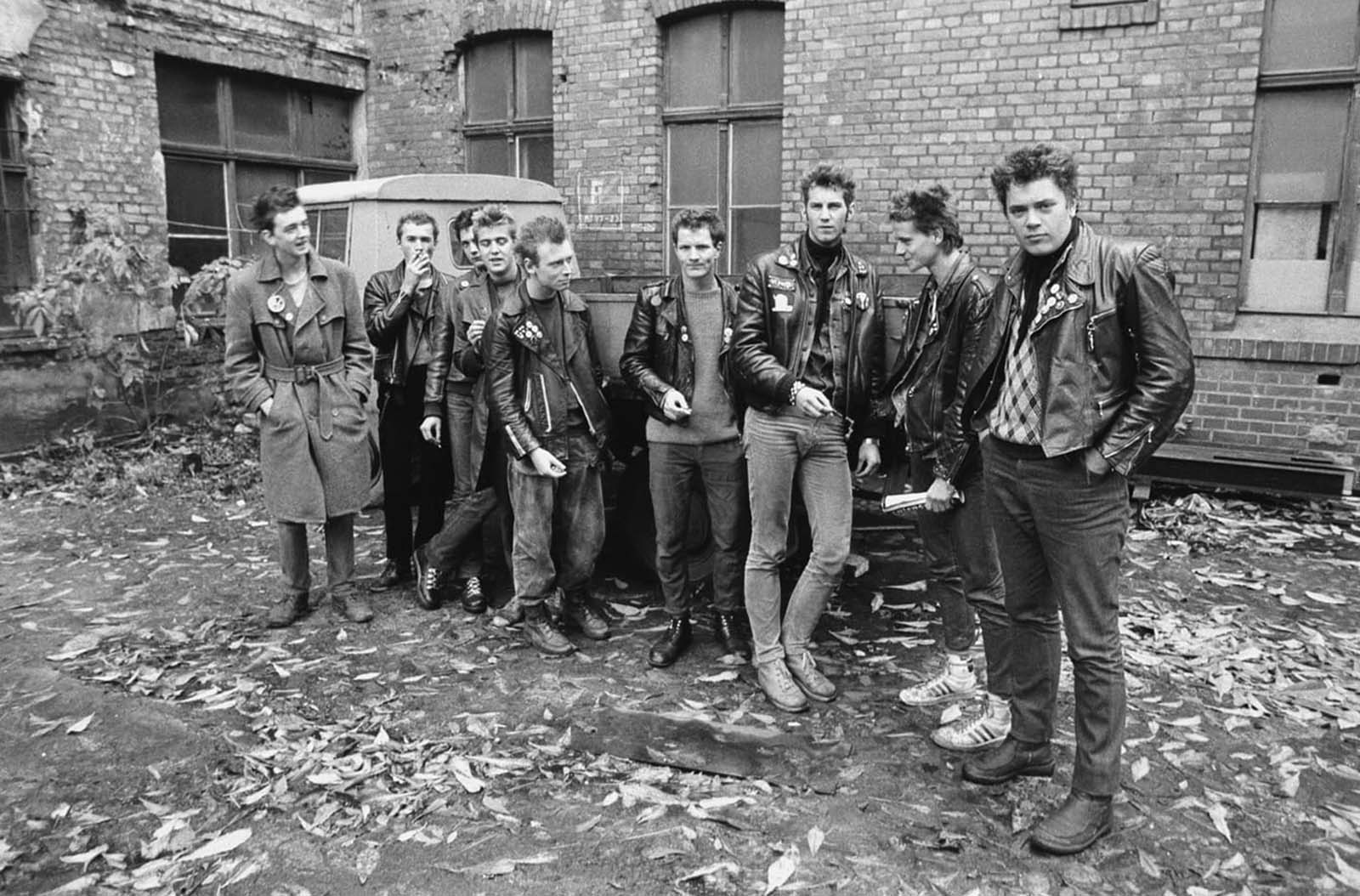
Beneath the gray concrete and rigid control of the German Democratic Republic in the 1980s, a quiet rebellion pulsed through cellars, abandoned factories, and dimly lit basements.
The underground punk scene in East Germany was more than a musical movement; it was an expression of defiance against conformity, surveillance, and a government that sought to dictate every aspect of personal life.
While the state demanded obedience, a generation of restless youth sought raw freedom in noise, unpolished guitar riffs, and the bold statement of spiked hair and torn clothing.
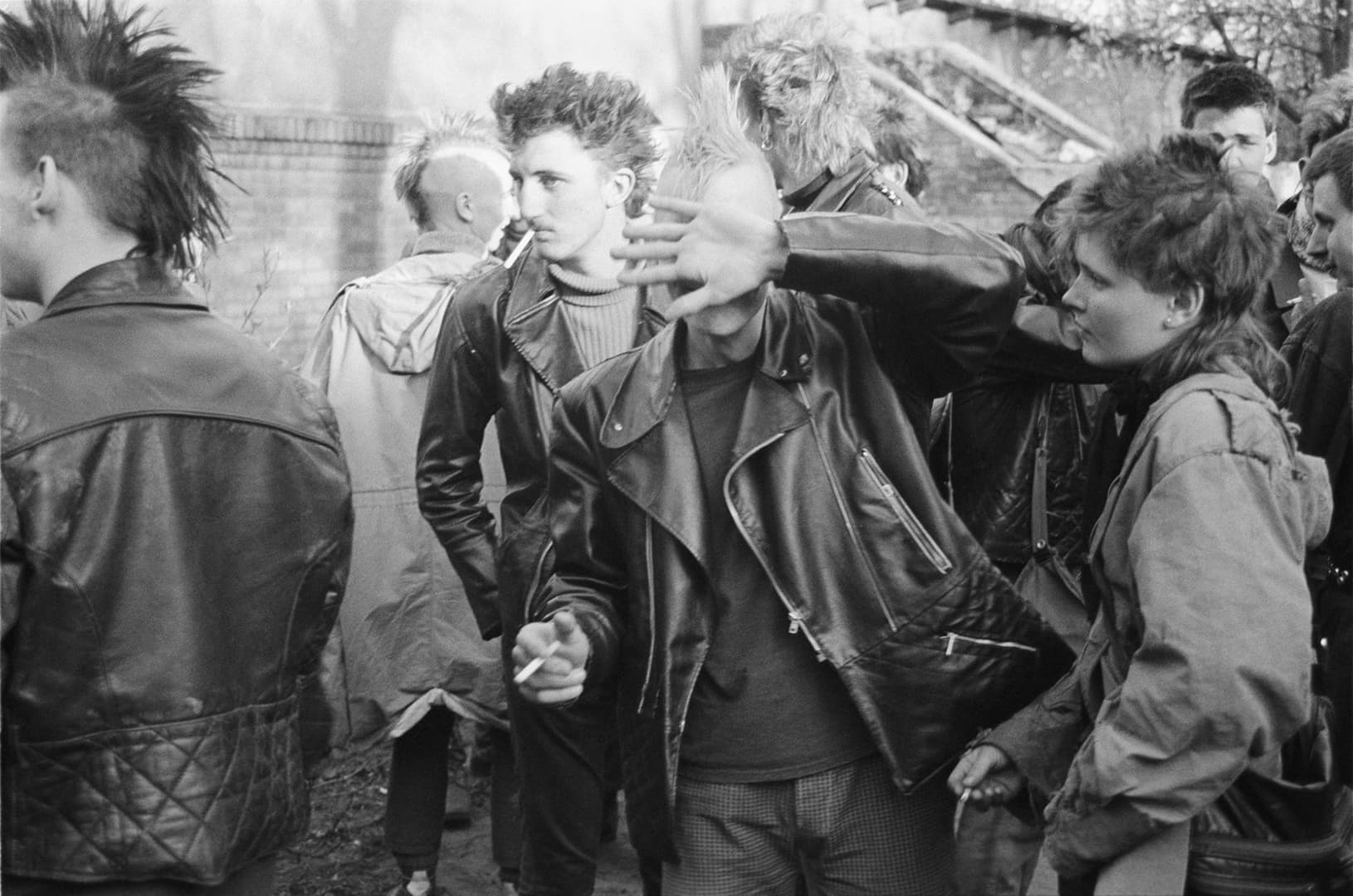
Bluesmass, Berlin, 1983. (Photo by Harald Hauswald).
Though punk had emerged in the West a decade earlier, its arrival behind the Iron Curtain carried a distinctly different meaning.
In places like Hamburg, new movements began to reshape German music through independent labels such as ZickZack Records, founded by Alfred Hilsberg.
This period saw the birth of the Neue Deutsche Welle, or New German Wave, blending experimental post-punk sounds with synthesizers and early computer technology.
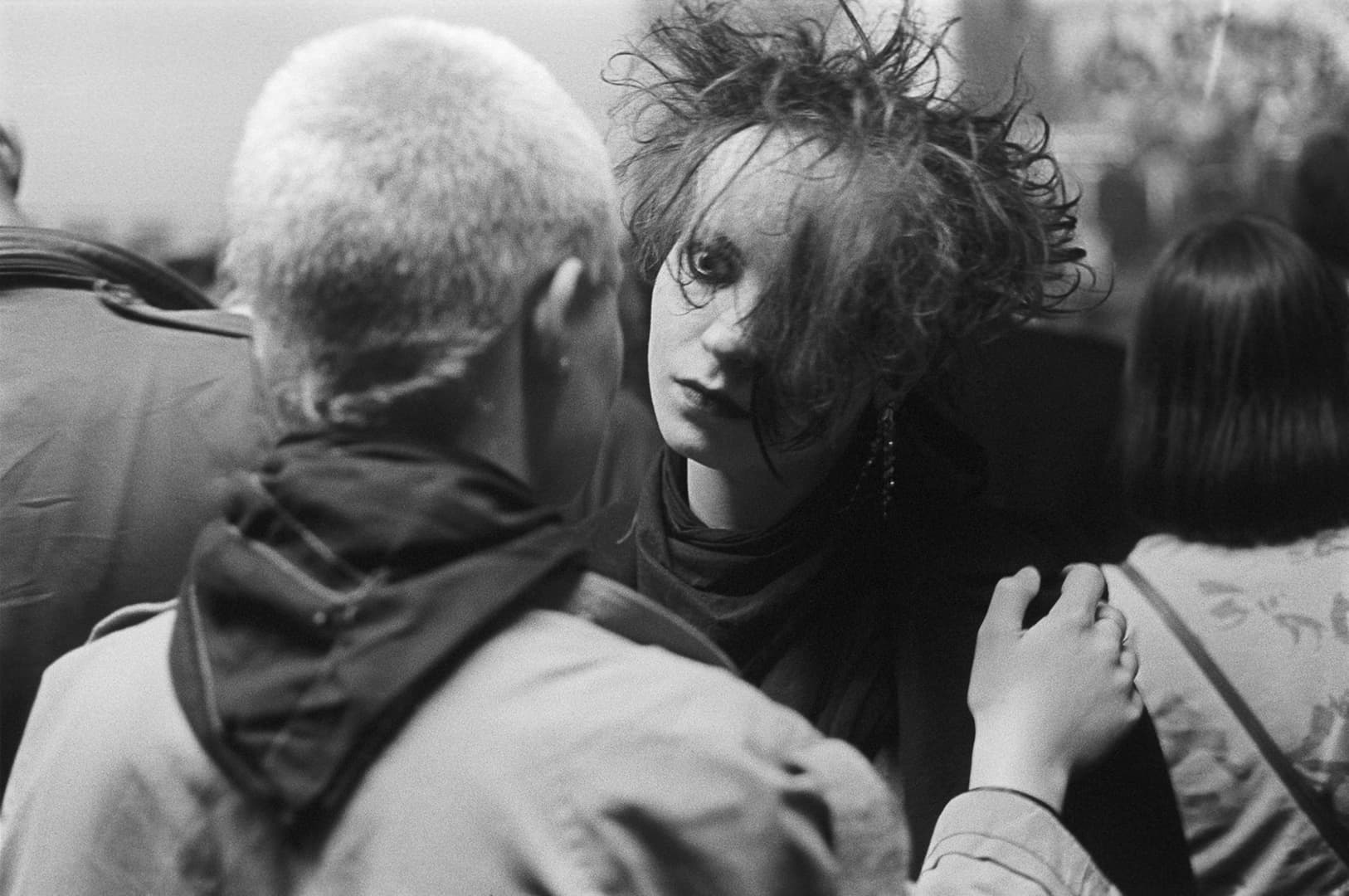
Punks in East-Berlin, 1985. (Photo by Harald Hauswald).
But in the East, these musical innovations spread quietly, often through smuggled tapes, shortwave radio, or personal contacts from West Berlin.
As the 1980s advanced, the genre evolved into what became known as Deutschpunk, a faster, harder, and more confrontational style characterized by stripped-down songwriting and politically charged lyrics.
While many West German bands used their platform to challenge capitalism or social hypocrisy, their counterparts in the East faced far greater risks.
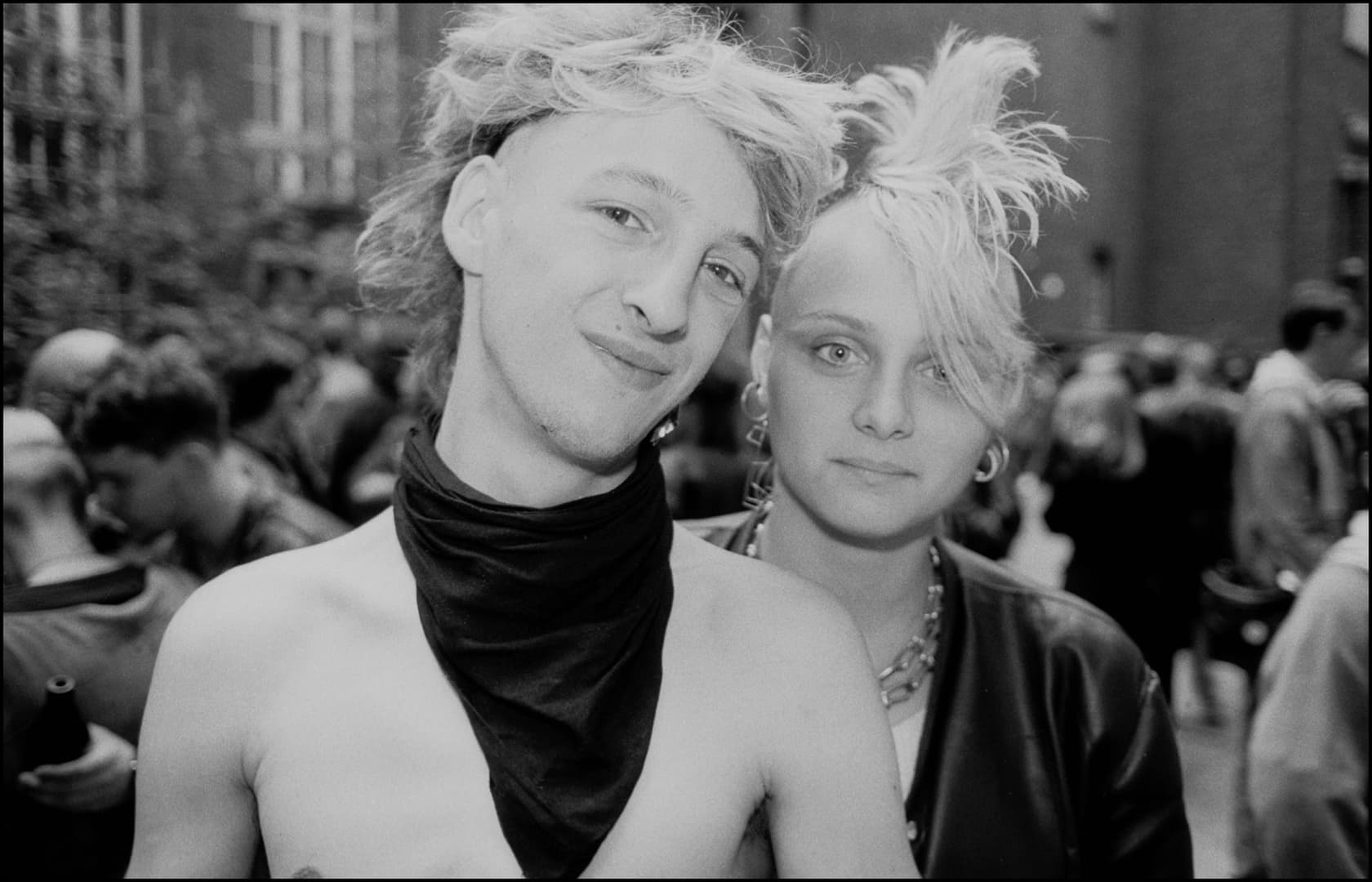
Alternative church congress (church from below), Berlin-Friedrichshain, 1987. (Photo by Harald Hauswald).
In the GDR, even attending an unauthorized concert could draw the attention of the authorities.
For young punks, every rehearsal, every song recorded on a hand-me-down cassette, felt like an act of rebellion.
The East German government viewed punk not merely as cultural disobedience but as a direct ideological threat.
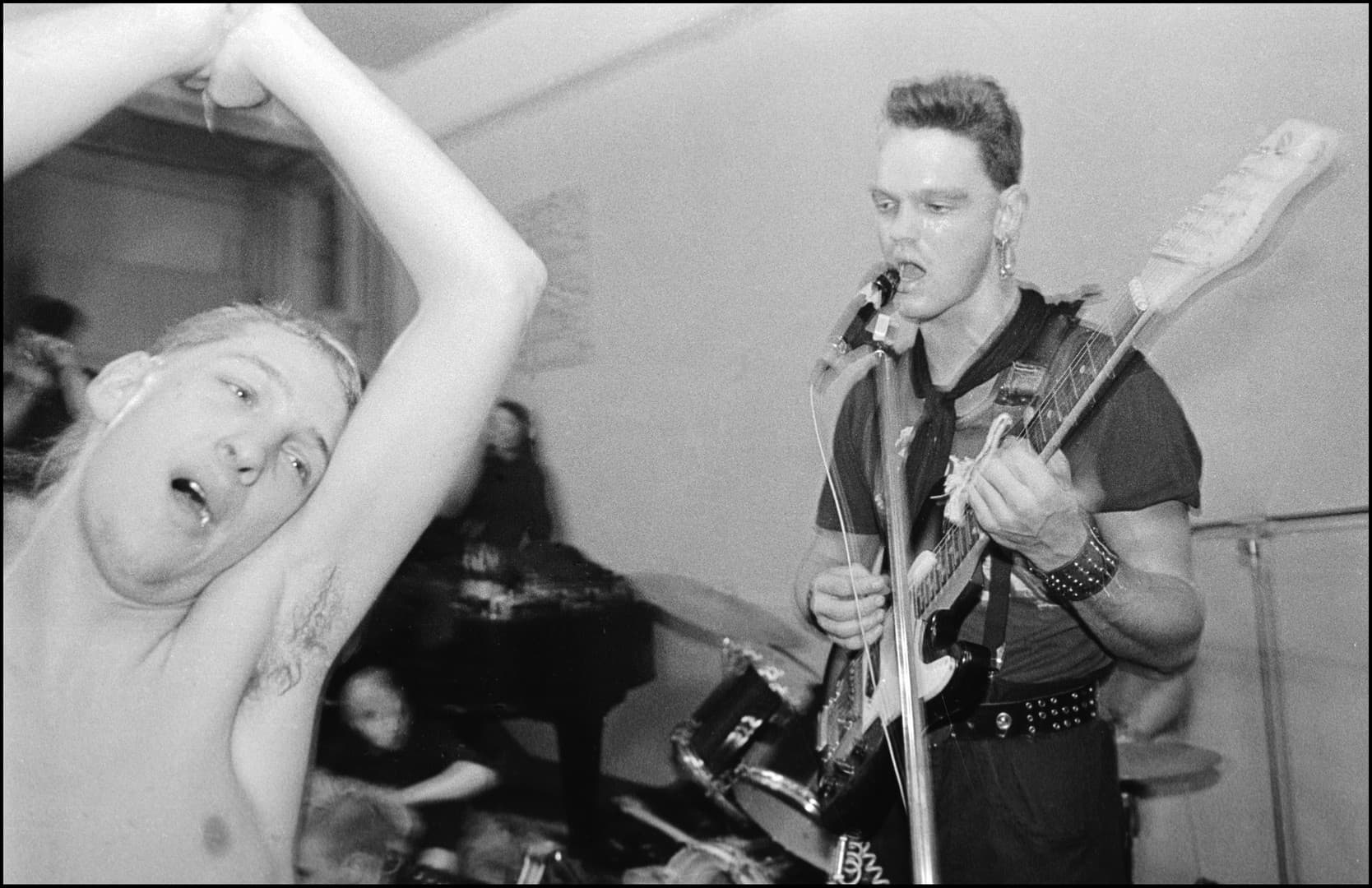
Punkrock concert in a church hall of the protestant church, Karl-Marx-Stadt, Saxony, 1985. (Photo by Harald Hauswald).
The Ministry for State Security, better known as the Stasi, infiltrated these circles with informants who documented conversations, tracked movements, and sometimes even joined the bands themselves.
The surveillance reached absurd proportions; a teenager’s hairstyle or a homemade badge could be enough to trigger suspicion.
Being a punk in East Germany often meant being unemployable, excluded from school, or sent for “re-education.”
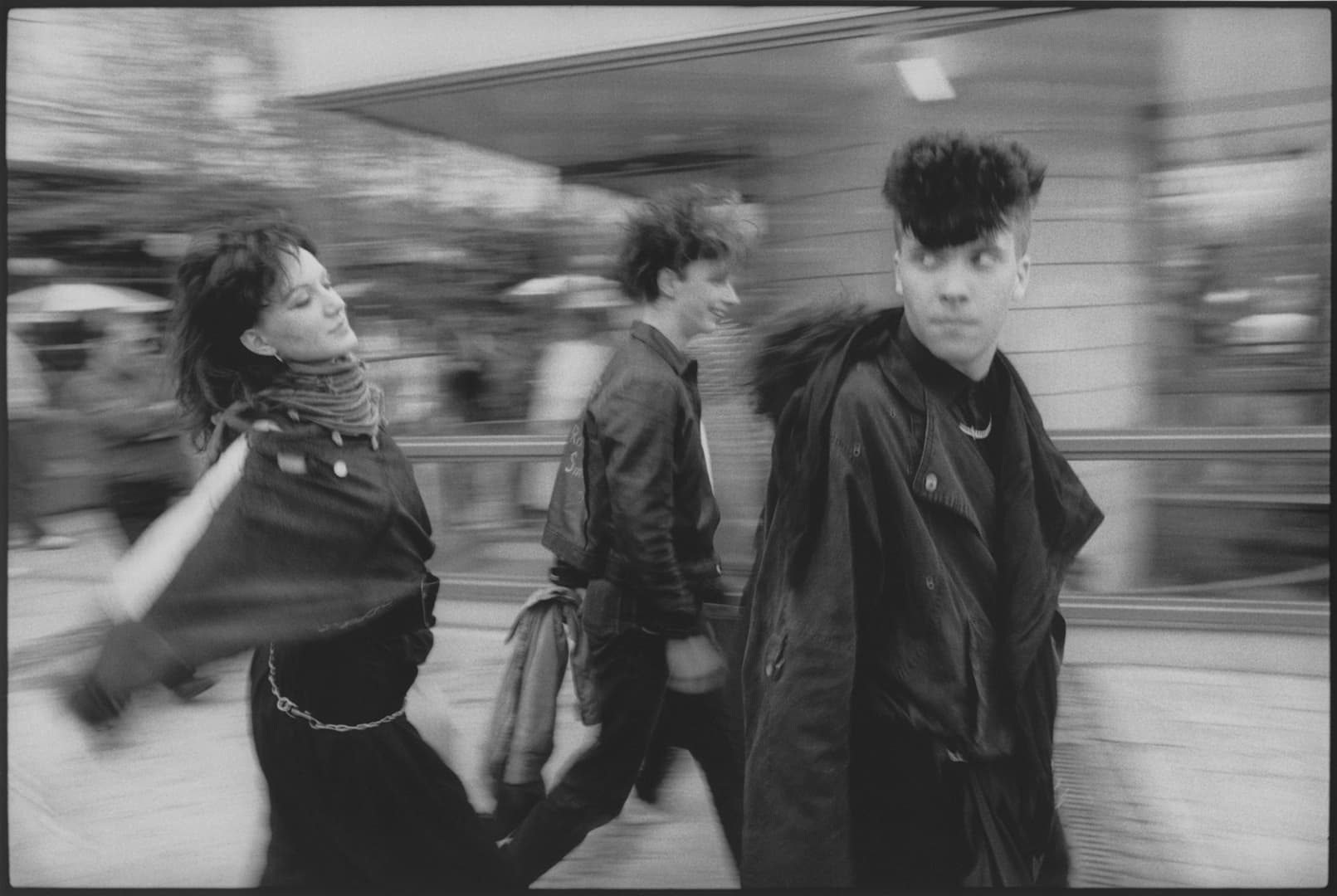
Alexanderplatz, Berlin-Mitte, 1988. (Photo by Harald Hauswald).
Yet despite the hostility, the community endured, bound by shared isolation and the determination to live authentically.
Schleim-Keim, one of the earliest and best-known East German punk bands, operated on the edge of legality. Originating from Erfurt, their raw songs were often recorded in secret and passed between friends like contraband.
Their reputation spread into West Germany, where the underground press embraced their authenticity and defiance.
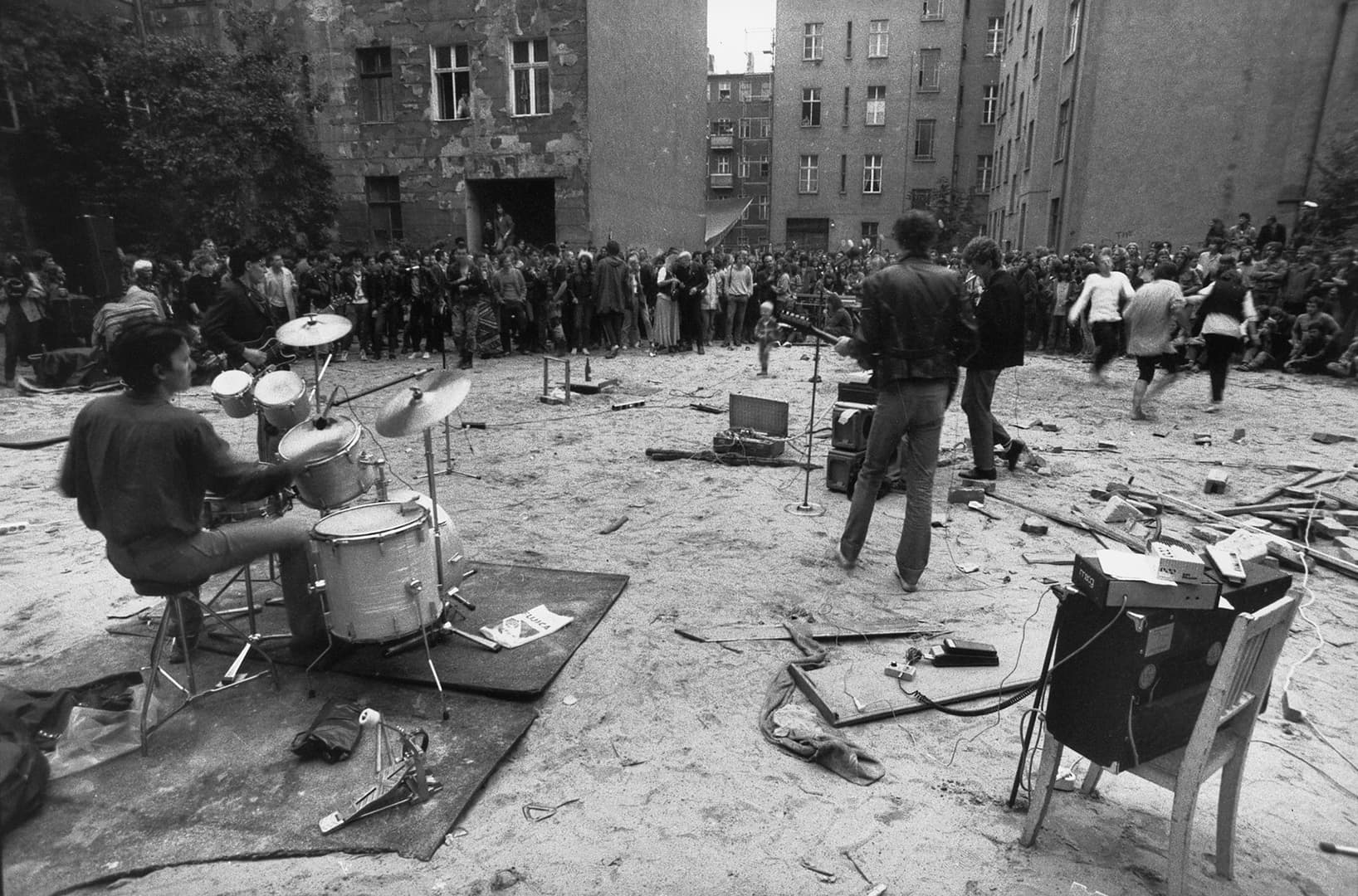
Backyard concert in the Schliemannstrasse with the band Rosa Extra, Berlin, 1982. (Photo by Harald Hauswald).
Later bands such as Feeling B and Die Skeptiker emerged from East Berlin, experimenting with more refined sounds and eventually gaining limited approval from cultural authorities.
Some groups obtained the so-called “amateur license,” a state permit that allowed them to perform publicly, though often under close observation.
Many punks saw these permissions as a compromise, a subtle attempt by the regime to co-opt a movement it could never fully control.
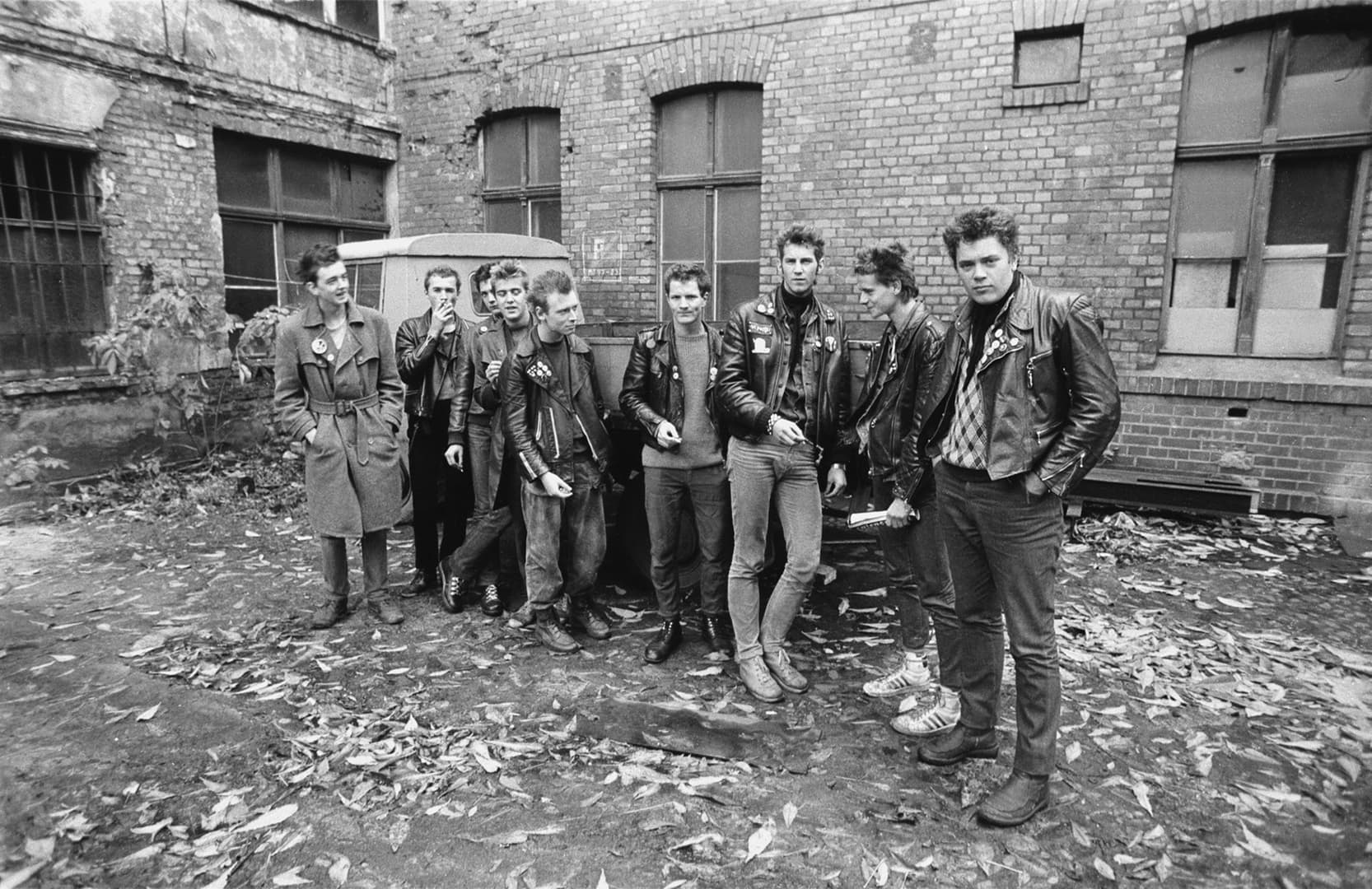
Early punks, Kastanienallee, Berlin, 1982. (Photo by Harald Hauswald).
The aesthetic language of East German punks was as radical as their music. Ripped clothes, safety pins, leather jackets, and dyed hair formed part of an identity that rejected socialist uniformity.
Their look symbolized individuality in a system built on sameness. Inspired by the raw energy of London and New York, they transformed these influences into something uniquely their own — creativity born from scarcity.
With limited access to Western fashion, many crafted their style from what they could find: repurposed military gear, homemade patches, and brightly colored hair dyes mixed in clandestine kitchen experiments.
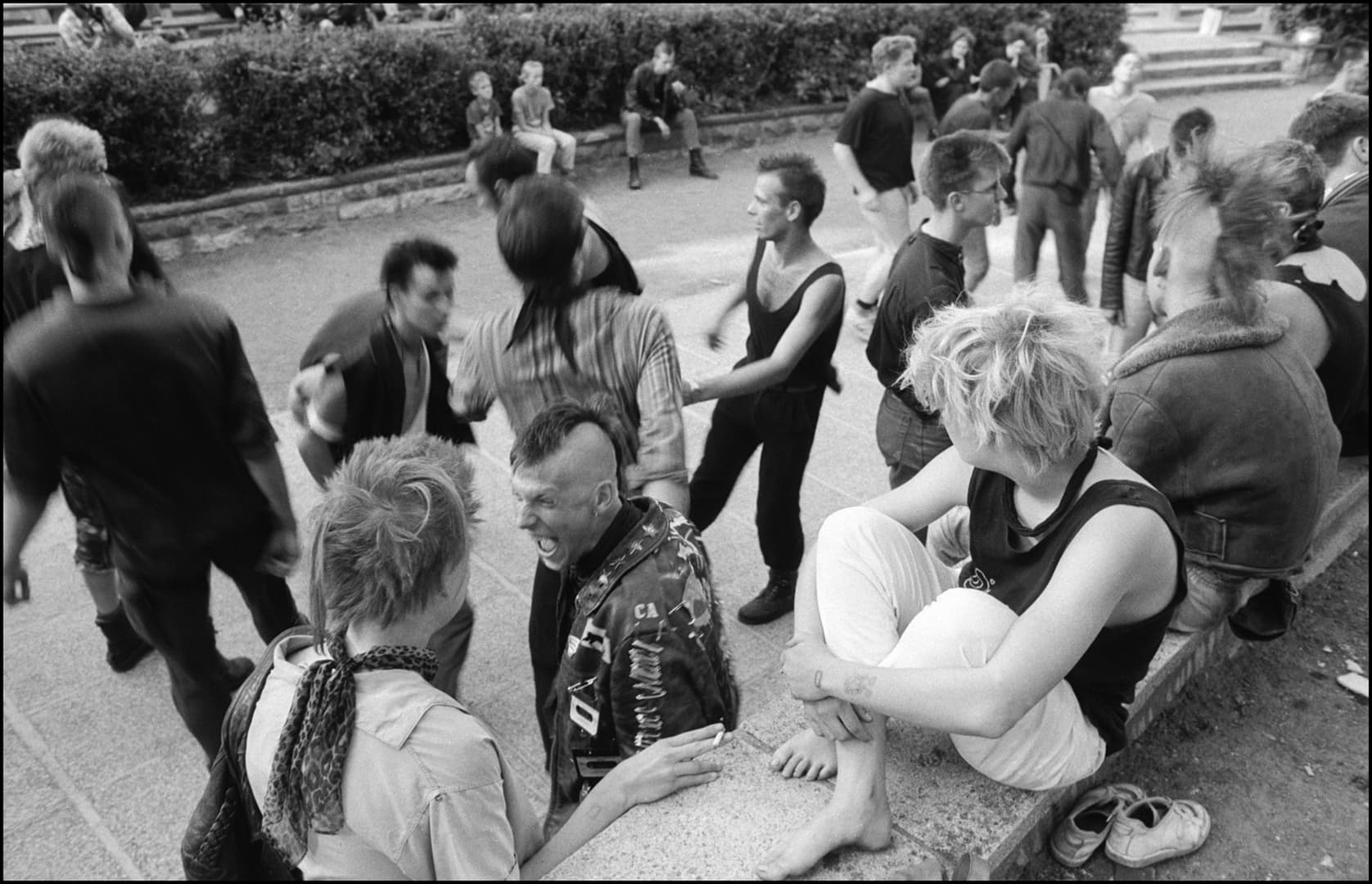
Rock concert at the open-air theatre, Berlin-Weissensee, 1990. (Photo by Harald Hauswald).
As the 1980s gave way to the final years of the GDR, the underground grew more visible. State repression, though still present, could not contain the cultural momentum building beneath the surface.
Punk offered a sense of community and truth in a society that prized control and conformity.
When the Berlin Wall finally fell in 1989, many of these artists and fans stepped out from the shadows to find the world they had imagined taking shape around them.
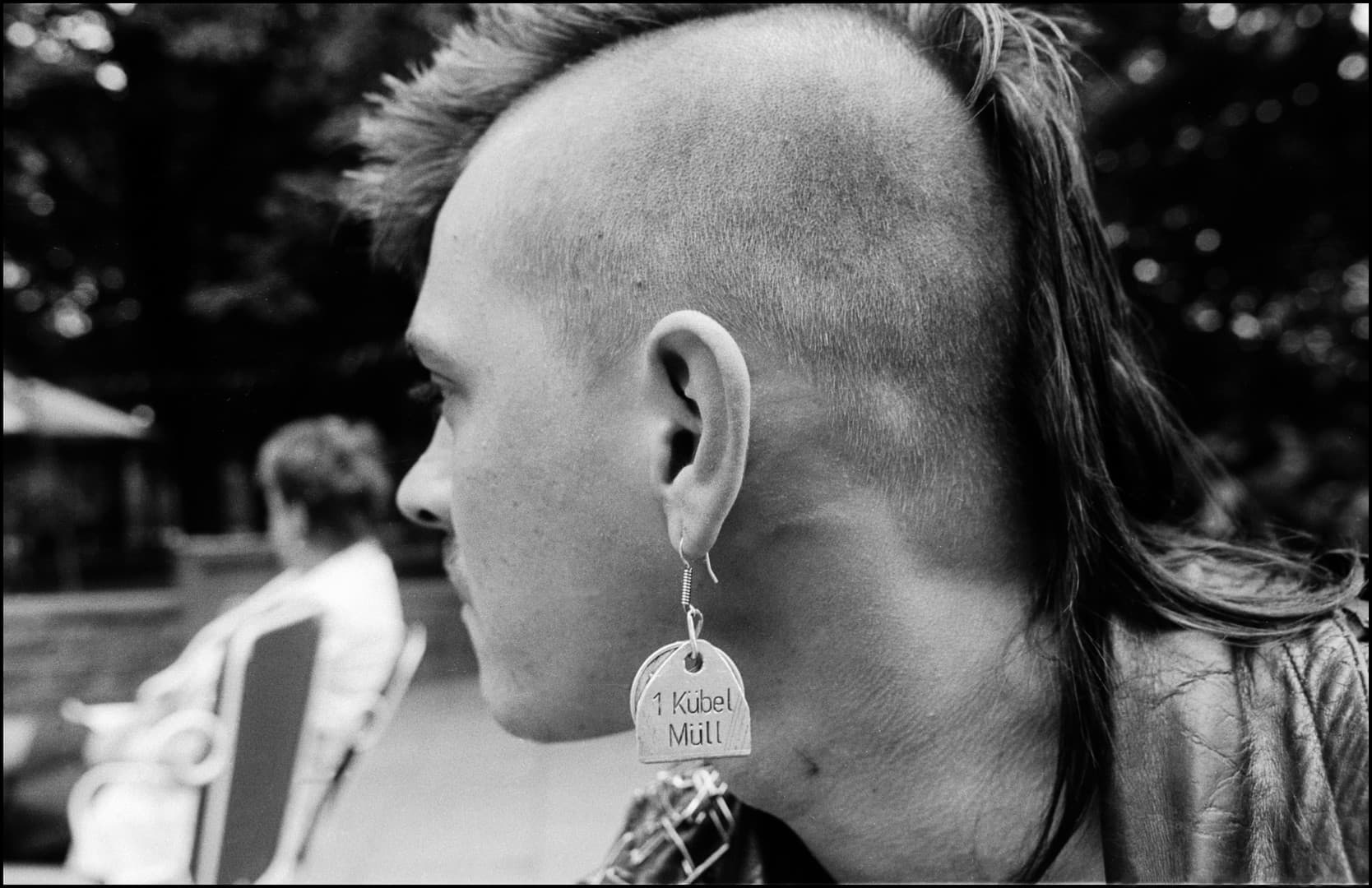
Weinbergsweg in Berlin-Mitte, 1988. (Photo by Harald Hauswald).
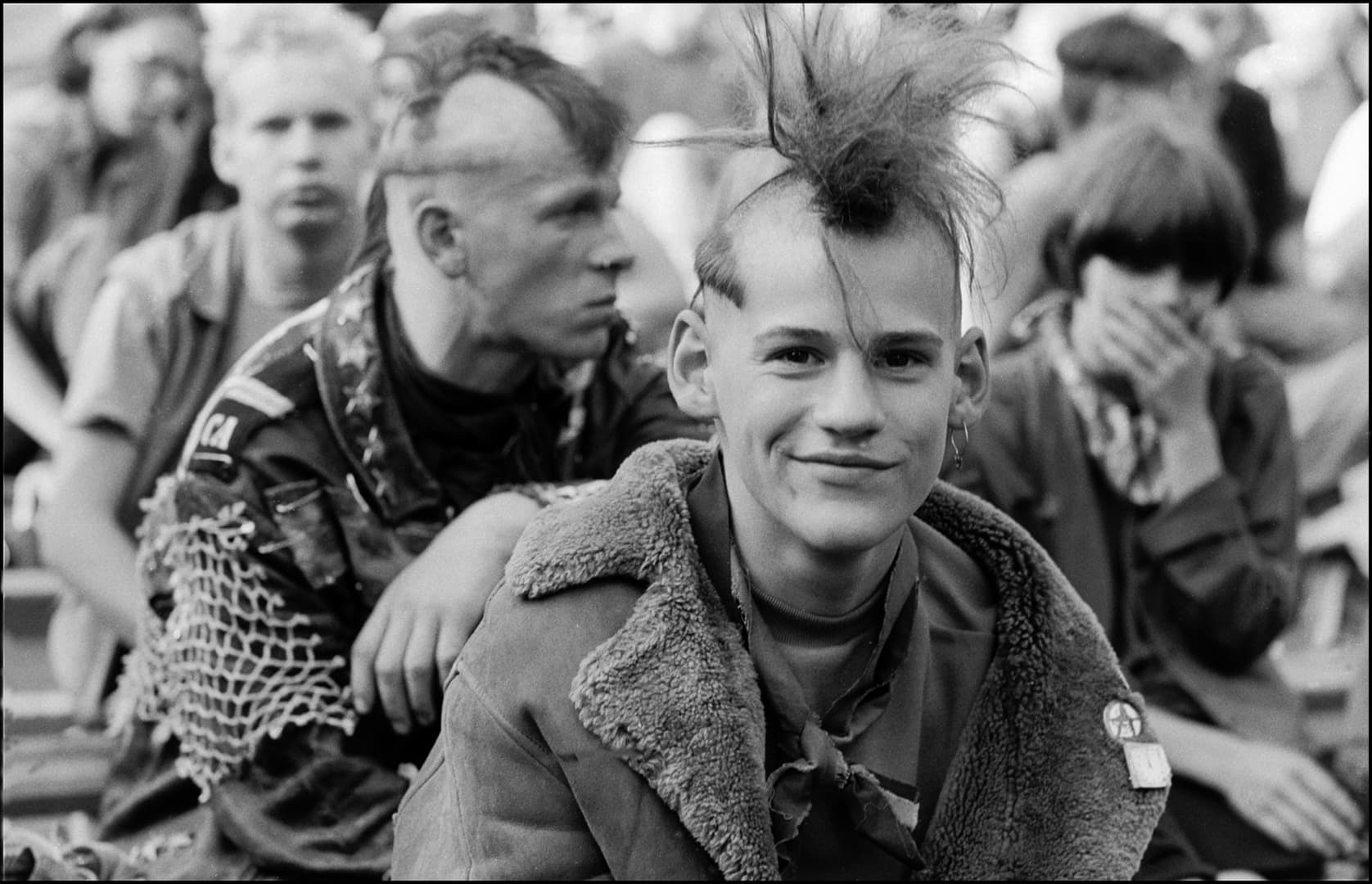
Rock concert at the open-air theater, Berlin-Weissensee, 1990. (Photo by Harald Hauswald).
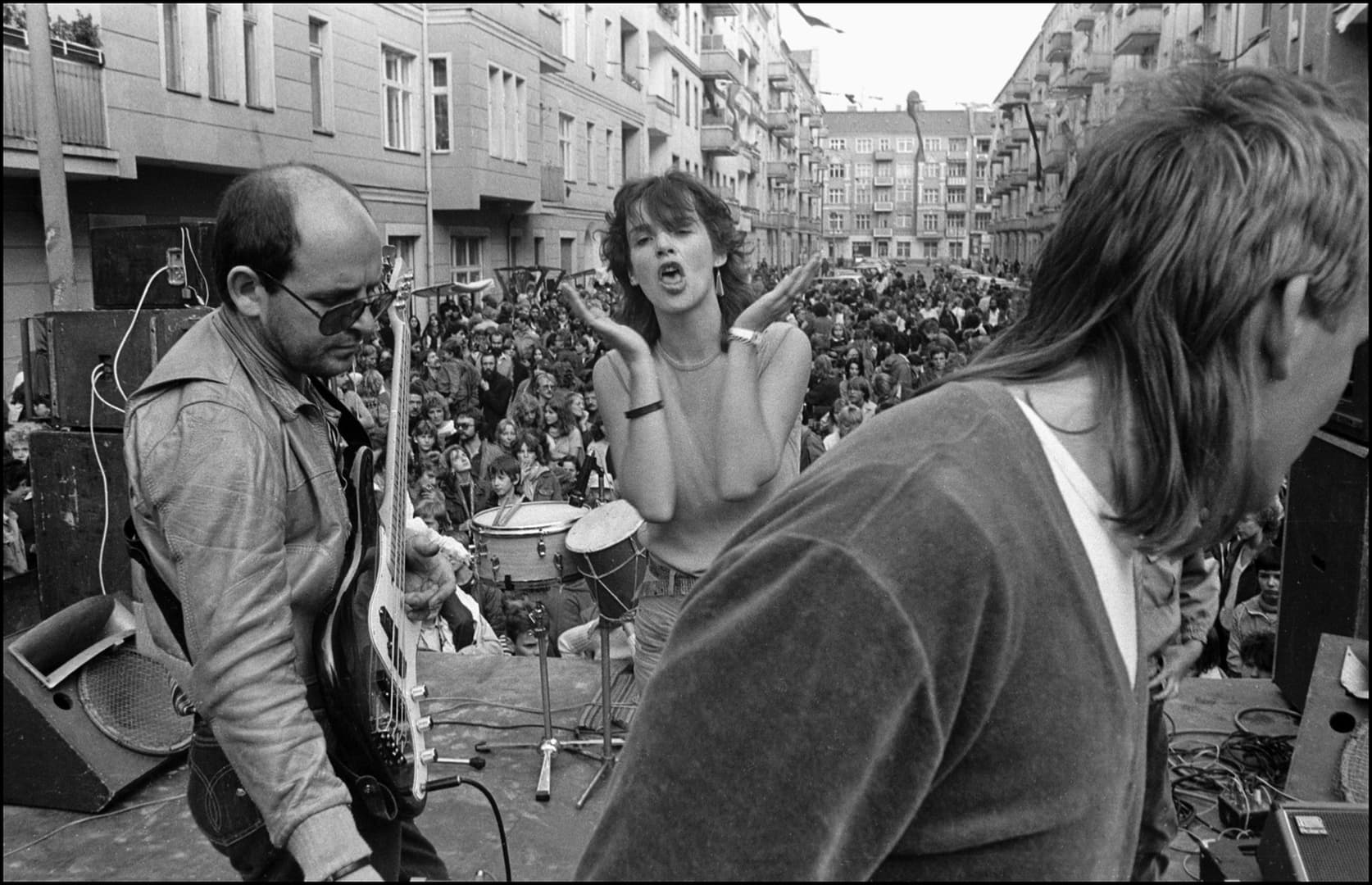
The band “itching”, street party in front of the youth club “impulse”, Berlin, 1981. (Photo by Harald Hauswald).
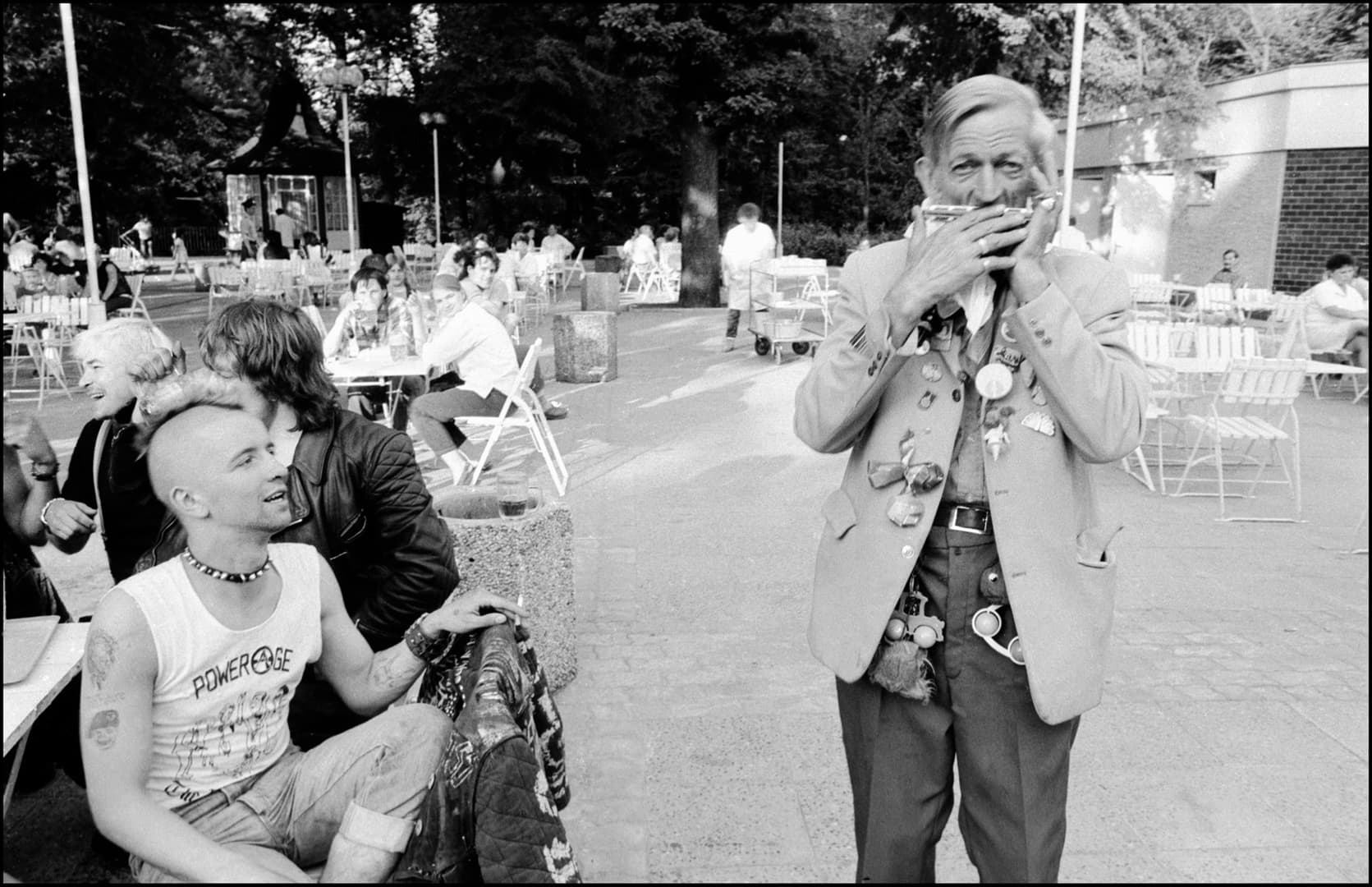
Kurt Wanski, In the zoo, Berlin-Friedrichsfelde, 1988. (Photo by Harald Hauswald).
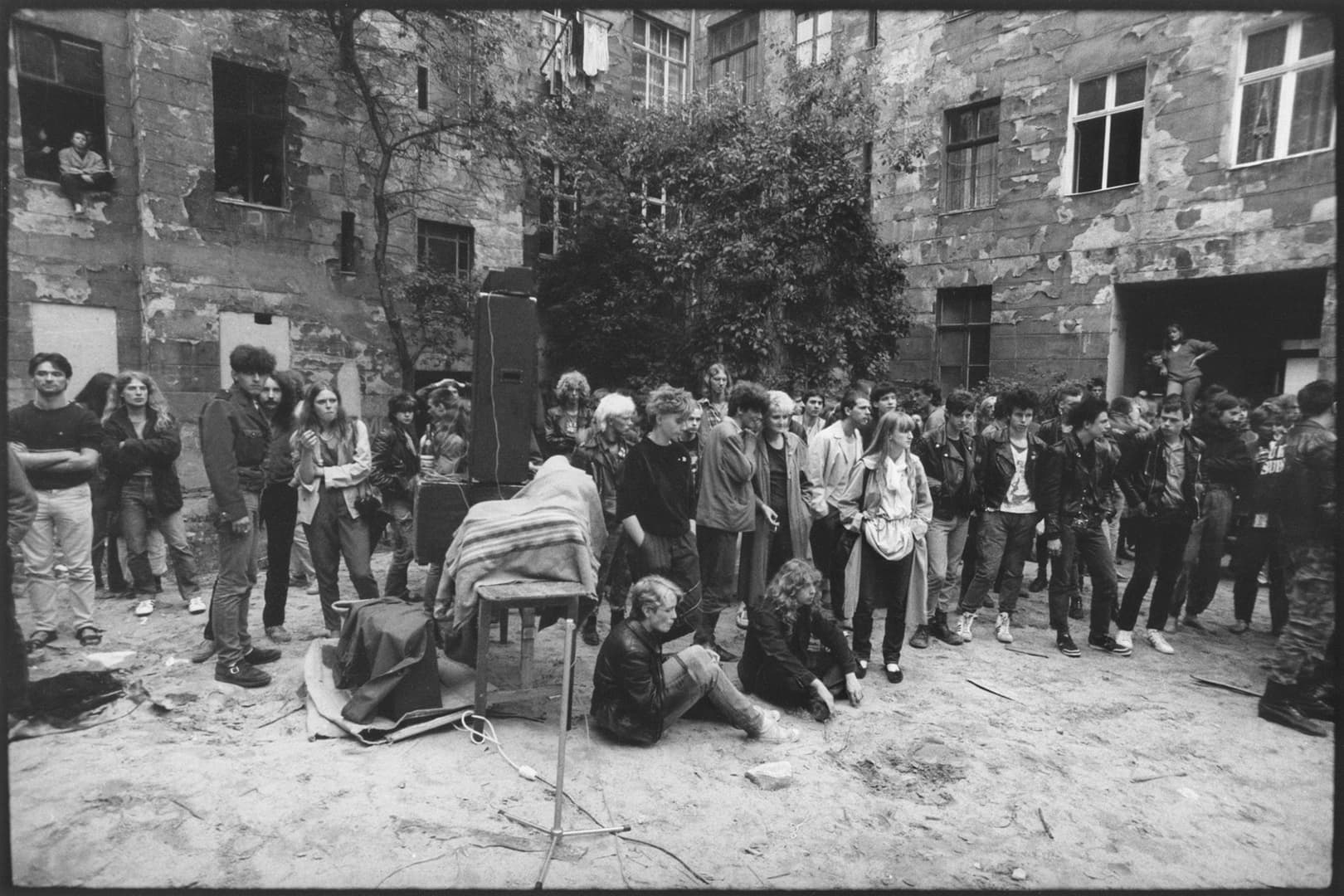
Backyard concert in the Schliemannstrasse with the band “Rosa Extra”, Berlin, 1985. (Photo by Harald Hauswald).
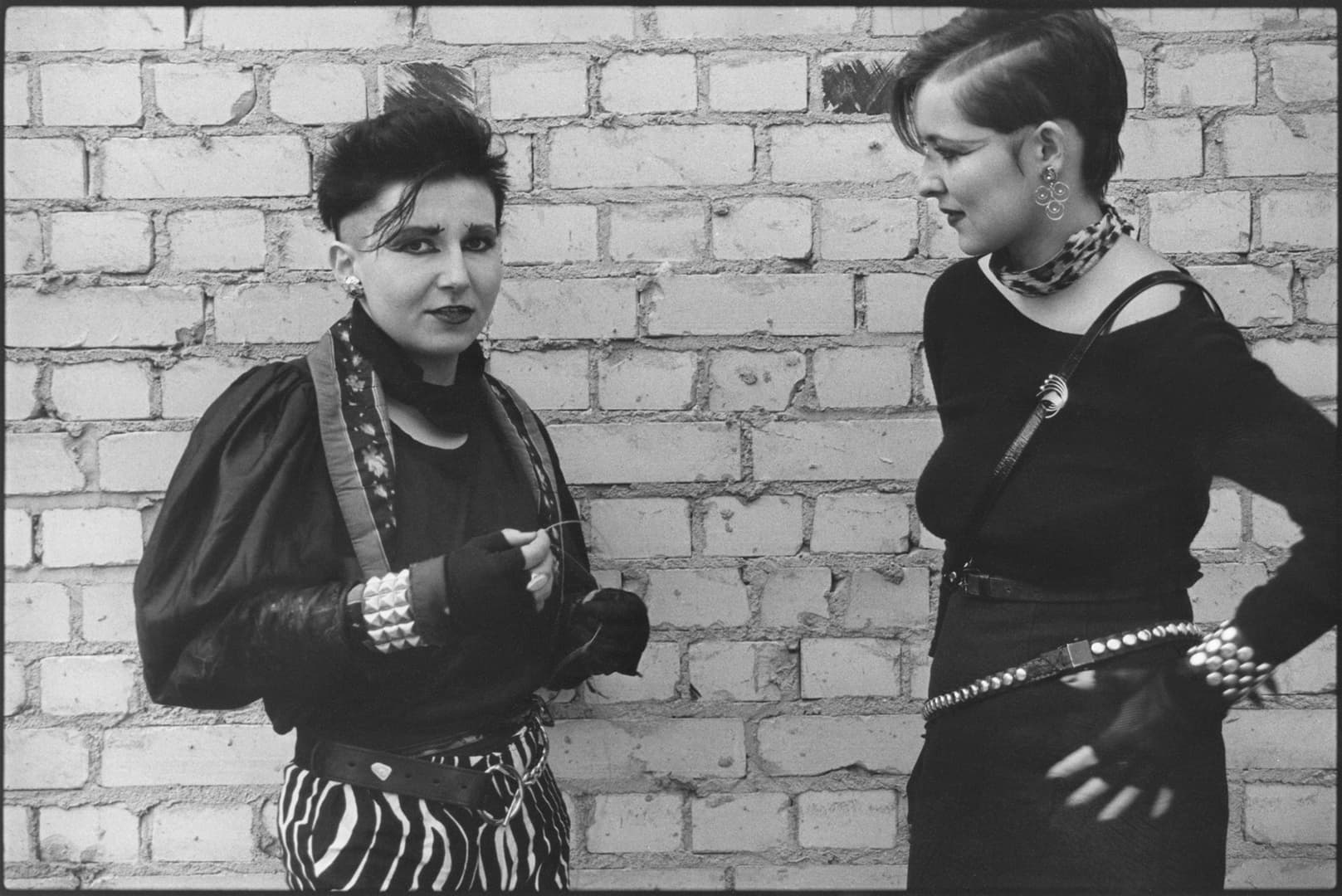
Hirschhof, Berlin, 1985. (Photo by Harald Hauswald).
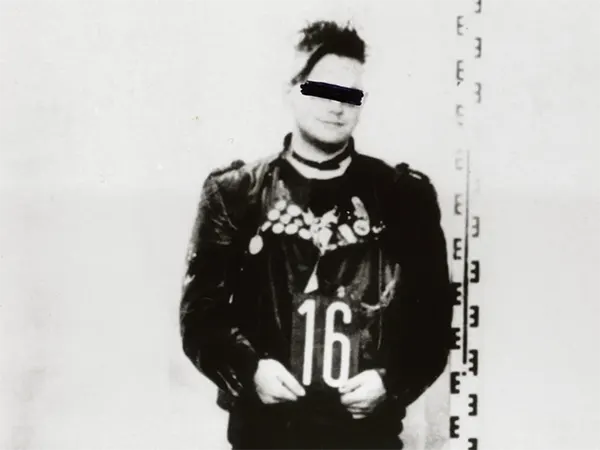
A young punk’s Stasi arrest photo. (Photo by SUBstitut Archiv).
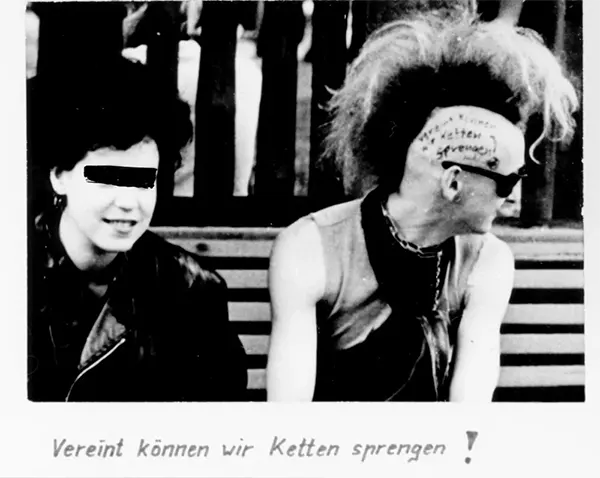
Stasi surveillance photos of Speiche, date unknown. The note reads “Together we can break chains.” (Photo by SUBstitut Archive).
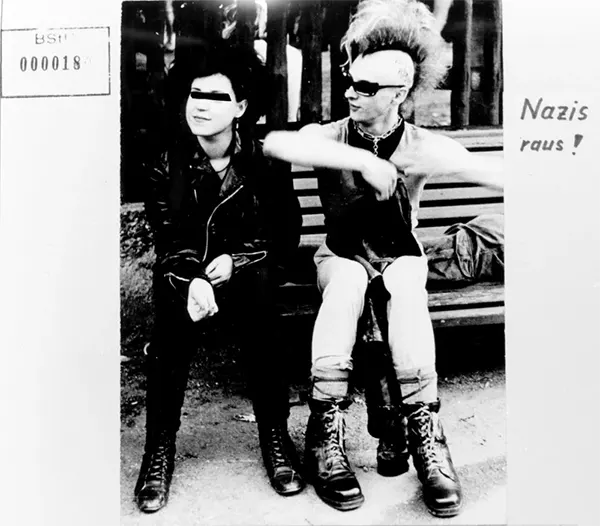
Stasi surveillance photos of Speiche, date unknown. The note reads “Nazis out!” (Photo by SUBstitut Archive).
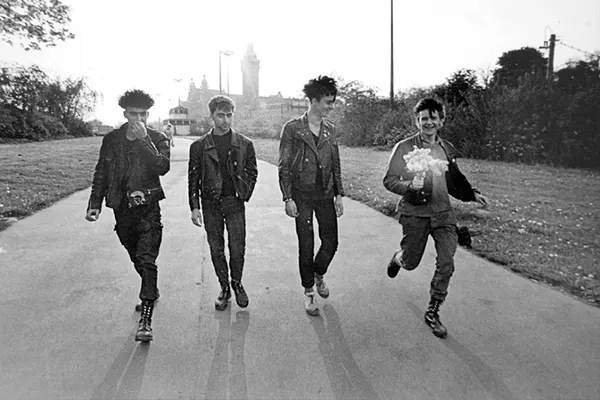
L’Attentat, approx. 1984. (Photo by Christiane Eisler/Transit Agency).
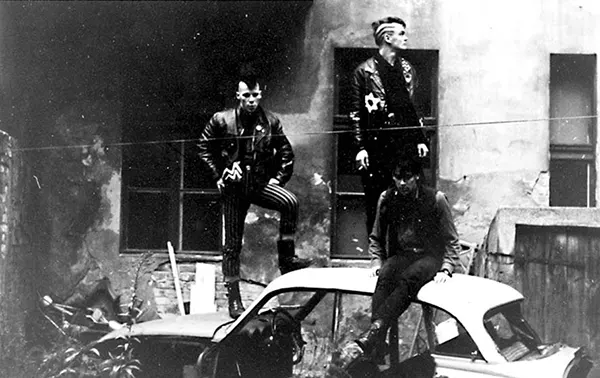
Antitrott (L-R: Reimo Adler, Thomas Kremer, Jorn Schulz), approx. 1986. (Photo by Jörn Schulz).
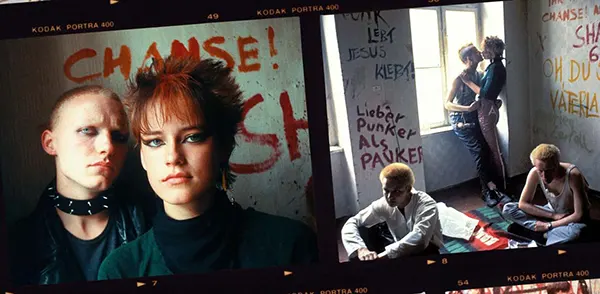
East Berlin punks squat in a graffiti-strewn apartment in 1982.
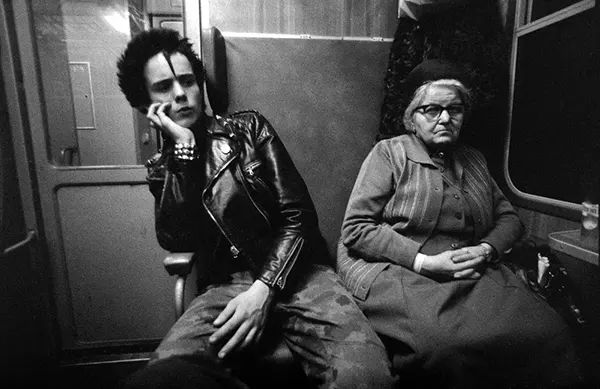
Ratte, bassist of HAU and L’Attentat, on a train to Berlin, 1983. (Photo by Christiane Eisler).
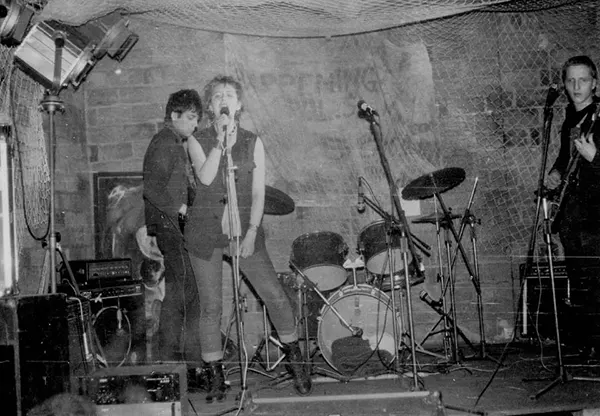
Wartburgs fur Walter (L to R: Jörne Schulz, Ina Pallas, Bernd Henning) in Poland, November 1987. (Photo by Jörne Schulz).
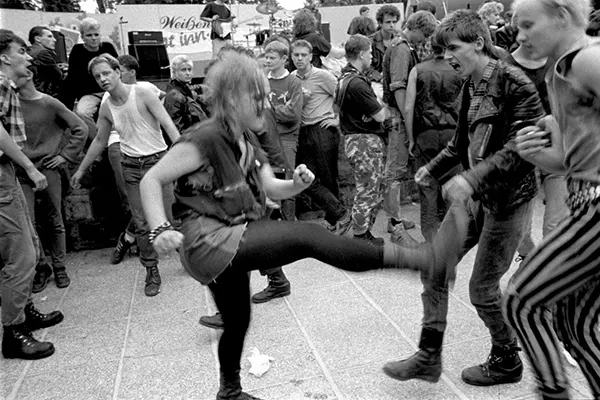
Punks at the officially licensed Beat Inn, in Berlin-Weissensee, 1988. (Photo by Volker Döring).
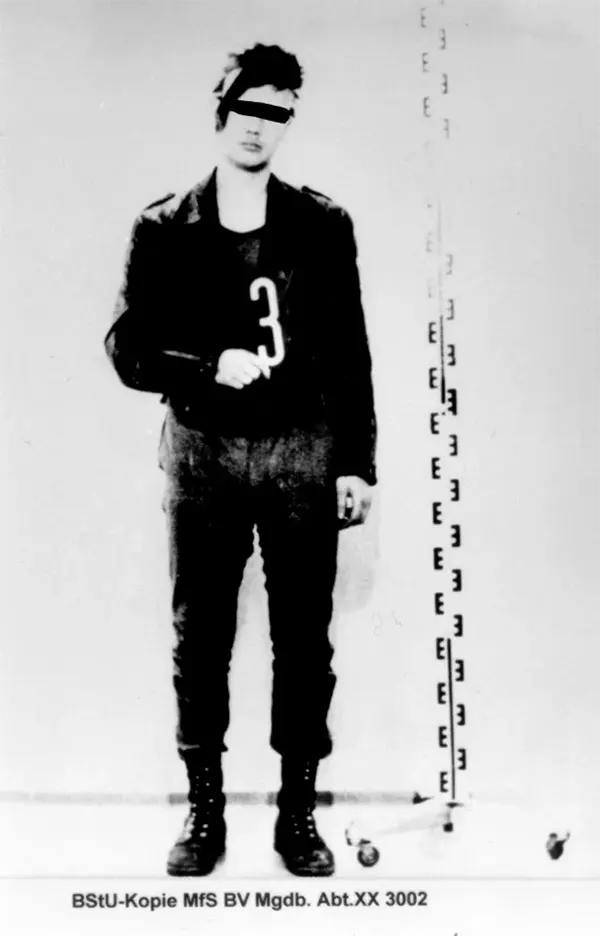
Police mugshots of East German punks.
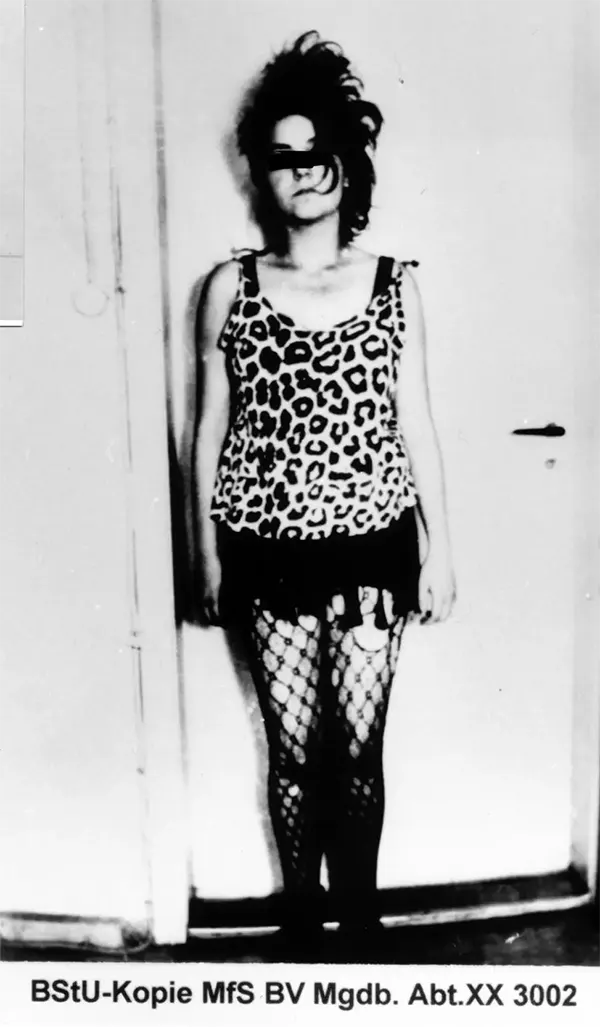
Police mugshots of East German punks.
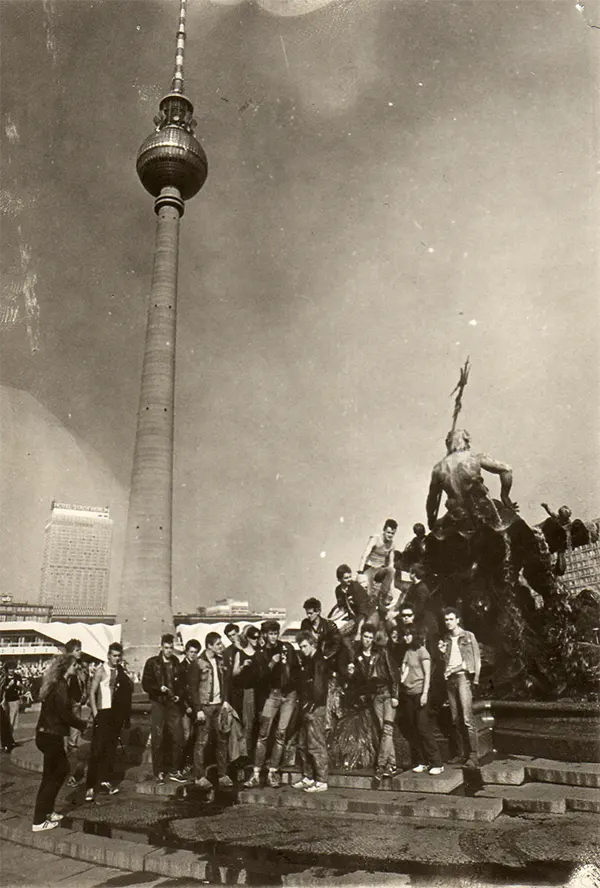
Punks gather on Alexanderplatz in East Berlin, 1981. (Photo by SUBstitut Archiv).
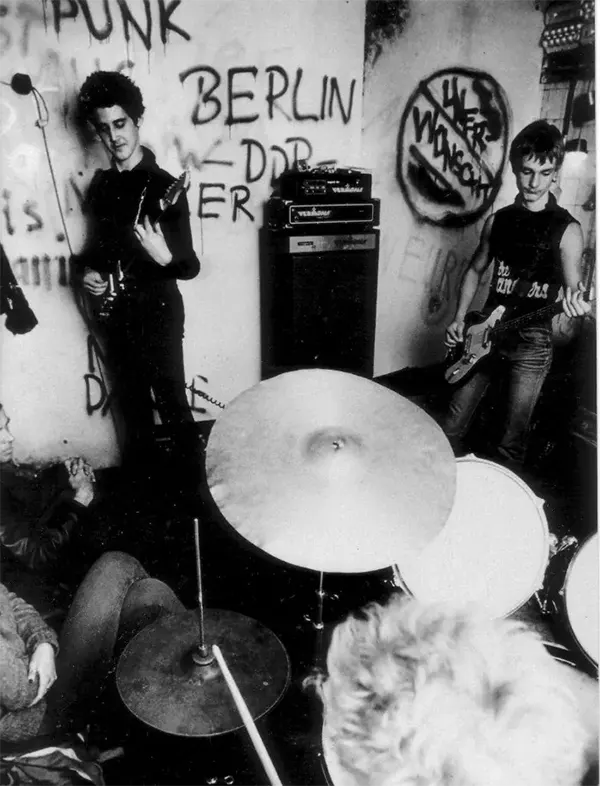
Kaiser (L) and Lade (drums) rehearsing, approx. 1981. (Photo by Nikolaus Becker/Nikolaus Becker Fotografie).
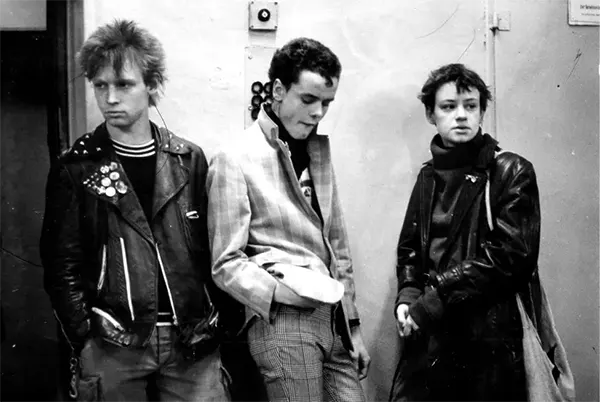
Keule, Colonel, and Esther Friedemann, approx. 1982. (Photo by Helga Paris Archive).
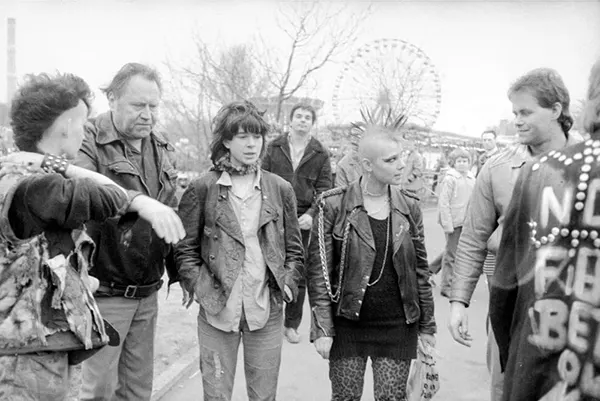
Mita (mid-left) and Jana (mid-right) of Namenlos, approx.1983. (Photo by Christiane Eisler/Transit Agency).
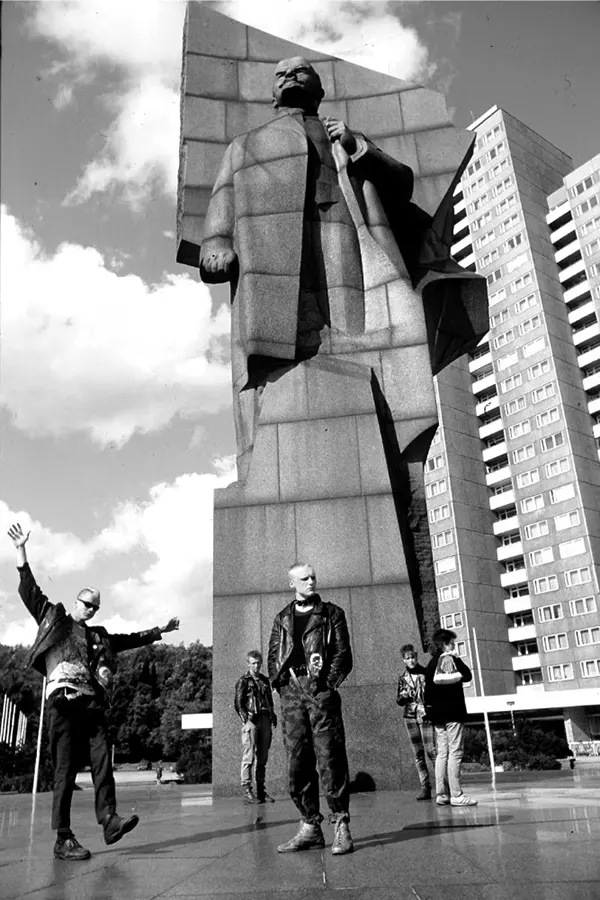
East Berlin punks on Lenin Platz, in Friedrichshain, approx. 1982. (Photo by Ilse Ruppert).
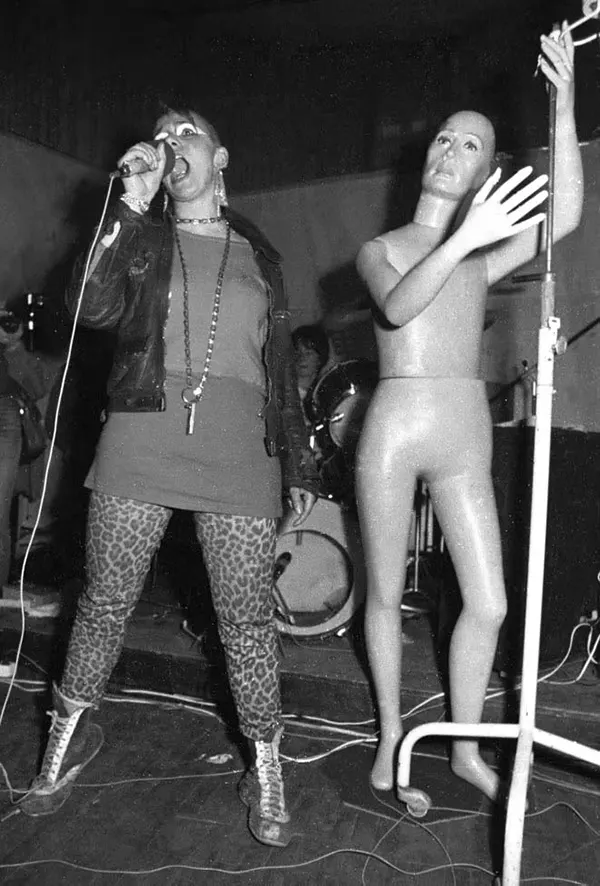
Jana Schlosser performing with Namenlos at Christus Church in Halle, 1983. (Photo by Christiane Eisler).
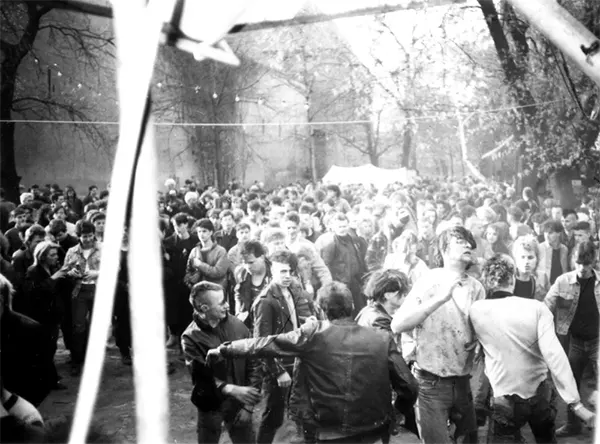
Punk festival at Erloser Church, April 1988. (Photo by SUBstitut Archive).
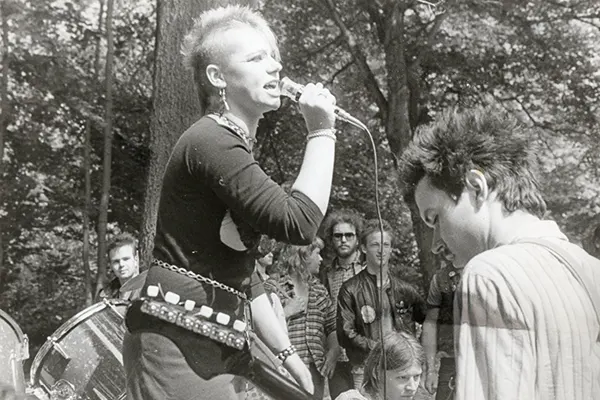
Singer Jana Schlosser and guitarist A-Micha of East German punk band Namenlos playing on the grounds of St. Michaelis Church in Karl-Marx-Stadt (now Chemnitz) in 1983. (Photo courtesy SUBstitut Archiv).
(Photo credit: Harald Hauswald / dazeddigital.com / Wikimedia Commons / Flickr).