
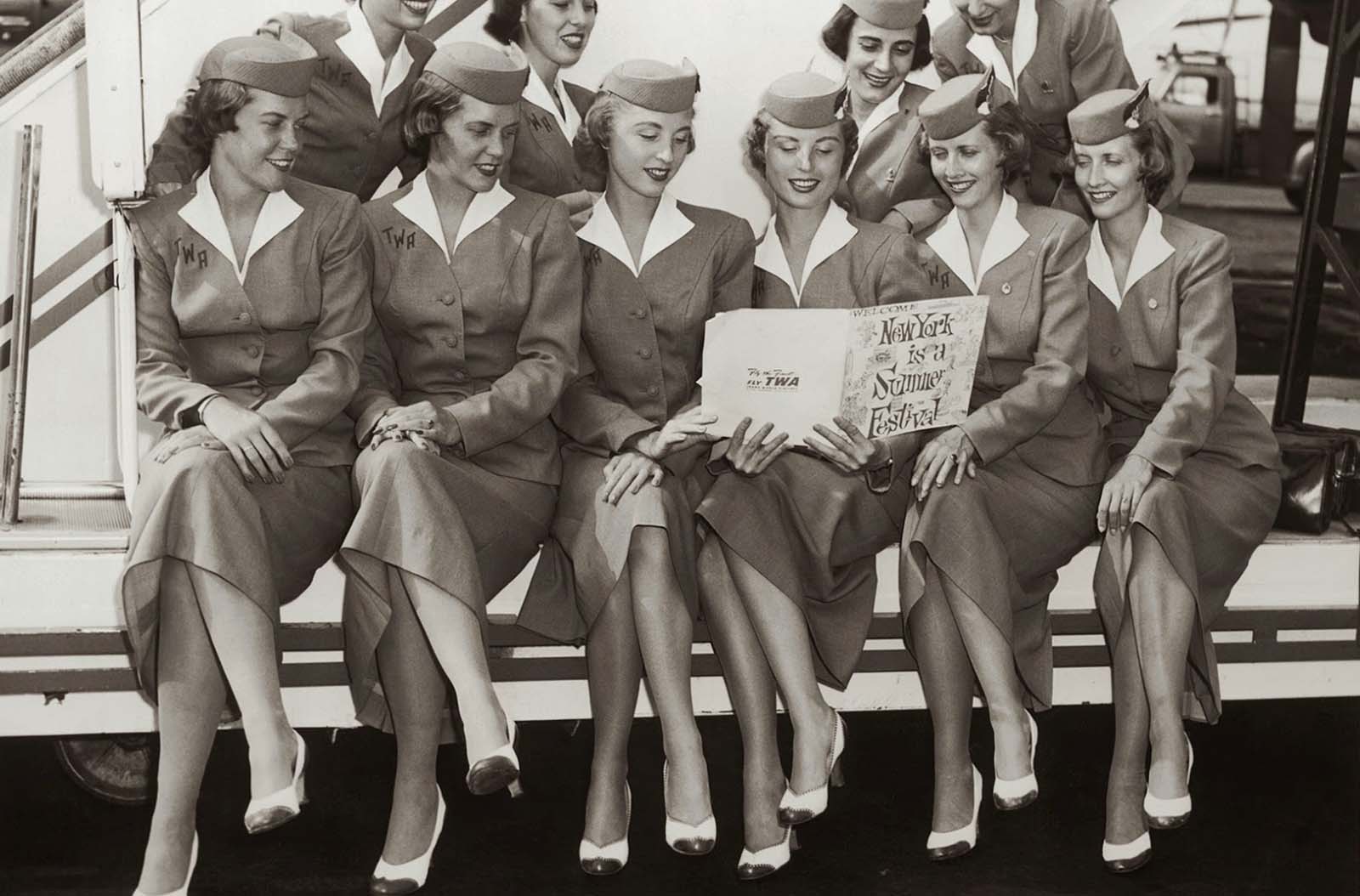
Air travel was once an experience shaped as much by style as it was by innovation, and few elements captured that spirit more vividly than the uniforms worn by early flight attendants.
In an era when flying still felt unfamiliar to many Americans, presentation mattered.
Airlines understood that the right look could reassure nervous passengers while also projecting a sense of modernity, elegance, and trust.
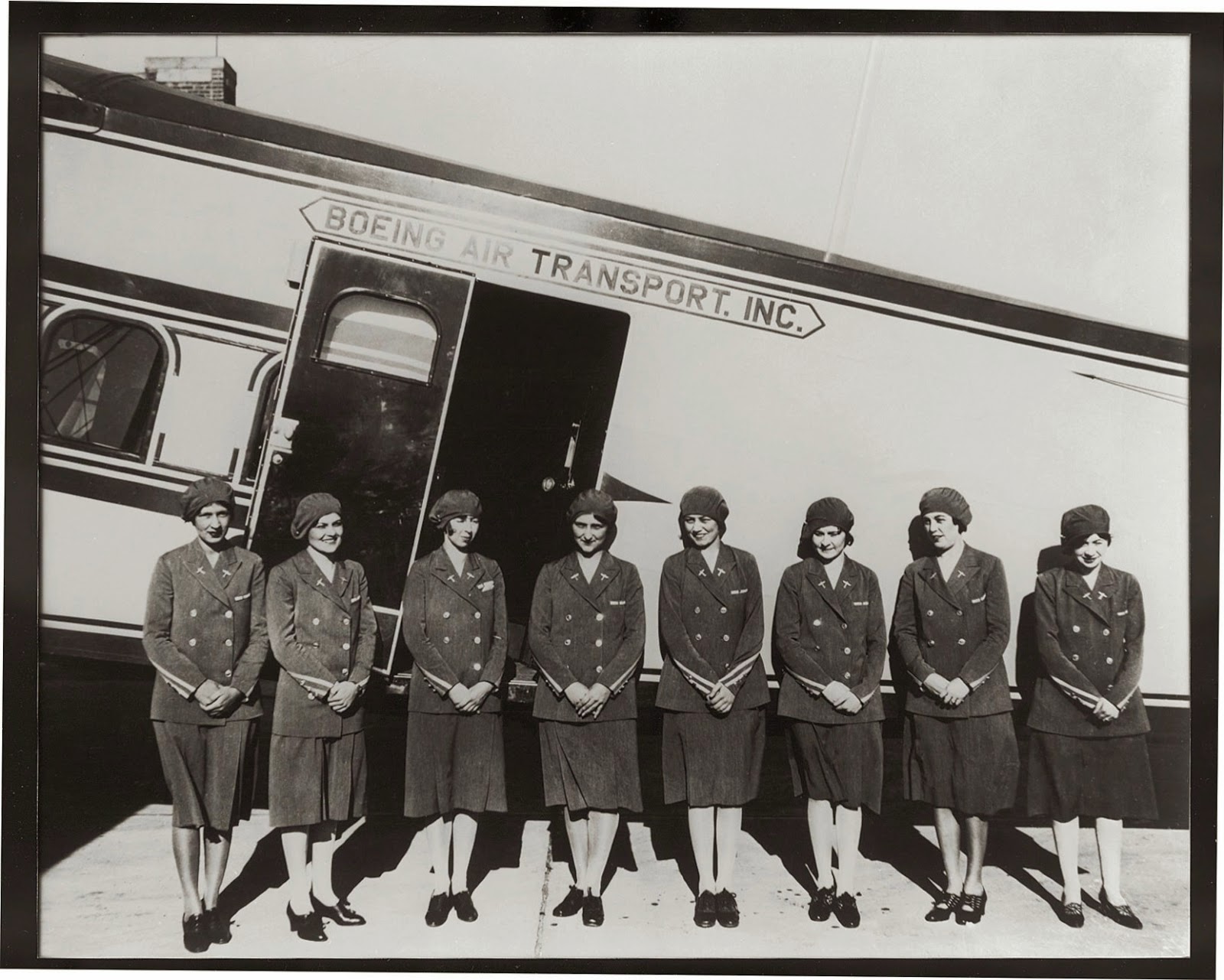
The airline industry’s first stewardesses ready for inspection for Boeing Air Transport, 1930.
When United Airlines hired Ellen Church in 1930 as the world’s first flight attendant, the role was almost entirely conceived around reassurance.
Early air travel was a nerve-wracking proposition for most passengers , the planes were loud, the rides bumpy, and the idea of hurtling through the sky in a metal tube still felt experimental to many.
Airlines understood that the people tending to their passengers needed to project calm authority. The solution, borrowed directly from hospitals, was the nurse’s uniform.
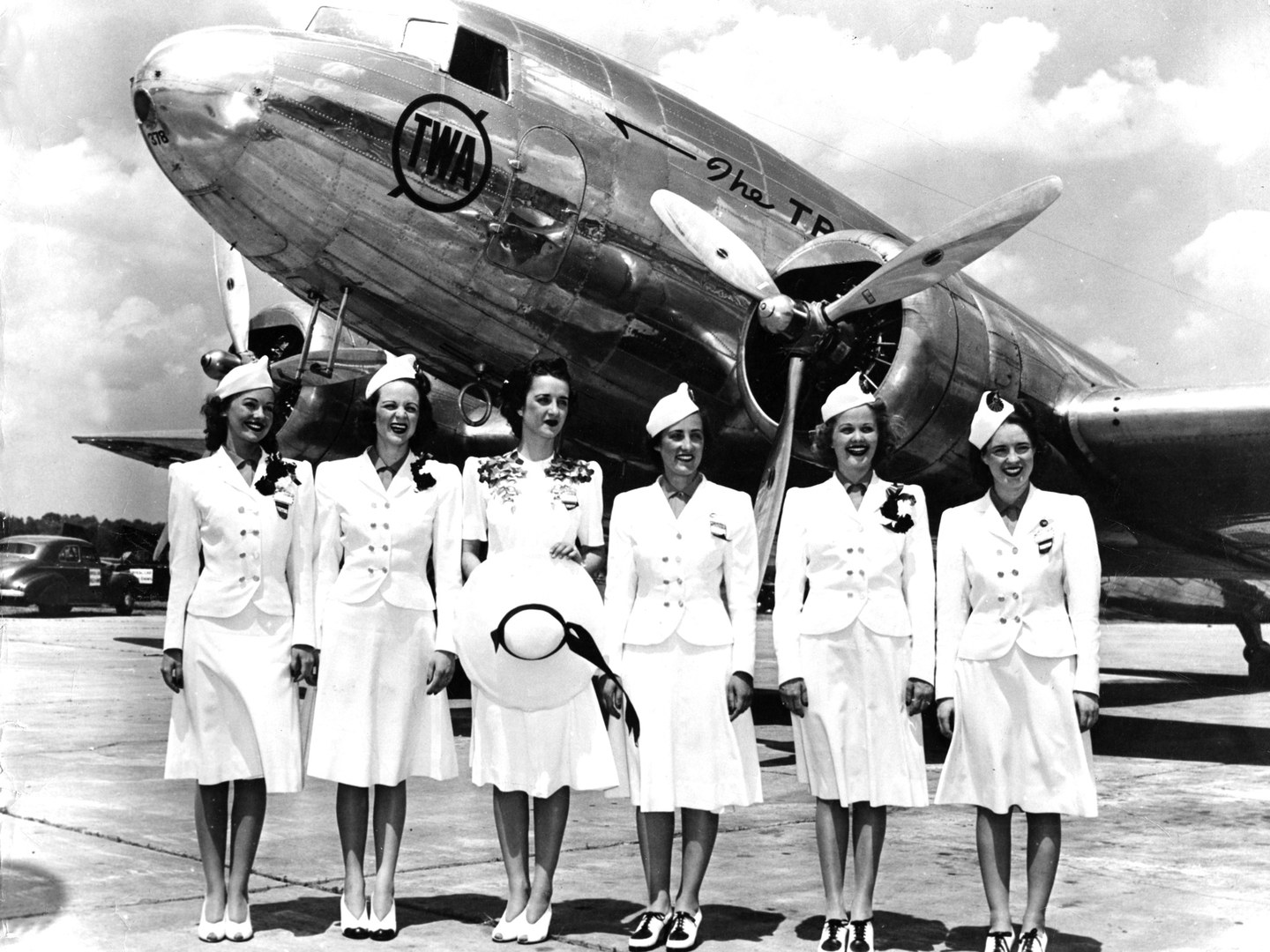
Transcontinental & Western Air (TWA) uniforms, 1939.
Church herself was a registered nurse, and the early stewardess outfits were designed to echo that professional credibility, dark, structured, and unmistakably clinical in their aesthetic. The message was simple: trained professionals are looking after you.
Through the late 1930s and into the early 1940s, American carriers including TWA and American Airlines refined their cabin crew uniforms while largely keeping that functional, authoritative spirit intact.
Military-influenced tailoring became increasingly common, with structured jackets, matching skirts, and fitted caps lending the look a sense of discipline and order.
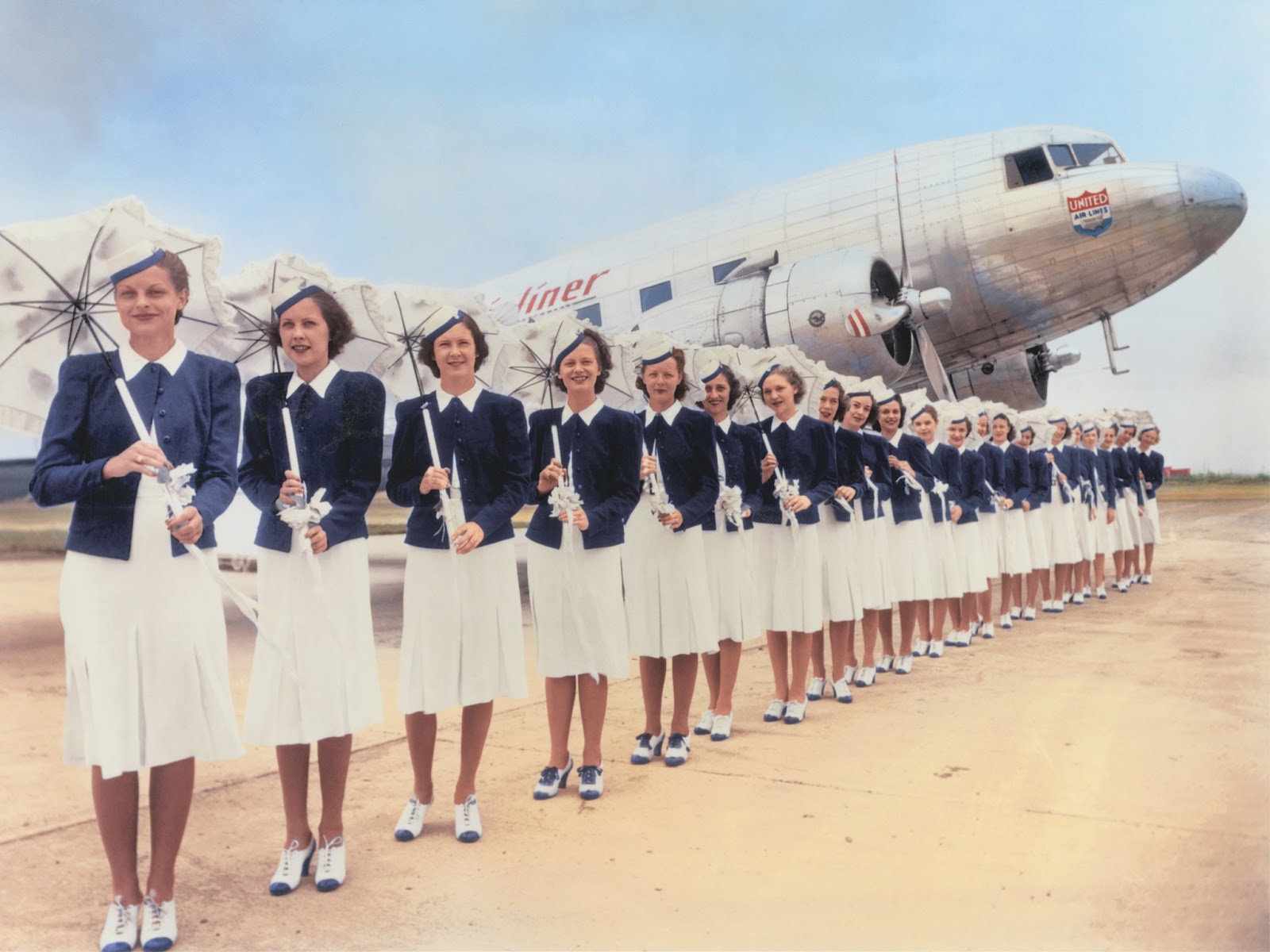
United Airlines uniforms, 1939.
The war years reinforced this aesthetic further, as fabric restrictions and a nationwide culture of practicality kept fashion ambitions grounded.
Stewardesses during this period dressed less like fashion icons and more like officers, which, in many respects, was precisely the point.
The postwar years brought a dramatic shift. As the 1950s unfolded and commercial aviation expanded into a genuine mass-market industry, airlines began competing aggressively for passengers.
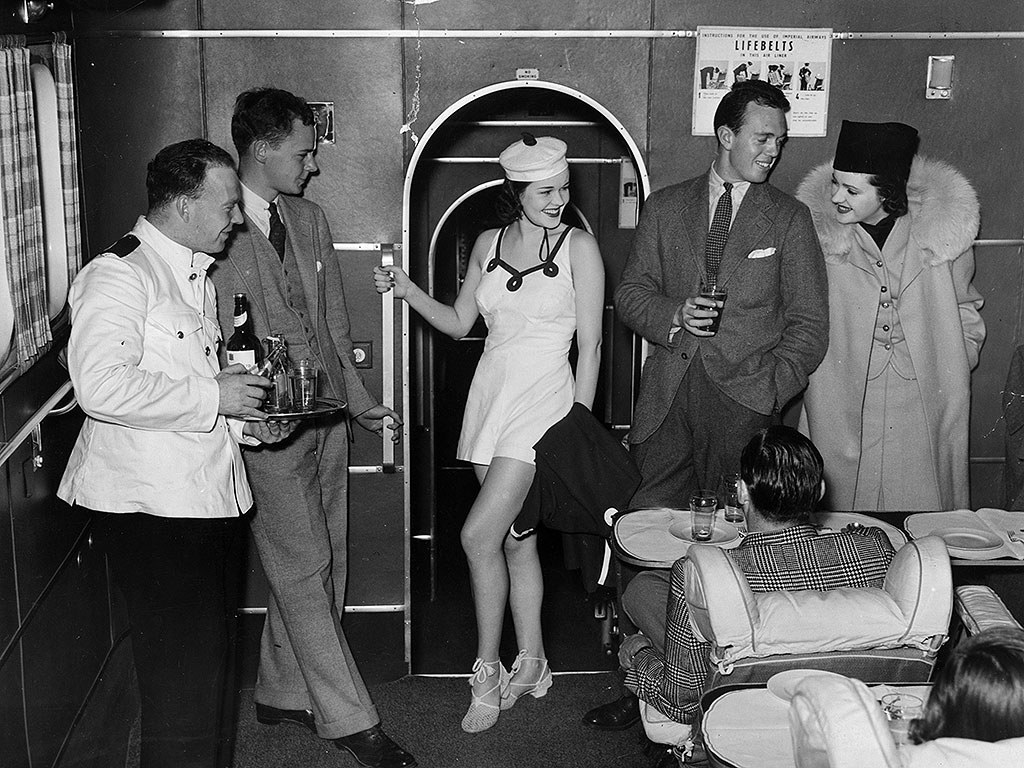
Stewards serving passengers on board an airplane, circa 1945.
Comfort, novelty, and glamour became selling points, and the uniforms worn by cabin crew evolved accordingly. The structured wartime silhouette gave way to softer lines, feminine cuts, and a more polished elegance.
Pillbox hats became a signature accessory, coordinating gloves appeared, and color palettes grew warmer and more inviting.
Carriers began commissioning their uniforms from established fashion houses rather than general tailors, treating their stewardesses as walking advertisements for the excitement and sophistication of air travel.
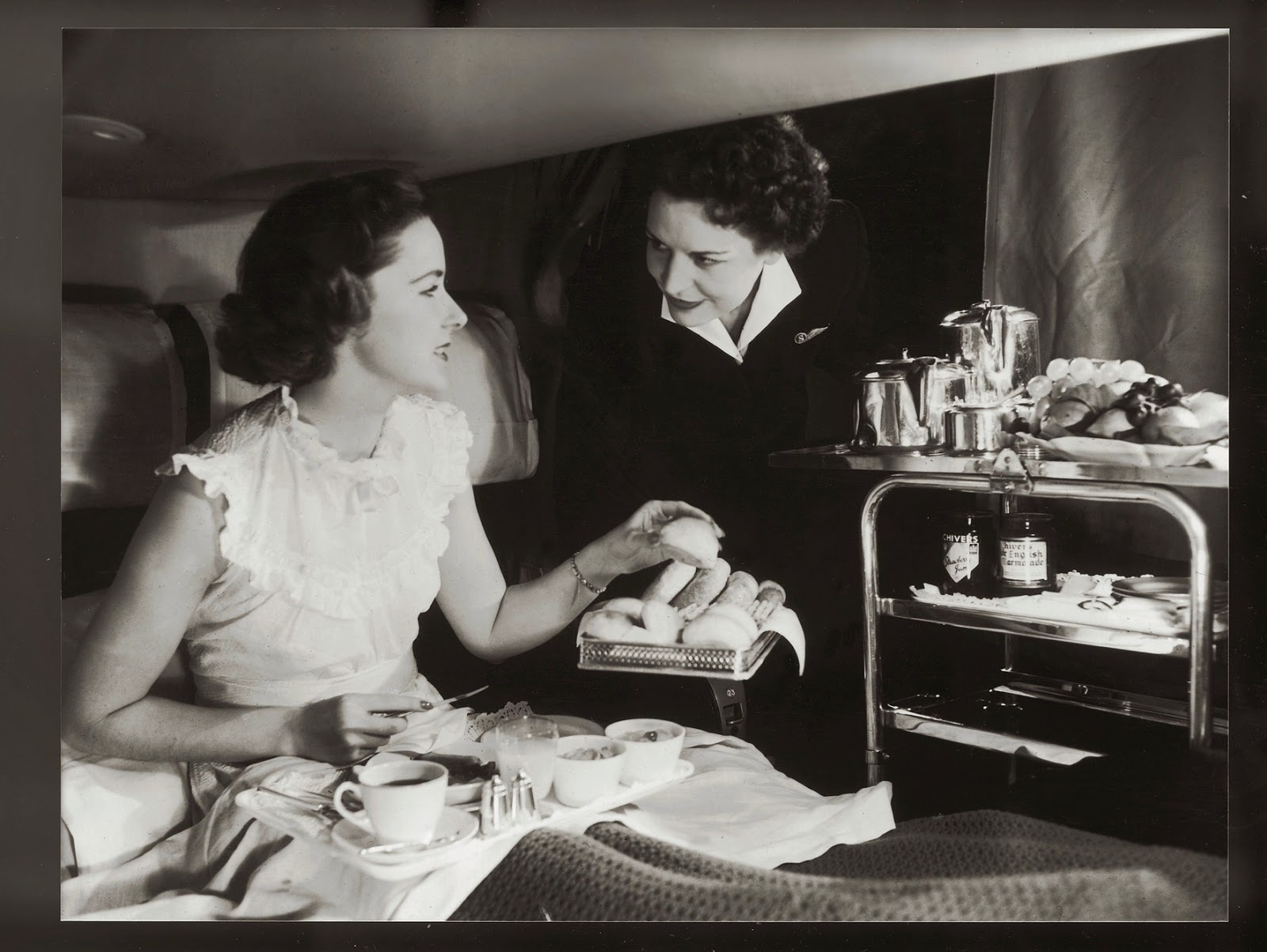
BOAC breakfast crockery, including egg cup, 1940s.
By the early 1960s, that approach had become standard across the major American airlines. United, Pan Am, Eastern, and TWA each developed a distinct visual identity for their cabin crews, and the competition extended to the names attached to those designs.
Cristobal Balenciaga, Emilio Pucci, and Edith Head were among the prominent designers brought in to shape how stewardesses looked at 30,000 feet.
Overseas, carriers like Air France and British Overseas Airways Corporation pursued similar strategies, associating their brands with European couture to appeal to transatlantic travelers.
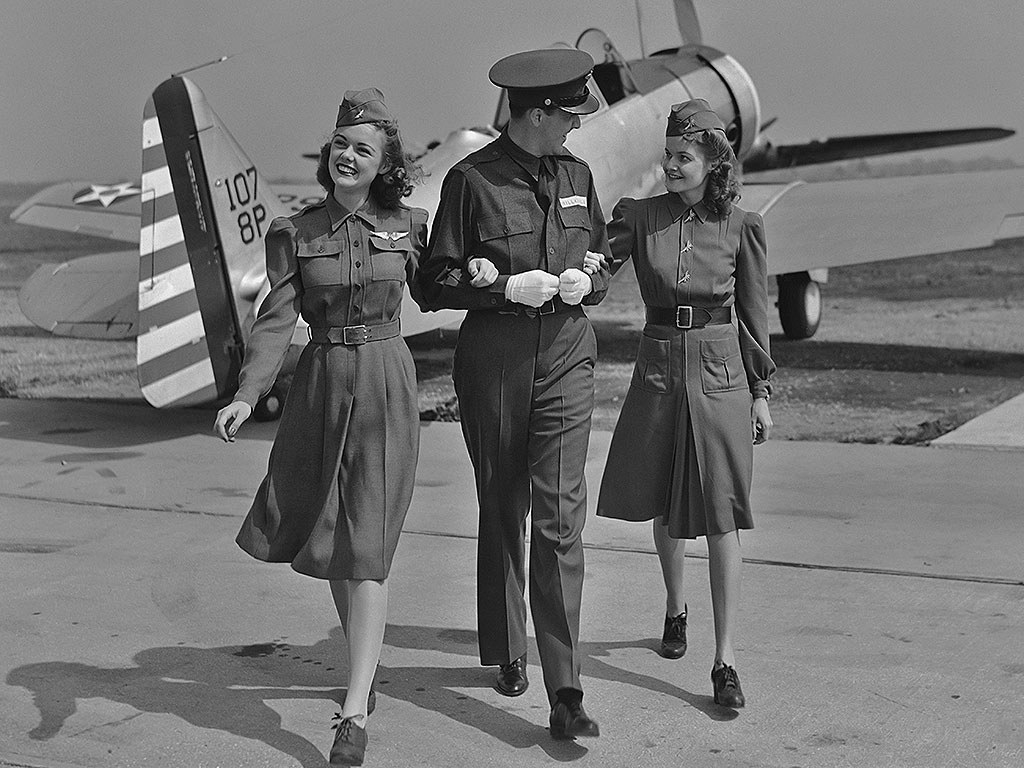
A male flight attendant walks with his arms linked with two female flight attendants in front of a small plane in the 1940s.
The 1960s ultimately marked the apex of flight attendant uniform culture.
The decade’s broader fashion revolution, mini skirts, bold geometry, vivid color, and a general rejection of postwar conservatism, translated directly into cabin wear.
Airlines began embracing bright oranges, electric blues, and sharp graphic patterns that would have looked wildly out of place a decade earlier.
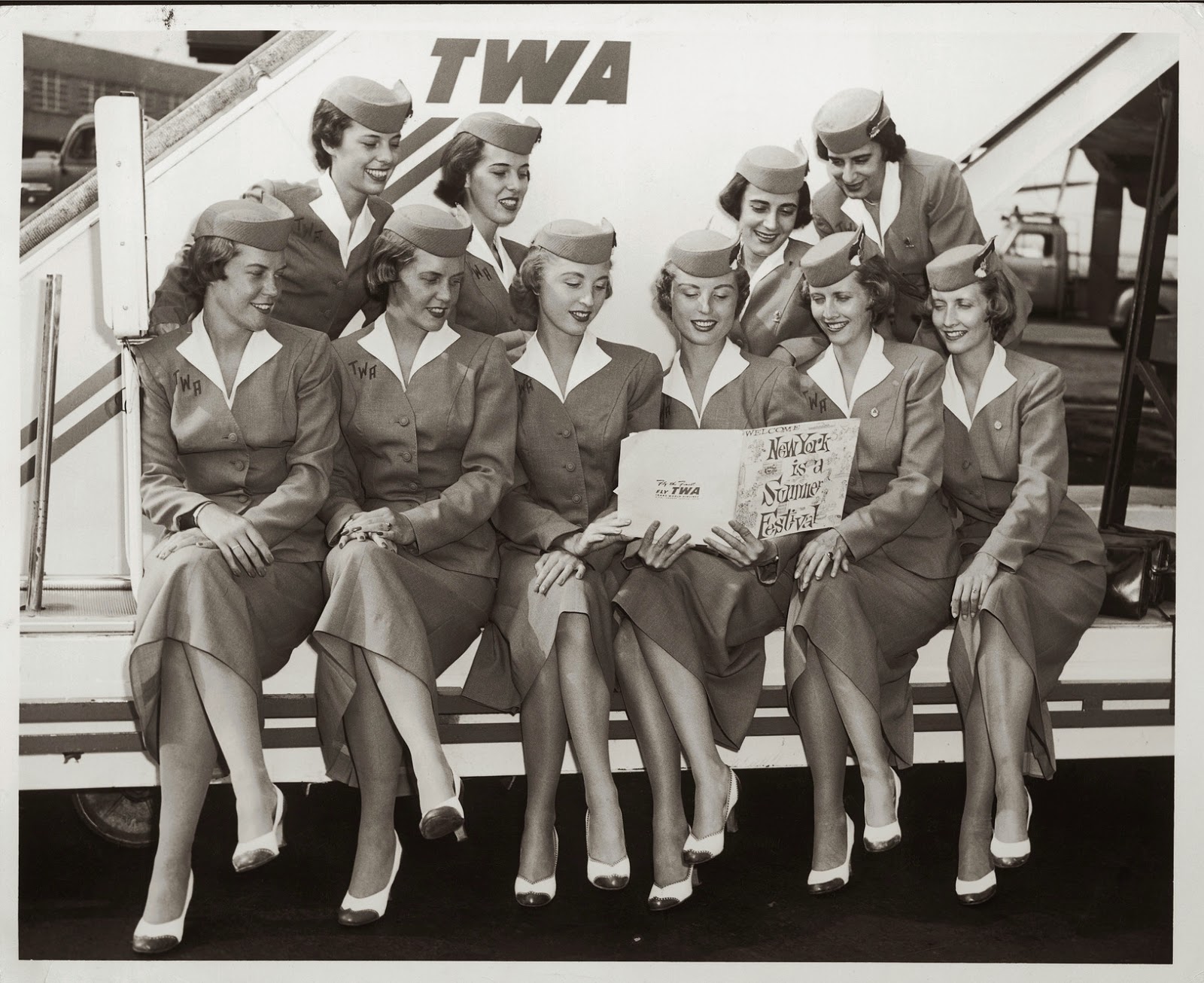
In 1956, five sets of stewardess twins make good publicity material for TWA. They are, front row from left to right, Jean and June Manby, Marilyn and Marlene Nagel, Phyllis and Mary Lous Jibbes and back row, Ruth and Pat Zimmerman and Rose and Victoria Lewis.
Pucci’s famous 1965 designs for Braniff International Airways remain perhaps the most celebrated example of the era: a kaleidoscopic collection that treated the airline’s cabin as a kind of flying fashion show.
The stewardess had, by this point, become a cultural icon in her own right — synonymous in the American imagination with travel, modernity, and a certain aspirational glamour.
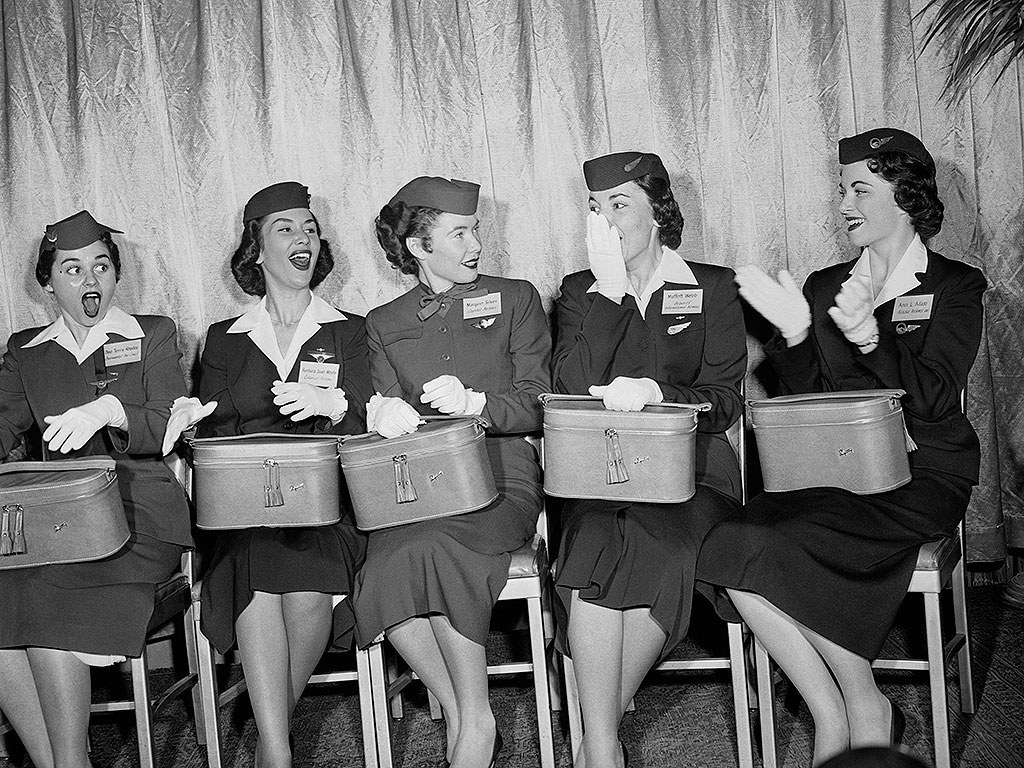
In the ’50s, flight attendants donned crisp collars and white gloves, with perfect coifs under their caps, 1956.
The 1970s brought both continuity and contradiction. Uniforms in this decade pulled simultaneously toward the decade’s earthy, relaxed aesthetic and the ongoing desire to position air travel as a premium experience.
Longer skirts, wider lapels, and muted earth tones gradually replaced the sharp mod energy of the late 1960s.
Pantsuits made their entry into the cabin for the first time, a quiet but meaningful shift that reflected broader changes in how professional women were expected to dress.
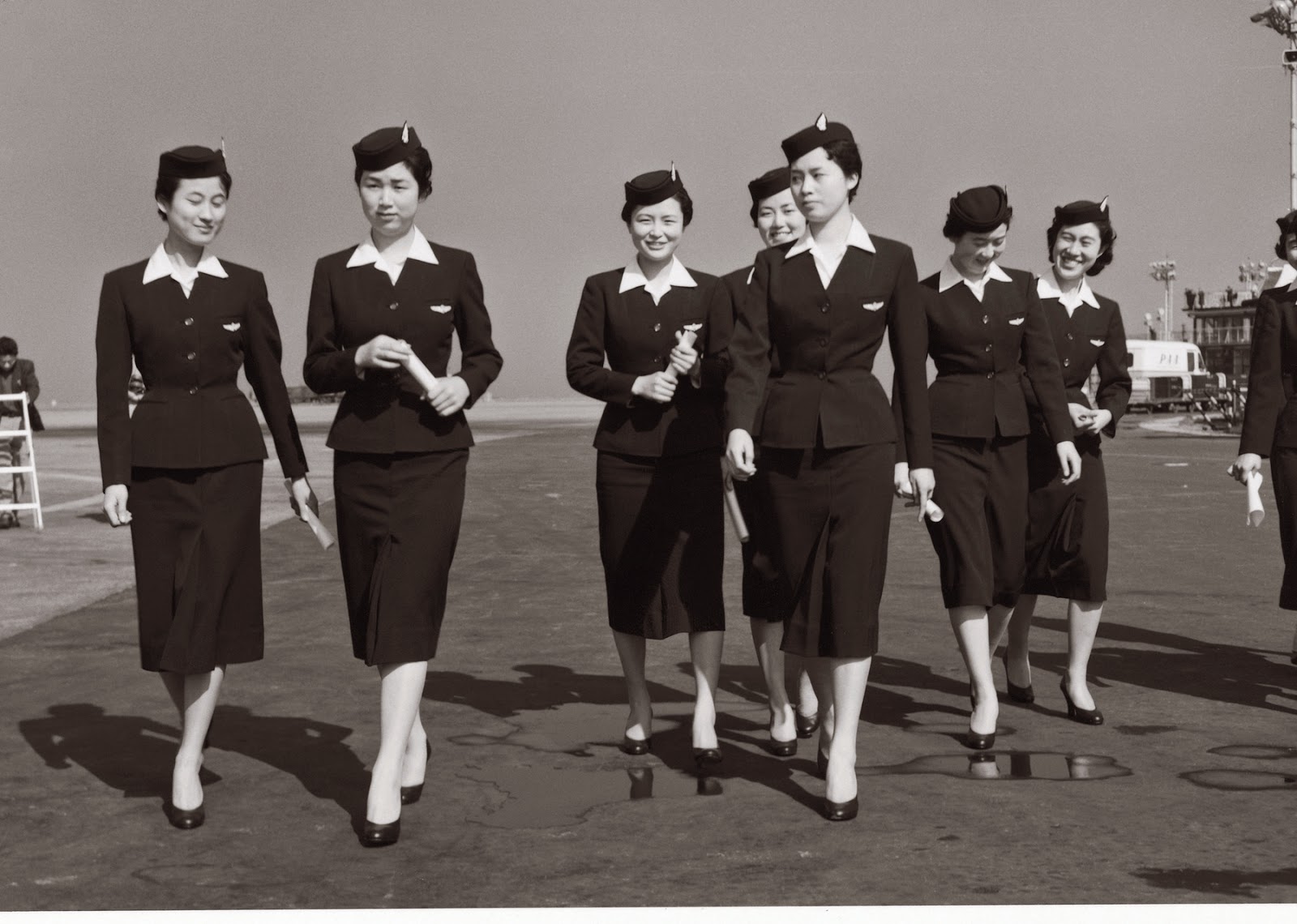
Japan Airlines stewardesses dressed in navy suits, c.1958, designed by Mohei Ito. In 1960, Ito shortened the skirts to just above the knee and added gold buttons.
Taken together, these evolving styles tell a larger story about aviation itself.
From the cautious optimism of the 1930s to the bold experimentation of the 1960s and the practical shifts of the 1970s, flight attendant uniforms mirrored the changing attitudes, technologies, and expectations of each era.
They reflect not only how airlines wanted to be seen, but also how passengers experienced the journey.
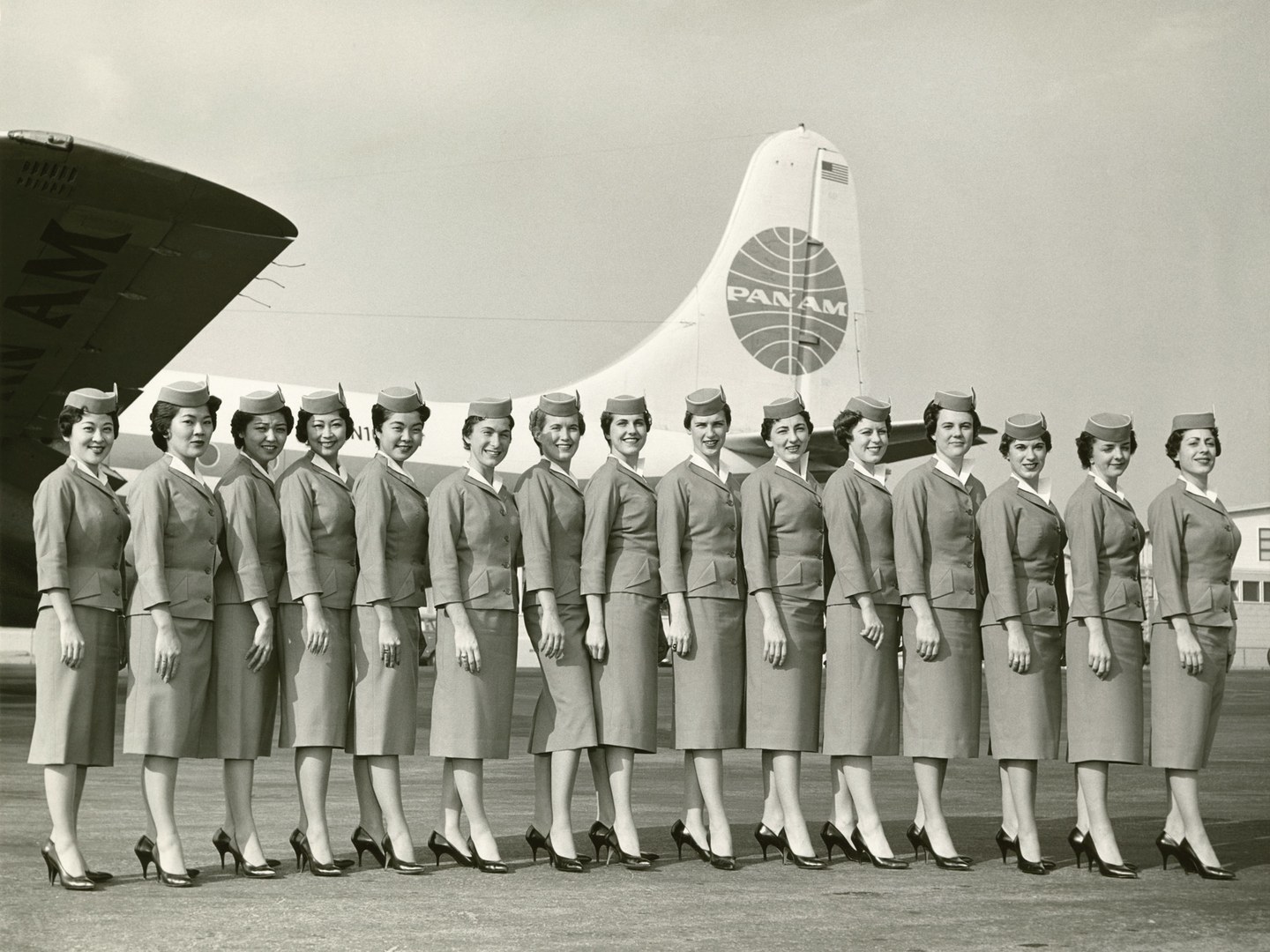
Pan American uniforms by Don Loper, 1959. Pan Am, as it was usually called, presented their flight attendants as examples of femininity and elegance. It’s no wonder the uniforms remain highly collectible even today.
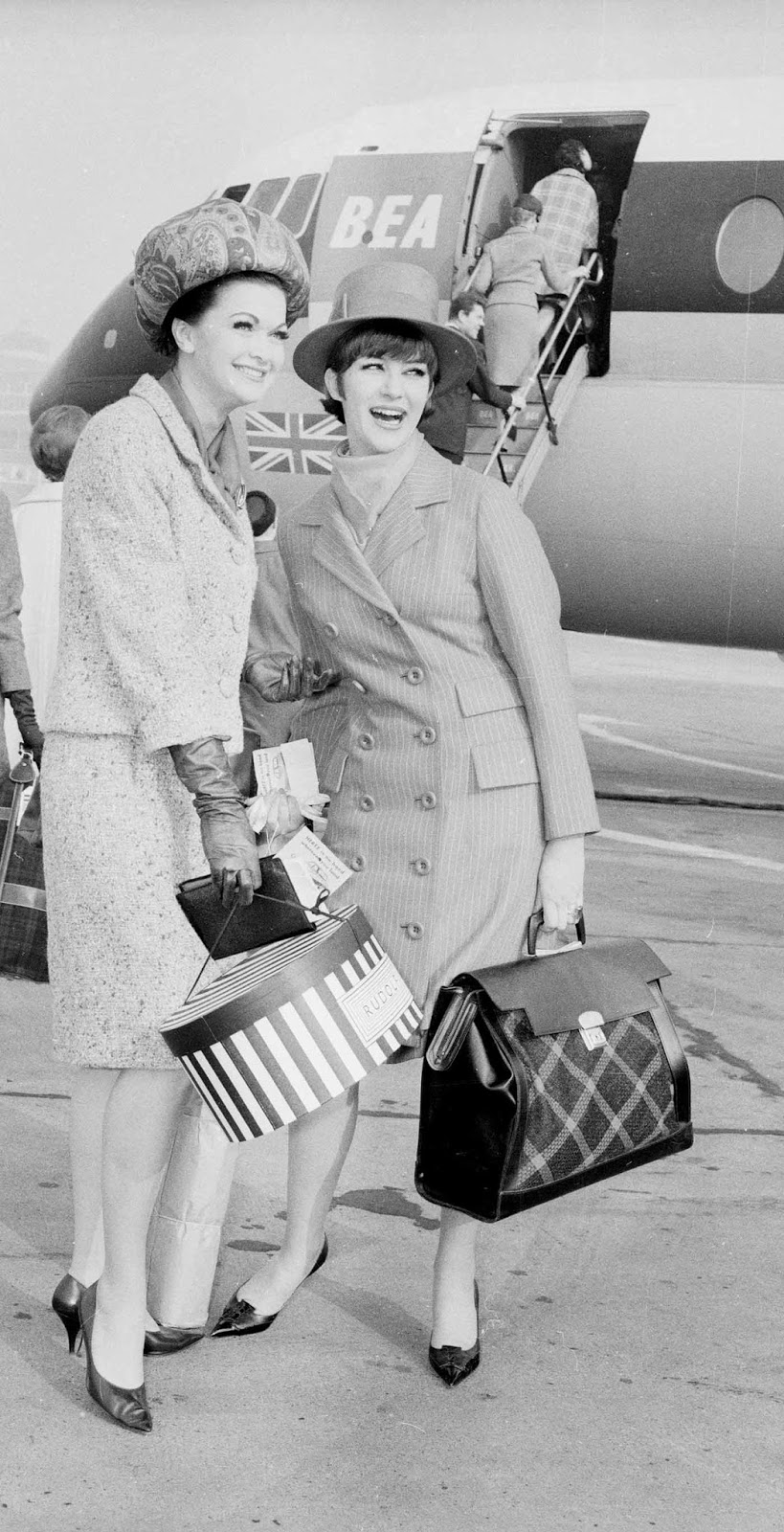
Air hostesses Penny Gillard and Jackie Bowyer prepare to board a BEA passenger plane for Paris, 1963.
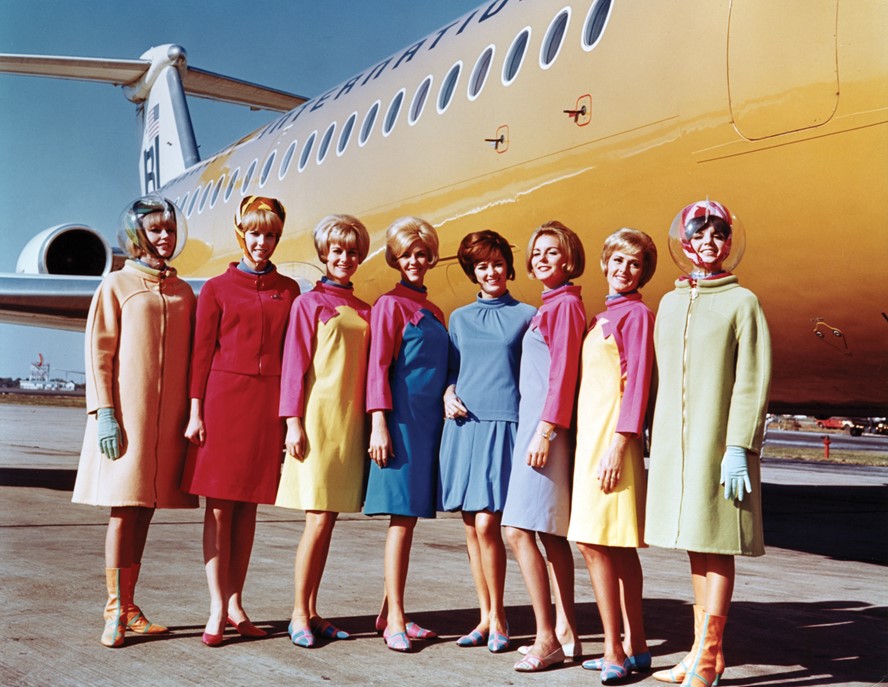
Braniff International uniforms by Emilio Pucci, 1965.
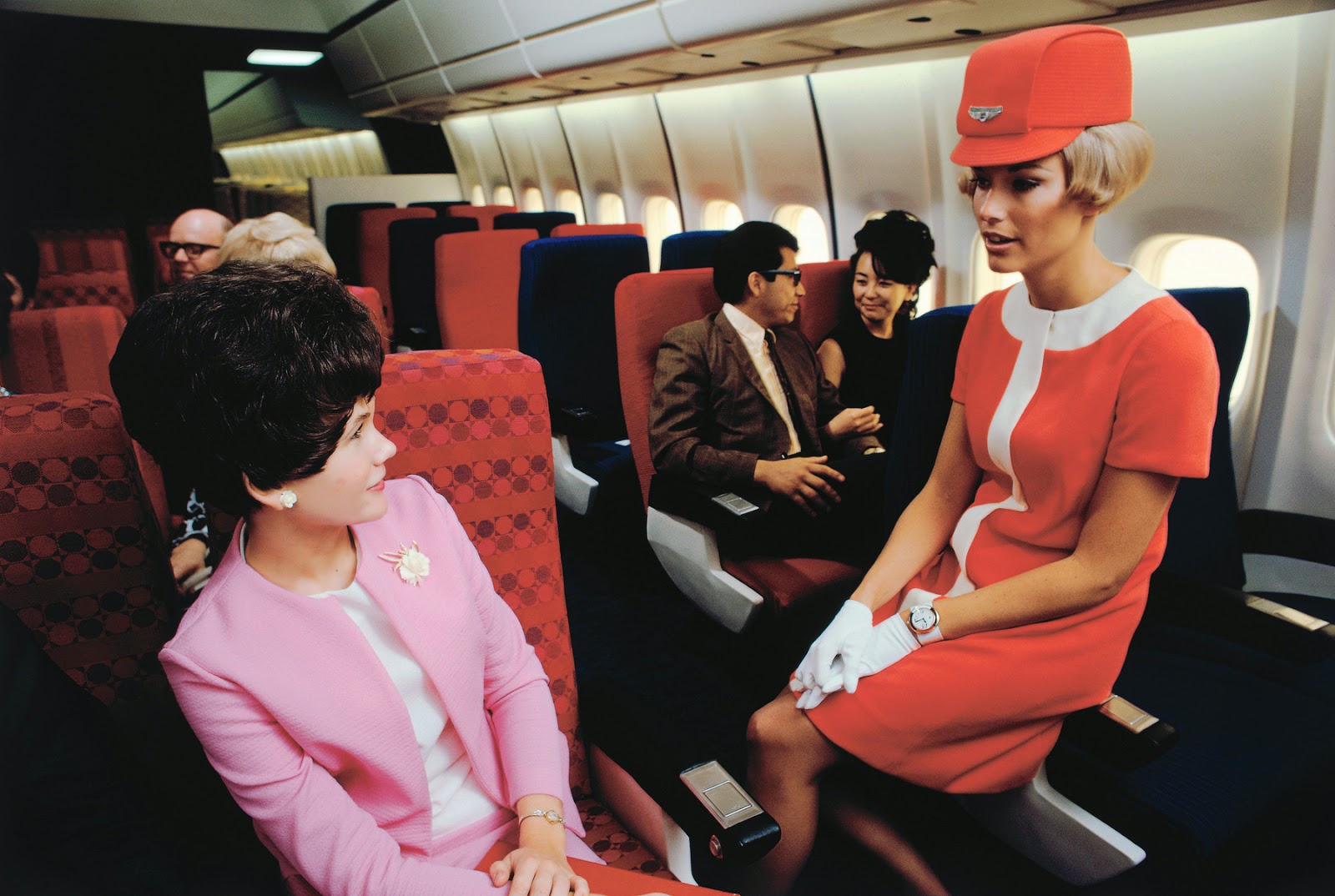
A United Airlines stewardess chats to a passenger in a simulated cabin of a Douglas DC-10, 1968.
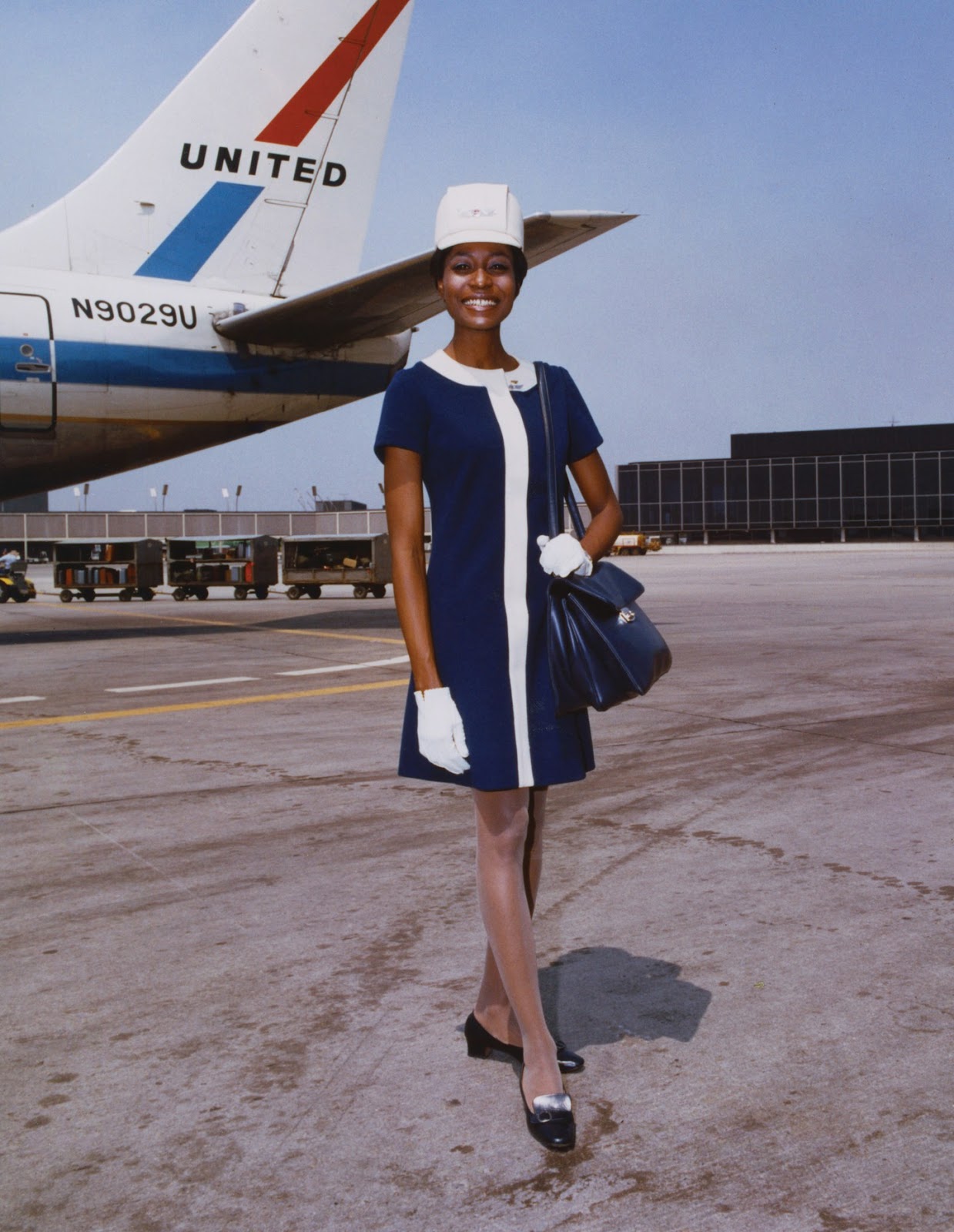
United Airlines uniforms by Jean Louis, 1968.
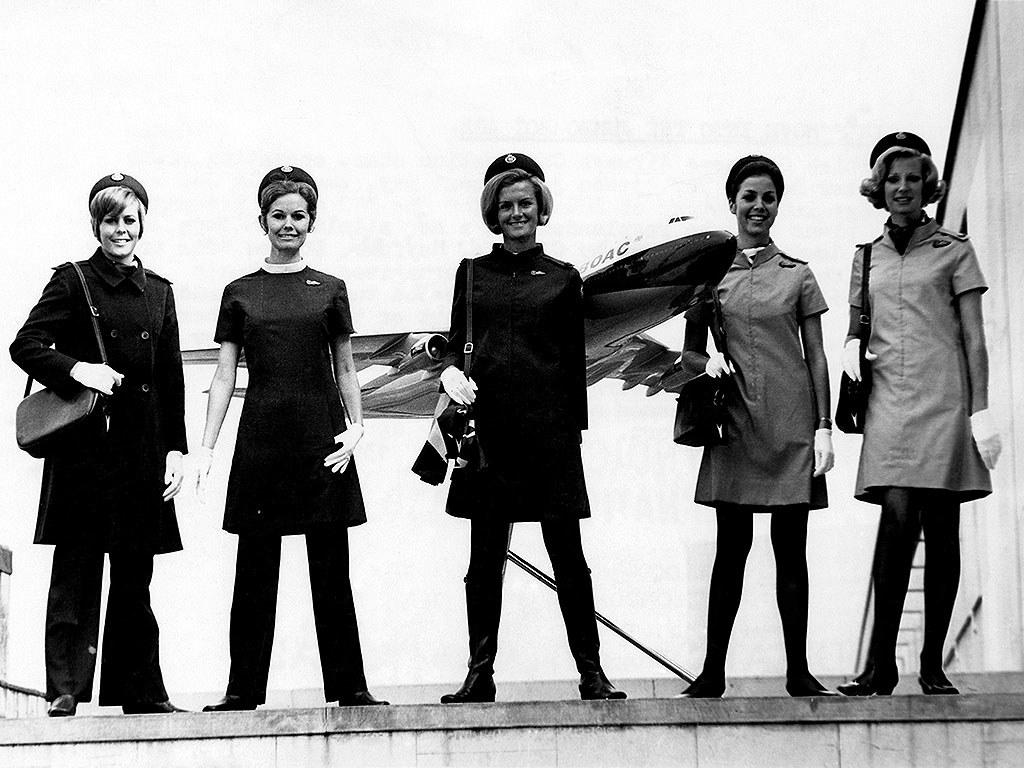
Air hostesses in shorter skirts at a London airport pose in 1969.
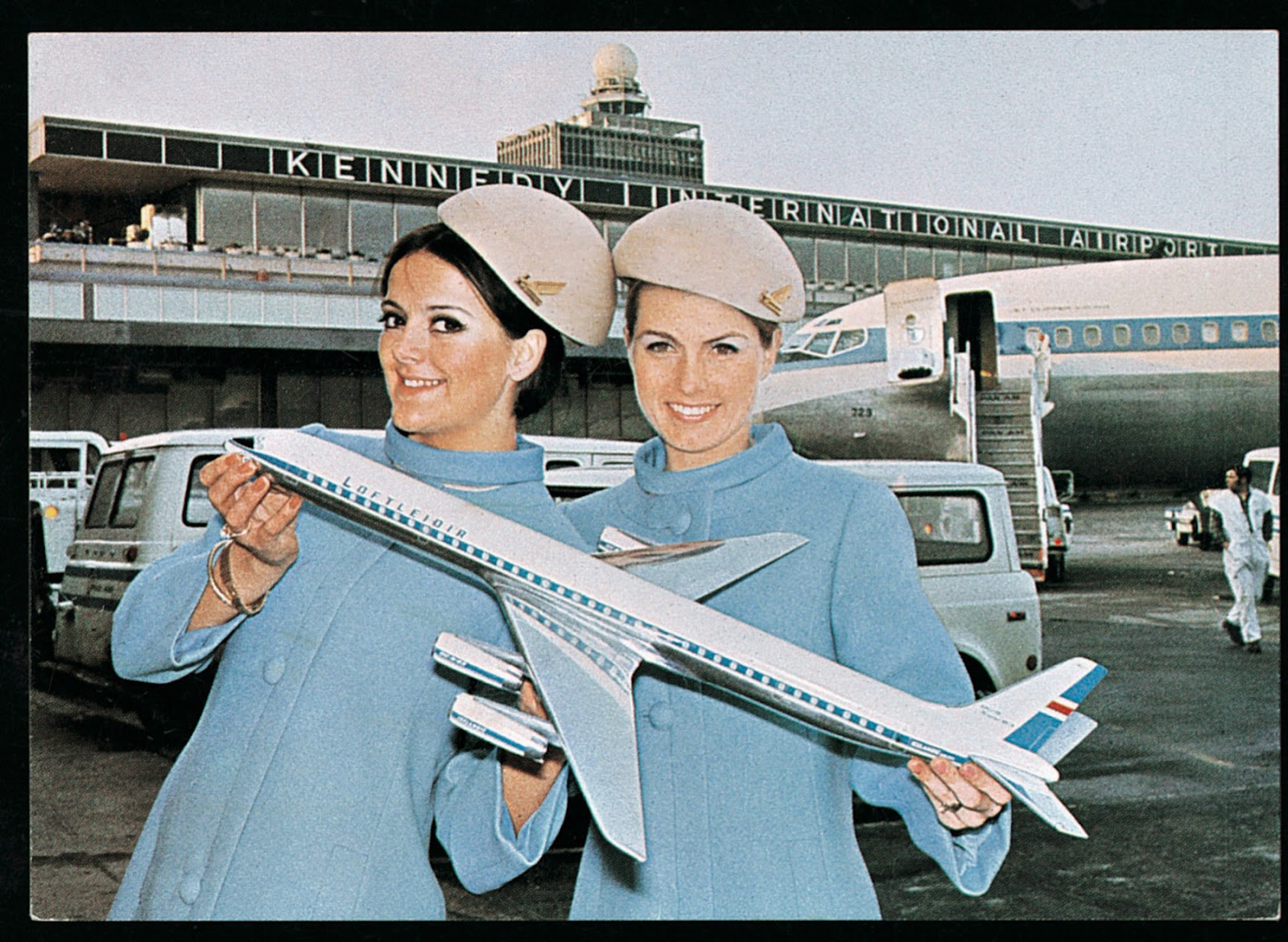
Icelandic Air stewardesses pose with a model Douglas DC-8, 1960s.
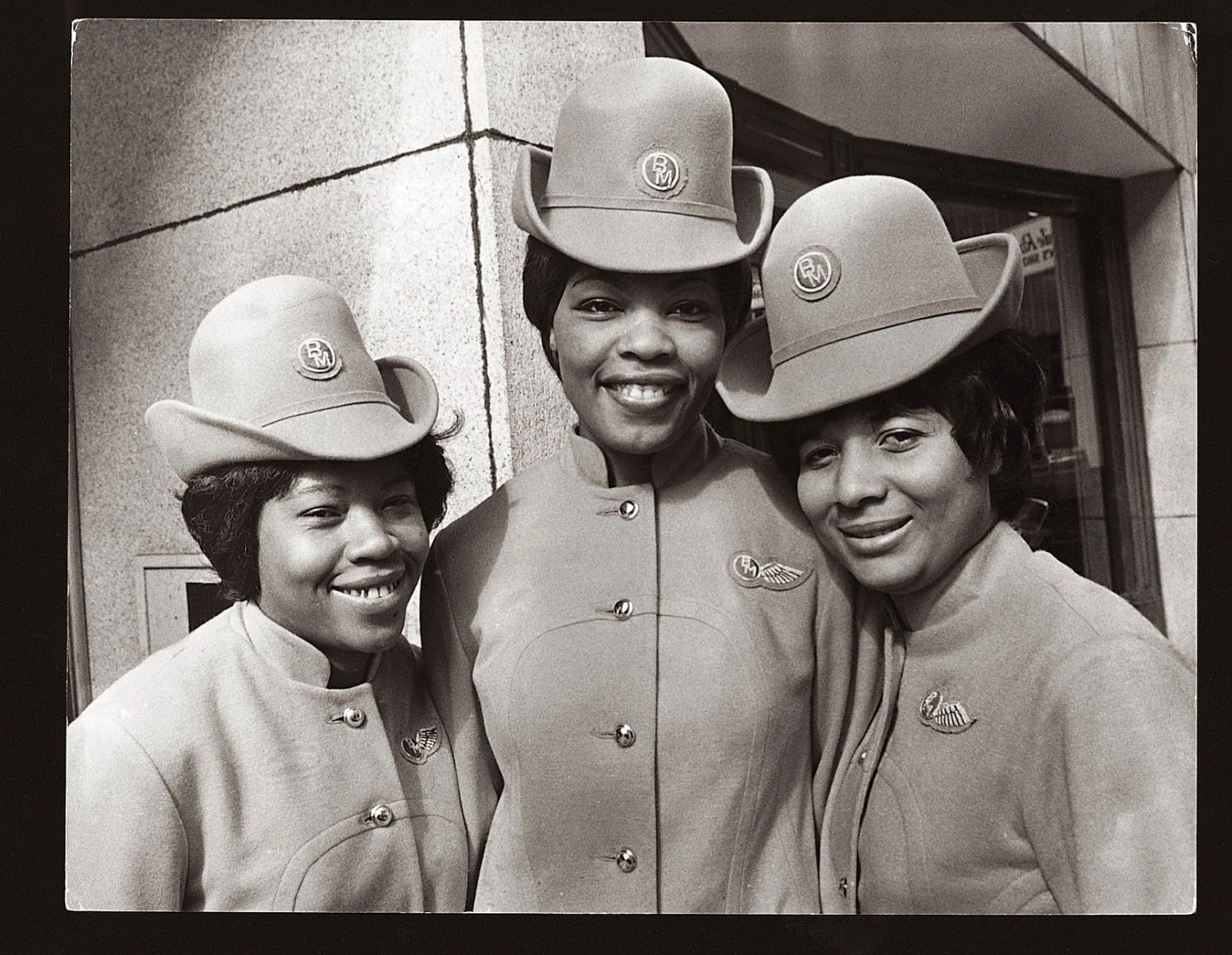
The first UK-based non-white stewardesses to be employed by an independent airline received their ‘wings’ at the London offices of British Midland Airways in 1970. From left: Innez Matthews, Irma Reid and Cindy Medford.
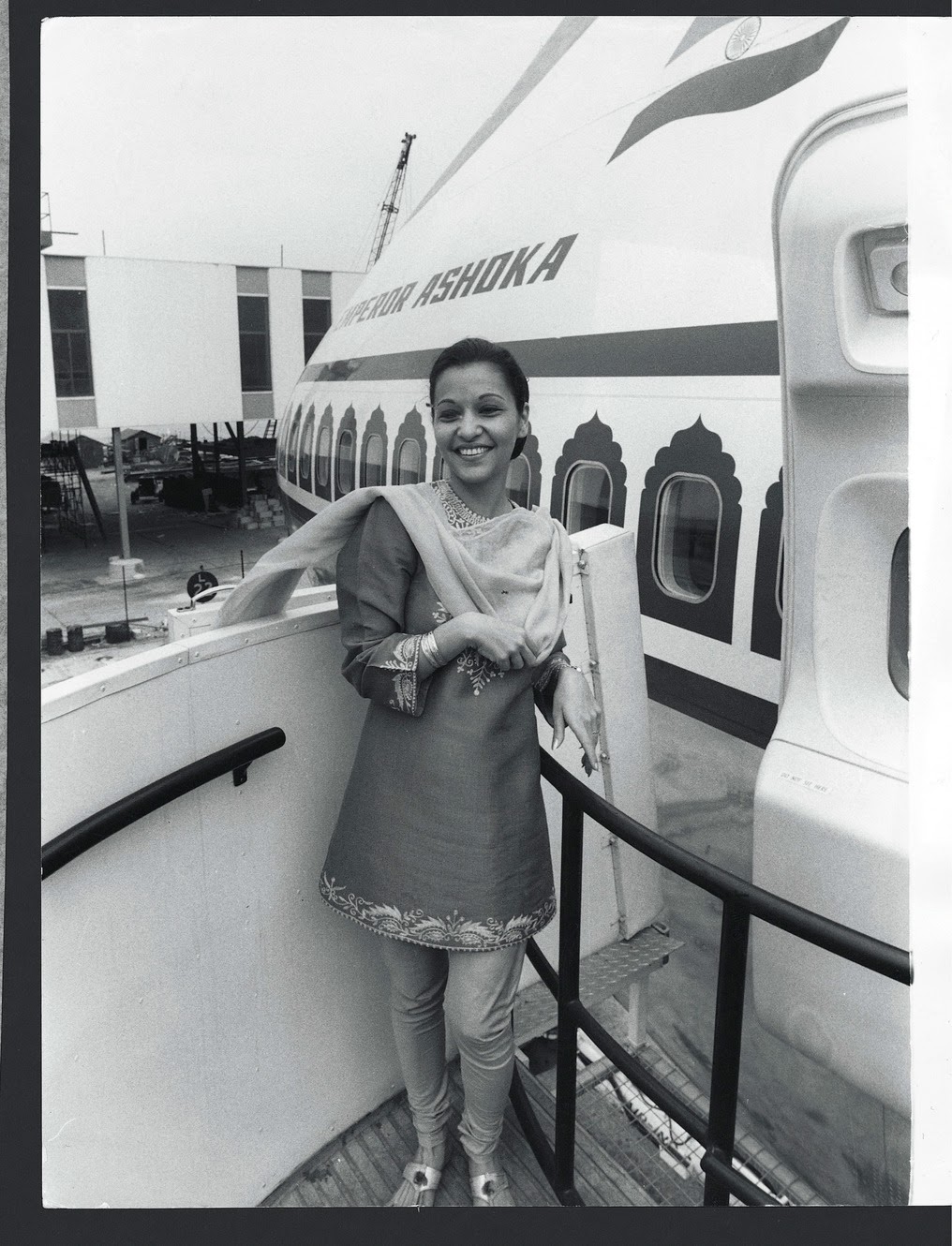
Stewardess Aban Mistry models the Air-India uniform next to the Taj Mahalian decor of an Air-India ‘Jumbo Jet’, 1971. The short salwar kameez was both culturally appropriate and practical for serving in the cabin. The elegant dupatta scarf added an extra flourish.
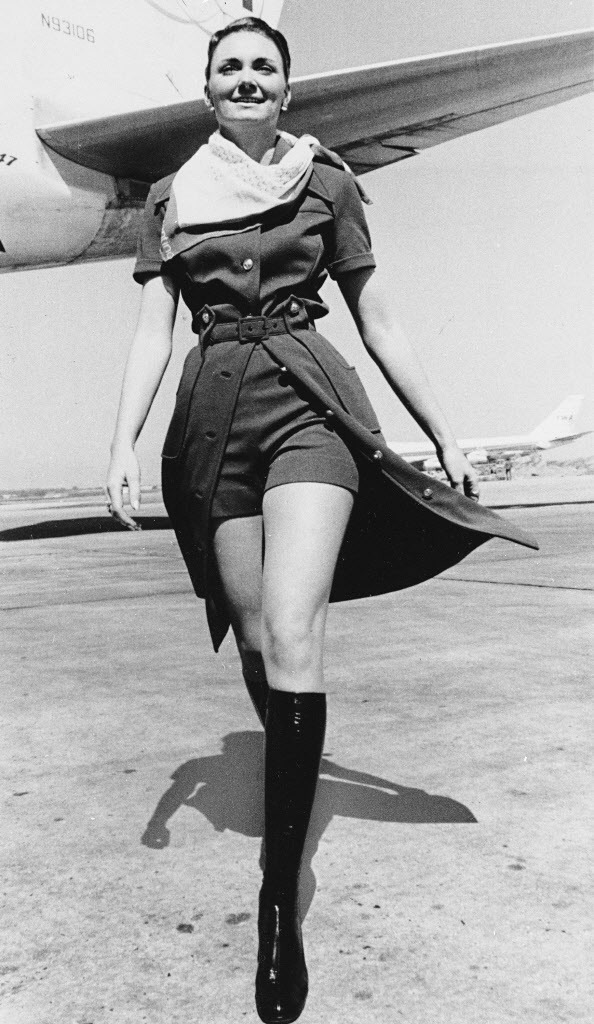
A uniform for TWA stewardesses from 1971 was made up of “mini-pants” worn with a safari shirt dress.
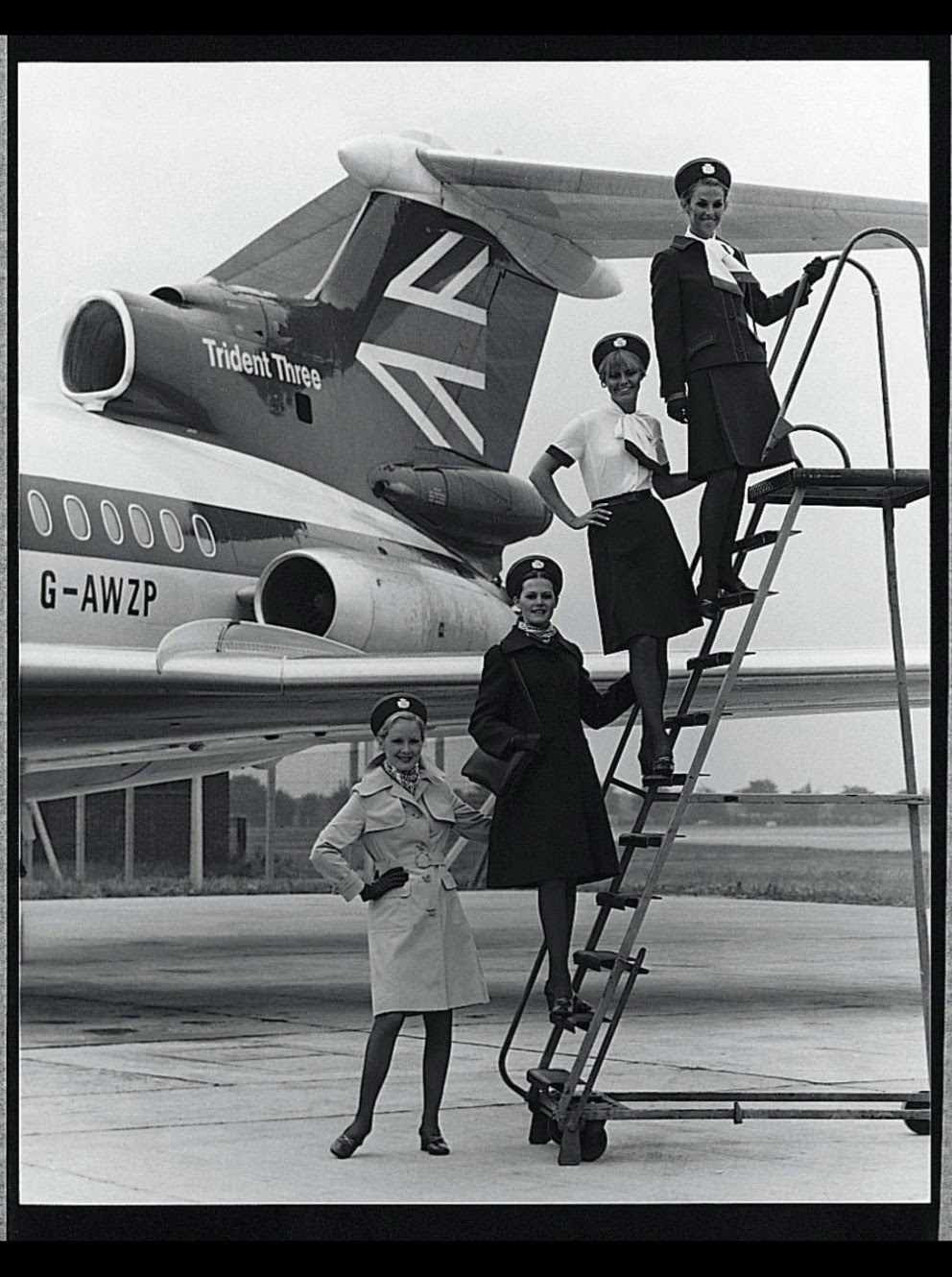
BEA’s popular uniforms, designed by Sir Hardy Amies, 1972.
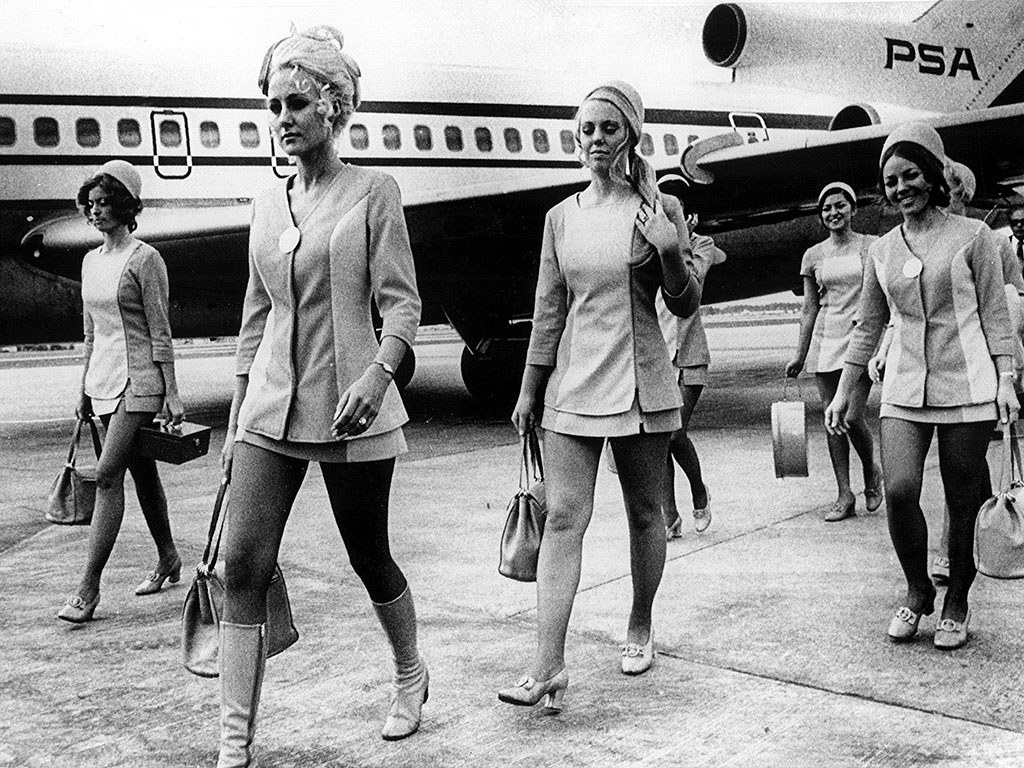
Stewardesses from a plane hijacked during a San Francisco-to-Los Angeles flight and forced to fly to Cuba on Jan. 8, 1972, left the plane as they arrived in Miami a day earlier.
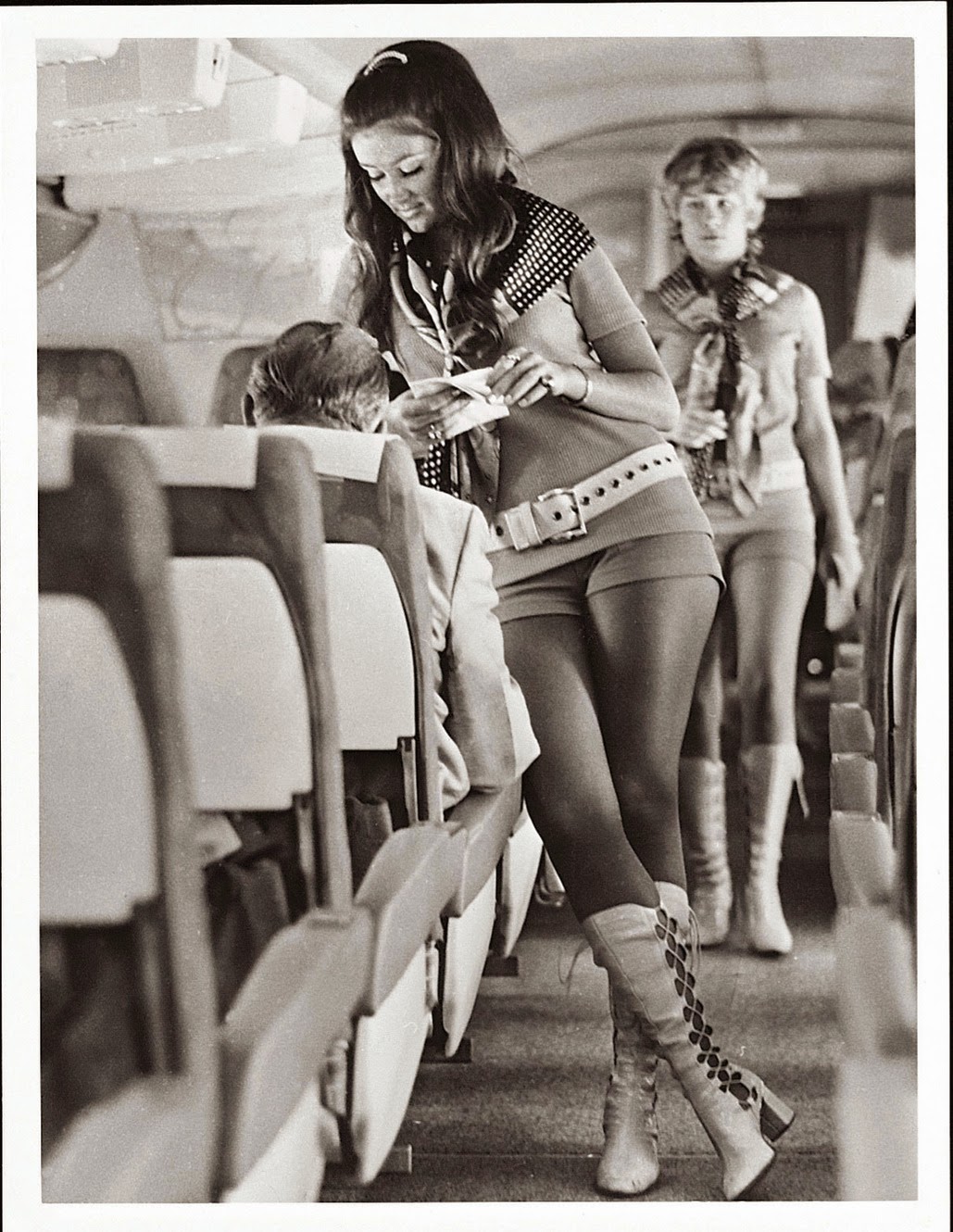
In stark contrast to the propriety (often to the point of prudishness) shown by most airlines to that date, in 1973 Southwest Airlines threw caution to the winds with its stewardess uniform. ‘The girls must be able to wear kinky leather boots and hot pants or they don’t get the job,’ said the airline’s male bosses.
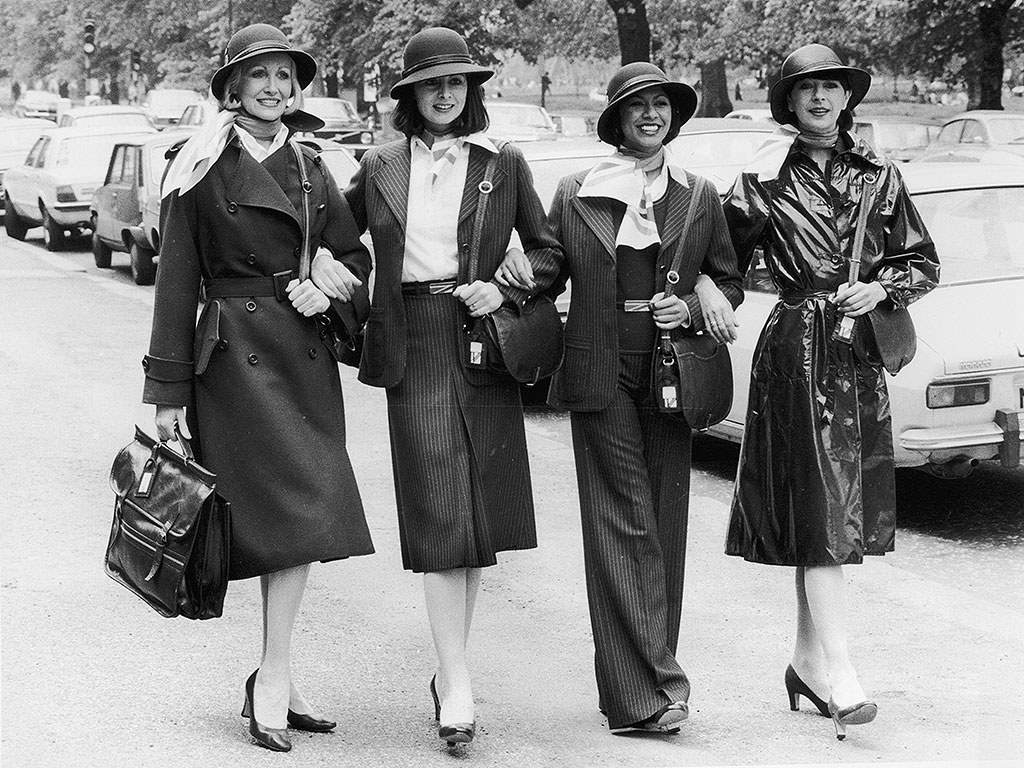
Models (from left) Myrtle Winston, Diane Edmunds, Sonia Pugin and Chris Harris modelling the various styles of new uniform for British Airways female staff, in London, England, United Kingdom, 25 May 1977.
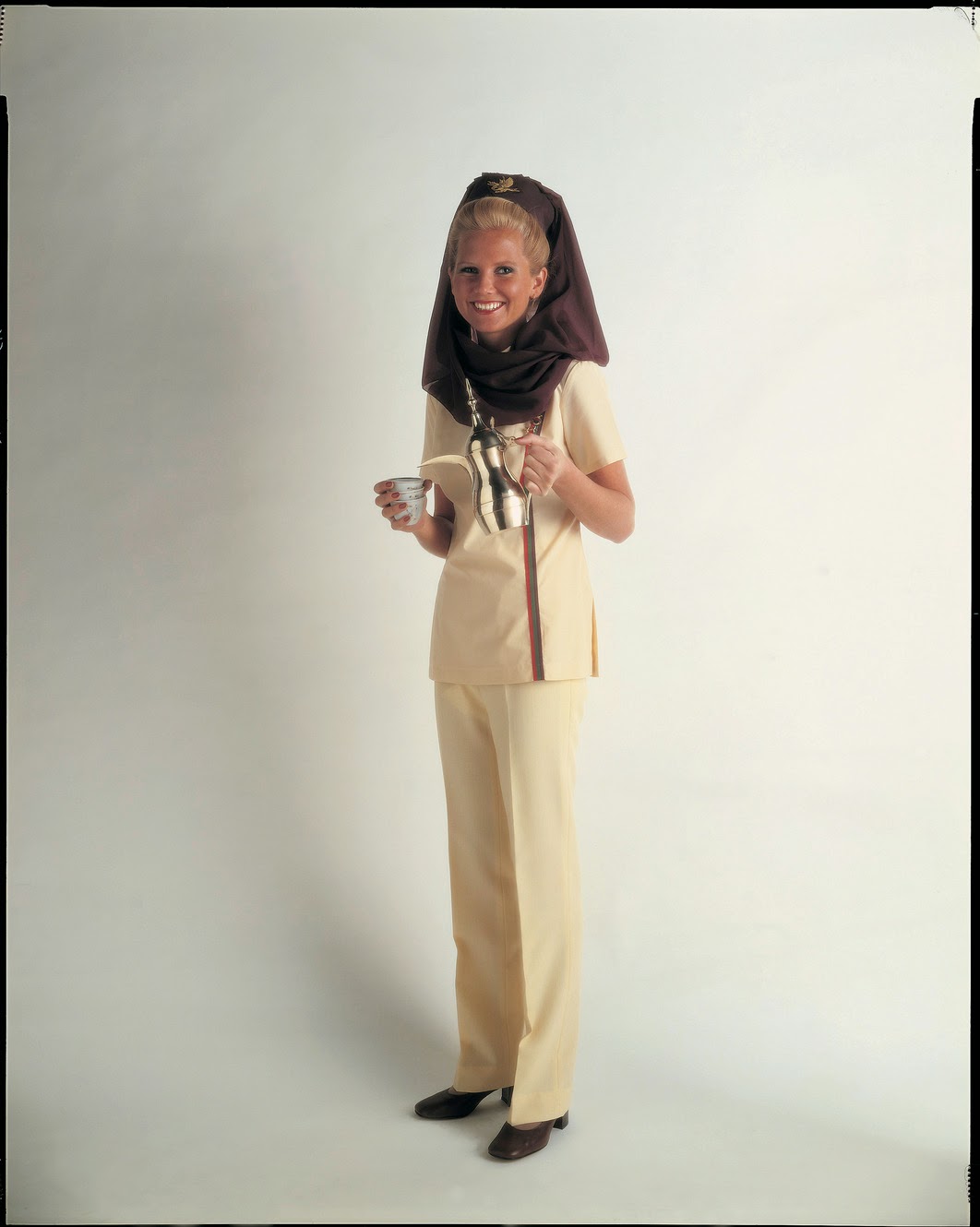
Middle East meets West in the 1970s with Gulf Air’s adaptation of the Muslim headdress; legs are covered by smart trousers. The uniform was originally designed by Joy Stokes.
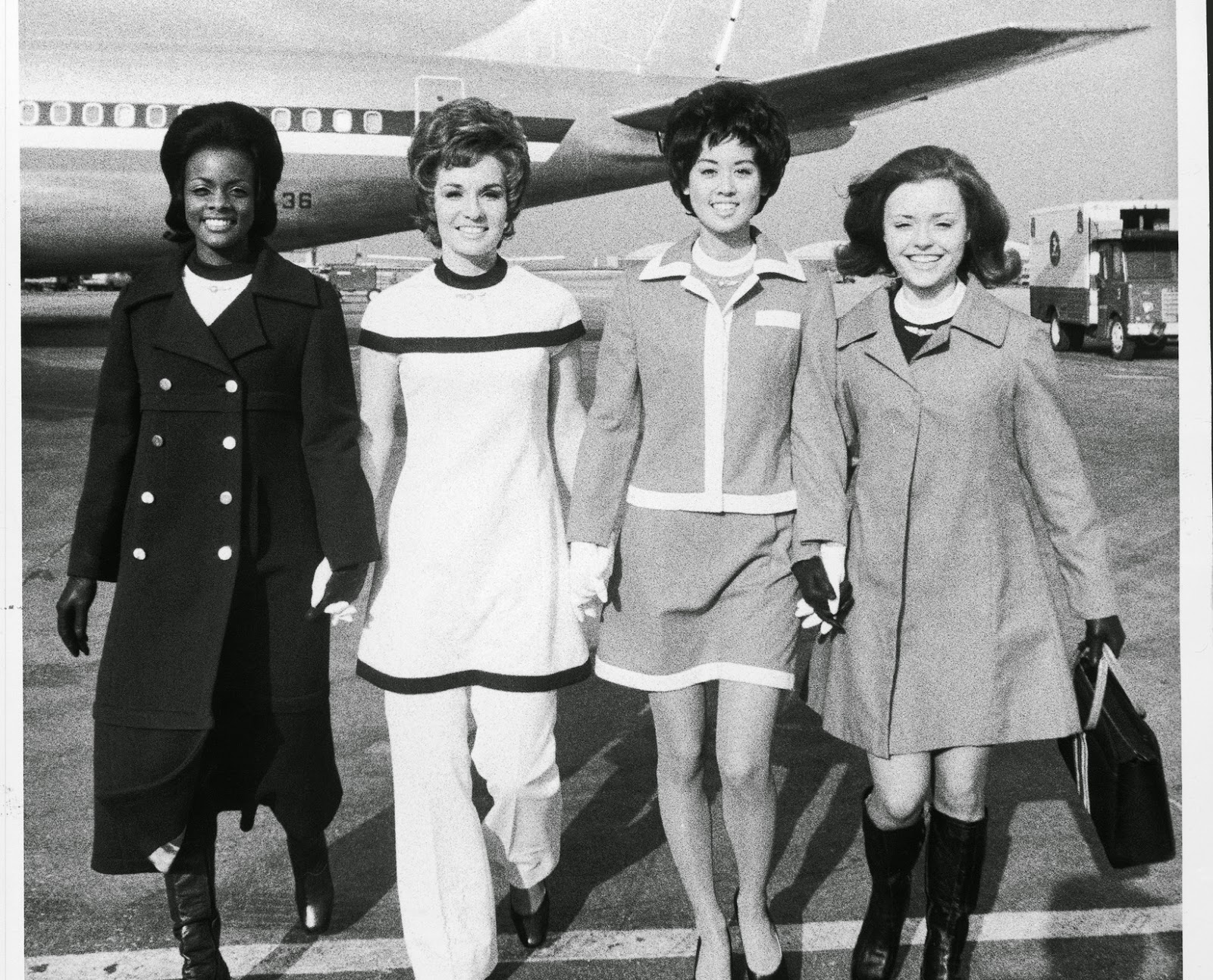
American Airlines stewardesses face the press in the mid-1970s.
(Photo credit: Airplane Vintage via Flickr / Wikimedia Commons / Pinterest).