
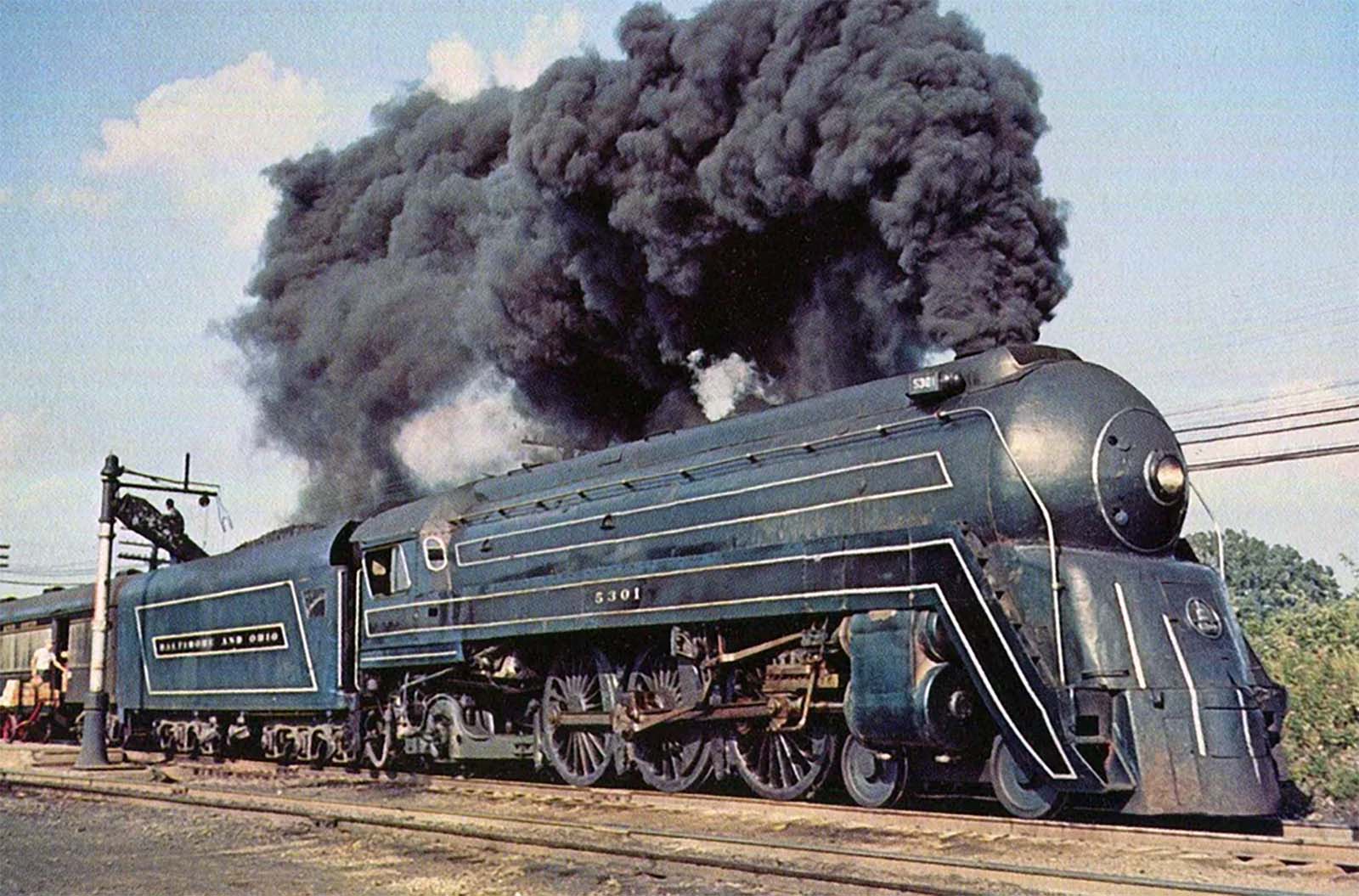
From the wreckage of the 1929 stock market crash, a new American obsession was born. As the economy crumbled, the companies that survived found themselves locked in fierce competition, and many turned to the power of design to stay relevant.
Everyday objects like toasters, furniture, and automobiles were reimagined with sleek curves and aerodynamic silhouettes.
Railroad companies, fighting their own battle against declining relevance, embraced this aesthetic revolution wholeheartedly, and the result was one of the most glamorous chapters in the history of American travel: the streamliner era.
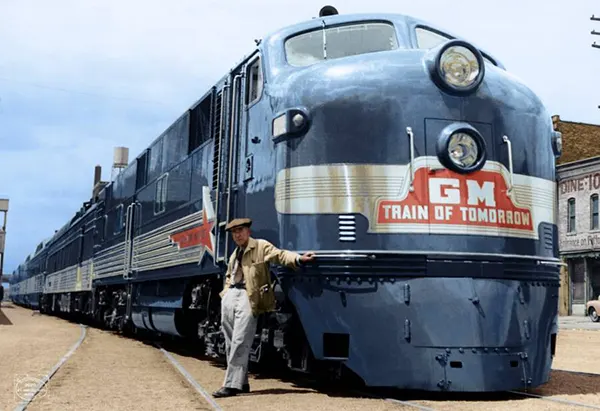
This colorized photograph of General Motors’ “Train of Tomorrow” was originally captured in 1947.
Streamliners were a class of luxury passenger trains built throughout the 1940s and 1950s, designed specifically for long-distance travel across North America.
Marketed as cruise ships on wheels, they promised a level of comfort and sophistication that the industry had never seen before. The railroads desperately needed something transformative.
Even before the Great Depression, the rise of the automobile had already begun eating into train ridership, and the economic collapse only made things worse by gutting freight demand.
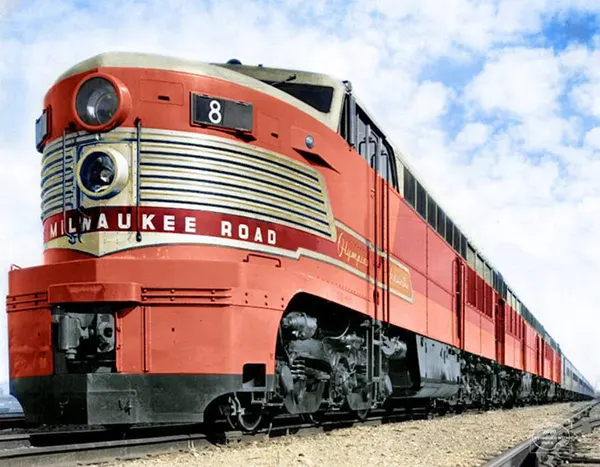
The Olympian Hiawatha, operated by the Milwaukee Road, pictured here at the start of its inaugural run.
Pivoting from cargo to passengers, railroad companies were forced to rethink what train travel could look like, and they answered that challenge by stripping away the boxy, utilitarian designs of the past in favor of something far more daring.
Streamlining, as a design philosophy, was about replacing angular shapes with curves and tapers that cut through air resistance and allowed for faster, more efficient movement.
The effect wasn’t just mechanical; it was psychological. As one historian noted, the movement “stimulated public faith in a future fueled by technological innovation.” At a time when the country was hungry for optimism, the streamliner delivered it in spectacular fashion.
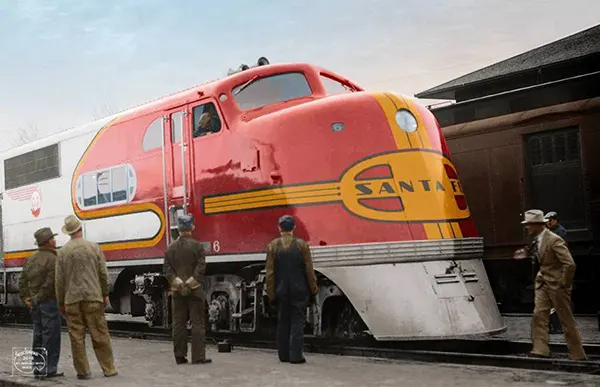
The Santa Fe Super Chief, photographed in 1939.
The spark that ignited the revolution came in 1932, when two men with the same last name, though no relation to each other, crossed paths and changed the industry forever.
Ralph Budd was president of the Chicago, Burlington & Quincy railroad, and Edward Budd was a Philadelphia car manufacturer.
Together, they hatched a plan: Ralph would tackle speed and efficiency while Edward would handle design and marketing.
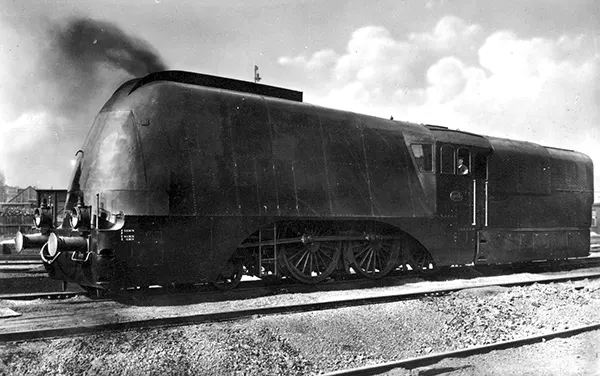
A Nederlandse Spoorwegen Class 3700/3800 steam locomotive, number 3804, photographed circa 1936.
Two years later, their creation made its debut. Named for Zephyrus, the ancient Greek god of the west wind, the Burlington Zephyr featured a gleaming corrugated stainless-steel exterior and turned heads from the moment it was unveiled on May 26, 1934.
On its maiden run from Denver to Chicago, the Zephyr arrived in just 13 hours and 5 minutes, shattering a record that had previously stood at over 25 hours. It wasn’t just a faster train. It was a statement.
Worth noting is that the Union Pacific railroad had released its own streamliner, the M-10000, just months before the Zephyr, and had actually introduced a streamlined design as far back as 1905. At the time, almost nobody took that early design seriously, except Edward Budd.
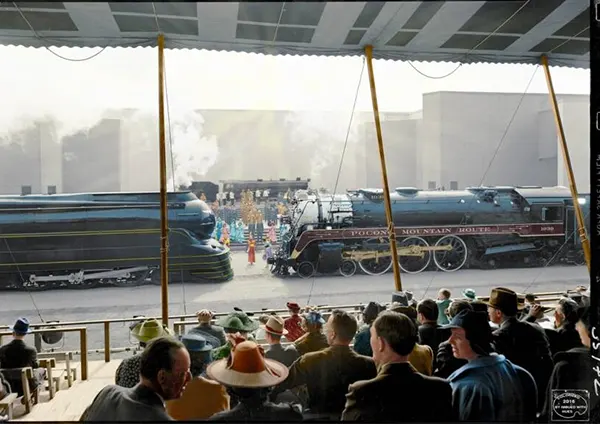
Streamliner trains were among the highlights of the 1939 New York World’s Fair, drawing crowds of admirers on opening day, May 27.
The Zephyr’s debut set off a frenzy. Other companies rushed to produce their own versions, with Pennsylvania Railroad, Great Northern, New York Central, and many others all unveiling their own streamlined fleets.
Pennsylvania Railroad coined the phrase “The Fleet of Modernism” when debuting its cars in the late 1930s, a tagline that perfectly captured the spirit of the age.
The name Zephyr itself became cultural shorthand for speed and modernity, adopted by sports teams, referenced in advertising, and even immortalized in song by Hank Williams Sr.
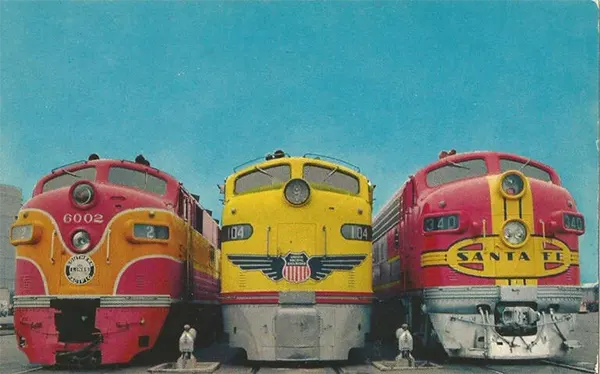
A Union Pacific streamliner postcard from the 1950s.
What made streamliners truly extraordinary, though, wasn’t just their striking exteriors. Inside, they were a world unto themselves.
Cocktail lounges, full-service dining cars, observation domes, and plush reclining seats made each journey feel more like an ocean voyage than a train ride.
General Motors pushed the concept even further with its “Train of Tomorrow” series, which featured an electric kitchen, telephone service, and a glass-ceilinged penthouse car.
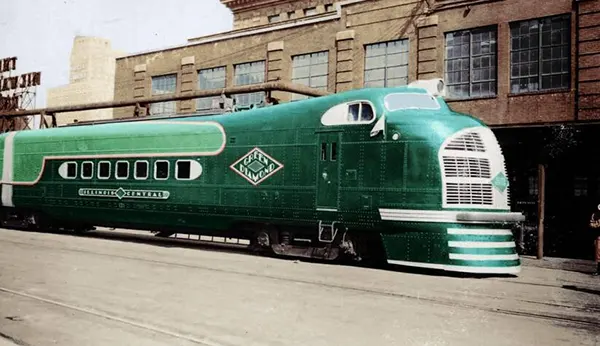
The Green Diamond, photographed at Milwaukee Station in 1936.
The memories left behind speak to just how indelible the experience was.
One passenger recalled to PBS a childhood journey in 1965: children roaming freely through the cars, the dining room set with white tablecloths, heavy silver, and cloth napkins, and food that lived up to the setting.
Another described catching sight of the train itself, “a great gleaming emerald line of sleek cars, all those dark shining windows and the golden lettering along the sides,” as something unmistakably, undeniably special.
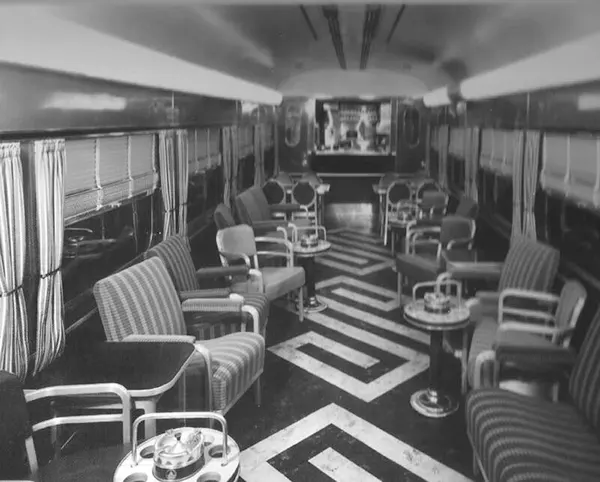
The Baltimore & Ohio line’s lounge car showcased a bold art deco interior, a design that defined the railroad’s aesthetic from the late 1940s through the early 1950s.
But the forces working against the streamliner were ones no amount of elegance could overcome.
The postwar expansion of commercial aviation and the growing accessibility of the private automobile drew passengers away steadily and irreversibly.
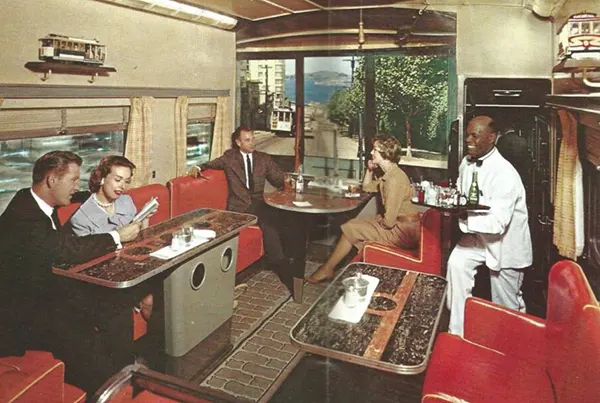
The Cable Car Buffet Lounge was one of the most beloved gathering spots aboard the California Zephyr.
Between 1946 and 1965, train passenger volume in the United States collapsed from 790 million to 298 million.
The railroads that had once symbolized the cutting edge of American ambition found themselves outpaced by newer industries, and the streamliner faded into history, leaving behind a legacy not of failure, but of a particular, fleeting moment when rail travel was the most glamorous way to see the country.
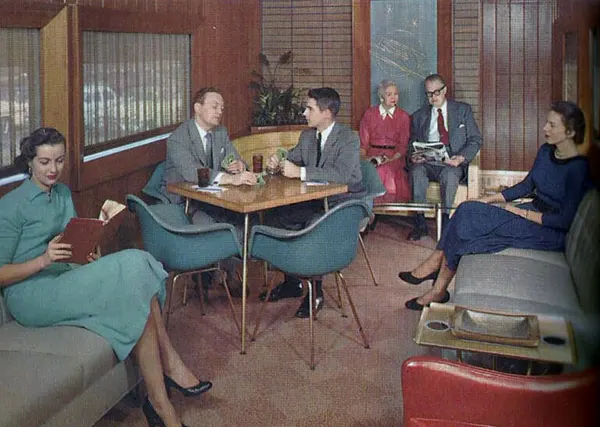
The Rosewood Lounge car aboard the Union Pacific’s City of Los Angeles.
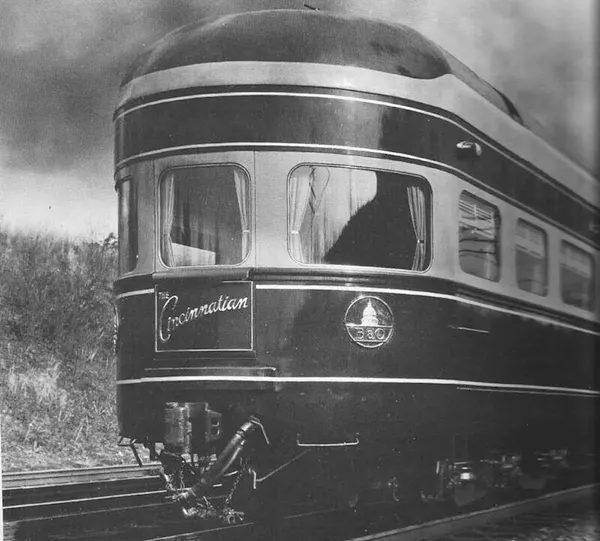
The Cincinnatian launched in 1947 as an all-day service connecting Baltimore and Washington to Cincinnati, but ridership never reached sustainable levels. On June 25, 1950, the route was relaunched on the Cincinnati to Detroit corridor.
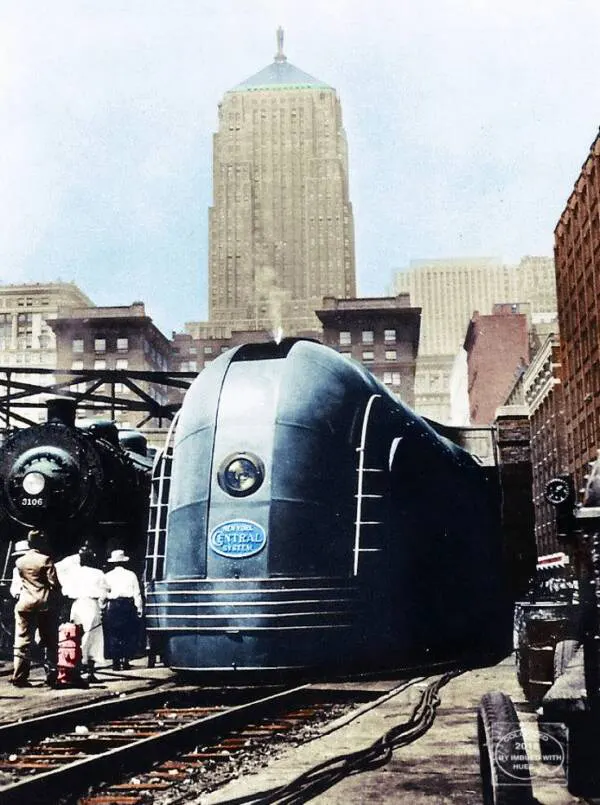
This colorized photograph of the New York Central System’s Mercury Train was taken in Chicago in 1936.
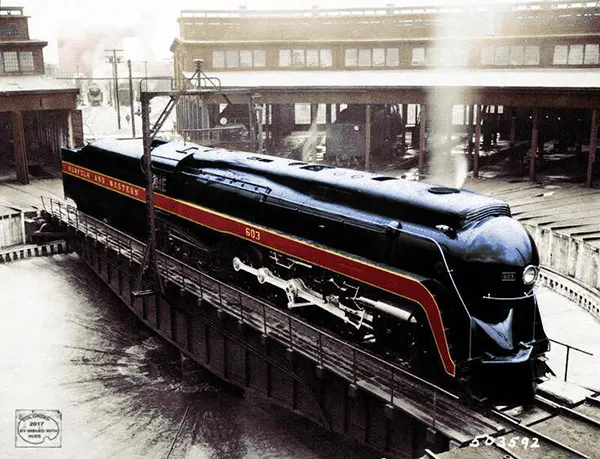
The Norfolk & Western J Class 603, circa 1940s. This was a series of 14 streamlined steam locomotives built entirely in-house at the railway’s own Roanoke Shops in Virginia, with production running from 1941 to 1950.
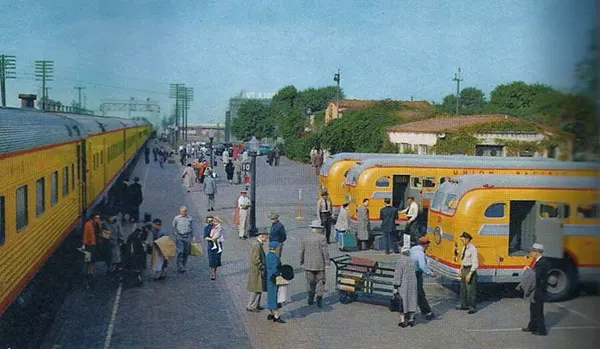
The East Los Angeles station, the final stop before reaching L.A. Union Station.
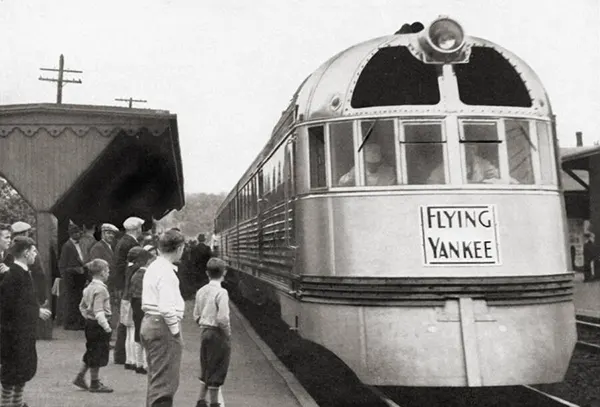
A February 1938 General Electric advertisement promoting electric trains, featuring the Flying Yankee. The ad originally appeared inside the front cover of the February 1938 issue of Scientific American.
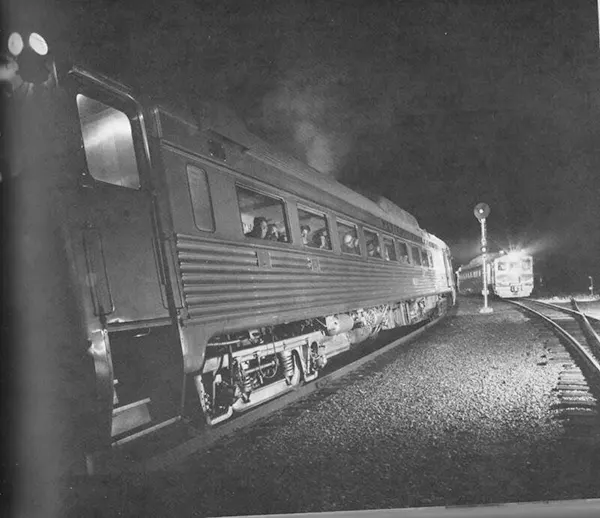
An undated photograph capturing a nighttime meeting of the eastbound and westbound Zephyrs somewhere in the Nevada desert.
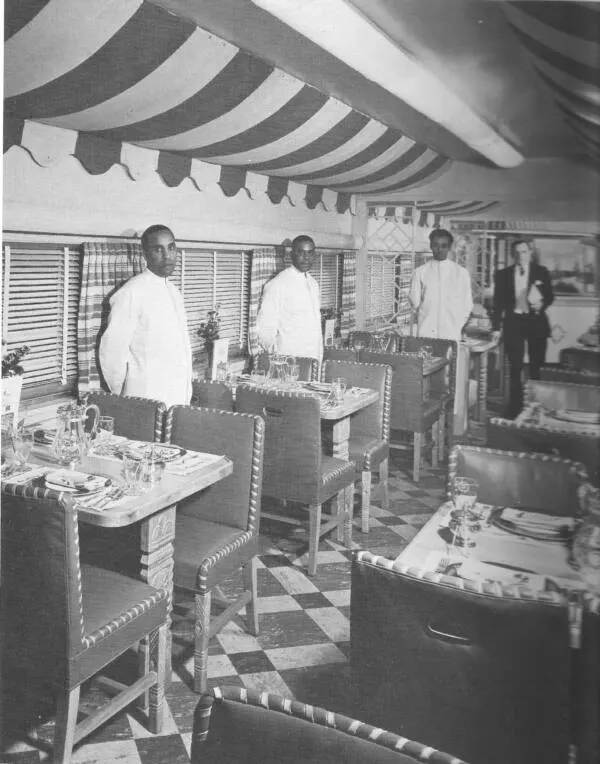
The lively “Fiesta” coffee shop car aboard a Golden State Route train, which ran the Chicago to Los Angeles corridor. Photo courtesy of Rock Island Railroad.
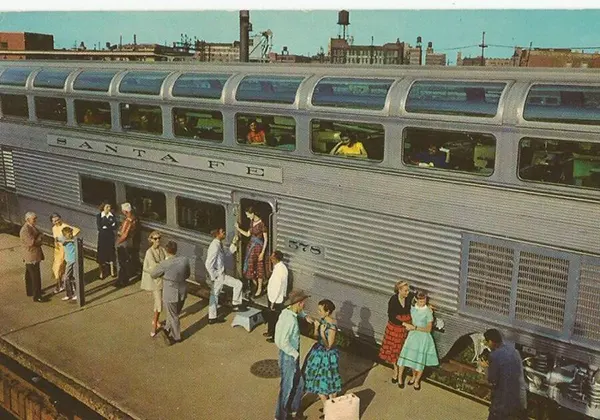
A postcard from a packet sold onboard El Capitan and other Santa Fe trains by on-board newsagents during the 1950s.
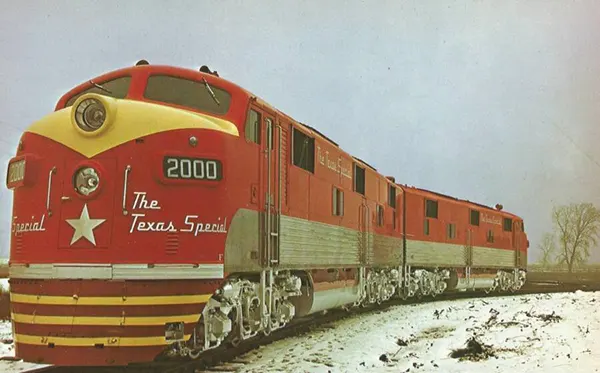
The Texas Special, streamlined in the late 1940s, ran in direct competition with Missouri Pacific’s Texas Eagle. The service featured an observation lounge car on three of every four nights, with a standard lounge car substituting on the fourth. This photograph was taken in 1947.
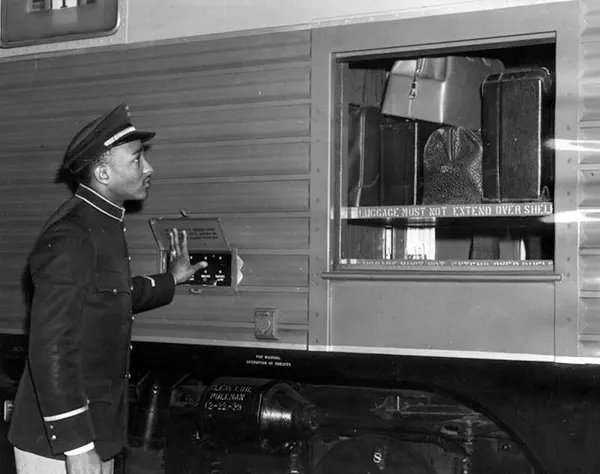
One of the more practical innovations aboard the new Southern Pacific Daylight streamliner was a dedicated luggage compartment fitted with an exterior door and a built-in elevator to lift baggage directly into the car. Here, a porter operates the elevator from the station platform. The Daylight made its first run to San Francisco on June 5, 1940.
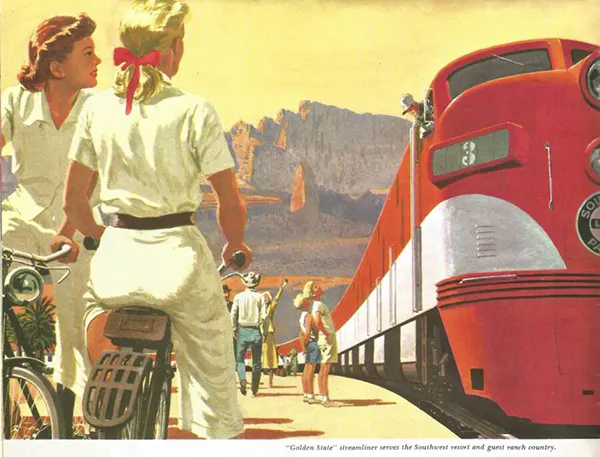
The Golden State was a Chicago-to-Los Angeles streamliner that ran in a striking red and silver color scheme from 1948 to 1950.
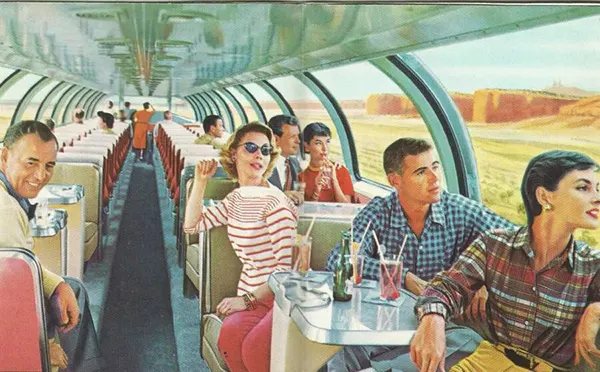
Unlike the Super Chief’s more intimate Pleasure Dome Lounge Car, the Santa Fe Chief featured full-length dome cars, a distinction that set it apart as one of the newest and most spacious streamliners in the Santa Fe fleet. This image appeared in a 1960 promotional brochure.
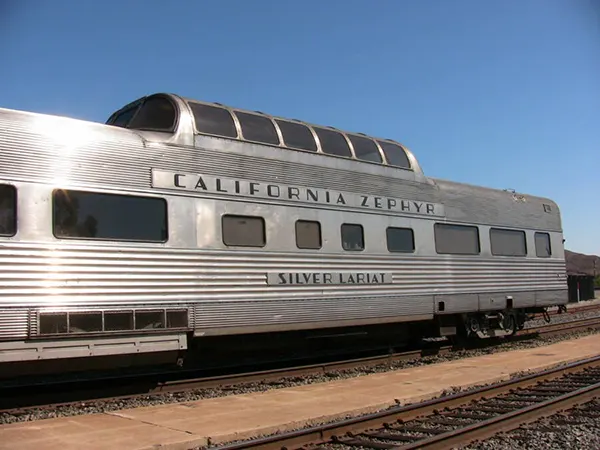
The California Zephyr dome coach “Silver Lariat,” car number 4718, photographed en route to Oakland. Built by the Budd Company between 1948 and 1949 for the Chicago, Burlington & Quincy railroad, the Silver Lariat was part of the California Zephyr’s original fleet.
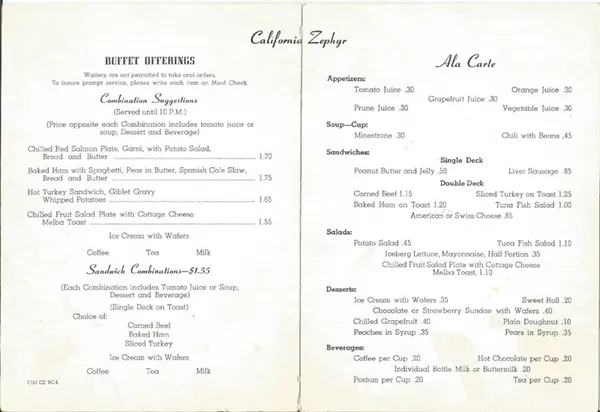
A look inside the Cable Car Room’s menu.
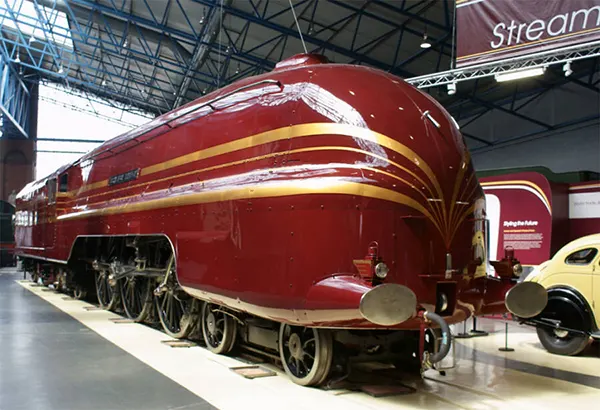
America was not alone in its passion for streamlined rail travel. Britain’s London Midland and Scottish Railway produced the Princess Coronation Class locomotive 6229, “Duchess of Hamilton,” seen here at the National Railway Museum. Built in 1938, the locomotive was exported to the United States for a 3,000-mile tour and made a stop at the 1939 New York World’s Fair.
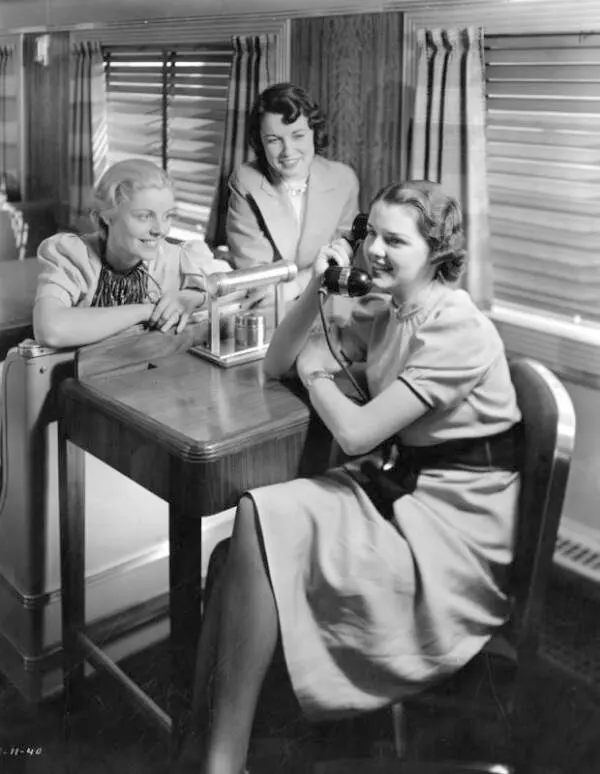
Three women gather around the telephone in one of the coaches aboard the Union Pacific’s “City of Los Angeles,” photographed on December 31, 1937.
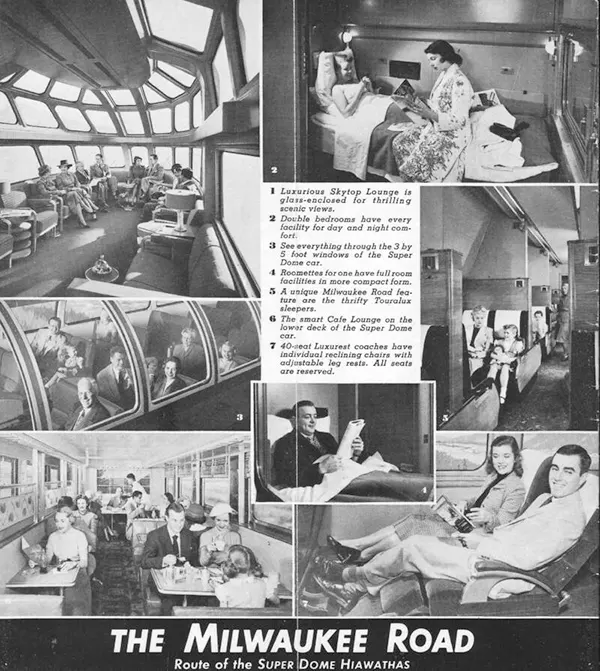
A glimpse into the Milwaukee Road’s Olympian Hiawatha, as seen in a promotional brochure from the early 1950s.
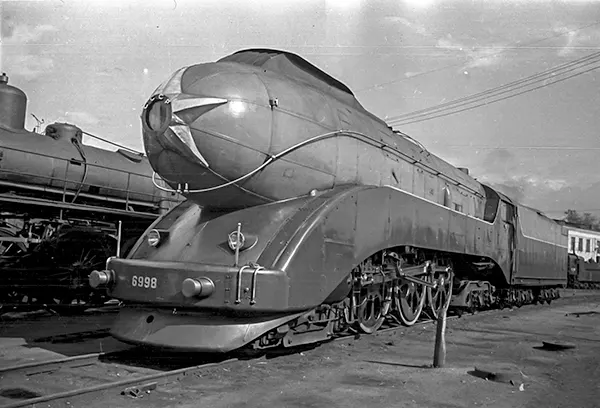
A pre-World War II Soviet Type 2-3-2V locomotive.
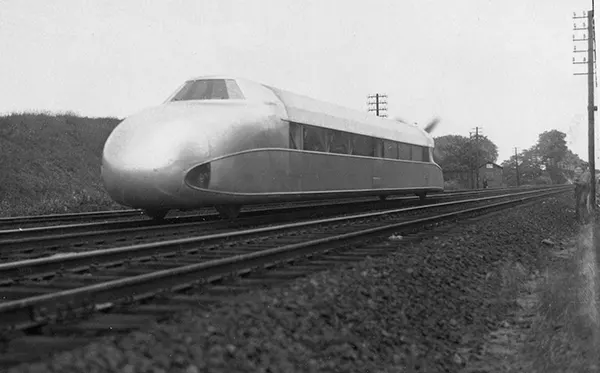
The Schienenzeppelin navigating the steep Erkrath-Hochdahl ramp in 1931.
(Photo credit: Streamliner Memories / Imbued with Hues / Wikimedia Commons).