
Death has always inspired the living to create, to protect, to memorialize, and sometimes, to astonish.
Across centuries and continents, the graves of the ordinary and the extraordinary alike have become canvases for human emotion, ingenuity, and occasionally, outright eccentricity.
From iron cages designed to outwit grave robbers in Victorian Scotland to an underwater memorial resting 60 feet beneath the Atlantic, the stories behind these resting places are as remarkable as the lives — and deaths — they commemorate.
The Grave of the Clasped Hands
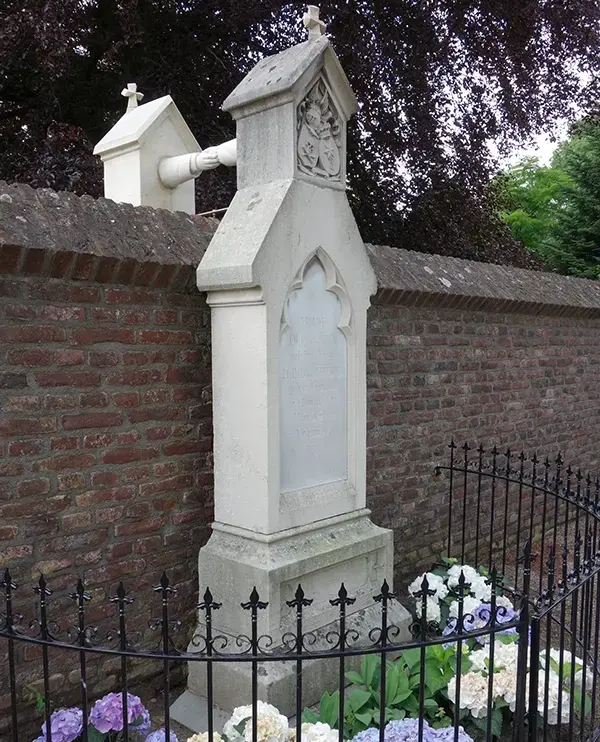
Located in Het Oude Kerkhof (The Old Cemetery) in Roermond, Netherlands.
Few gravestones in the world carry as much emotional and historical weight as this one.
To understand why, one must look back at 19th-century Dutch society, which operated under a system known as “Pillarisation” — a rigid policy that segregated religious communities at virtually every level of public and private life.
Separate Catholic and Protestant cemeteries were not merely common; they were the rule. It was within this climate of division that a Protestant colonel named J.W.C. van Gorkum and a Roman Catholic noblewoman, J.C.P.H. van Aefferden, fell in love and married in 1842.
Their union was met with widespread disapproval, but the couple remained devoted to one another throughout their lives, often seen walking together hand in hand through their community.
When van Gorkum passed away in 1880, the conventions of the time required that he be buried in the Protestant section of the local cemetery. Van Aefferden, determined not to be separated from her husband even in death, made careful arrangements well in advance.
Rather than accepting a place in her family’s Catholic plot, she requested to be buried as close to her husband’s grave as physically possible — on the other side of the brick wall that divided the two sections.
The result is one of the most quietly powerful grave monuments in existence: two stone hands reaching across the wall that separates them, clasped together in an eternal embrace.
The Bean Tombstone Puzzle
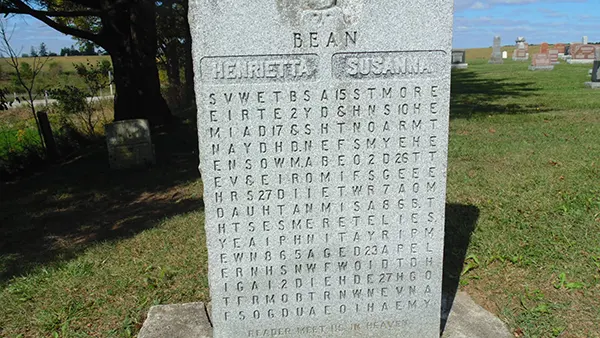
Located in Rushes Cemetery in Wellesley, Ontario.
For over a century, visitors to this quiet Ontario cemetery were drawn to a peculiar headstone shared by two women named Henrietta and Susanna Bean — not because of its grandeur, but because of the strange crossword-like code engraved across its face.
Grave rubbings were taken, local historians puzzled over it, and amateur cryptographers tried their hand at cracking it, all without success. The stone kept its secret stubbornly and for a very long time.
What was known was this: in 1867, a physician named Dr. Samuel Bean had the stone erected in secret as a tribute to his two wives, both of whom had died within a few years of one another.
He had them buried side by side beneath the cryptic inscription, but before he could reveal its meaning to anyone, he drowned in a sailing accident, taking the answer with him to his own grave.
The mystery endured until the 1970s, when a 94-year-old woman living in a nearby retirement home became the unlikely hero of the story, successfully deciphering the code that had baffled generations before her.
The inscription, it turned out, begins on the seventh character of the seventh row and spirals outward in a diagonal pattern, reading: “In memoriam Henrietta, 1st wife of S. Bean, M.D. who died 27th Sep. 1865, aged 23 years, 2 months and 17 days and Susanna his 2nd wife who died 27th April, 1867, aged 26 years, 10 months and 15 days, 2 better wives 1 man never had, they were gifts from God but are now in Heaven. May God help me, S.B., to meet them there.”
The Tomb with a Stairway
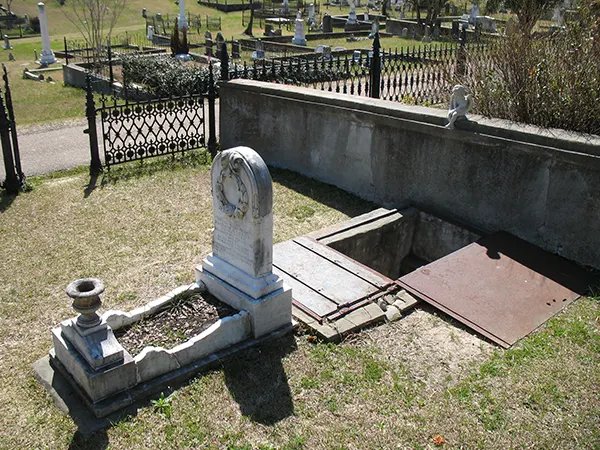
Located in Natchez City Cemetery in Natchez, MS.
Parenthood in the 19th century carried with it a particular kind of sorrow that is difficult to fully grasp today.
With roughly half of all children dying before reaching puberty, grief was not an exception to the human experience — it was woven into it. The loss of a child touched every corner of society, from the most ordinary households to the highest offices in the land.
President Lincoln and First Lady Mary Todd were among the many parents who never recovered from such a loss, and for every story that history recorded, thousands more faded away in silence.
One that did not fade belongs to a woman named Ellen Ford. Her daughter, Florence Irene Ford, died at the age of ten from yellow fever, leaving behind a mother unwilling to accept that her role as protector had ended.
During her short life, Florence had been terrified of thunderstorms, and it had always been her mother who stayed close until the fear passed.
Ellen Ford channeled her grief into something utterly singular. She had Florence’s grave designed with a small glass window and a staircase that descended directly to the level of the casket, fitted with metal trap doors to shelter anyone who descended from rain or wind.
When a storm rolled in, Ellen could go down those stairs and sit beside her daughter, continuing in death the comfort she had always provided in life.
The window has since been obscured by a concrete barrier, added over time to discourage vandalism, but the stairwell remains intact and open to visitors.
The Haunting Grave of Fernand Abelot
Located in Père Lachaise Cemetery in Paris, France.
Père Lachaise Cemetery in Paris is home to some of the most celebrated graves in the world, attracting visitors who come to pay their respects to writers, musicians, and artists whose legacies have outlasted generations.
Among these monuments, one consistently stops people in their tracks — not because of the fame of the man it memorializes, but because of its deeply unsettling appearance.
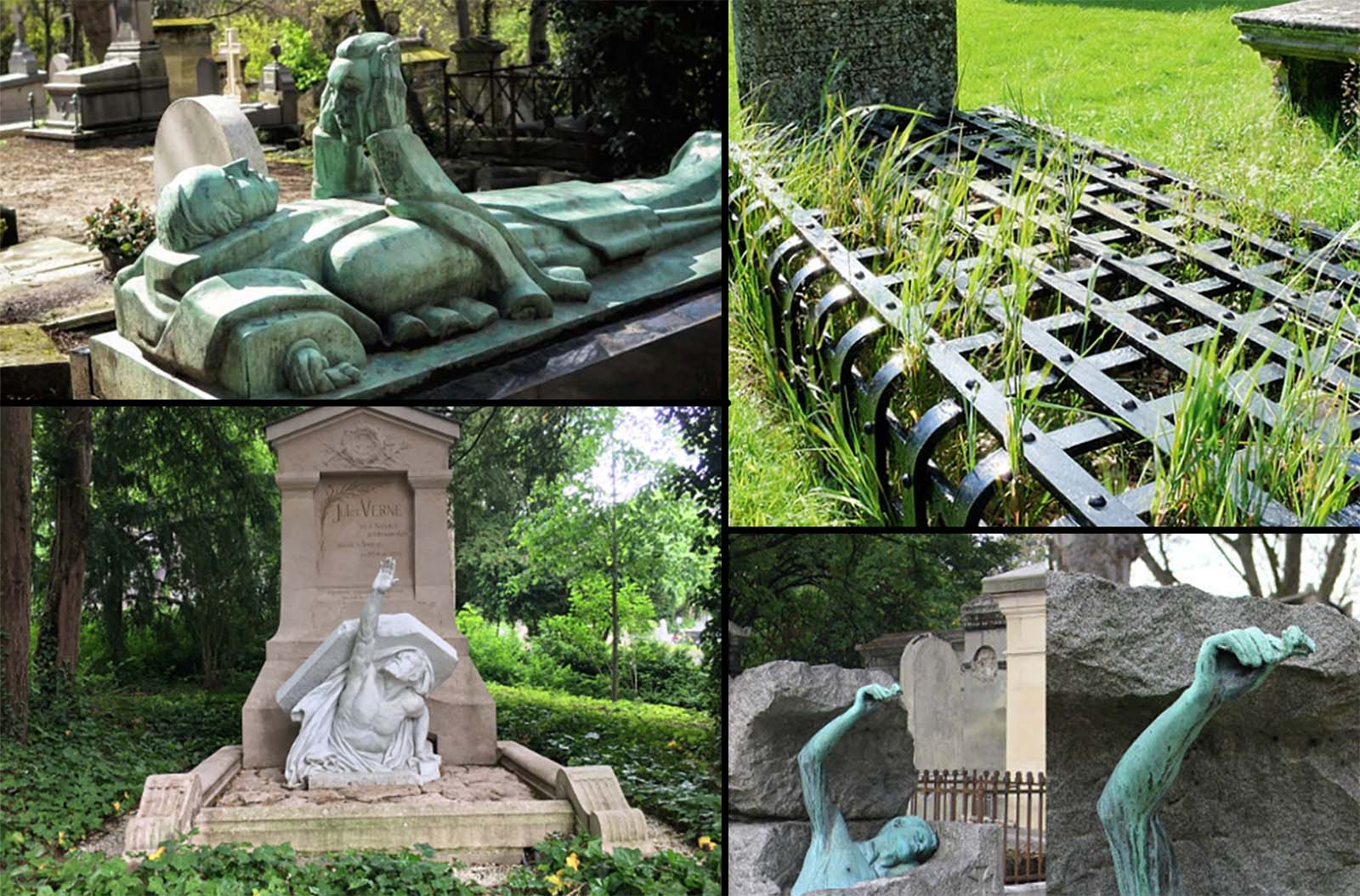
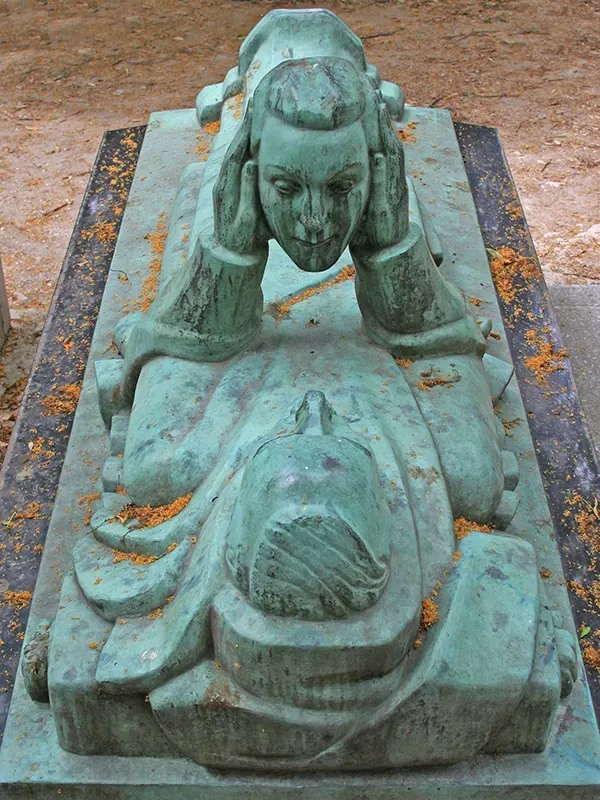
The grave of Fernand Abelot depicts a stone figure of a man lying down, cradling a severed human head in his hands.
It is the kind of image that tends to appear on lists of the world’s most macabre cemetery statues, and understandably so. Very little is known about Abelot himself, which only deepens the air of mystery surrounding the monument.
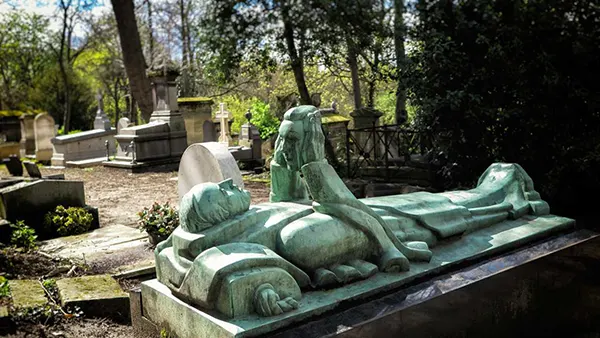
What is known is that the statue was created in accordance with his final wish: to spend eternity gazing at the face of his wife.
The decapitated head, unsettling as it appears to modern eyes, is hers — and the figure holding it is a man who simply could not bear the thought of looking anywhere else.
The epitaph carved into the stone reads: “They marveled at the beauty of the journey that brought them to the end of life.”
The Mortsafe Graves (The Creepy Zombie Trap Graves of The United Kingdom)
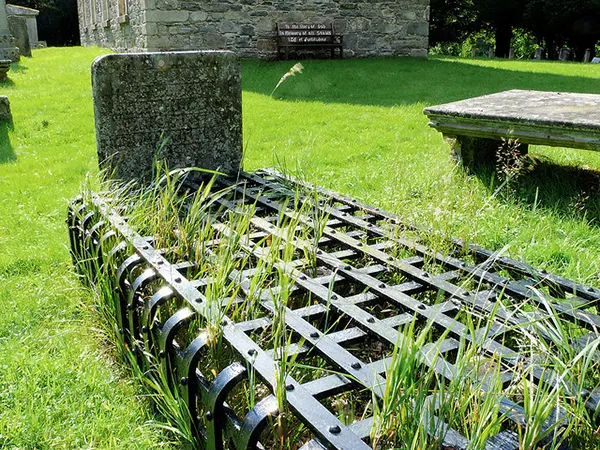
Walking through a Scottish cemetery from the 18th or 19th century, a visitor might notice something deeply unusual: graves encased in heavy iron cages, bolted shut and anchored to the earth as though something — or someone — needed to be kept inside.
Local folklore, of course, ran wild with this imagery, weaving tales of the undead and zombie-like figures restrained beneath the iron bars. The truth, while considerably less supernatural, is no less disturbing.
During the Victorian era, the study of human anatomy posed a serious logistical problem for the medical establishment.
While the law permitted students to dissect the bodies of executed criminals, the supply of such cadavers was nowhere near sufficient to meet demand. This shortage gave rise to a grim profession: the body snatcher.
Gangs of so-called “resurrection men” would descend on freshly dug graves under cover of darkness, exhuming recently buried bodies and selling them to medical schools for profit.
Grieving families, horrified at the thought of their loved ones ending up on a dissection table, took matters into their own hands.
The solution was the mortsafe — a heavy iron cage or framework bolted over a grave to make unauthorized exhumation as difficult as possible. Some mortsafes were rented out by the church and removed once the body had decomposed enough to be of no value to the trade.
Others were permanent fixtures, and many still stand today. While these cage graves appear throughout England, Wales, and Ireland, Scotland boasts the highest concentration of them, serving as an enduring and rather haunting reminder of the uncomfortable relationship between medical progress and human dignity.
The Tazacorte Martyrs Memorial
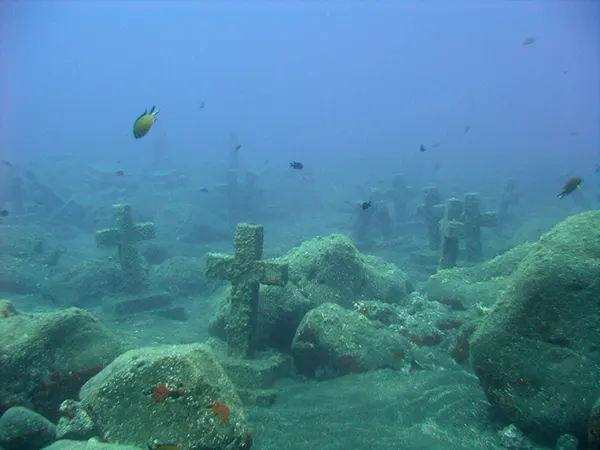 Most memorials are built to be seen. This one was built to be submerged. Located 60 feet beneath the surface of the North Atlantic Ocean near La Palma Island in the Canary Islands, the Tazacorte Martyrs Memorial is among the most unusual and remote tributes to human loss anywhere in the world.
The story behind it reaches back to 1570, when a group of 40 Jesuit missionaries set sail from Portugal, bound for Brazil.
Their voyage was violently cut short when their ship was intercepted by French pirates under the command of Jacques Sourie.
Every priest on board was killed in the attack, with a brutality that reportedly extended to the dismemberment of several victims, their remains thrown into the sea.
The precise location of the massacre, just off the coast of La Palma, was later marked with a memorial consisting of 40 crosses — one for each man who lost his life that day.
The decision to place the memorial underwater, at the site of the atrocity itself rather than on land at a safe remove, gives it a solemnity that few above-ground monuments can match.
Divers who make the descent to visit the crosses have described the experience as otherworldly — an eerie, silent tribute to lives extinguished without mercy more than four centuries ago.
The Socialite Buried Inside Her Ferrari
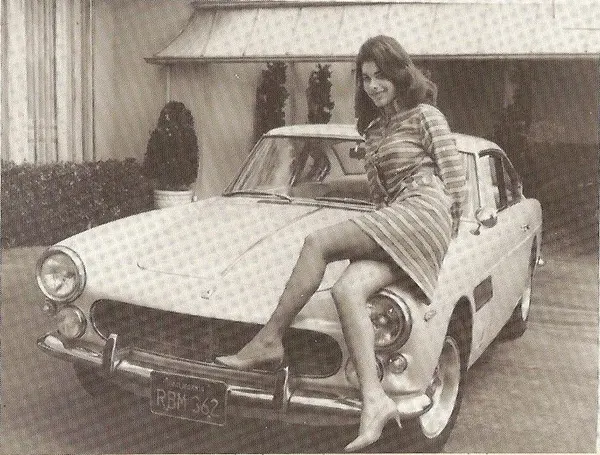 The Alamo Masonic Cemetery in Bexar County, Texas, is home to one of the most unconventional burials in American history.
Beneath the ground lies a concrete-encased Ferrari 330 America — a powder blue 1964 model — and seated inside it, dressed in an elegant white lace nightgown, is Sandra Ilene Hara West, a wealthy Beverly Hills socialite who died in March of 1977.
West had been meticulous in planning her final arrangements. Four years before her death, she specified in her will that she wished to be buried “next to my husband in my lace nightgown by Porter Loring Mortuary and in my Ferrari with the seat slanted comfortably.”
Her brother-in-law initially contested the request, but the courts ultimately upheld it.
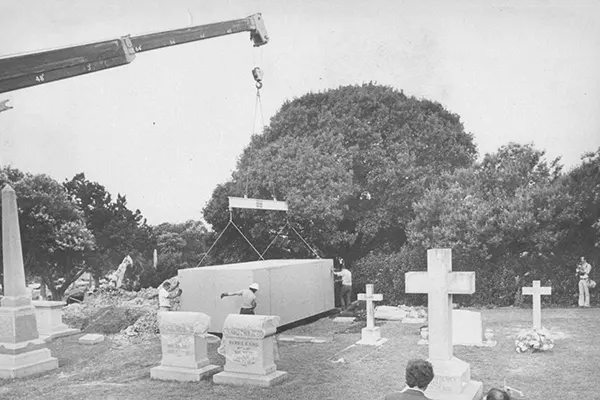 On May 18, 1977 — approximately two months after her passing — the wish was carried out in full.
A crane was brought in to lower a specially constructed concrete box, containing both the car and West’s body, into a grave measuring 19 feet long, 10 feet wide, and 9 feet deep.
Once the box was in place, additional concrete was poured over it to deter any would-be grave robbers with an eye for vintage Italian sports cars.
The burial made national headlines at the time, and the grave remains one of the most talked-about final resting places in the United States.
The Deathly Procession Which Never Moves
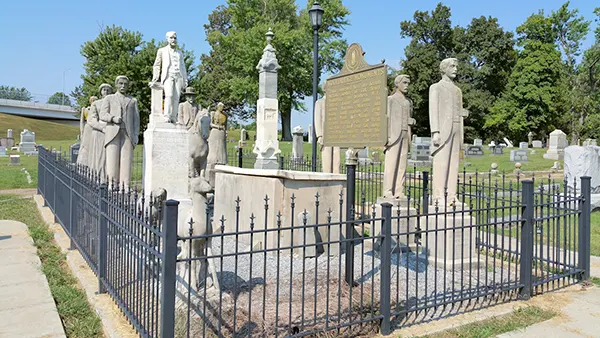 Tucked inside Maplewood Cemetery in Mayfield, Kentucky, stands one of the strangest collections of funerary monuments in the country.
Eighteen life-sized stone statues occupy the plot, arranged in a formation that locals have long referred to as “the strange procession which never moves.” At the center of it all — and the only person actually buried there — is Colonel Henry G. Wooldridge.
Before his death on May 30, 1899, Colonel Wooldridge commissioned the statues himself, apparently determined to spend eternity surrounded by those he had loved in life.
The figures include his mother, several brothers and sisters, nieces, and beloved animals, including dogs. Two statues of Wooldridge himself were added to the ensemble: one depicting him astride his favorite horse, the other showing him standing beside a lectern.
Conspicuously absent is any likeness of his father, an omission that has never been explained and that continues to fuel quiet speculation among visitors and historians alike.
The monument was featured on the television program Ripley’s Believe It or Not in September 1984, bringing national attention to what had long been a local curiosity. Whether it reads as touching or unsettling tends to depend entirely on the viewer.
The Tomb of Jules Verne
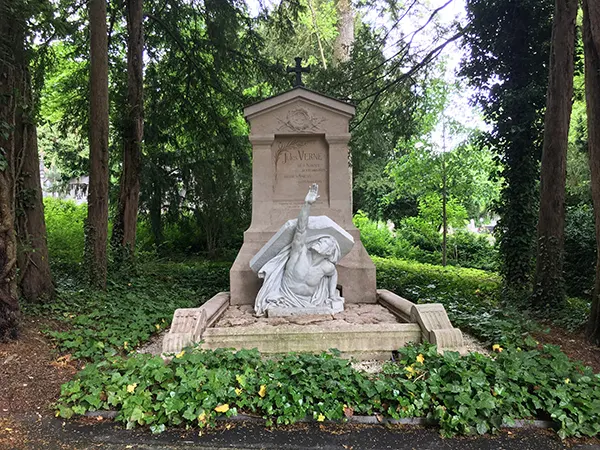 In the La Madeleine Cemetery in Amiens, France, the grave of Jules Verne does not simply mark where the man is buried — it makes a statement about what he stood for.
Verne, the 19th-century French novelist widely regarded as one of the fathers of science fiction, gave the world some of its most enduring adventure stories, among them Journey to the Center of the Earth, Twenty Thousand Leagues Under the Sea, and Around the World in Eighty Days.
It seemed only appropriate that the monument above his grave would be as dramatic as the worlds he conjured on the page.
Two years after Verne’s death in 1905, sculptor Albert Roze unveiled a work titled Vers l’Immortalité et l’Éternelle Jeunesse — “Towards Immortality and Eternal Youth.”
Working from Verne’s actual death mask, Roze carved a figure of the writer in the act of rising from the earth, breaking free of his tombstone while still wrapped in his burial shroud, one arm stretched upward toward the sky.
The image is at once striking and deeply fitting: a man who spent his life imagining what lay beyond the horizon, depicted in death as still reaching for something just out of grasp.
Oscar Wilde — Père Lachaise Cemetery, Paris, France
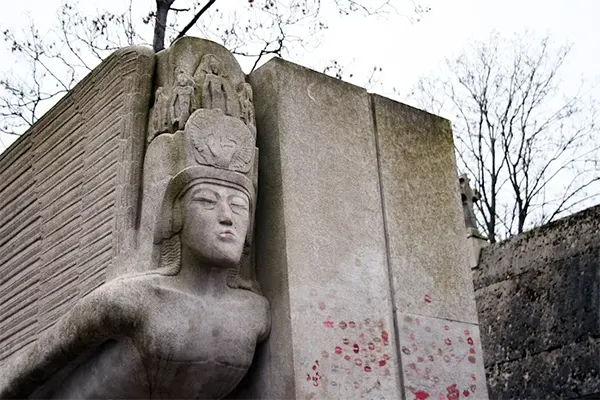 Oscar Wilde left behind no instructions for his burial, but the monument that stands over his grave in Père Lachaise Cemetery manages to capture his spirit with remarkable precision.
The Egyptian Revivalist sculpture, bold and theatrical in equal measure, suits a man who made an art form out of aesthetic provocation and wit. What truly sets the tomb apart, however, is the tradition that has grown up around it.
For generations, visitors have pressed lipstick-marked kisses onto the stone as a gesture of affection and tribute, a custom so enthusiastically observed that the monument’s surface became heavily stained with decades of accumulated prints.
Authorities eventually installed a glass barrier around the tomb to protect it, though even this has not entirely discouraged the more devoted admirers from finding ways to leave their mark. The kisses, in a sense, have become part of the monument itself.
Victor Noir — Père Lachaise Cemetery, Paris, France
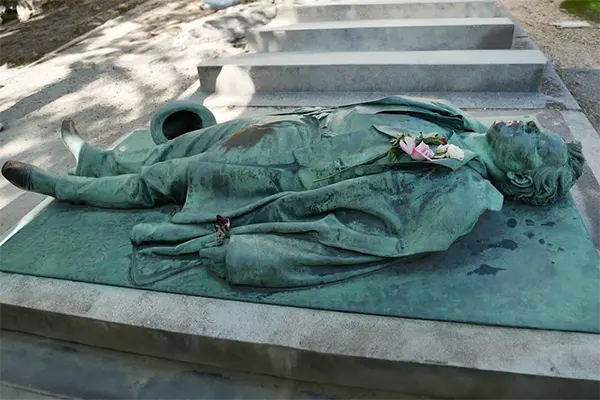 Also within Père Lachaise lies one of the most visited — and most touched — graves in the world. Victor Noir was a French journalist and fierce critic of the imperial regime who was shot and killed at the age of 21 by Pierre Bonaparte, a cousin of Emperor Napoleon III.
His death caused an enormous public outcry, and the life-sized bronze statue placed over his grave became both a tribute and a symbol.
Over time, the statue took on an unexpected significance. One particular anatomical feature of the bronze figure became highly polished from constant contact, as visitors began touching it in the belief that doing so would bring good luck in matters of love and fertility.
The tradition has endured for well over a century, drawing visitors from across the world to a quiet corner of a Paris cemetery. As monuments go, it is difficult to imagine one that better reflects both the city and the man it was built to honor.
Rudolf Nureyev — Cimetière de Sainte-Geneviève-des-Bois, near Paris, France
 While Mikhail Baryshnikov’s dramatic defection to the West in 1974 tends to dominate popular memory, it was Rudolf Nureyev who made the leap more than a decade earlier, slipping away from Soviet control in 1961 during a tour stop in Paris.
The move shocked the world and set the stage for one of the most celebrated careers in the history of ballet.
Widely regarded as one of the greatest male dancers to ever grace a stage, Nureyev spent the remainder of his life bringing the art form to audiences far beyond the traditional opera house circuit, transforming ballet’s public image in the process.
It would have been almost inconceivable for a performer of his theatrical magnitude to be marked by an ordinary headstone, and indeed he is not.
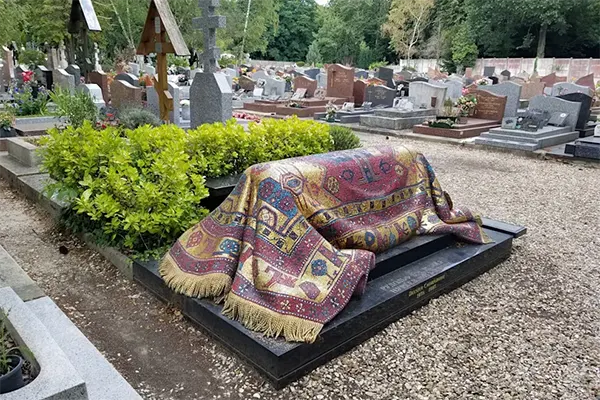
Draped over his grave is a stunning mosaic crafted to resemble a kilim rug — a style of textile Nureyev was particularly devoted to during his lifetime.
The rich, interlocking patterns rendered in deep reds, golds, and blues make the monument instantly distinctive, unlike virtually anything else found in a conventional cemetery.
Tragedy and Romance in Paris
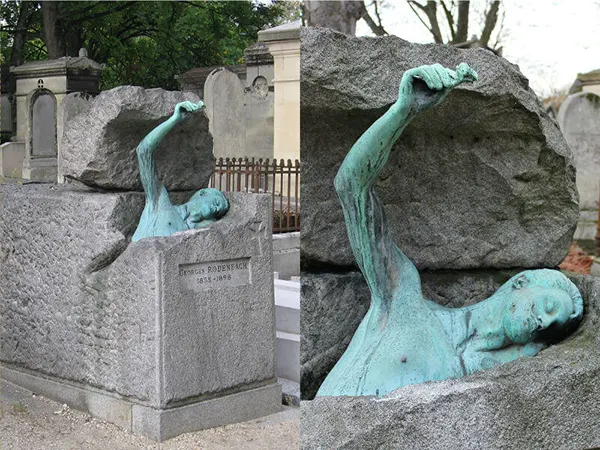 Père Lachaise Cemetery is no stranger to remarkable monuments, but among its many celebrated graves, the tomb of Georges Rodenbach stands out for its sheer emotional intensity.
A 19th-century Belgian writer who spent much of his life in Paris, Rodenbach is perhaps best remembered for his 1892 Symbolist novel Bruges-la-Morte, a haunting portrayal of a widower consumed by grief following the death of his wife, wandering the fog-laden canals of Bruges in an almost trance-like state of mourning.
Love, loss, and the impossibility of moving on were the great themes of his work, and his grave reflects them with quiet precision.
Rising from the stone is a life-sized bronze statue of Rodenbach himself, depicted in the act of emerging from the tomb, one hand extended and clutching a single rose.
Memorial Candle for a Hungarian Heroine
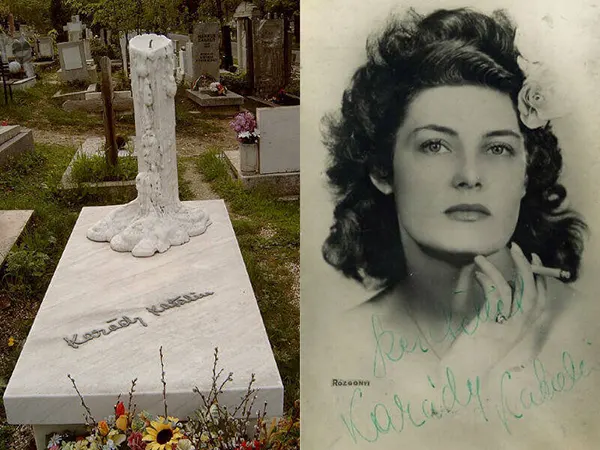 Not all graves mark the end of a story. Some mark the beginning of how a life is truly remembered.
In Farkasreti Cemetery in Budapest, the grave of Katalin Karády has become exactly that — a site of pilgrimage and gratitude for a woman whose courage during one of history’s darkest chapters deserves far wider recognition.
Karády was one of Hungary’s most beloved film actresses during the 1940s, a glamorous and magnetic screen presence whose public image concealed an extraordinary private bravery.
During the Second World War, at enormous personal risk, she sheltered Jewish children in her home and worked to protect others from the horrors unfolding around them.
In 1944, her activities drew the attention of the authorities and she was arrested on suspicion of espionage for the Allies, enduring three months of imprisonment before her release.
After the war, she left Hungary and spent years traveling before eventually settling in New York City, where she lived quietly, running a hat shop far removed from the world of cinema that had once made her famous. She died in February 1990, and her remains were returned to Hungary for burial.
Her grave is marked by a large, intricately carved sculpture designed to resemble a melting candle — a form both fragile and enduring, much like the memory of the woman it honors.
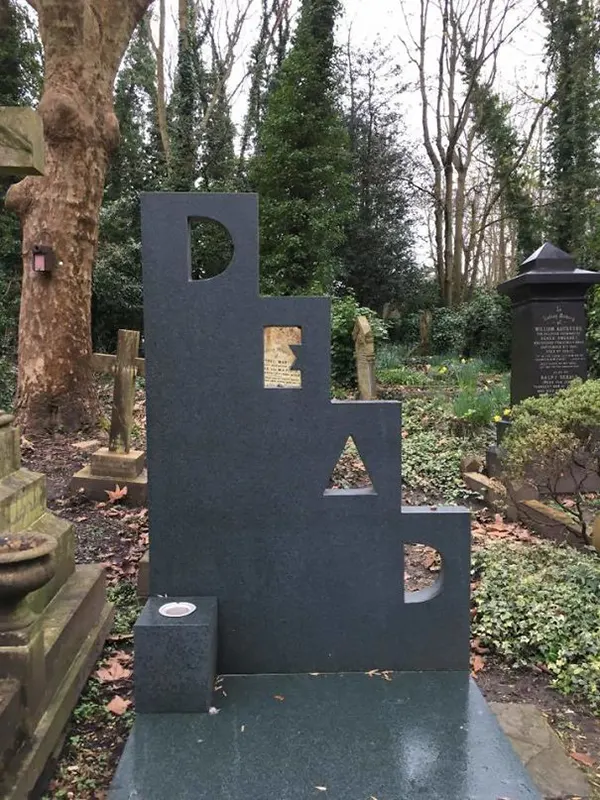
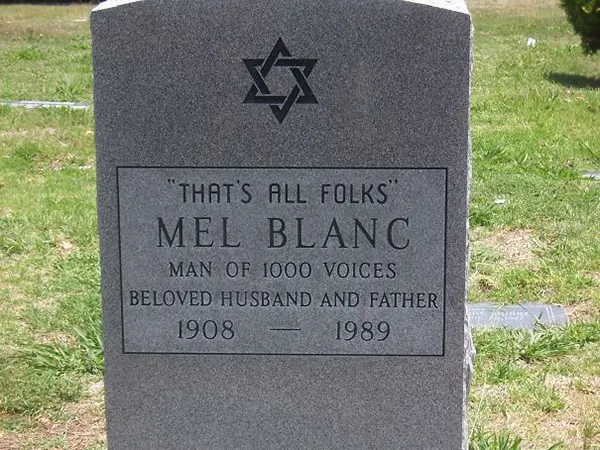
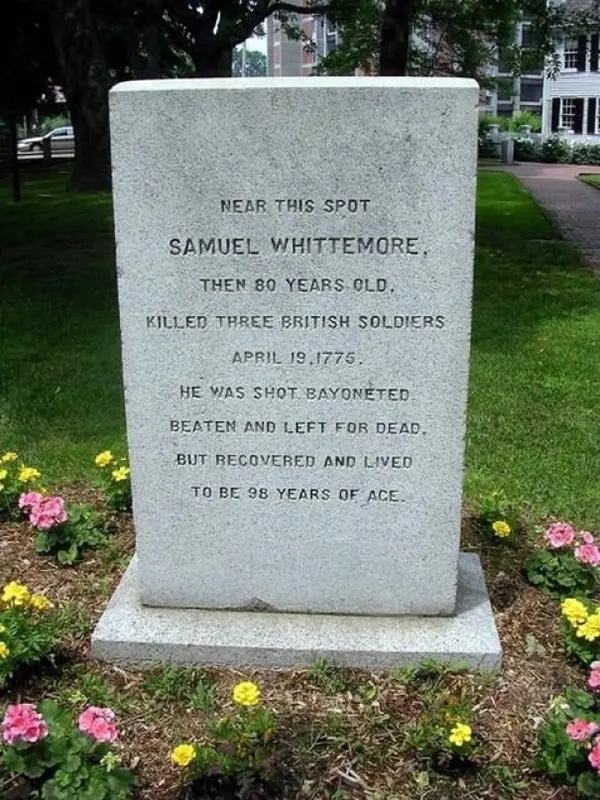
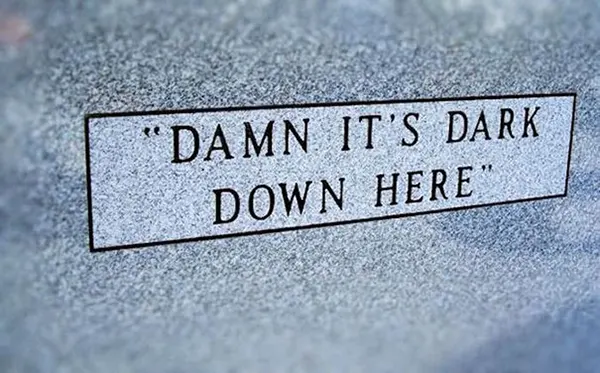
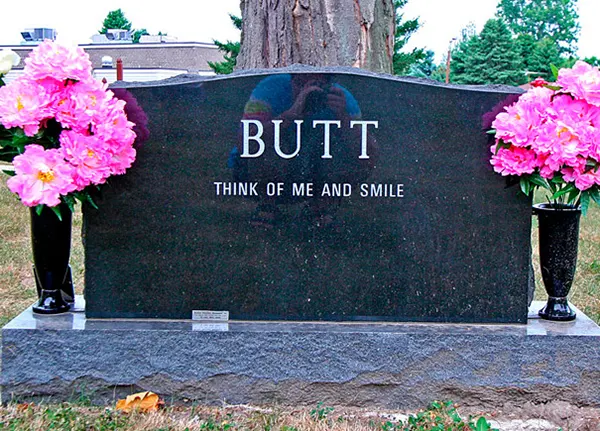
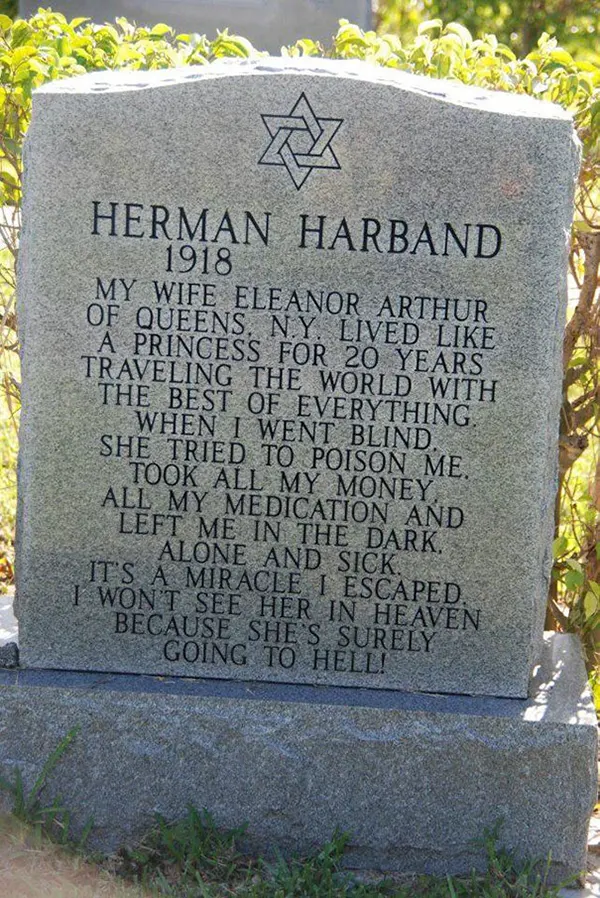
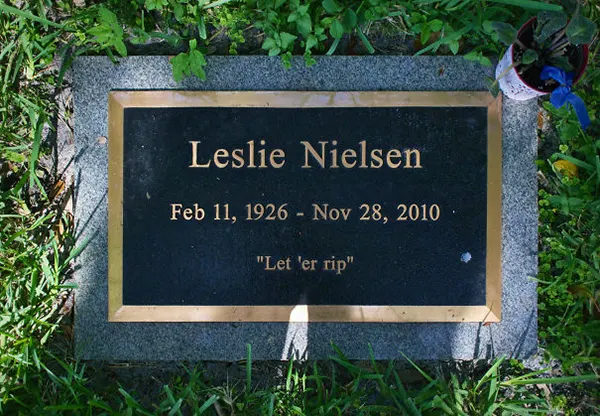
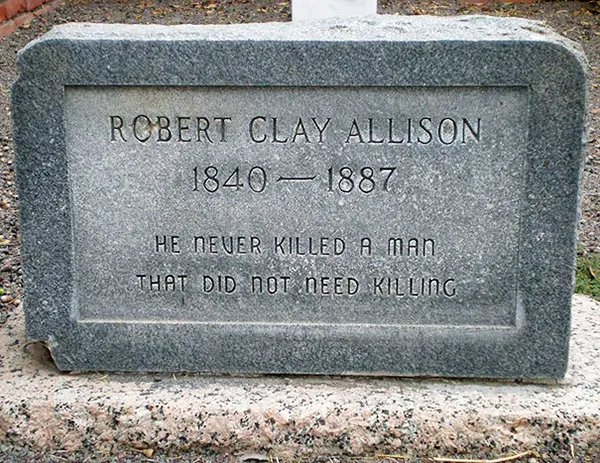
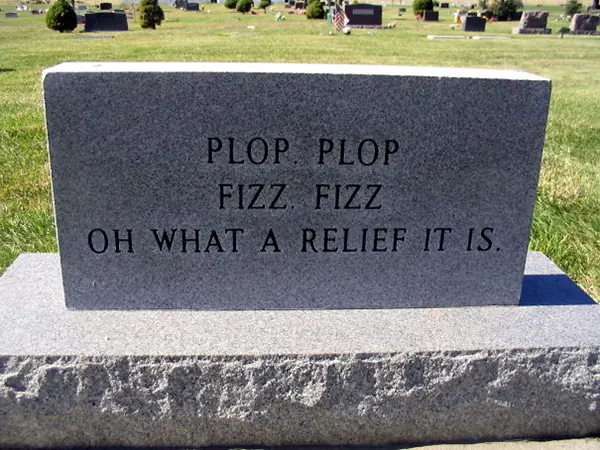
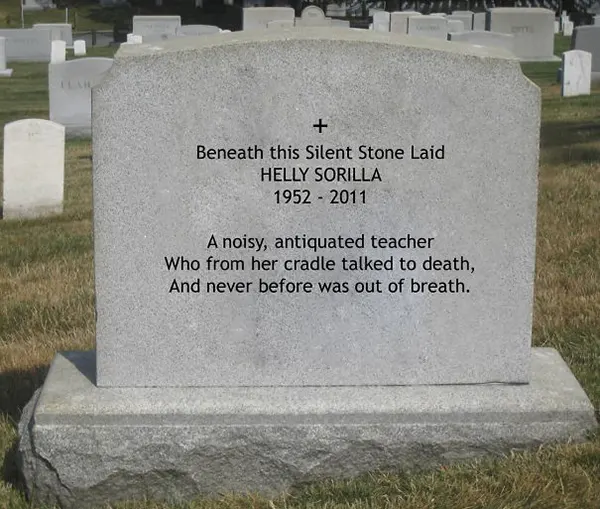
Here Are Some Funny Tombstones By People With An Undying Humor
Memorial Candle for a Hungarian Heroine
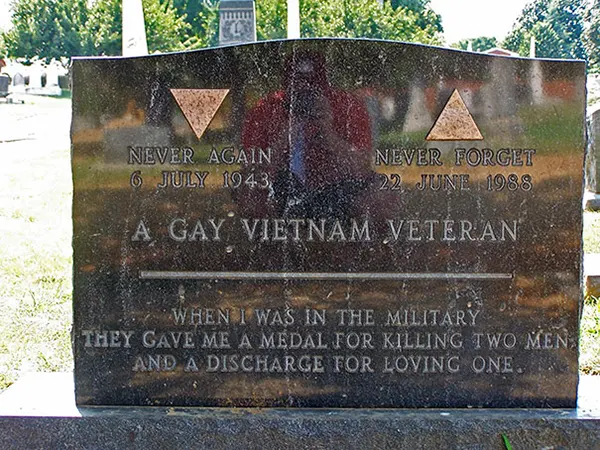
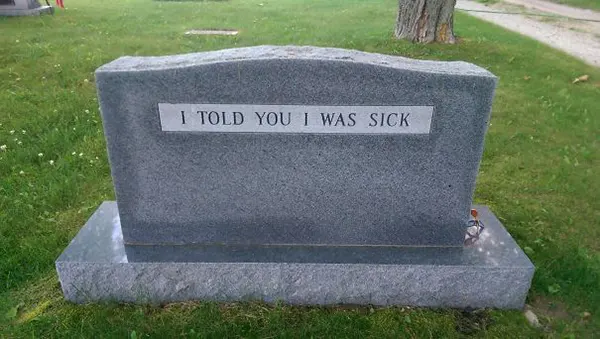
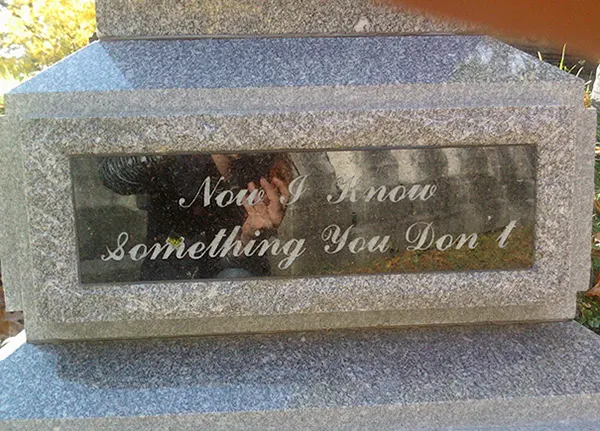
(Photo credit: Wikimedia Commons / Flickr / Pinterest / Britannica).