
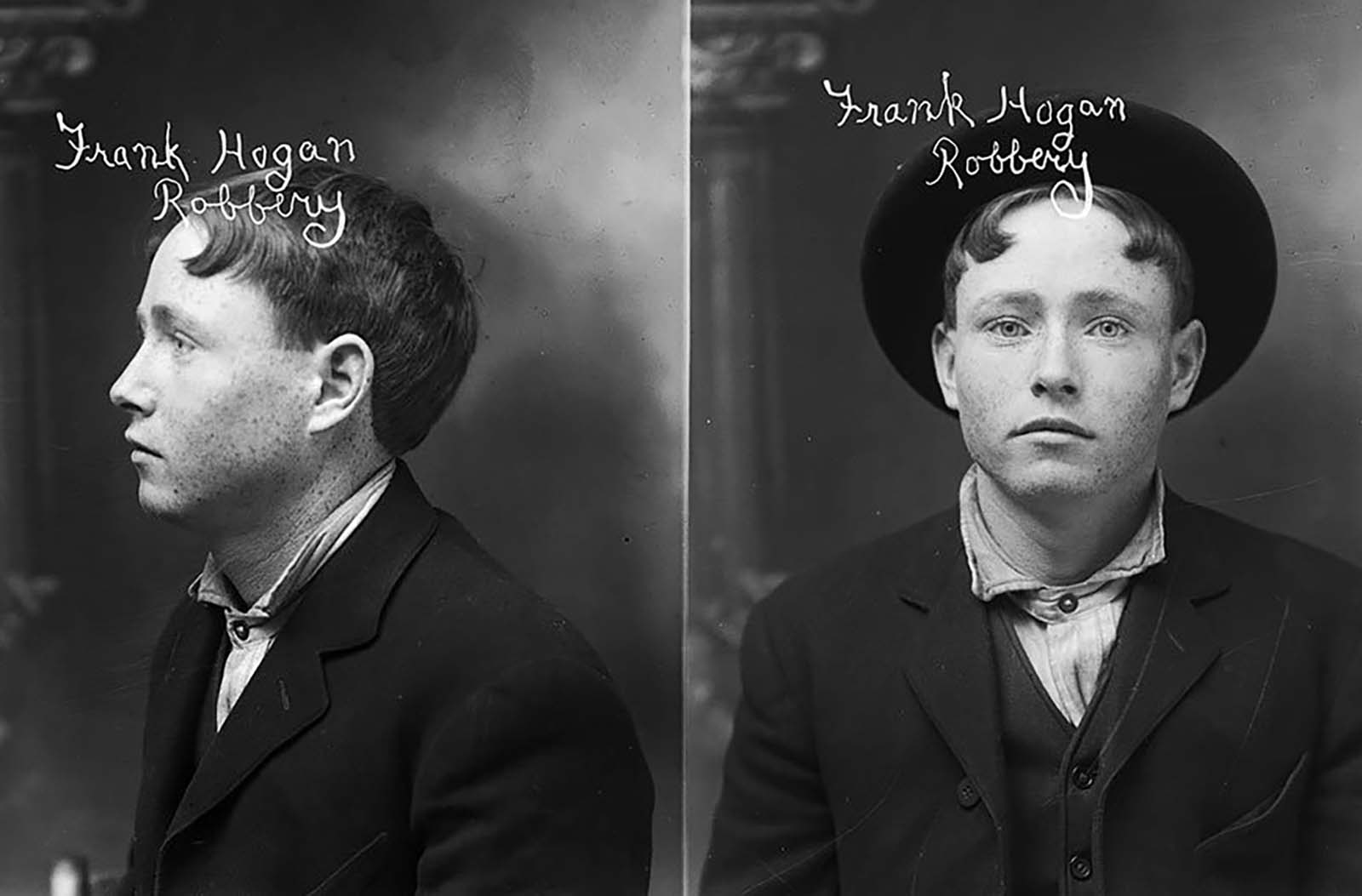

Faces frozen in time stare out from fragile glass negatives that survived more than a century in silence. Some appear nervous, others defiant or exhausted, each one carrying a story that was nearly forgotten forever.
Taken in the small Northern California town of Marysville during the early 1900s, these haunting mugshots offer an unusually personal look at ordinary people who found themselves on the wrong side of the law.
What began as routine police documentation has since become an extraordinary visual record of another era in American history.
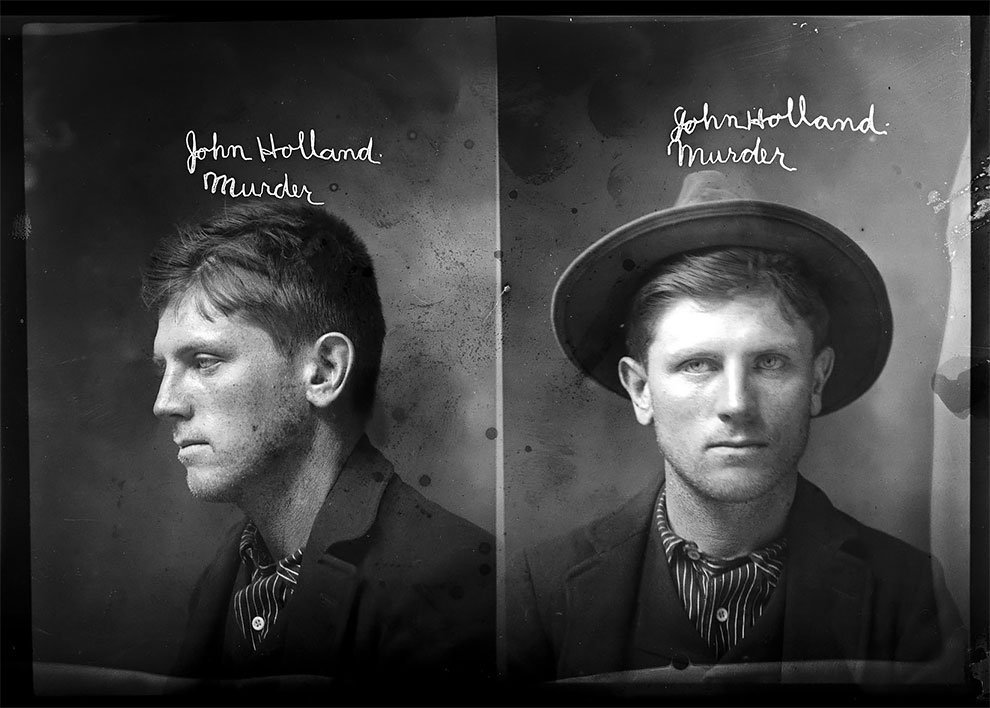 The remarkable collection was rediscovered by New York artist and photographer Arne Svenson, who found hundreds of neglected glass negatives and brought them back to life.
Svenson later published many of these portraits in his book Prisoners: Murder, Mayhem, and Petit Larceny, preserving the faces and histories of men whose identities had long faded from public memory.
The negatives had been abandoned for decades, separated from the lives and circumstances that once gave them meaning.
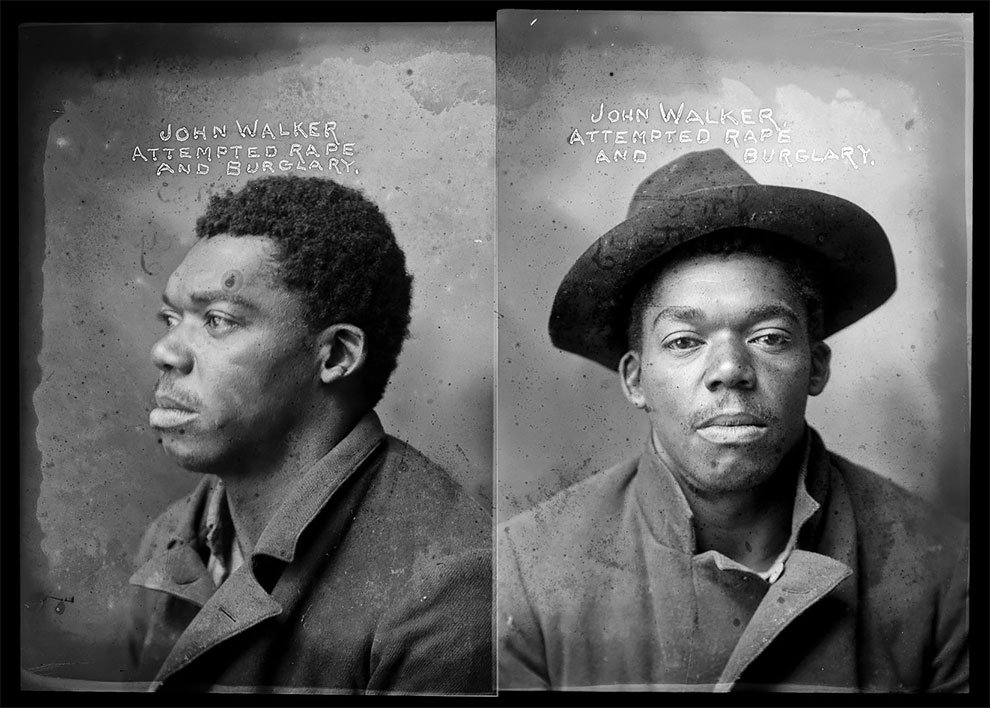 Svenson described such forgotten photographs as “orphaned,” images disconnected from their past and left without context.
Unlike the harsh police photography commonly associated with mugshots, these portraits possess an unexpected warmth and humanity.
The images were taken by Clara S. Smith, a local portrait photographer better known for photographing families, children, and newlyweds than criminal suspects.
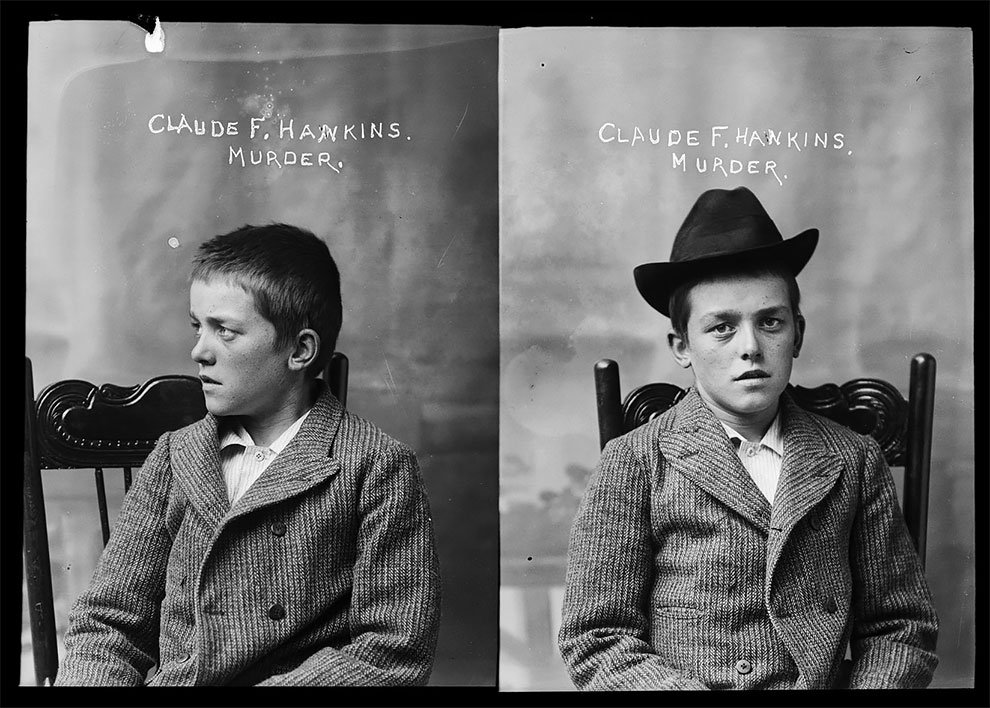
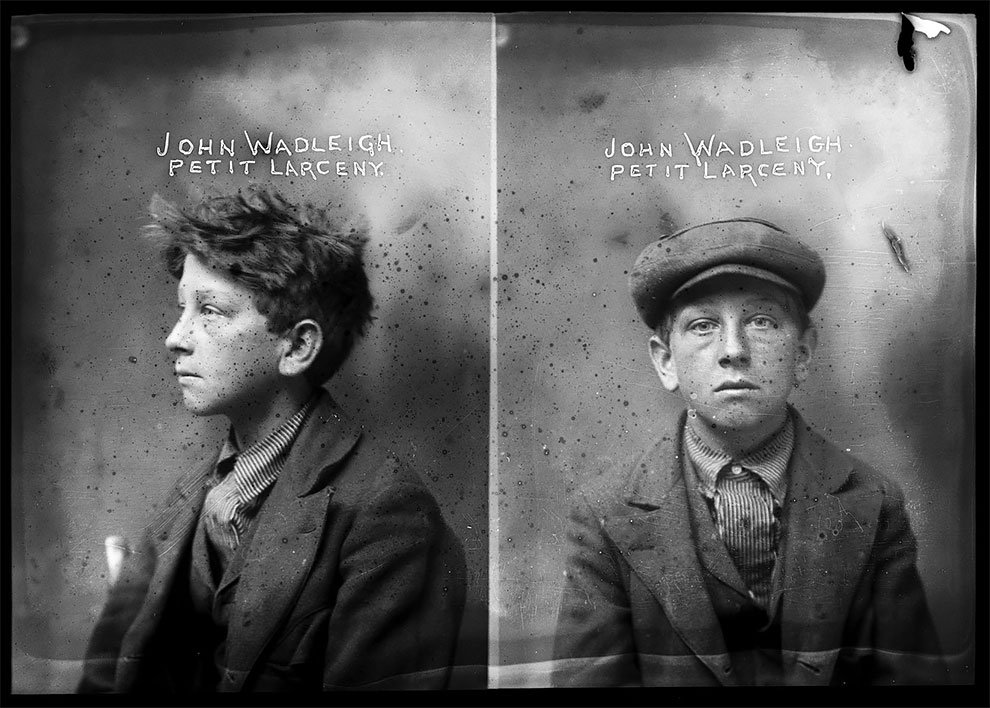 Her studio backdrop, often featuring a softly lit garden scene, remained unchanged when police brought prisoners in to be photographed. That unusual setting gives the portraits a striking contrast.
Men accused of crimes ranging from petty theft to murder stood before the same backdrop used for respectable townspeople, creating images that feel far more intimate than standard law enforcement records.
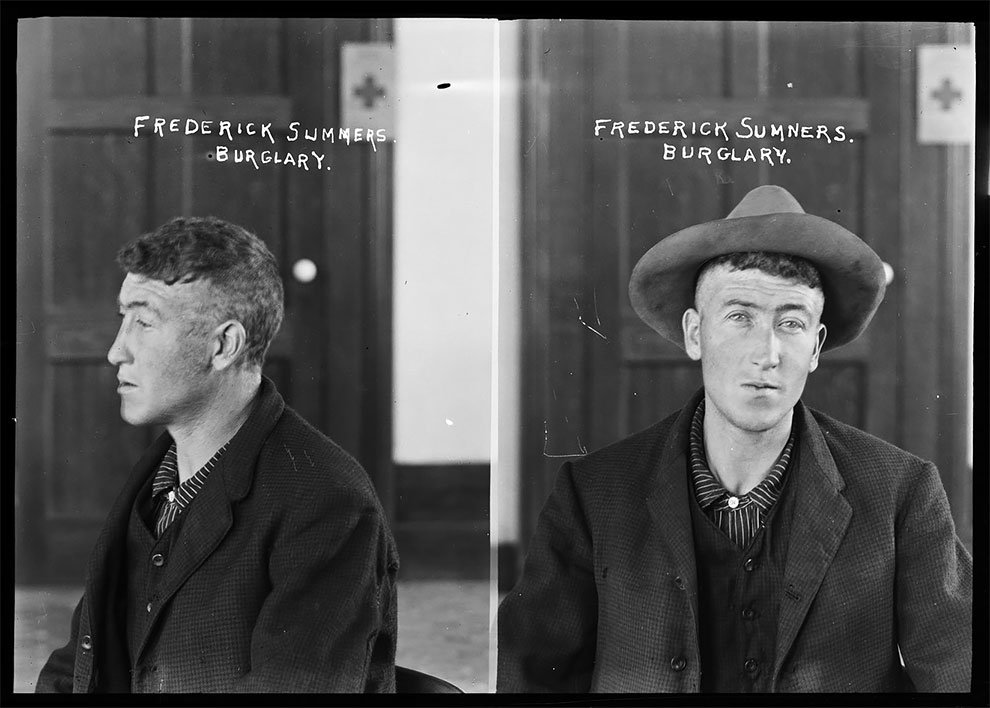 Smith’s photography captured far more than identification details. Expressions of fear, anger, resignation, and uncertainty are visible in nearly every face.
For many of these prisoners, this may have been the only formal portrait ever taken of them. Some stare directly into the camera with quiet dignity, while others appear uncomfortable beneath the photographer’s gaze.
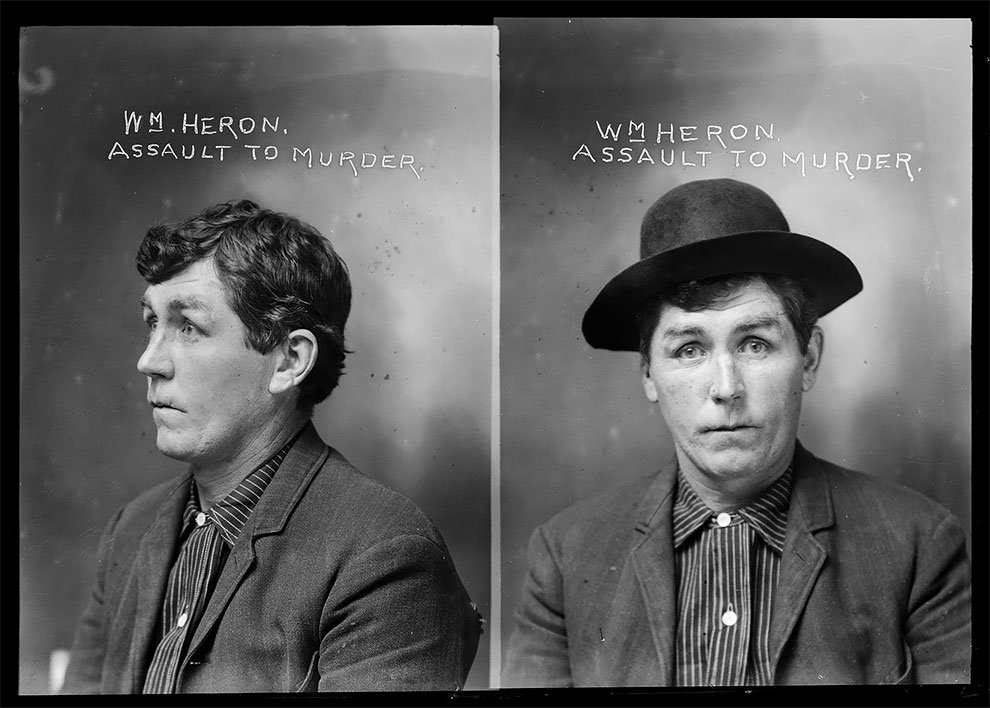
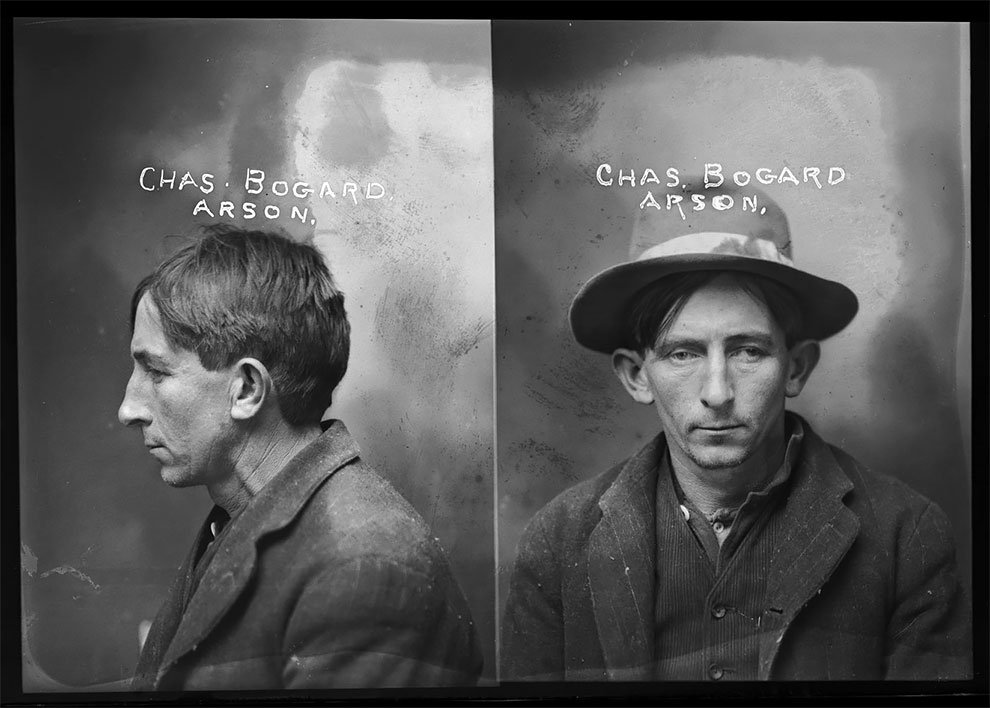
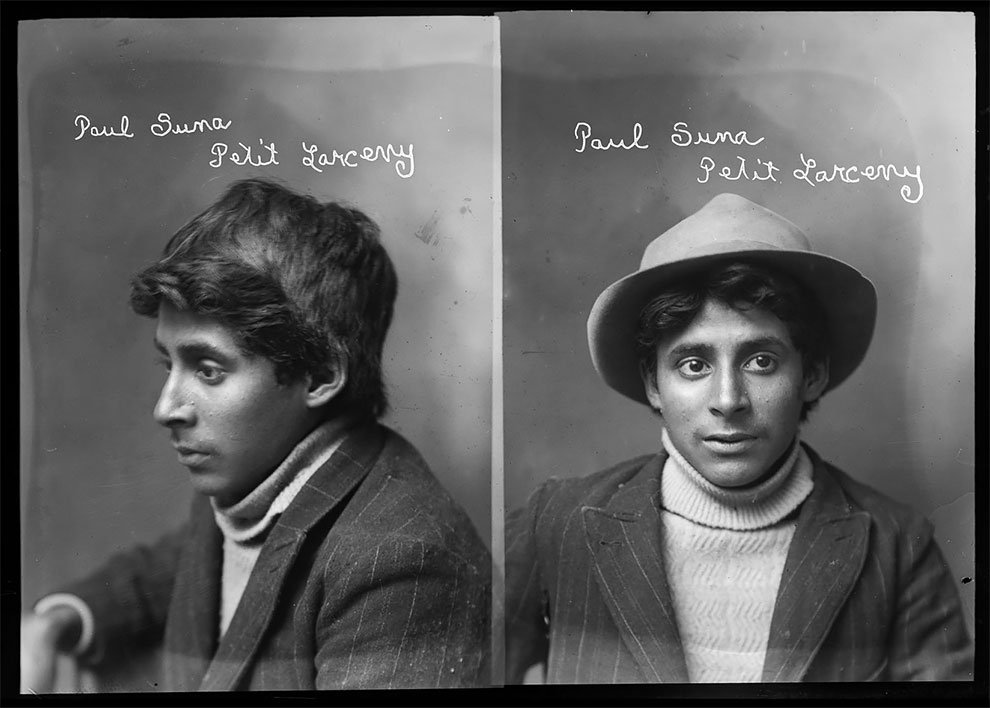
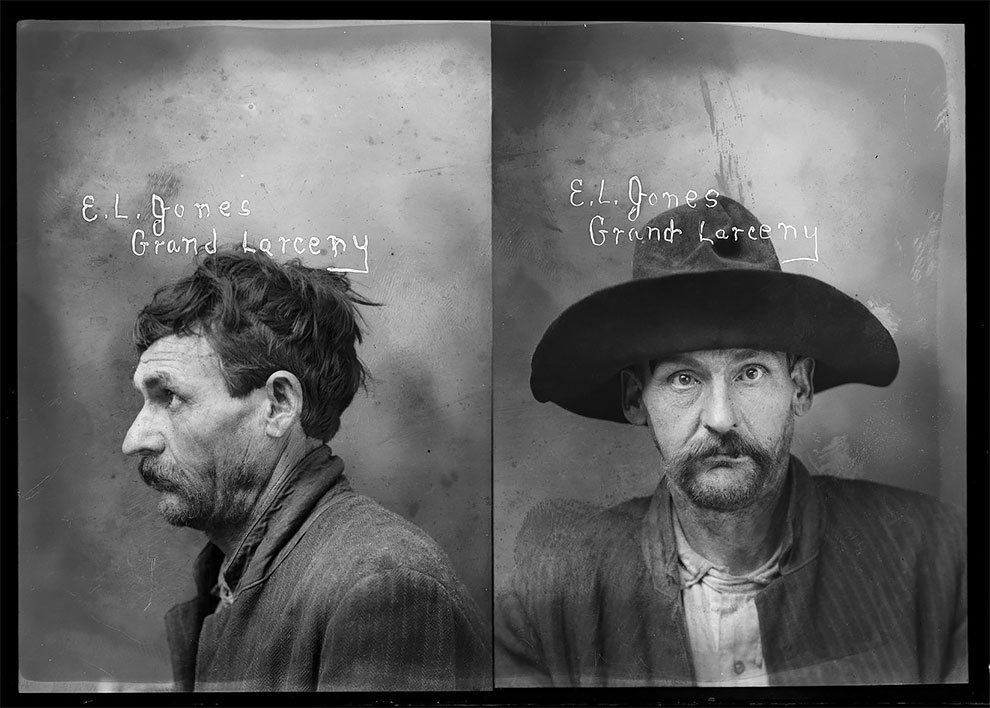
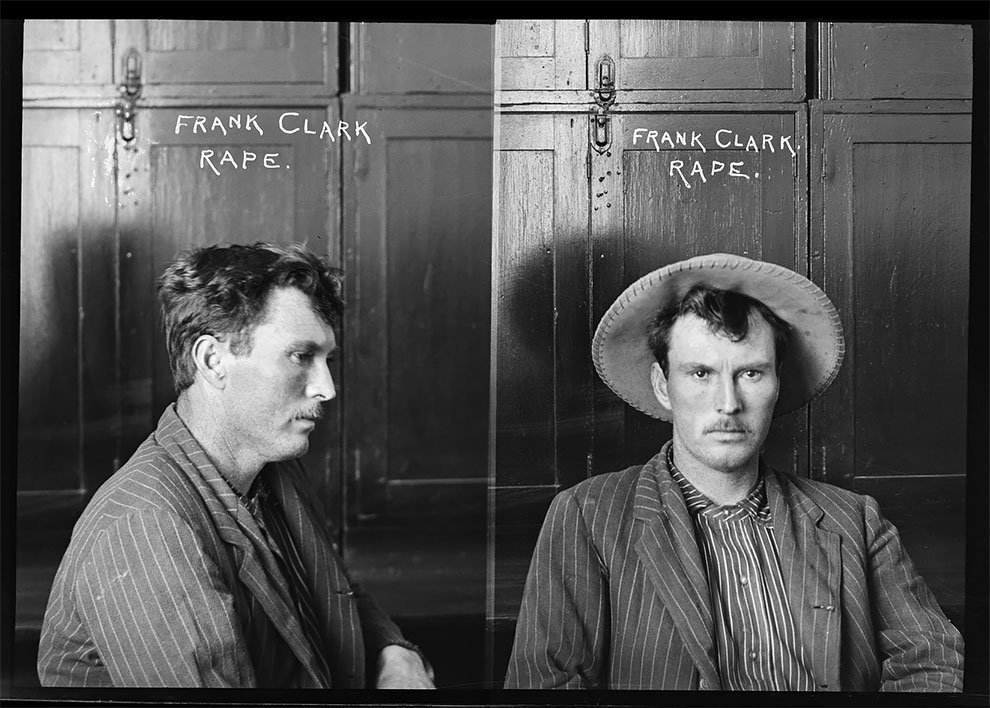
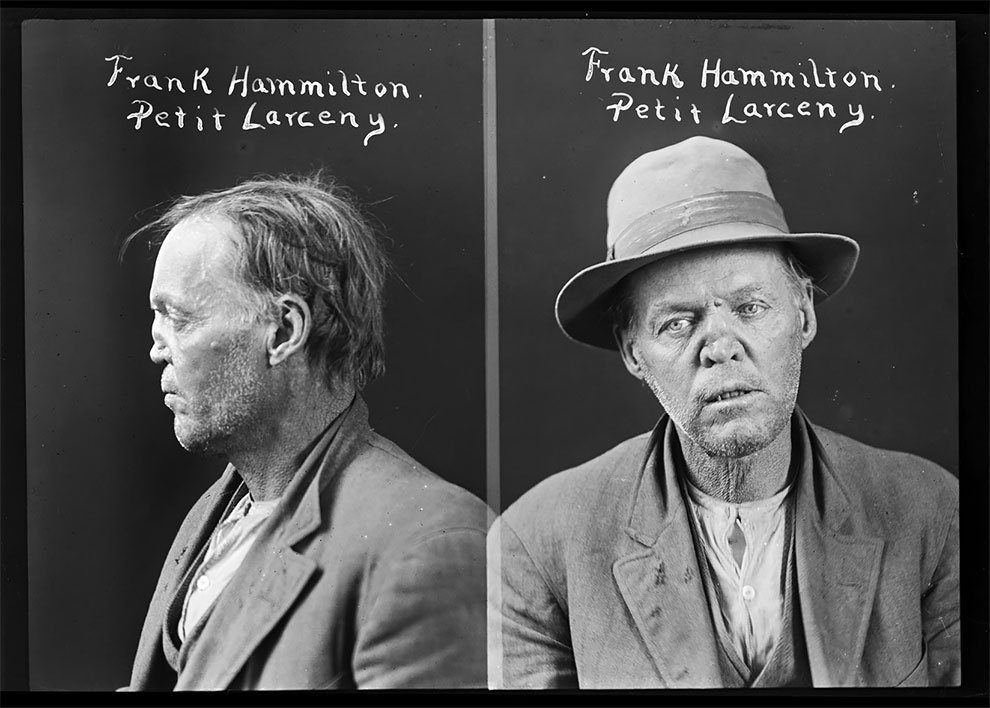
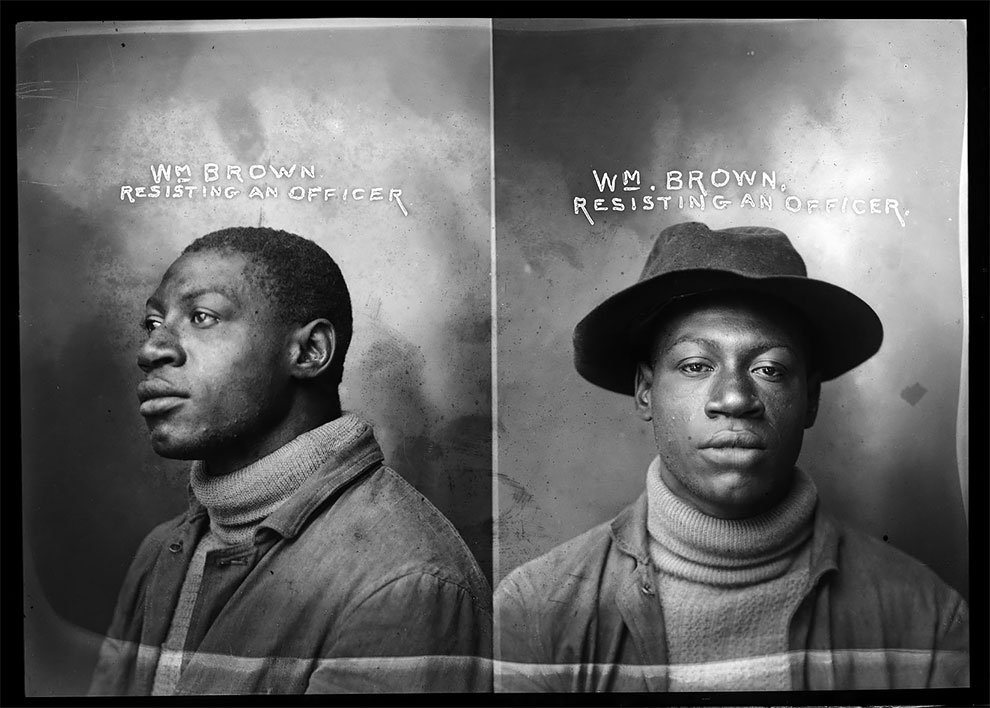
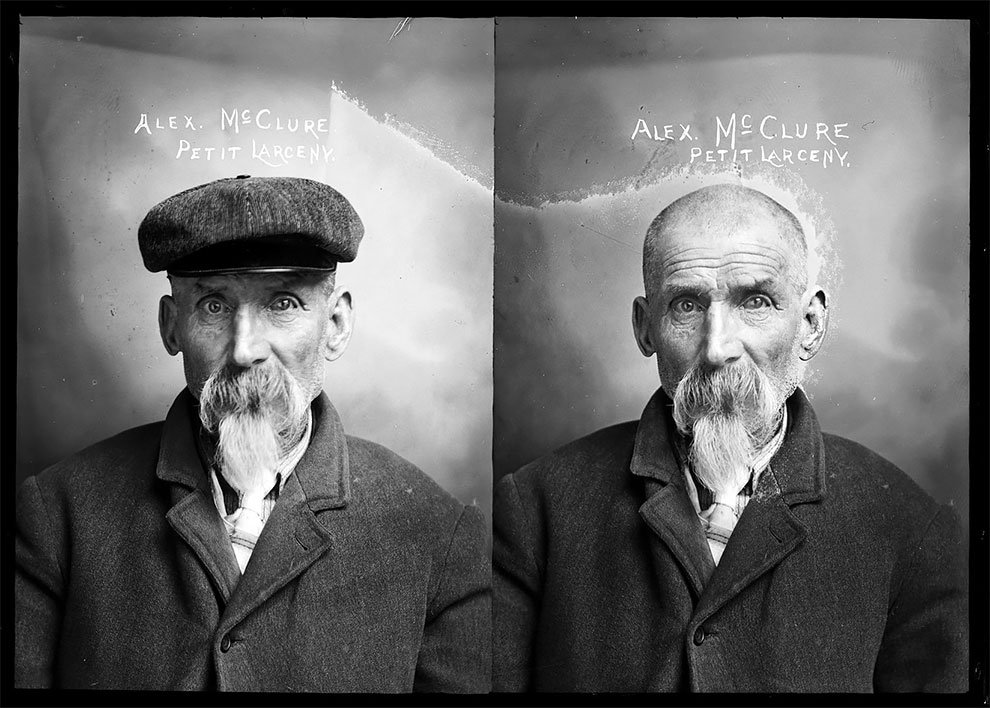
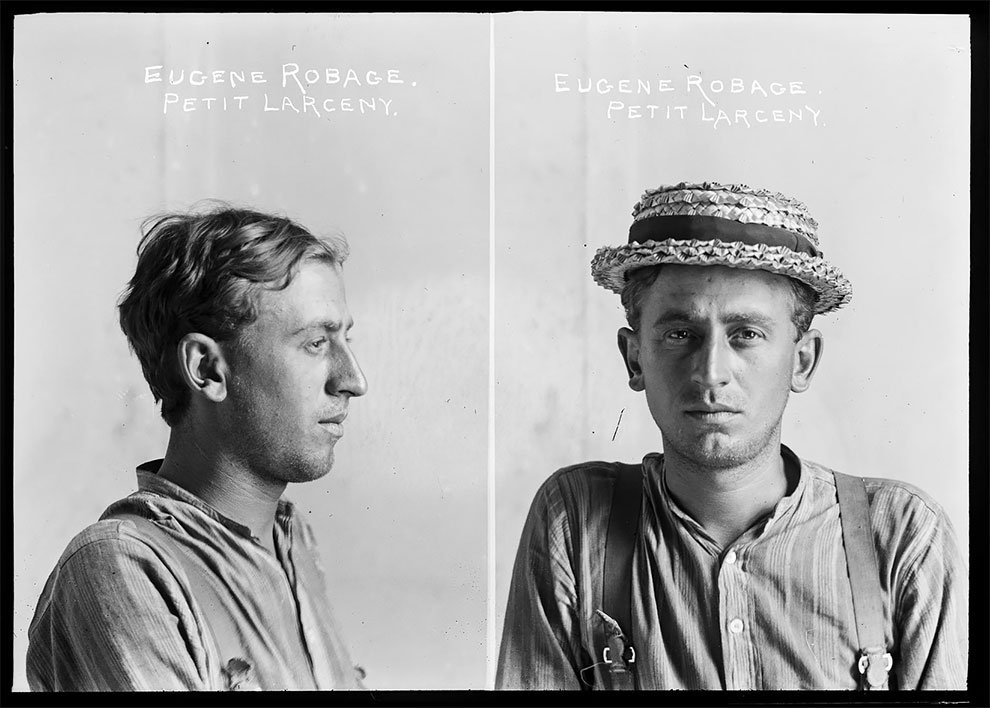
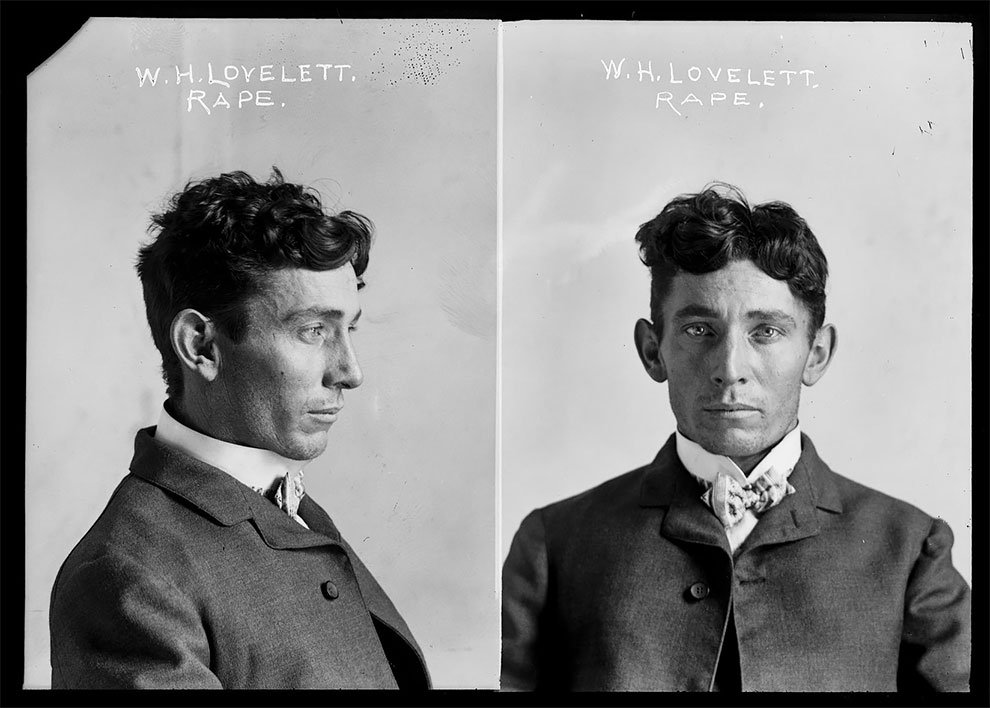
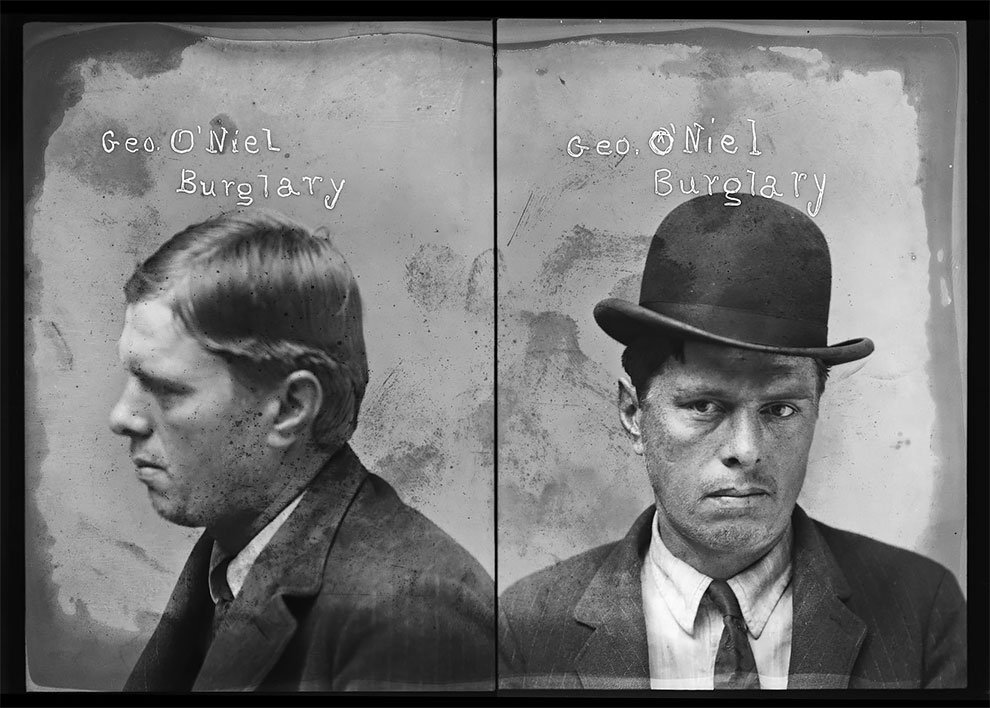
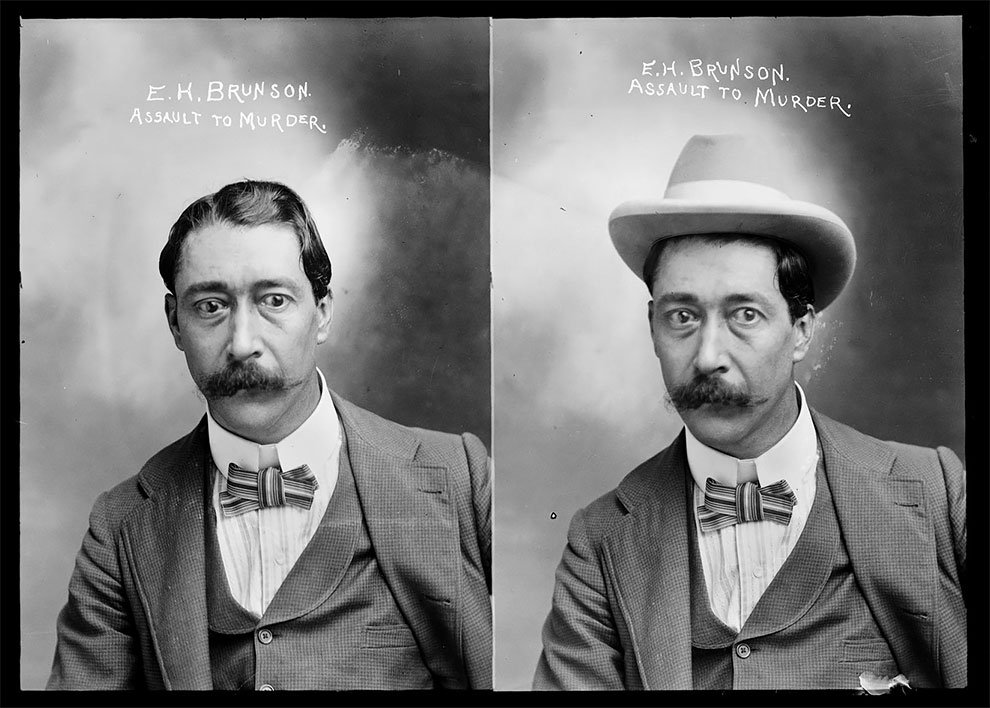
Above each portrait, handwritten inscriptions identified the subject and the alleged crime.
Names such as Frank White, charged with petit larceny, or Claude F. Hawkins, accused of murder, transformed the photographs into fragments of unfinished stories.
Svenson spent years researching those stories through local newspaper archives and prison records from San Quentin and Folsom Prison. His investigation uncovered details that complicated many of the assumptions attached to the images.
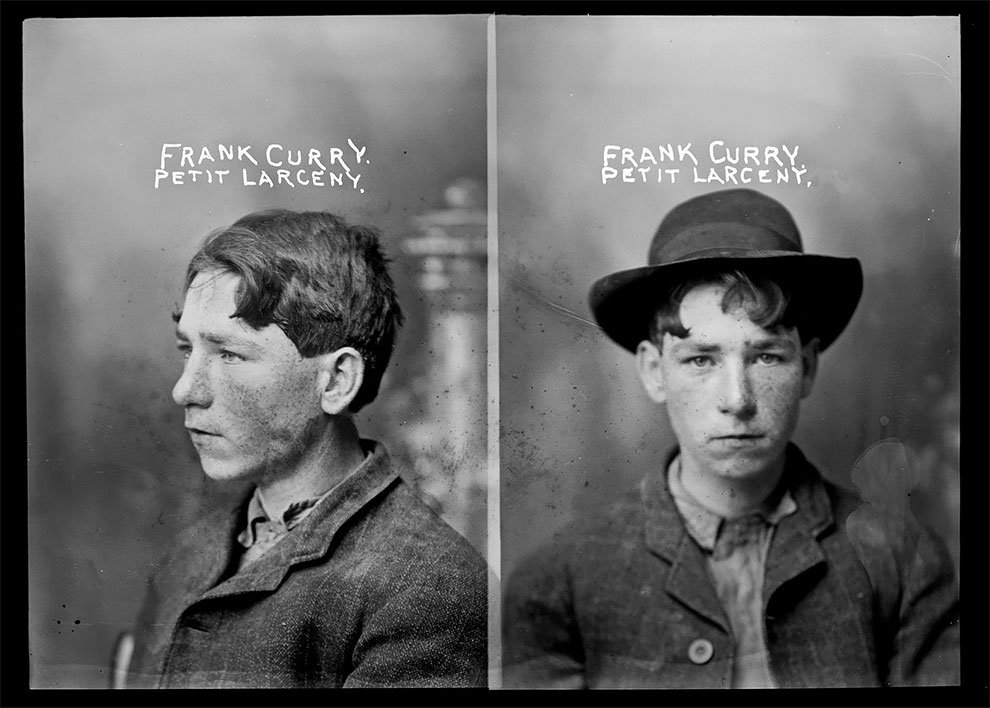 One man accused of petit larceny, for example, had reportedly stolen only a jacket to protect himself from the cold.
Cases like this revealed the harsh realities faced by poor and desperate individuals during the period.
Rather than presenting the prisoners simply as criminals, the research exposed the social conditions, personal struggles, and inequalities that shaped many of their lives.
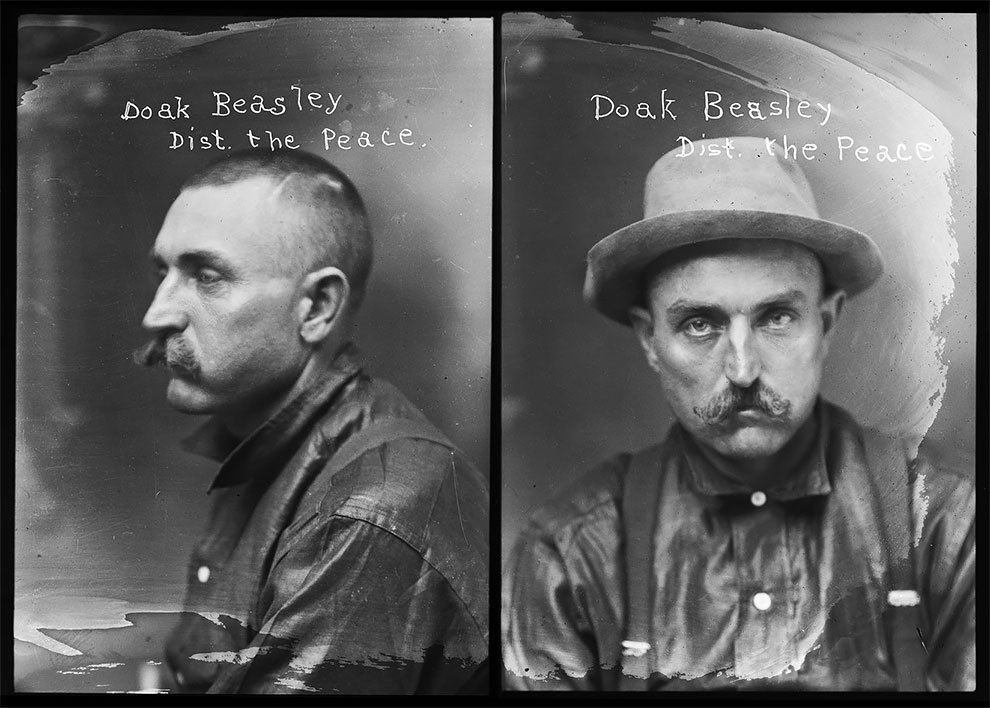 The records also highlighted racial tensions that feel disturbingly familiar today.
One black prisoner, W.M. Brown, was arrested after refusing to comply with a police officer unless shown proper authority or a warrant.
For that resistance, he was charged with disturbing the peace. Incidents like this demonstrate how unequal treatment and discrimination were deeply woven into the justice system of the time.
 Svenson dedicated nearly three years to tracing the lives behind the negatives. He traveled repeatedly between New York and Northern California, carefully examining every available newspaper published in Marysville between 1901 and 1908.
Since official records were limited, those newspapers became the primary source for reconstructing the prisoners’ histories.
The project eventually resulted in Prisoners, a collection featuring dozens of restored portraits accompanied by narrative accounts of the men pictured.
 The finished work stands as both an artistic achievement and a historical document.
Each image is presented as a diptych showing both a front-facing portrait and profile view, with the prisoner’s name and alleged crime etched directly into the emulsion above the image.
The format preserves the practical function of the original mugshots while allowing viewers to focus on the humanity of the subjects themselves.
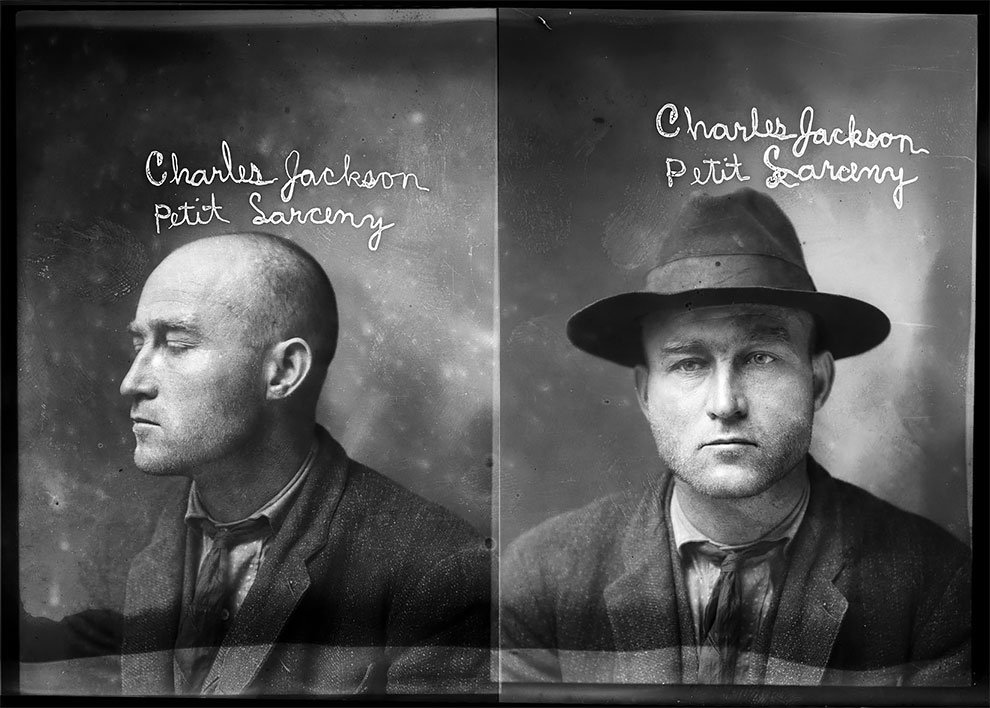
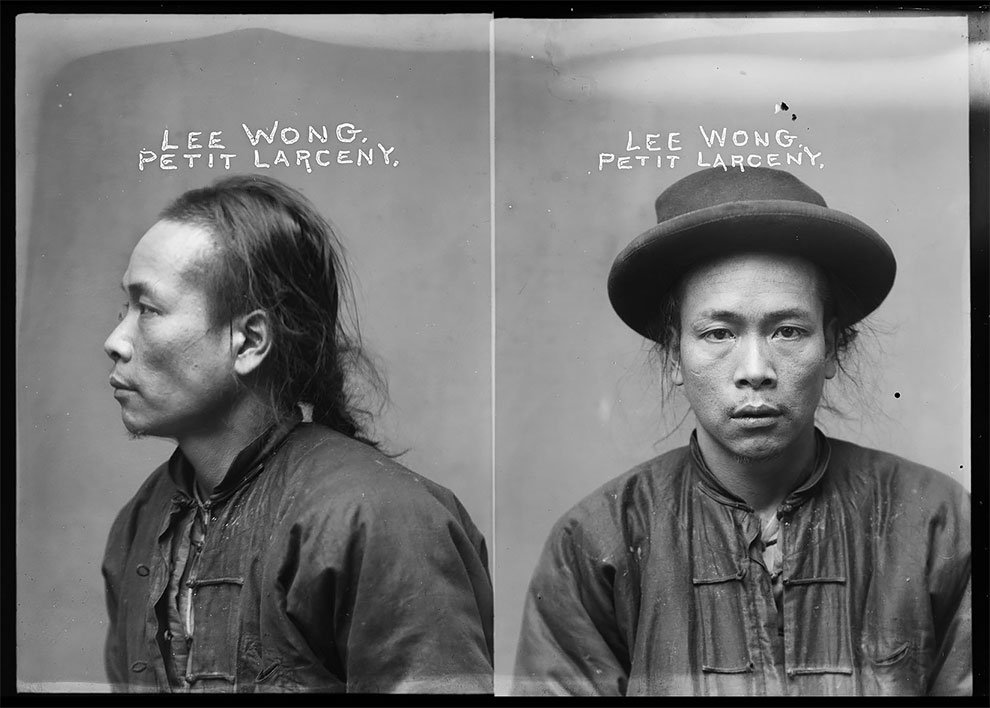
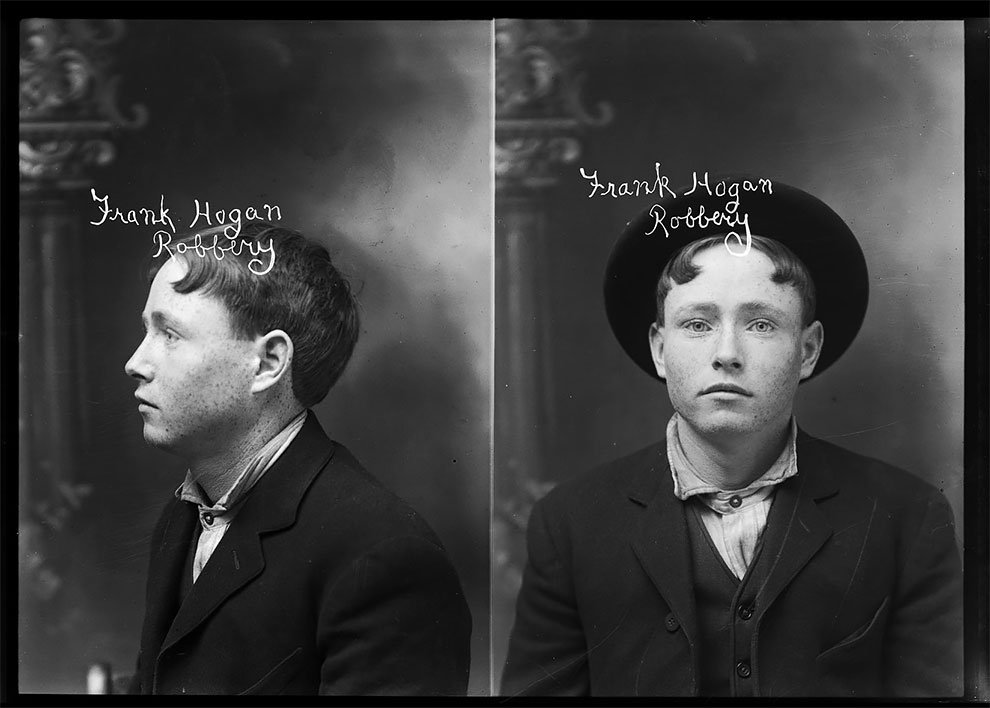
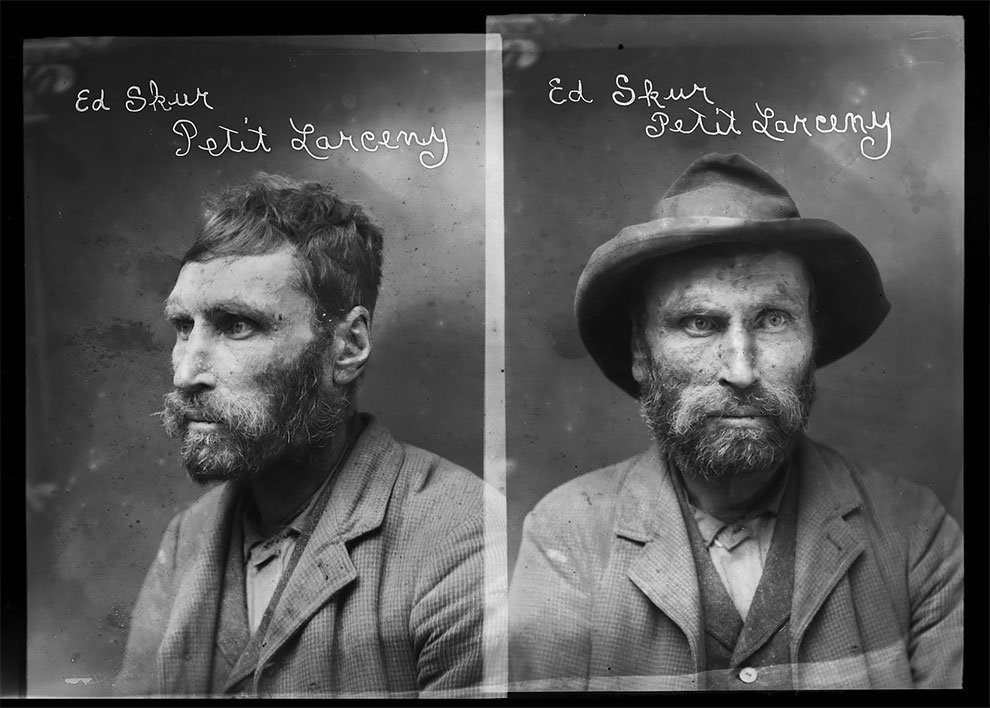
(Photo credit: Arne Svenson / Prisoners: Murder, Mayhem, and Petit Larceny by Arne Svenson).