
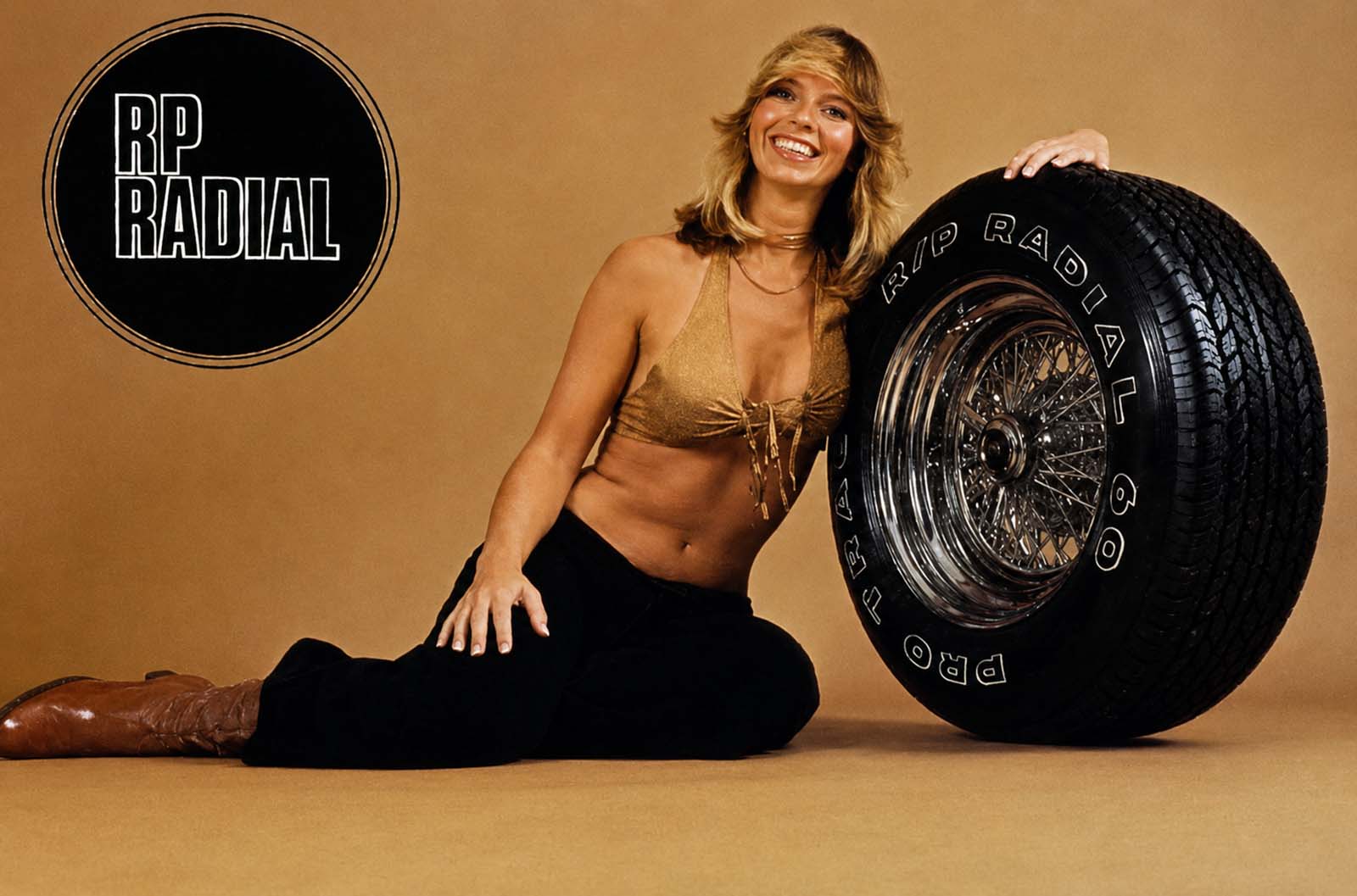
Flip through any auto parts catalog from the 1970s or 80s and the message becomes clear within seconds: this was an industry that believed a woman in a bikini could sell anything from spark plugs to seat covers.
Long before marketing departments worried about backlash or boycotts, automotive advertisers operated on a simple, unapologetic formula that dominated print campaigns for two full decades.
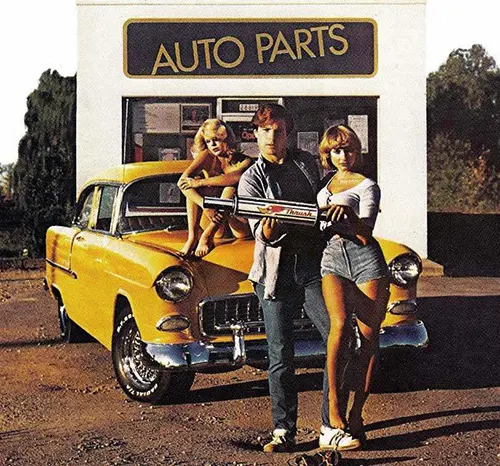 The automotive industry has always catered primarily to men, and advertisers leaned into that reality without much subtlety.
Flipping through old auto magazines from this era reveals a consistent pattern across nearly every product category.
Carburetors, mufflers, upholstery, and tires all received the same treatment: pair the part with a model in a suggestive pose, and sales would follow.
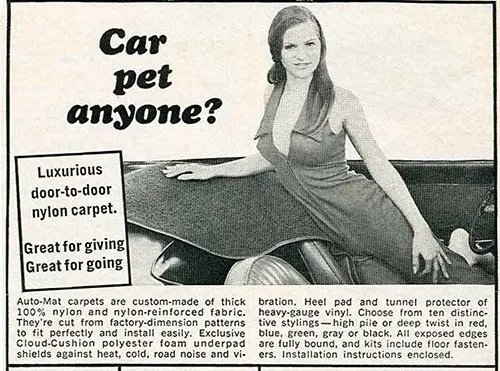
Get it? Car Pet… eh? (A creepy wink might make it clearer.) Take note that this luxurious interior is not only “great for giving,” but also “great for going.” No idea what that means, but it sounds promising.
The logic behind this approach was straightforward. Readers scanning through page after page of similar-looking products needed something to make them pause, and a photo of a woman draped over an engine or cradling a tailpipe accomplished exactly that.
What made this advertising trend so pervasive was its reach beyond high-performance auto parts. Companies selling everyday essentials like floor mats, wax polish, and battery chargers used identical tactics.
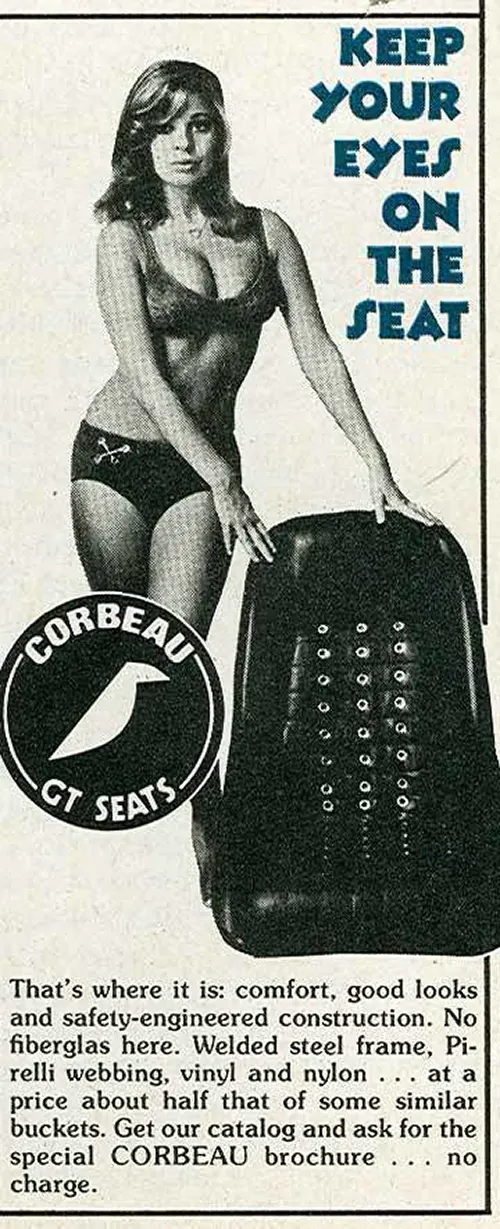
Get it? The Seat… as in a lady’s bottom? (Awkward throat clear.) Suffice it to say, any auto part was fair game for sexual innuendo. Some attempts were more subtle than others.
One advertisement for a basic battery charger featured a model arching her back in a pose that had little connection to the actual function of charging a car battery.
Another ad for steering wheel covers showed a woman in tight shorts holding the product as though it were a trophy rather than a practical accessory.
These choices reflected a broader marketing philosophy of the era: visual appeal trumped technical accuracy, and sex appeal could justify almost any creative liberty.
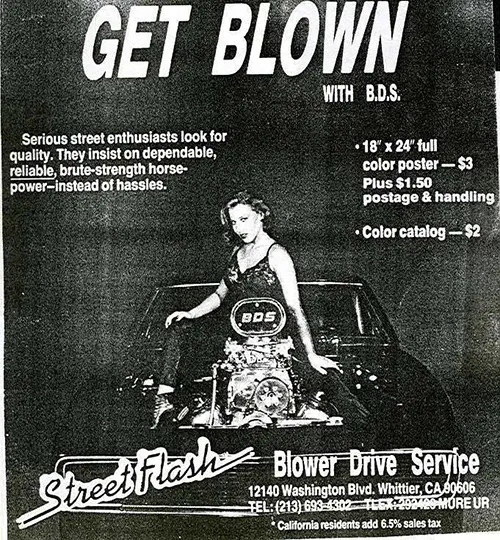
Double entendre, thy name is vintage auto advertising. Fact: with the exception of the airbag sensor, every part of the automobile could be given a sexual connotation.
The wordplay accompanying these images often matched the visuals in tone. Copywriters leaned heavily into double meanings, finding ways to connect mundane auto parts with suggestive language.
Mufflers became opportunities for innuendo about getting “off,” while exhaust headers transformed into symbols tied to wild, untamed performance.
Even technical specifications like fuel economy ratings appeared alongside imagery that had nothing to do with engineering, suggesting that advertisers cared less about informing buyers and more about capturing their attention through any means necessary.
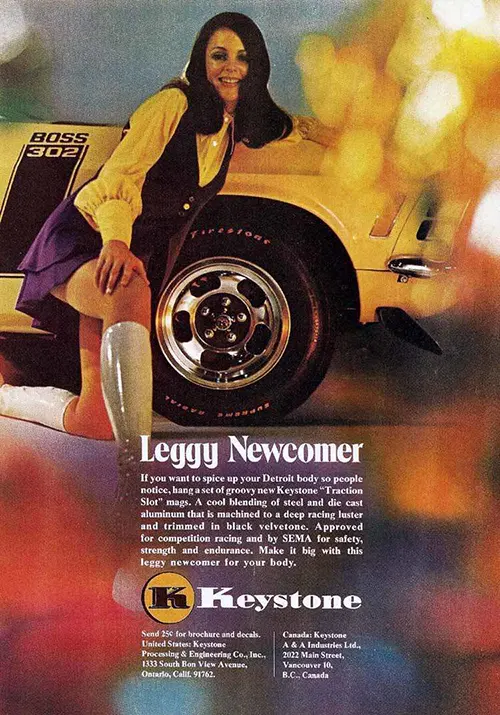
This ad for mags manages to work in female legs, which deserves applause for a valiant attempt. There’s not a lot of sly innuendo to be squeezed out of “magnesium alloy wheels.”
This advertising approach extended across nearly every imaginable auto component.
Magnesium alloy wheels, convertible hardtop hoists, and even airbag sensors found their way into campaigns built around physical attraction rather than product specifications.
The pattern became so consistent that certain formulas emerged: pair a product with an attractive model, add a clever or risqué tagline, and the advertisement was complete.
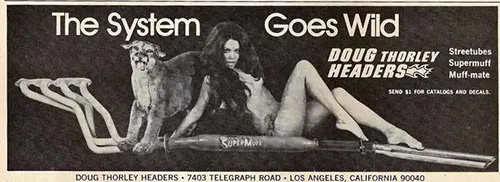
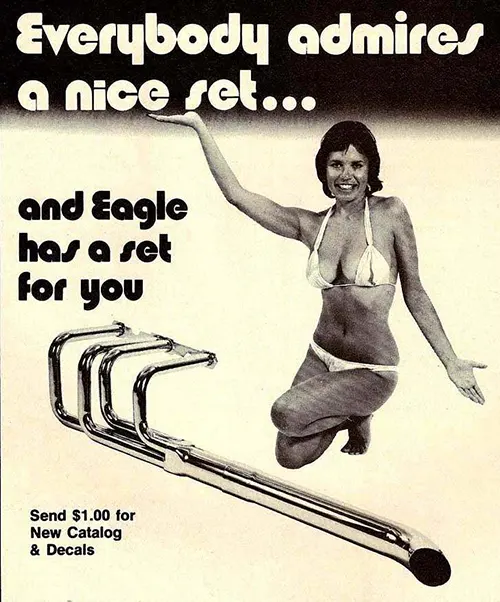
Somehow a cylinder for emitting exhaust gases got transformed into a sex object. Pure genius. Septic tank outlet pipes never get this treatment. Other waste emission industries could take a cue from car header ads.
Some campaigns pushed this formula further than others, but the underlying strategy rarely changed throughout these two decades.
Looking back at these advertisements offers more than just nostalgic amusement.
They serve as a window into a different era of marketing, one where regulations around objectification in advertising were far less strict, and where companies operated under the assumption that attractive imagery alone could move products regardless of relevance.
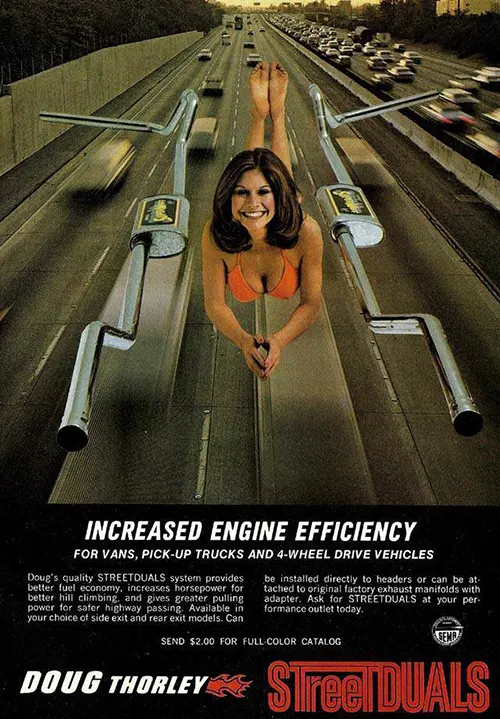
The text is dead serious, discussing fuel economy and the like, yet the illustration shows flying cleavage. One might think airborne breasts would detract from a technical presentation, but somehow it only makes it better. Boobs are magic that way. Further proof…
While modern marketing has shifted significantly away from this approach, largely due to changing social attitudes and stricter advertising standards, these vintage campaigns remain a fascinating record of how far companies once went to capture buyer attention.
Revisiting them provides valuable context for understanding how advertising standards have evolved, and why such blatant tactics would be unthinkable in today’s marketplace.
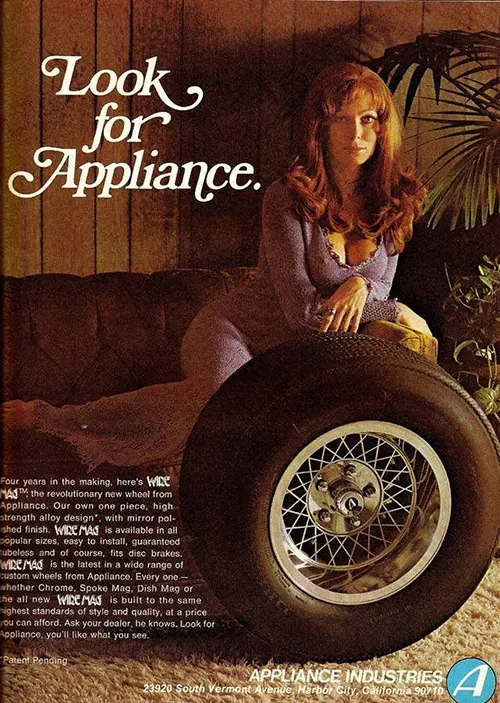
This could have been just a run-of-the-mill picture of a tire with some boring text nobody would read. Insert boobs and suddenly it’s an ad to be reckoned with. It’s as if there was a legal mandate for all auto parts advertisers: breasts are not optional, they’re required.
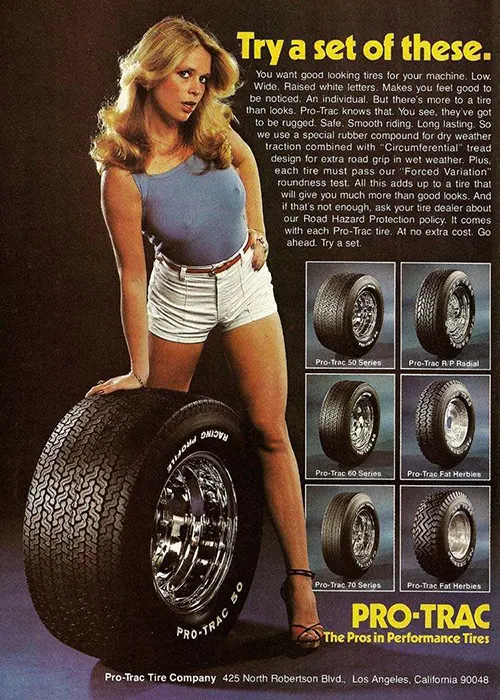
Pro-Trac fulfilled their obligation with panache. In a pinch, this model could also moonlight as a headlight (cue rim shot, the jokes don’t stop here).
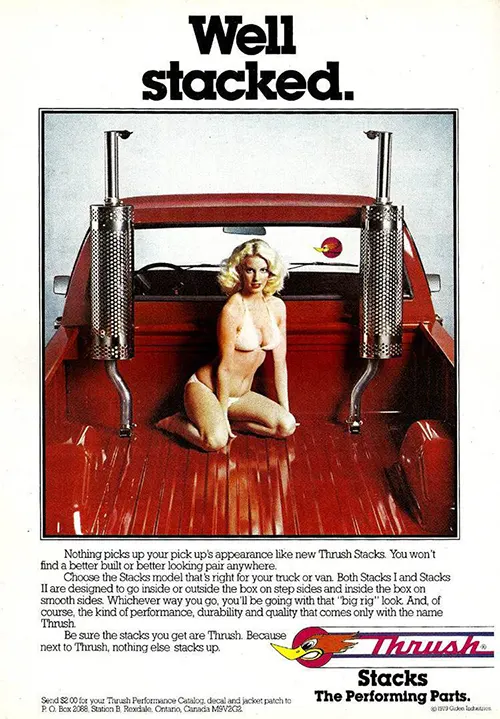
The “stacked” double entendre is a bit obvious. Selling stacks practically demands a girl who’s stacked too; it’s a no brainer. The trick is to transcend simple innuendo…
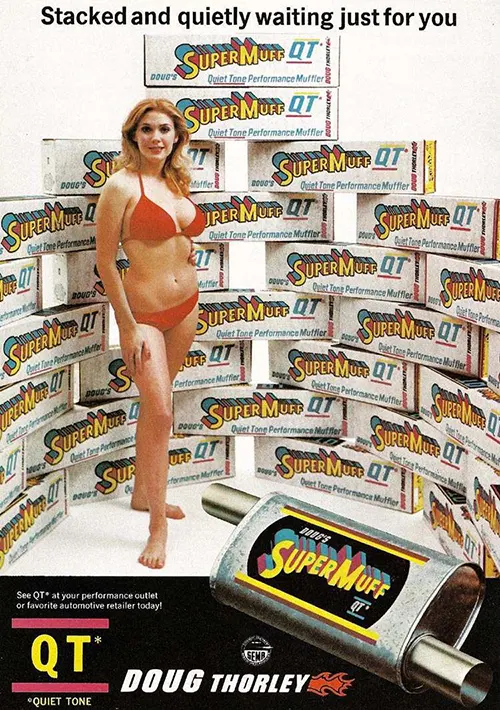
“Stacked and quietly waiting just for you.” What mad genius wrote this line?
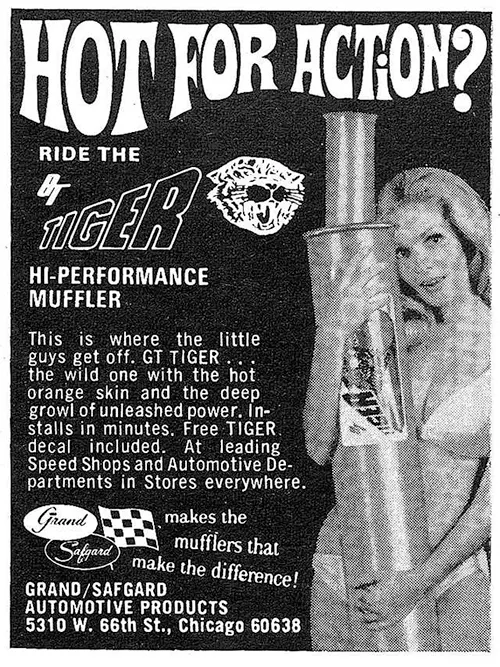
This little ad is brimming with innuendo: hot for action, ride the tiger, this is where the guys get off, the wild one with the hot orange skin and the deep growl. Not to mention the scantily clad lady cradling her phallic muffler.
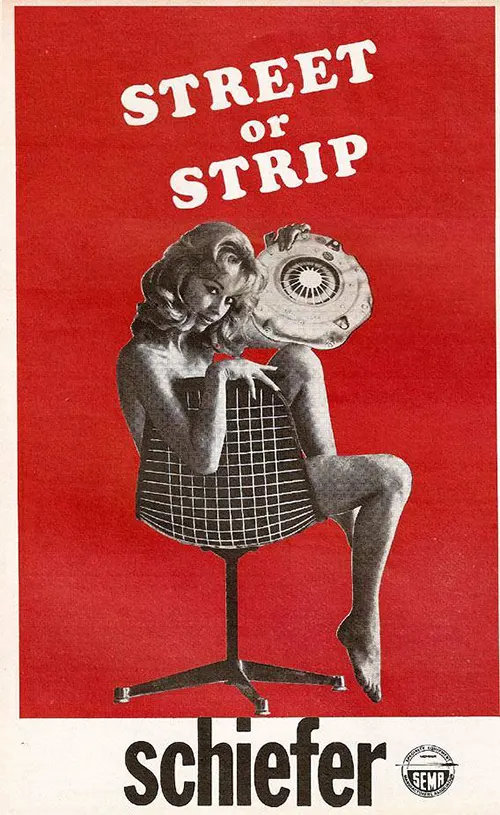
Believe it or not, the “sex sells” approach even got used to advertise a clutch. No car part, it seems, was immune to lascivious marketing.
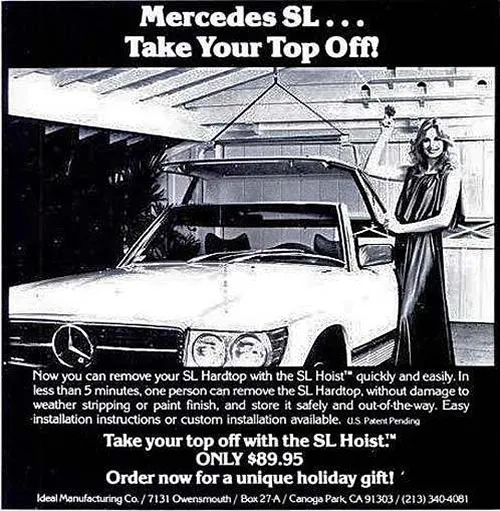
Even a convertible hardtop hoist was apparently fair game.
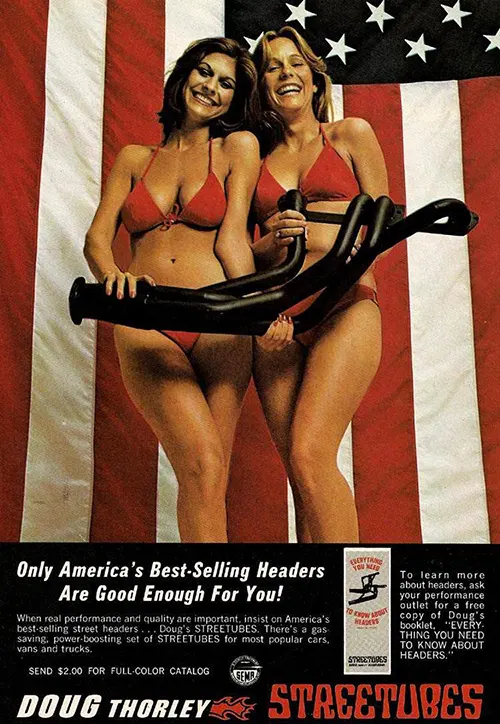
There’s no obvious way for these girls to handle the header without it looking suggestive, but it doesn’t take a degree in Freudian psychology to spot something naughty going on here. Oh, and one more thing: ‘MURICA!
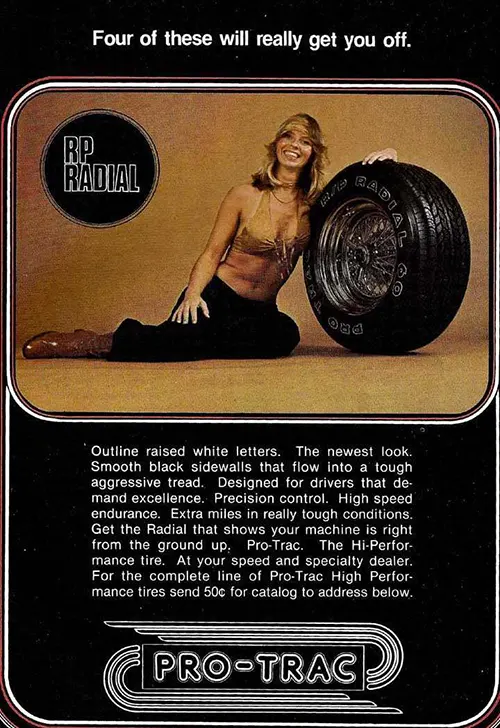
“Four of these will really get you off.” At this point, redundancy has clearly set in. A hundred more tacky vintage ads for auto parts could easily follow, but the pattern is clear. It boils down to three parts: boobs, sly innuendo, and insert auto part.
Got it? Time to make one yourself. Good luck!
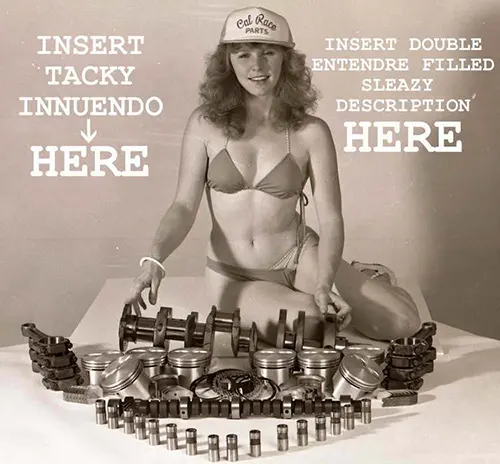

(Photo credit: Flickr).