
At the height of his power, J.P. Morgan controlled railroads, banks, steel mills, and the financial fate of the United States government itself.
He was a man who bent entire industries to his will and whose name alone could calm a national panic.
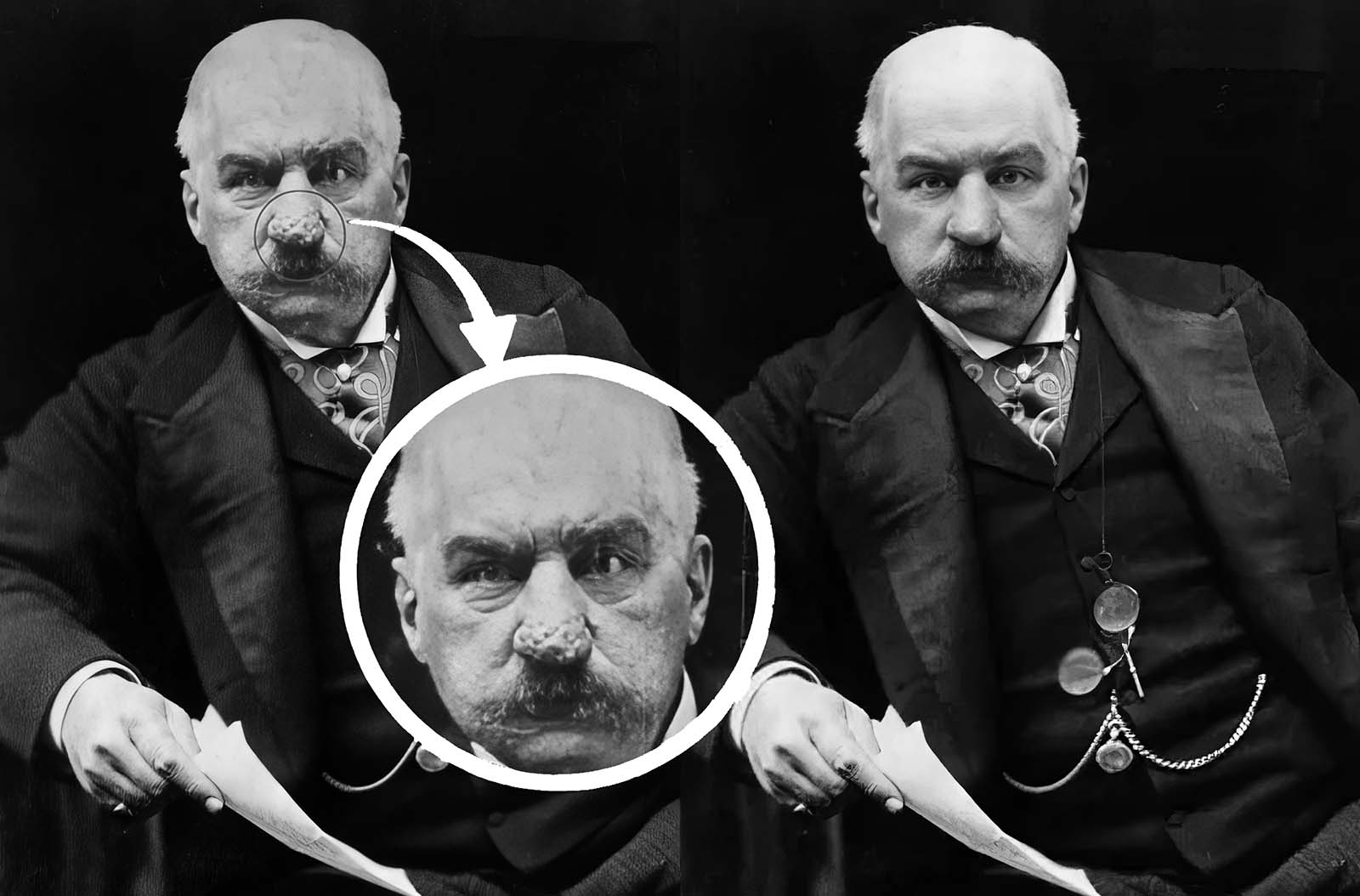
Yet for all that dominance, one thing consumed him with an anxiety no amount of wealth or influence could fully suppress: his nose, a bulbous, purple, disfigured mass ravaged by rhinophyma, and the image it projected whenever a camera shutter clicked.
Morgan’s obsession with retouched photographs was not vanity for its own sake. It was a calculated, sometimes violent effort to conceal a condition that had quietly dismantled his confidence since childhood, and one that he believed stood between him and the commanding public presence he had worked his entire life to project.
 John Pierpont Morgan was born on April 17, 1837, in Hartford, Connecticut, into a distinguished New England family.
His father, Junius Morgan, co-founded the influential banking firm J.S. Morgan & Co. alongside George Peabody.
As a young man, Morgan cut an impressive figure — standing 6 feet 2 inches in an era when the average American male stood closer to 5 feet 7 inches, with broad shoulders, a muscular frame, and eyes that contemporaries frequently described as unnervingly intense.
He was considered attractive in his youth, though he remained shy and socially tentative beneath the commanding exterior.
 His personal life carried early grief. Morgan married Amelia “Mimi” Sturges in 1861, the only woman he is said to have truly loved, but she died of tuberculosis just four months after their wedding.
He remarried in 1865, taking Frances Tracy as his wife, with whom he had four children.
As his fortune grew, so did his appetite for company beyond the marriage , Morgan became a serial philanderer, cycling through relationships with women as freely as he moved capital across continents.
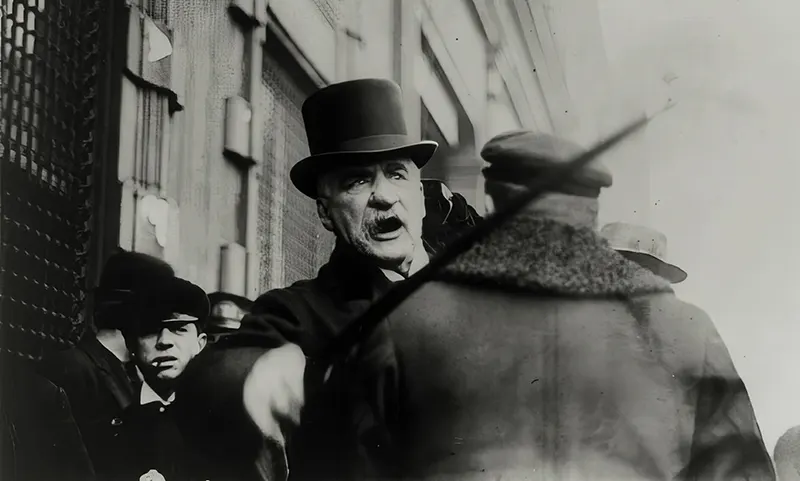
Morgan hitting a photographer with his cane; he was self-conscious about his rosacea and hated being photographed without permission.
From childhood, Morgan had suffered from acne rosacea, a chronic skin condition that caused persistent facial redness and broken blood vessels across his nose.
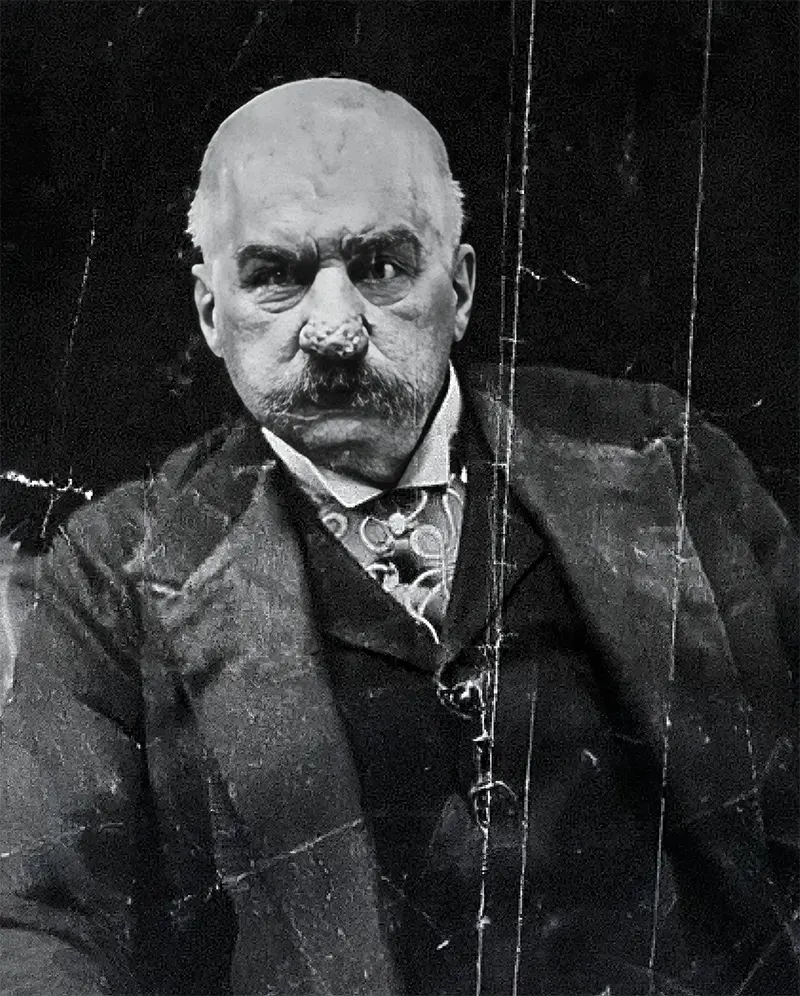
By middle age, the rosacea had progressed into rhinophyma — a severe form of the condition that produces fibrous tissue growths, deep pockmarks, and pronounced lesions. His nose had swollen into something resembling, as those close to him described it, a purple cauliflower.
The discoloration, the irregular surface, the sheer size of it — all of it proved mortifying for a man whose entire identity rested on projecting authority and attracting admiration.
 His biographer Ron Chernow noted that people who knew Morgan well consistently connected his explosive temper to his nose: “The nose certainly contributed to an insecurity and lack of social ease that were thinly masked by a barking voice and tyrannical manner.”
Morgan tried every remedy available to him, none of which produced results. Publicly, he affected indifference.
When surgery was suggested, he reportedly dismissed it with characteristic bluntness: “Everybody knows my nose. It would be impossible for me to appear on the streets of New York without it.”
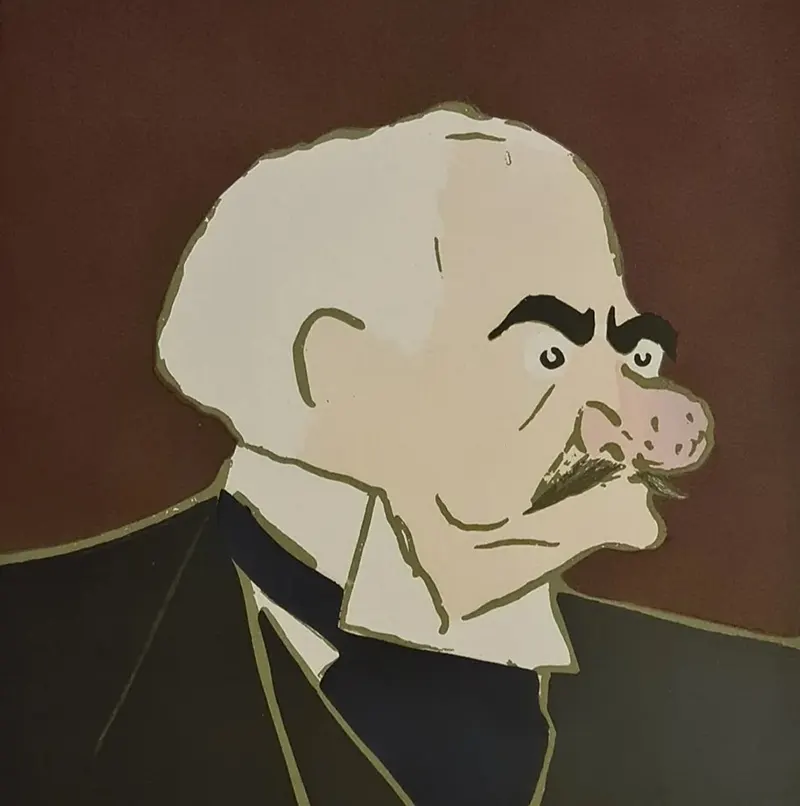
Marie Joseph Georges Goursat, caricature of JP Morgan.
He also described it, with forced humor, as “part of the American business structure.” Those closest to him, however, knew how thin that performance was.
Newspaper magnate Joseph Pulitzer made a habit of publishing caricatures that exaggerated Morgan’s nose to grotesque proportions.
Morgan asked him to stop. John “Bet-a-Million” Gates went further, openly calling him “Livernose” , a slight Morgan repaid by having Gates blackballed from both the Union League and the New York Yacht Club. The sensitivity was total and absolute.
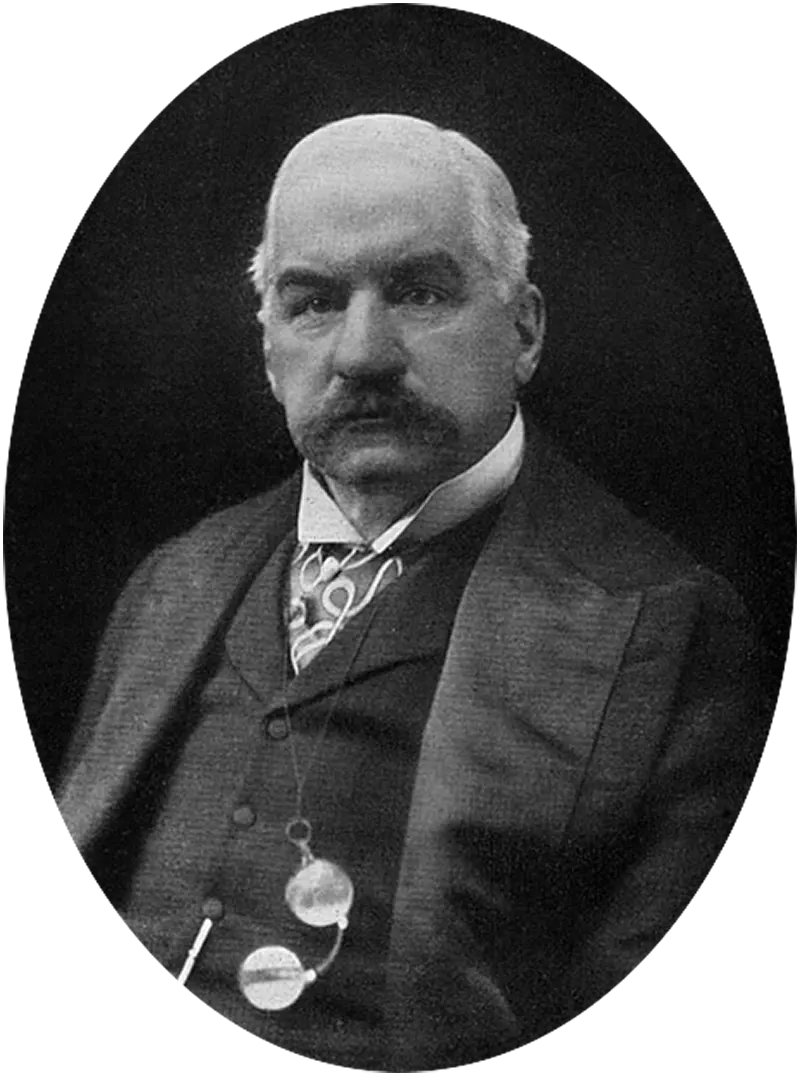
The banking titan in a retouched photo.
Controlling his photographic image became a near-obsession. Morgan required that photographers retouch his nose in every image before it reached the public, softening its size and color until it approximated something more ordinary.
Those who attempted to photograph him without permission in public risked something far worse than his displeasure.
Morgan was known to physically attack unauthorized photographers in the street, and one of the few candid photographs that survives actually captures him mid-swing, cane raised toward the cameraman’s face.
For most people, the sheer sight of him was deterrent enough — few individuals dared approach a man of his size and reputation with a camera in hand.
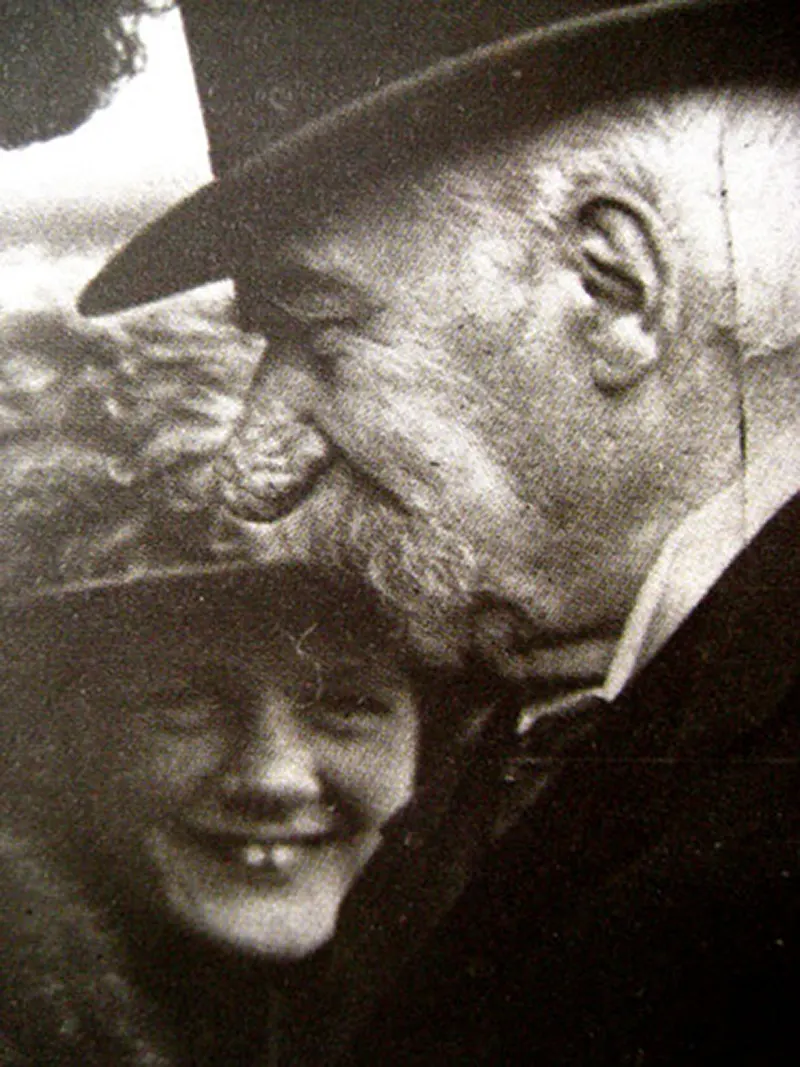
As the deformity worsens, pits, nodules, fissures, lobulations, and pedunculation contort the nose. This condition inspired the brilliant taunt “Johnny Morgan’s nasal organ has a purple hue.”
The general public, largely shielded from the reality by retouched portraits and enforced distance, was often stunned on first meeting him.
Art dealer Joseph Duveen recorded his reaction vividly upon their introduction: “No nose in caricature ever assumed such gigantic proportions or presented such appalling excrescences.
If I did not gasp, I might have changed color. Morgan noticed this, and his small, piercing eyes transfixed me with a malicious stare.”

Rosacea is a chronic skin disease that causes redness and swelling. It usually affects the face.
Morgan disliked sitting for portraits for the same reason he disliked cameras — the inability to control the result in advance.
Portrait painters typically worked from approved photographs that Morgan had scrutinized beforehand.
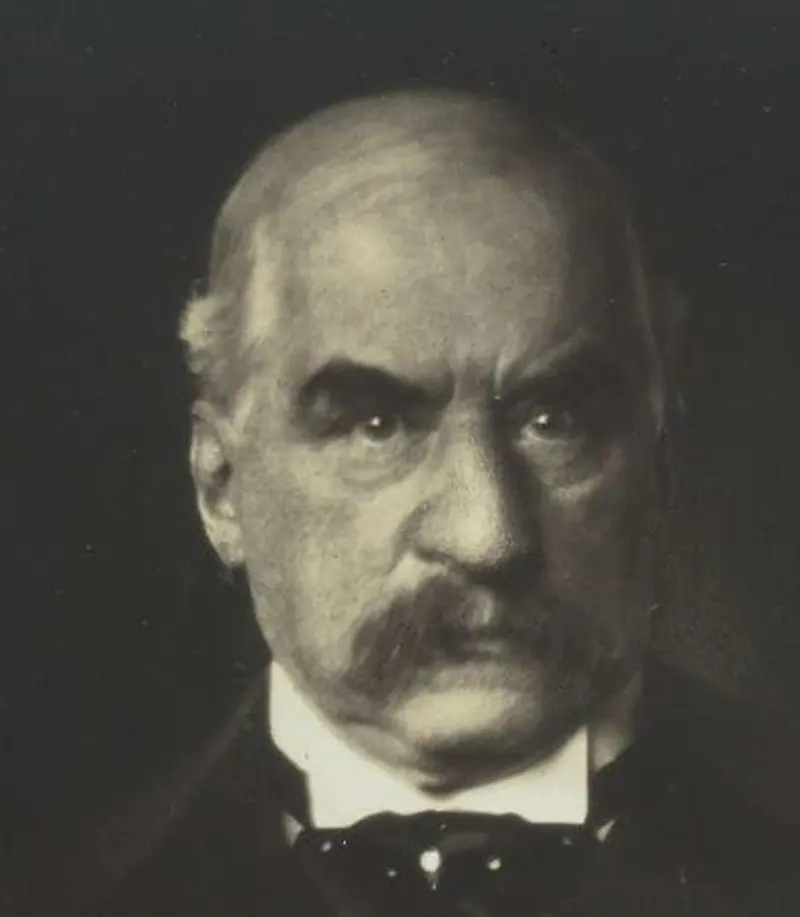
In 1903, artist Fedor Encke commissioned a young photographer named Edward Steichen to produce reference images for a portrait.
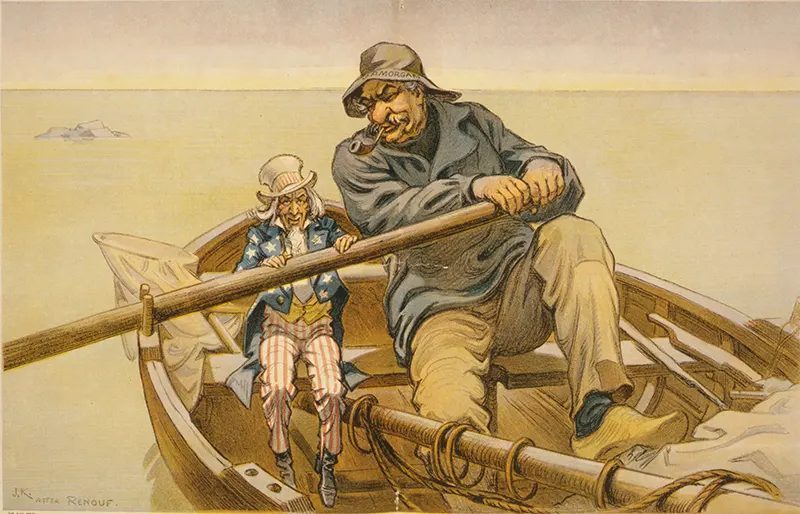
Puck magazine cartoon skewering .P. Morgan’s outsize influence on the U.S. economy — and his pink nose.
Steichen spent hours arranging the lighting, using a janitor of similar build as a stand-in, since Morgan had agreed to appear for no more than five minutes.
The actual session lasted three minutes — an efficiency that evidently impressed Morgan, who told Steichen simply, “I like you, young man.”
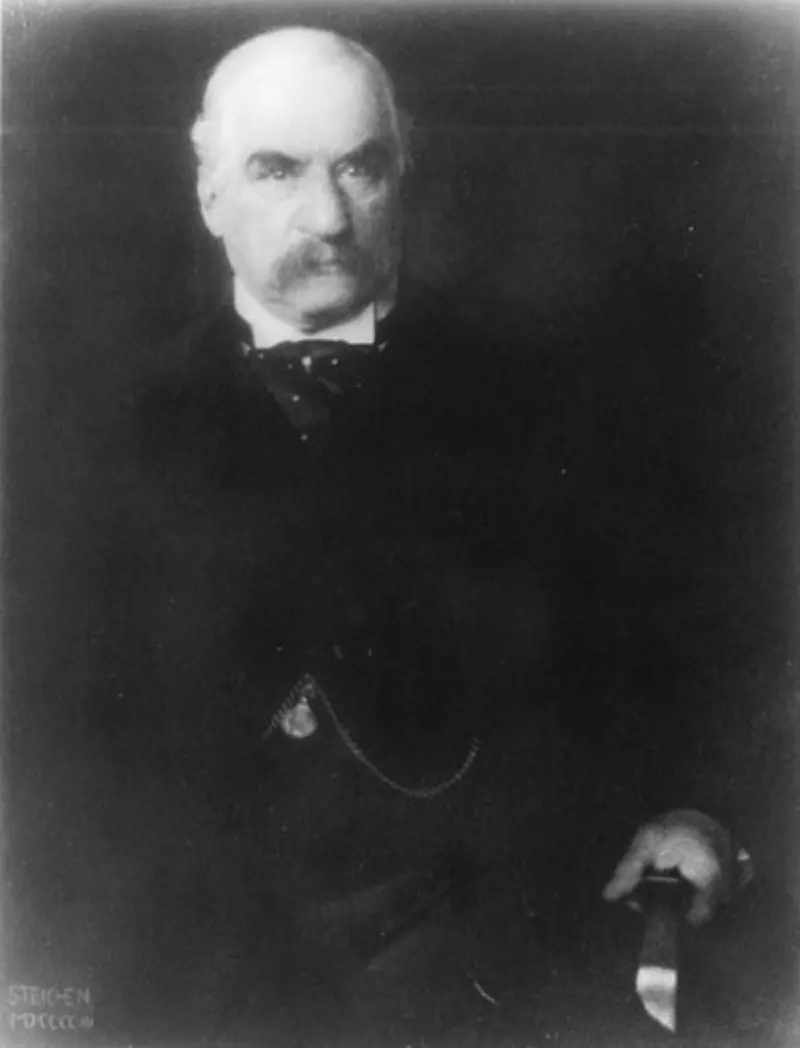 Steichen later recounted that Morgan arrived without a word, settled into the chair, and struck a composed pose.
Steichen took one photograph, then asked whether Morgan would mind adjusting his head. Morgan responded not with words but with a withering glare — which Steichen captured in a second frame before the expression passed.
Morgan rose, paid Steichen $500 (roughly $13,000 today), exchanged a few brief words, and left.
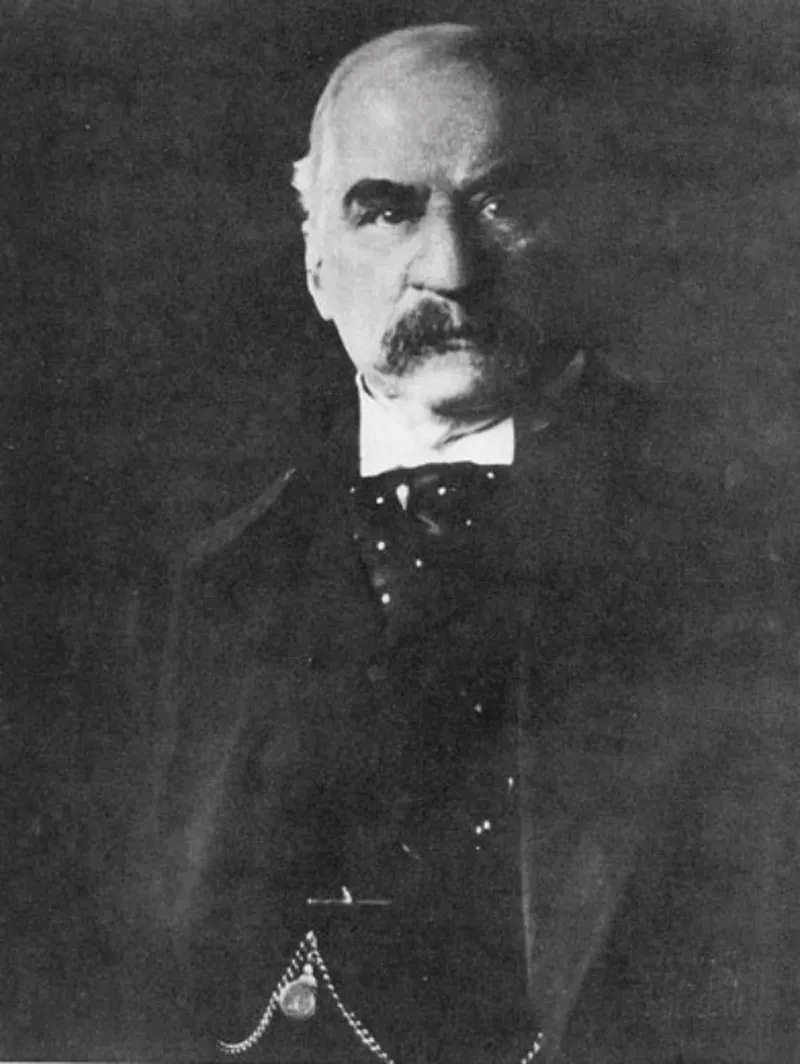 Morgan died on March 31, 1913, carrying to his grave a particular resentment for the phrase “ruby-visaged magnate.”
His instinct for privacy outlasted him in one consequential way: shortly before his death, he burned thousands of letters, including more than three decades of weekly correspondence with his father in England covering American business and politics from the 1850s onward.
What those letters might have revealed about one of the most consequential figures in American financial history will never be known — a final act of control from a man who spent his life deciding, on his own terms, exactly what the world was permitted to see.
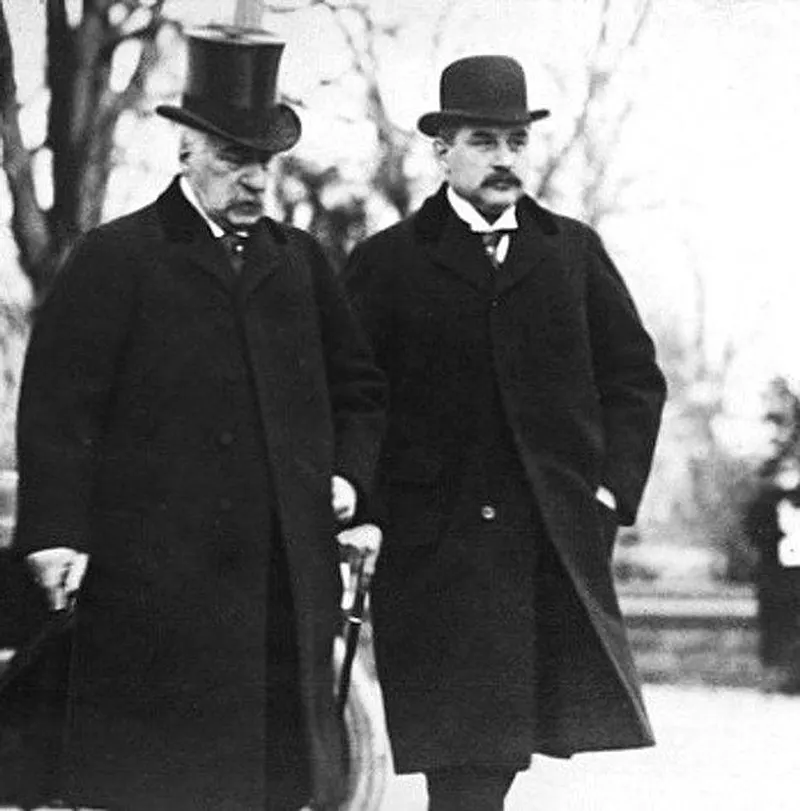
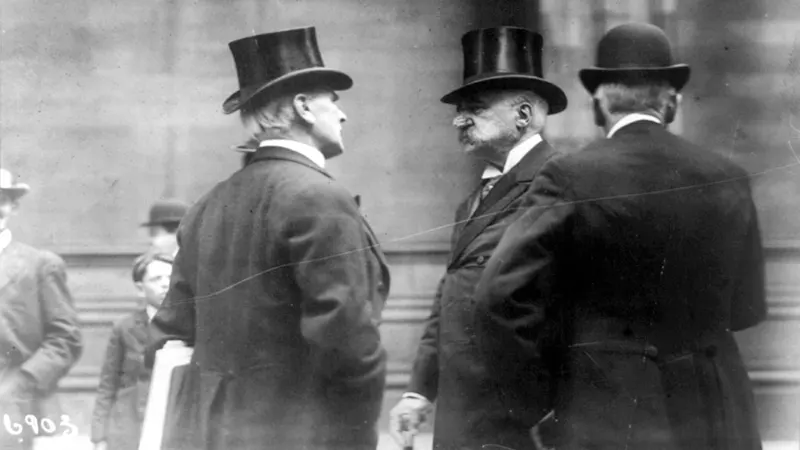
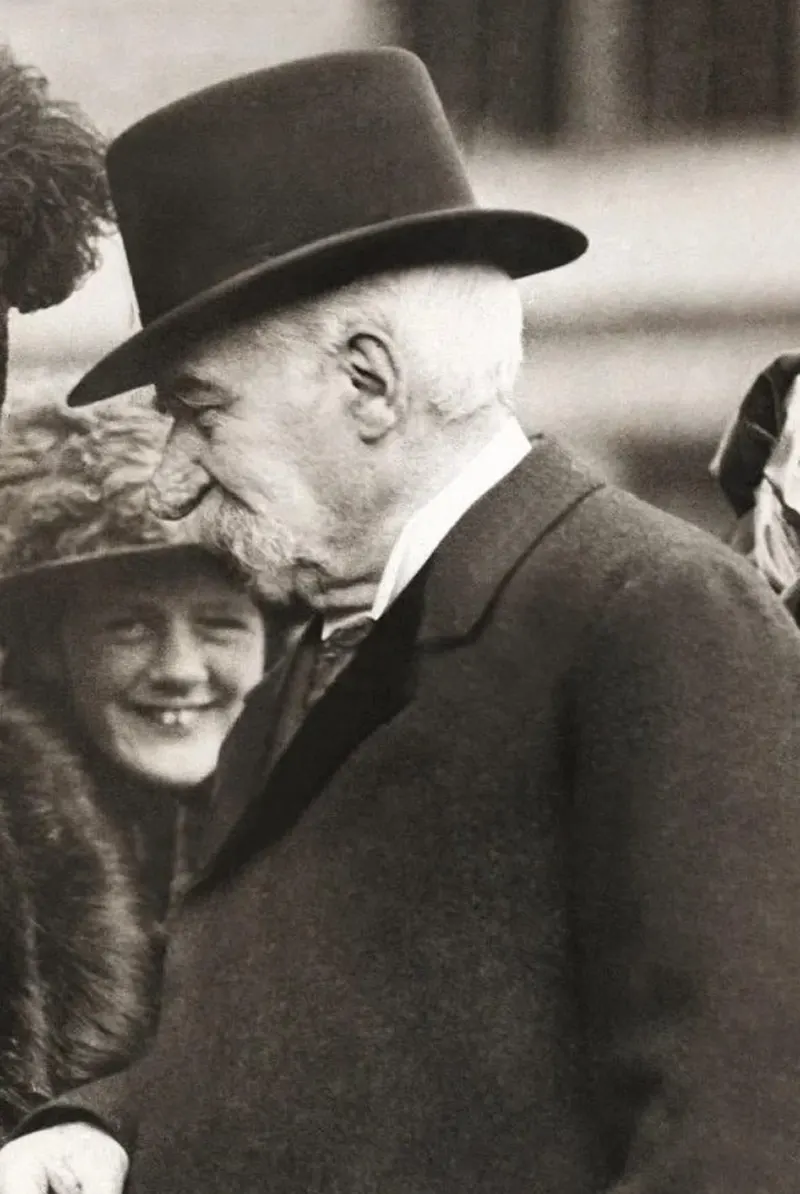
J. P. Morgan walking alongside his son in the last known photograph of the two together (c. 1913).
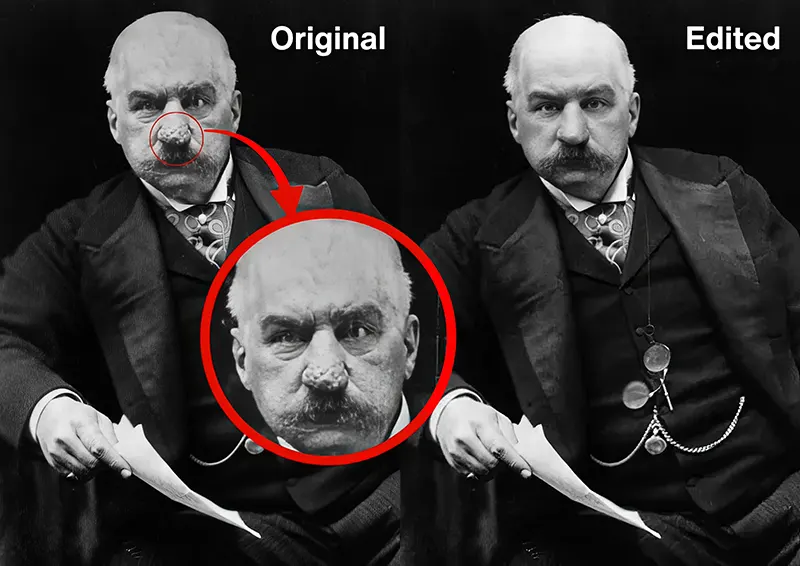
(Photo credit: Wikimedia Commons / Upscaled and enhanced by RHP).