
Hollywood has always been a place of illusion — carefully constructed personas, fabricated romances, and studio-engineered narratives designed to keep audiences captivated and ticket sales climbing.
But behind the velvet ropes and the camera flashbulbs, countless stars of the Golden Age were living double lives, navigating a world that offered them adoration with one hand and threatened their livelihoods with the other.
At a time when homosexuality was not only stigmatized but criminalized, many of cinema’s most iconic figures had no choice but to bury their true selves beneath layers of performance, both on screen and off. Some took their secrets to the grave.
Others were outed posthumously by biographers, former lovers, and the passage of time. What follows are the stories of the stars who had everything the world wanted to see , and so much more they were never allowed to show.
Cary Grant
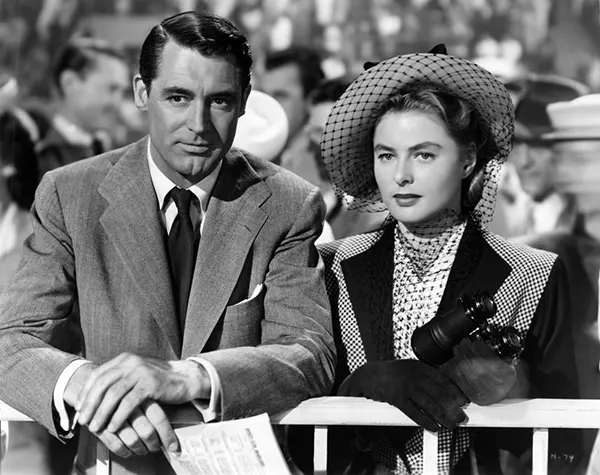
Cary Grant (18 January 1904 – 29 November 1986).
Few actors embodied old Hollywood charm quite like Cary Grant. The British-American star — whose credits included His Girl Friday and North by Northwest — was celebrated as much for his magnetic charisma as his acting.
Publicly, he was known as a serial romantic whose five marriages seemed to confirm his reputation as a ladies’ man. But in more recent decades, new details about his private life have come to light.
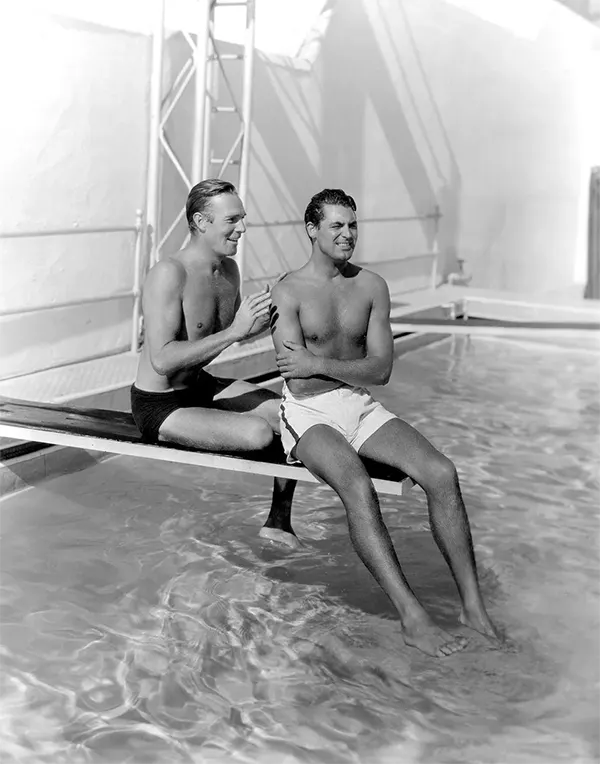
Iconic movie star Cary Grant with his “roommate” of 12 years, fellow actor Randolph Scott.
Grant shared a home with fellow actor Randolph Scott for several years, and longstanding rumors suggest the two were far more than roommates.
The nature of their relationship remains a subject of debate, but the closeness between them has never been in question.
Rock Hudson
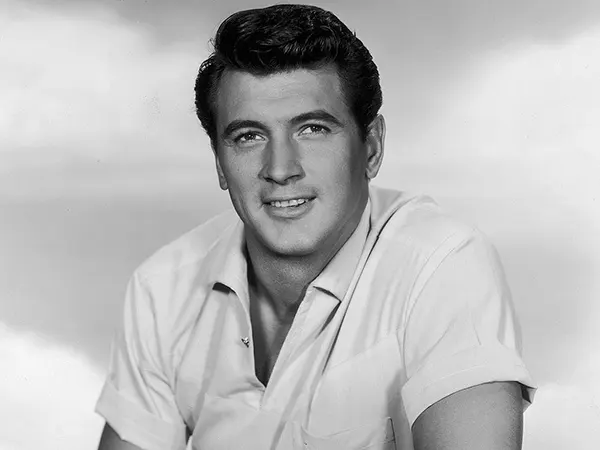
Rock Hudson (November 17, 1925 – October 2, 1985).
Rock Hudson was the quintessential American heartthrob — tall, dark, and impossibly handsome. For decades, he cultivated a carefully managed public image that kept his private life firmly out of reach.
When Confidential magazine threatened to expose his homosexuality, his studio moved quickly; Hudson was married to Phyllis Gates not long after, a union that served as a protective cover.
The marriage dissolved once Gates became aware of the truth. By 1962, Hudson had entered into a meaningful relationship with stockbroker Lee Garlington.
He continued working steadily until his death from AIDS complications in 1985 — a passing that brought global attention to the epidemic. His story was later dramatized in Ryan Murphy’s 2020 Netflix series Hollywood.
Anthony Perkins
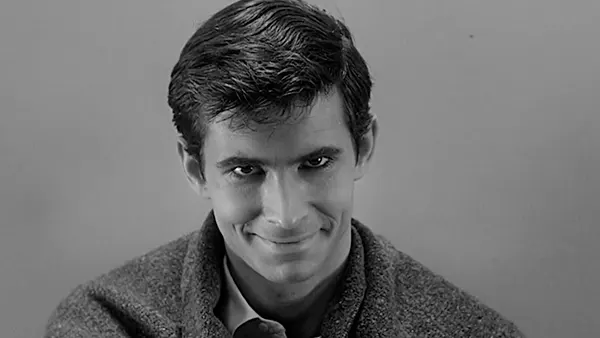
Anthony Perkins (April 4, 1932 – September 12, 1992).
Anthony Perkins carried the weight of speculation about his sexuality from nearly the beginning of his career. His Broadway debut in Tea and Sympathy, in which he played a gay character, set tongues wagging early on.
According to biographer Charles Winecoff, Perkins’s college years at Rollins were touched by controversy related to the expulsion of gay students, though Perkins reportedly avoided disciplinary consequences through his connection to a theater professor — claims based on alumni interviews without corroborating documentation.
Perkins reportedly did not have his first heterosexual relationship until he was 39, while simultaneously undergoing conversion therapy.
Director Sidney Lumet, in a 1999 documentary, recalled a frank conversation in which Perkins identified as homosexual.
Those who knew him best generally described him the same way, noting that his romantic history with women was limited and largely overshadowed by long-term relationships with men — including Tab Hunter.
Cesar Romero
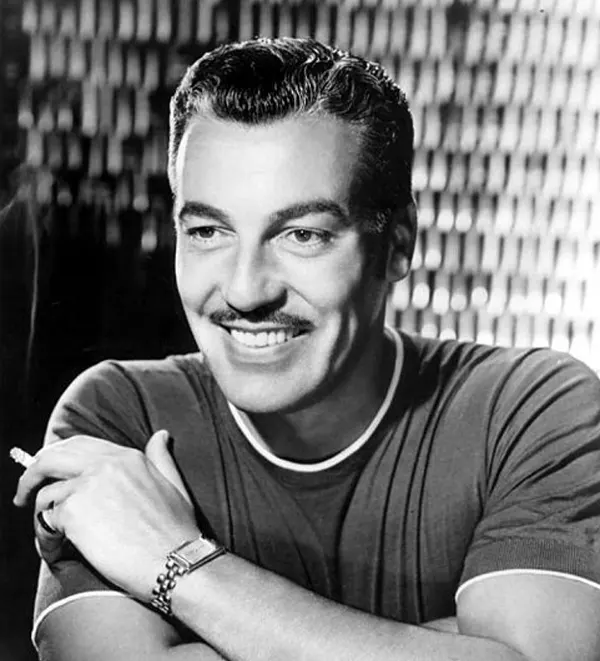
César Julio Romero Jr. (February 15, 1907 – January 1, 1994).
With a devilishly handsome smile and a towering 6’3″ frame, Cesar Romero seemed born for leading man status.
The Cuban-American actor shared the silver screen with Marlene Dietrich and Carole Lombard, maintained a lifelong friendship with Joan Crawford, and cemented his place in pop culture history as The Joker in the original Batman film.
What audiences didn’t know was that Romero was gay — a fact he kept carefully guarded from the public throughout his entire career, though those within Hollywood’s inner circles were well aware.
In 1996, author Boze Hadleigh published Hollywood Gays, a collection of purported interviews in which Romero allegedly spoke candidly about his sexuality for the first time.
Vincent Price
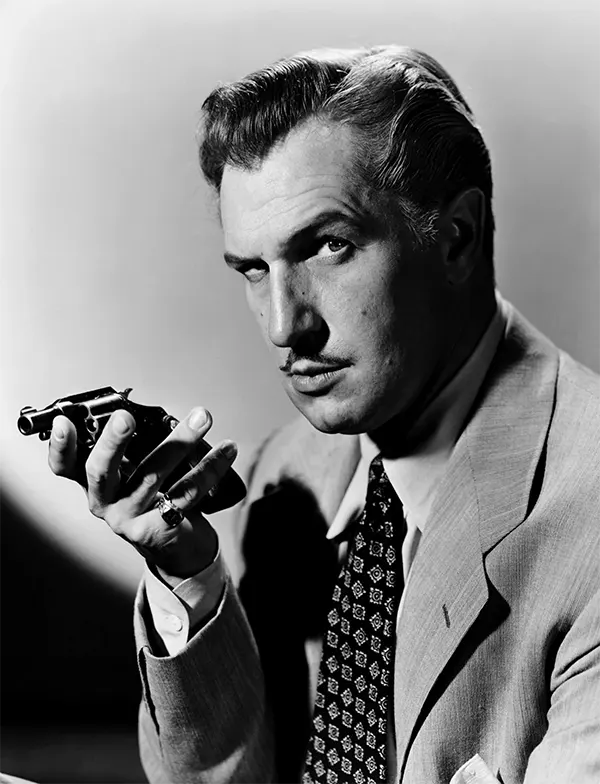
Vincent Leonard Price Jr. (May 27, 1911 – October 25, 1993).
Few figures in cinema history are as synonymous with Gothic glamour as Vincent Price. The master of macabre horror was beloved for films like House on Haunted Hill and Edward Scissorhands, but it wasn’t until after his death that a fuller picture of his personal life emerged.
His daughter Victoria Price revealed in her biography, Vincent Price: A Daughter’s Biography, that her father was bisexual.
In a 2015 interview, Victoria shared that her father had confided in her about his intimate relationships with men — a revelation that came when she came out to him as a lesbian.
Price was also among the first celebrities to film a public service announcement addressing public fear around HIV/AIDS, a cause that clearly held personal weight.
Barbara Stanwyck
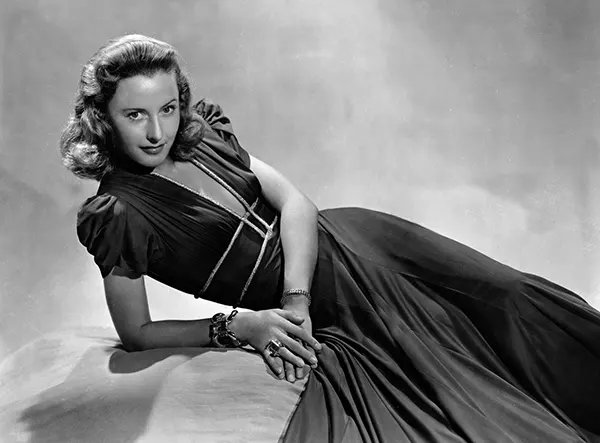
Barbara Stanwyck (July 16, 1907 – January 20, 1990).
Film noir icon Barbara Stanwyck never formally came out, but the speculation surrounding her personal life was anything but quiet.
Gay actor Clifton Webb, her co-star in Titanic, famously referred to her as “my favorite American lesbian.”
Rumors connected her romantically to some of Hollywood’s most powerful women, including Joan Crawford, Marlene Dietrich, and Tallulah Bankhead.
Most notably, she was said to have shared a decades-long romance with publicist Helen Ferguson — a relationship that, by all accounts, was the most enduring of her life.
Raymond Burr
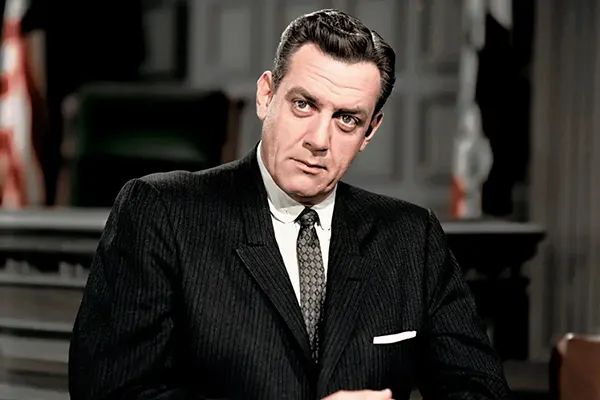
Raymond William Stacy Burr (May 21, 1917 – September 12, 1993).
Canadian actor Raymond Burr became a television institution through his iconic roles in Perry Mason and Ironside, and gained cinematic recognition through Rear Window and Godzilla.
Though Burr was married three times, his most meaningful relationship was with actor Robert Benevides, with whom he shared his life until his death in 1993.
Those close to Burr understood that his marriages served, at least in part, as a shield. Producer Arthur Marks, a longtime collaborator on Perry Mason, noted that Burr’s frequent references to wives and romantic relationships with women felt performative.
AP reporter Bob Thomas reflected similarly, noting that in that era of Hollywood, any revelation of homosexuality “would have been very difficult for him.” Burr, it seems, knew this better than anyone.
Marlene Dietrich
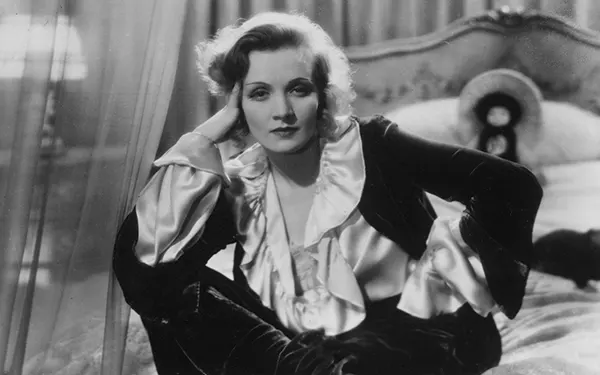
Marie Magdalene “Marlene” Dietrich (27 December 1901 – 6 May 1992).
Marlene Dietrich didn’t just push boundaries — she demolished them with effortless elegance.
A product of the artistically liberated Weimar culture of early 20th-century Germany, Dietrich brought a radical sense of freedom to everything she did.
She wore tuxedos and trousers on screen at a time when doing so was considered scandalous, and in doing so, permanently reshaped how women related to fashion. Her personal life was equally uninhibited.
Dietrich was openly attracted to both men and women and made no apologies for it. As early as 1930, she was kissing women on screen, and off-screen she was romantically linked to Kay Francis, Edith Piaf, Mercedes de Acosta, and Greta Garbo.
Greta Garbo
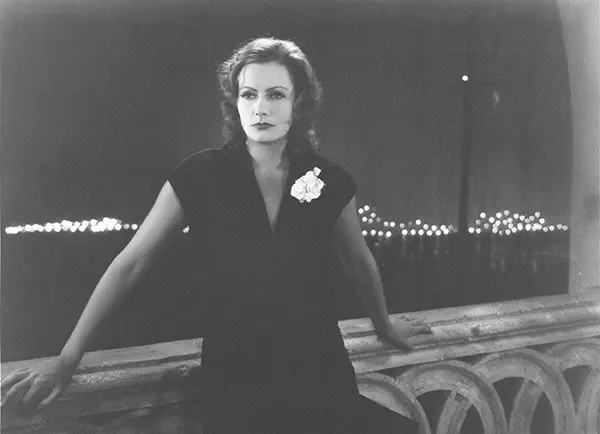
Greta Garbo (18 September 1905 – 15 April 1990).
Once heralded as the most beautiful woman in the world, Greta Garbo was as enigmatic in her private life as she was magnetic on screen.
She fiercely guarded her personal affairs and, during her lifetime, never clearly defined her sexuality — though history has largely come to remember her as gay.
She was said to have had a flirtatious, on-again-off-again dynamic with socialite Mercedes de Acosta, who would reportedly turn to Marlene Dietrich whenever Garbo pulled away.
There were also whispers of a tender attachment to her childhood friend Mimi Pollack, suggesting that Garbo’s romantic world was as layered and complex as the performances that made her a legend.
Joan Crawford
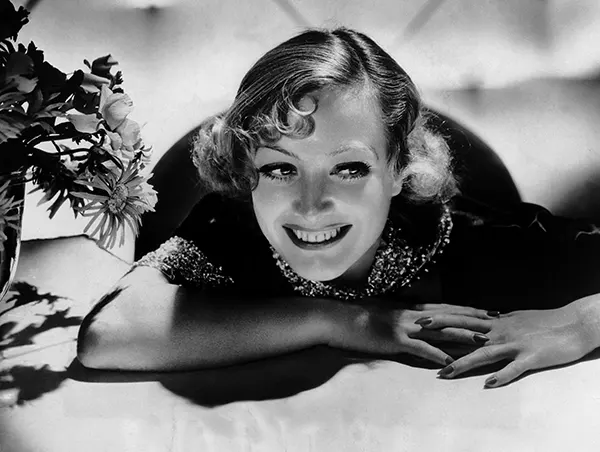
Joan Crawford ( March 23, 1904 – May 10, 1977).
Joan Crawford is perhaps best remembered for her dramatic fashion sensibilities and her larger-than-life persona, but fewer people are familiar with the whispers that surrounded her sexuality.
Despite her well-known appetite for male attention, Crawford was widely rumored to be bisexual.
In the years following her death, accounts emerged suggesting she had romantic affairs with Barbara Stanwyck, Marilyn Monroe, Martha Raye, and actress Marion Morgan.
Whether these accounts are fully accurate remains uncertain, but they paint a picture of a woman whose personal life was considerably more complex than her public image let on.
Tallulah Bankhead
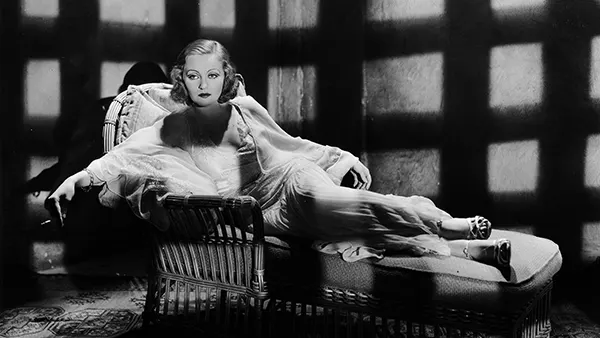
Tallulah Brockman Bankhead (January 31, 1902 – December 12, 1968).
Tallulah Bankhead was many things: a stage actress of remarkable talent, a Hollywood presence, and a socialite who seemed to exist purely to challenge convention.
She was famously unbothered by what others thought of her personal life and made little effort to conceal it.
Bankhead was reportedly intimate with several women on this very list, including Mercedes de Acosta, Greta Garbo, Hope Williams, and Barbara Stanwyck — connections that spoke to just how tightly woven the private lives of these women really were.
Ramon Novarro
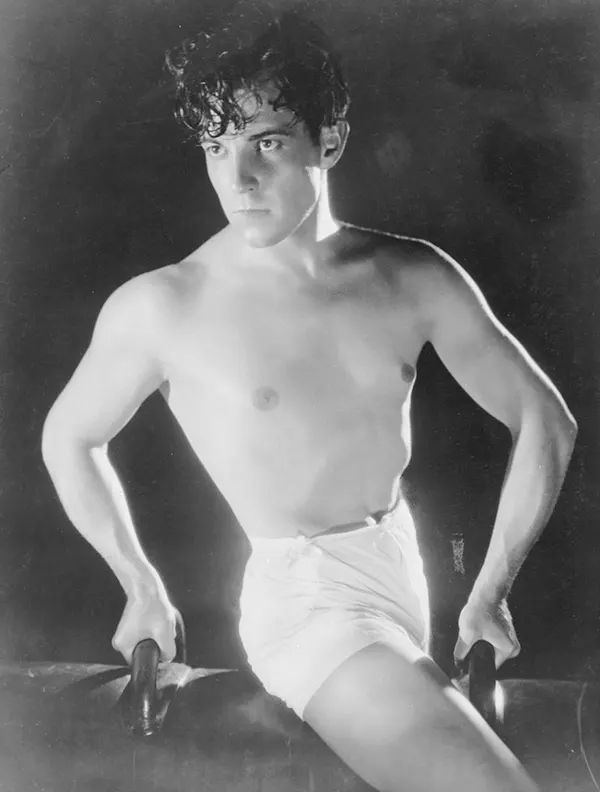
Ramón Gil Samaniego (February 6, 1899 – October 30, 1968).
Ramon Novarro rode the wave of silent film stardom to remarkable heights, most notably through his title role in the 1925 epic Ben-Hur.
The Mexican-born actor was handsome and compelling on screen, but off it he was consumed by a painful internal conflict — his attraction to men set against the rigid expectations of his Catholic faith. Unable to reconcile the two, he turned to alcohol and, in darker moments, to hired company to stave off isolation.
His life ended in tragedy in the late 1960s, when two brothers he had invited to his home tortured and killed him.
The brothers were convicted and imprisoned, and later paroled — a grim coda to the life of a man who never found peace with who he was.
Lizabeth Scott
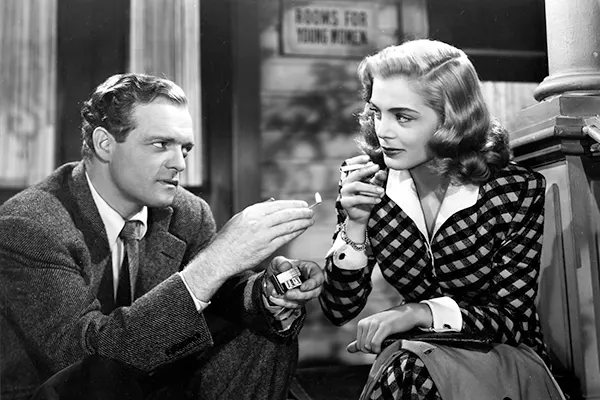
Lizabeth Virginia Scott (September 29, 1922 – January 31, 2015).
Lizabeth Scott was frequently compared to Lauren Bacall — sultry, blonde, and possessed of a smokily magnetic voice — but to reduce her to someone else’s shadow was a disservice.
She had her own distinct style and screen presence that set her apart from her film noir contemporaries. Her career, however, was derailed not by her talent but by a tabloid.
In 1954, Confidential magazine ran an exposé implying she was a lesbian, using the coded language of the era to label her a woman with a taste for “baritone babes.”
Scott sued the publication, but the damage was done. The stigma clung to her reputation and her career never fully recovered — a sobering reminder of how much power a single story could wield over a life.
Robert Reed
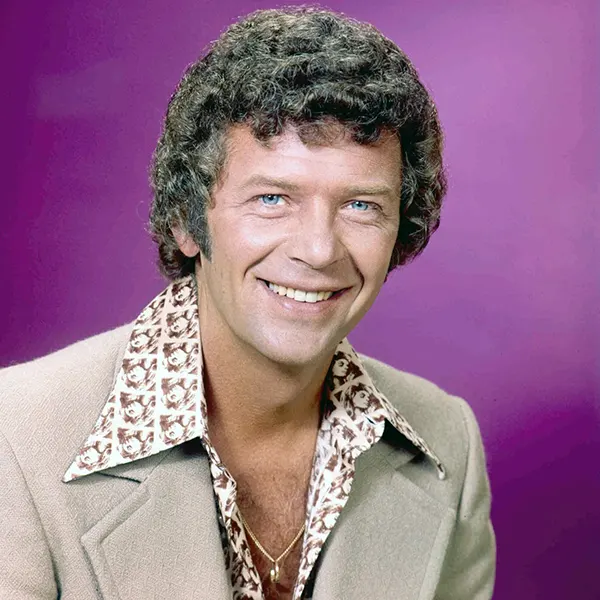
Robert Reed (October 19, 1932 – May 12, 1992).
Robert Reed is best remembered as the warm, dependable Mike Brady on The Brady Bunch — a role that made him a fixture in American homes for years.
Behind the scenes, Reed closely guarded his sexuality, acutely aware of the career consequences that exposure could bring.
Casting director Joel Thurm, writing in his memoir Sex, Drugs & Pilot Season, recalled personal encounters with Reed and noted that industry parties of the era were populated largely by gay men — a detail that speaks to just how common, and how carefully concealed, the reality of Hollywood’s gay community truly was.
James Dean
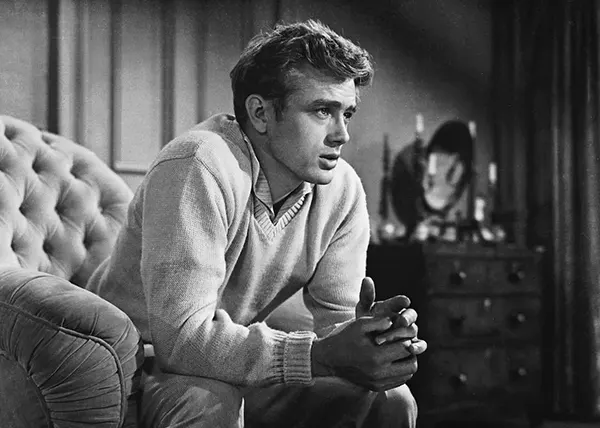
James Byron Dean (February 8, 1931 – September 30, 1955).
The claims surrounding James Dean’s sexuality are, by admission, largely unverified — but they are persistent enough to warrant inclusion.
Multiple sources over the years have alleged homosexual activity on Dean’s part during the height of his career.
A 2016 book, James Dean: Tomorrow Never Comes, suggested he carried on a secret relationship with Marlon Brando, though its authors have a well-documented taste for provocative Hollywood mythology.
What lends the rumors at least some texture is the broader context: accounts of the social circles Dean moved through describe a predominantly gay milieu, which has kept speculation alive long after his death.
Marlon Brando
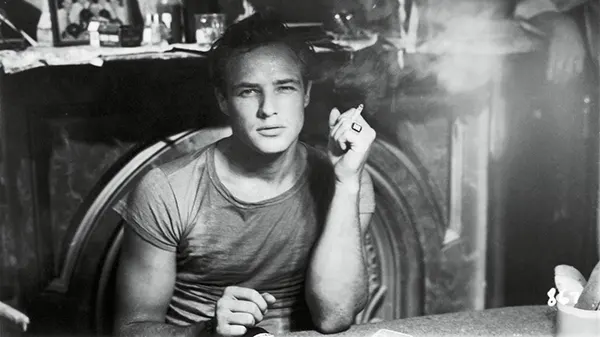
Marlon Brando Jr. (April 3, 1924 – July 1, 2004).
The other name at the center of the James Dean rumor, Marlon Brando, was openly bisexual — and remarkably candid about it for his time.
In a 1976 interview with a French journalist, Brando acknowledged that he, like many men, had engaged in homosexual relationships and expressed no shame about it whatsoever.
He did, however, categorically deny the specific claim of a romance with Dean in his memoir, Songs My Mother Taught Me.
Whatever the truth of that particular story, Brando’s willingness to speak openly about bisexuality at a time when few public figures would dare to remains a notably bold act.
Tab Hunter
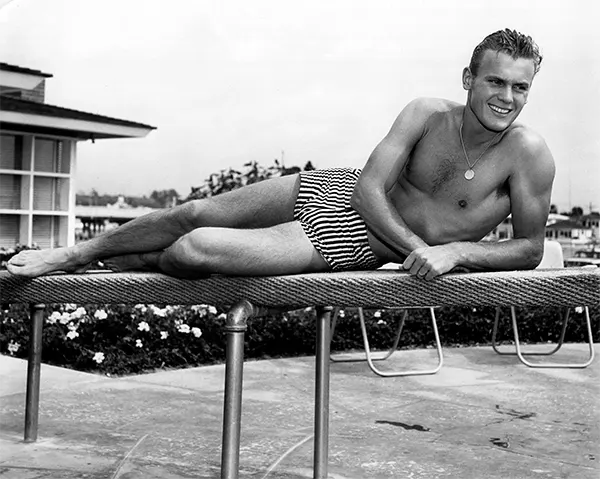
Tab Hunter (July 11, 1931 – July 8, 2018).
Tab Hunter was the archetypal 1950s heartthrob — discovered at seventeen for his striking looks and immediately launched into a film career that made him one of the decade’s most recognizable faces.
When Confidential magazine published details of a past arrest tied to what was then coded as “lewdness” — essentially any public display of homosexuality — his studio moved to minimize the story, and the public largely moved on.
Hunter remained closeted for most of his professional life, but eventually told his own story in the 2005 memoir Tab Hunter Confidential, which included an account of his relationship with fellow actor Anthony Perkins.
Patsy Kelly
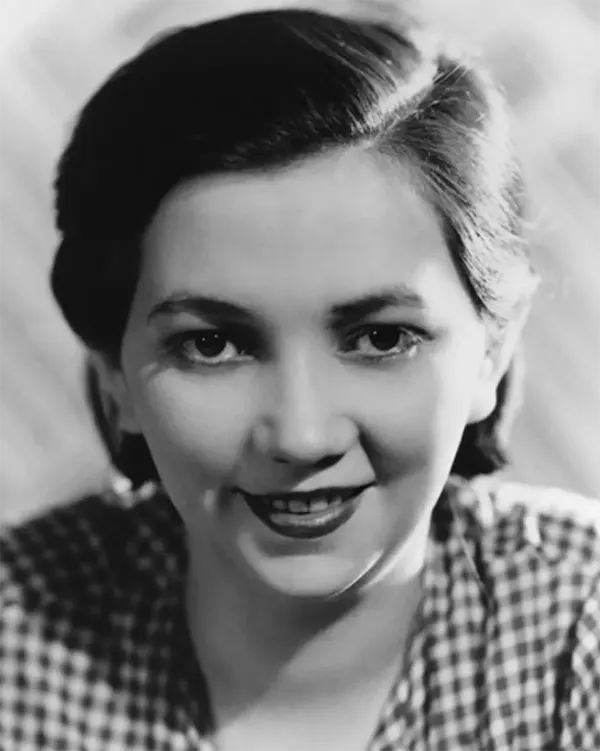
Patsy Kelly (January 12, 1910 – September 24, 1981).
Patsy Kelly was a refreshing outlier in an era defined by concealment.
Unlike many of her contemporaries in the 1930s and 1940s, Kelly made no effort to hide her sexuality — reportedly telling at least one publication directly that she was a “dyke” who lived with her girlfriend and had no intention of marrying.
She was also romantically linked to Tallulah Bankhead, who was similarly open about her own bisexuality. In a Hollywood culture built on secrets, Kelly’s straightforwardness was, in its own way, quietly radical.
Montgomery Clift
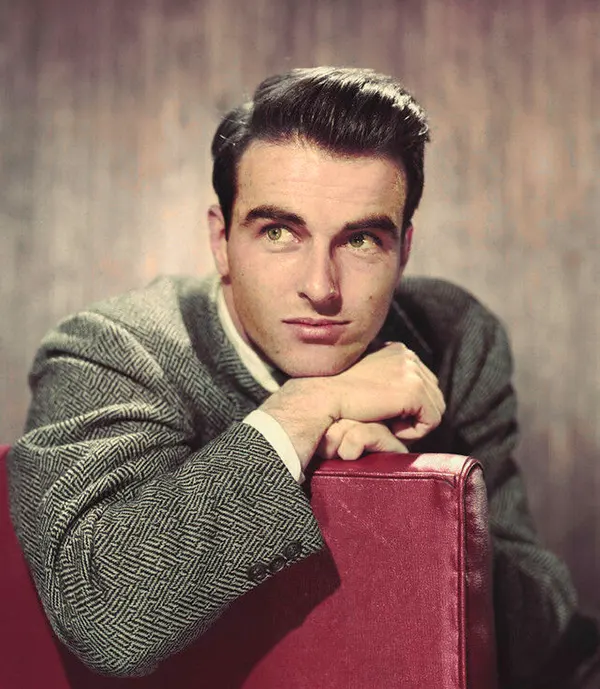
Edward Montgomery Clift (October 17, 1920 – July 23, 1966).
Montgomery Clift built his reputation on raw, emotionally complex performances in films like A Place in the Sun and From Here to Eternity.
His personal life, meanwhile, was shadowed by struggles with substance abuse — though Clift himself pushed back against the narrative that his sexuality was the root cause.
His mother, speaking in the 2018 documentary Making Montgomery Clift — co-directed by his nephew Robert Clift — shared that she had been aware of her son’s sexuality from a young age.
In 2000, Elizabeth Taylor made a public acknowledgment of Clift’s homosexuality at the GLAAD Media Awards, offering a moment of recognition that Clift himself never lived to see.
J. Edgar Hoover
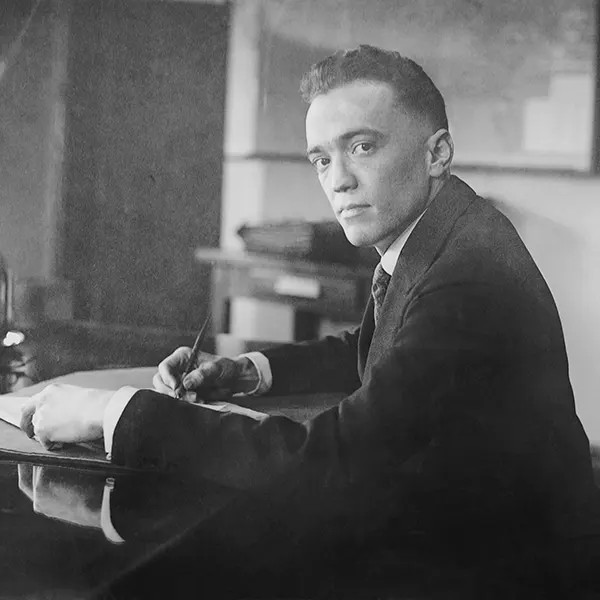
John Edgar Hoover (January 1, 1895 – May 2, 1972).
As the long-serving director of the FBI, J. Edgar Hoover wielded enormous power — and reportedly used it to silence anyone who dared question his sexuality.
Rumors about Hoover began circulating in the 1940s, and by 1969 they had made it into print. His relationship with deputy Clyde Tolson was the most scrutinized aspect of his personal life.
The two were inseparable: they worked together, dined together, vacationed together, and ultimately left their estates to one another.
Hoover referred to Tolson as his “alter ego.” Some FBI colleagues described the bond as brotherly; others, including former executive assistant director Mike Mason, suggested that those denials were less about truth and more about protecting Hoover’s carefully constructed image.
Katharine Hepburn
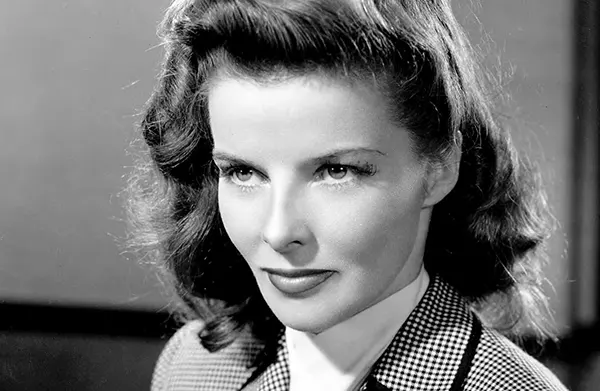
Katharine Houghton Hepburn (May 12, 1907 – June 29, 2003).
Katharine Hepburn remains one of the most celebrated and fiercely independent figures in Hollywood history.
Over the course of a career that spanned decades, she accumulated four Academy Awards and a reputation for refusing to conform — on screen or off.
Persistent rumors about her sexuality followed her throughout her life, with some biographers and former associates suggesting she had romantic relationships with women, most notably actress Laura Harding.
Hepburn was married briefly to businessman Ludlow Ogden Smith in the late 1920s, and later shared a famously devoted, if complicated, relationship with Spencer Tracy.
She never publicly addressed questions about her sexuality, leaving that chapter of her story, like so much else about her, deliberately and defiantly unresolved.
(Photo credit: Wikimedia Commons).