
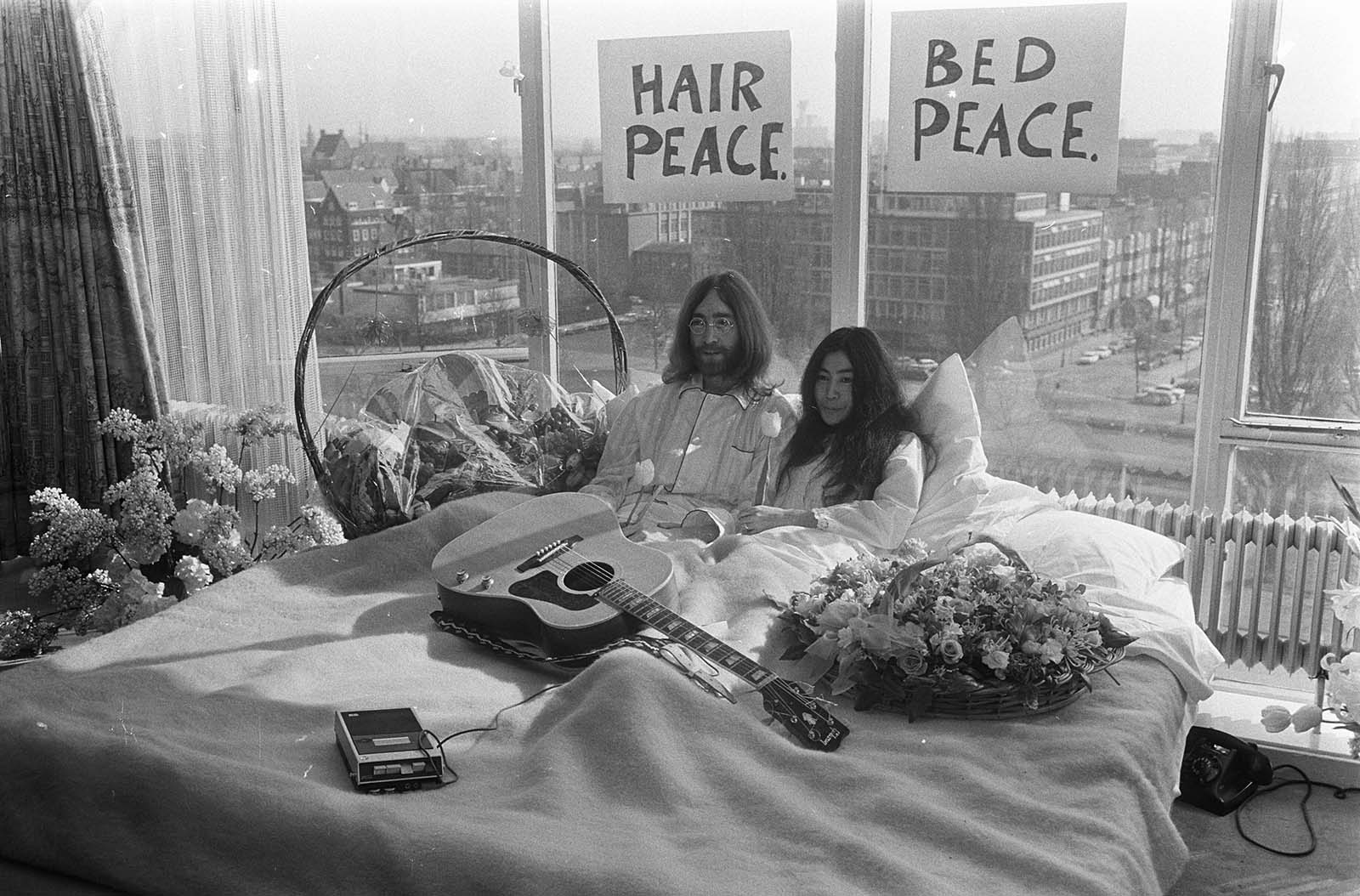
In 1969, as images of the Vietnam War dominated headlines around the world, John Lennon and Yoko Ono chose an unexpected stage for their protest: a hotel bed.
Rather than marching in the streets, the couple turned their celebrity, their marriage, and relentless media attention into a carefully staged experiment aimed at challenging how peace could be discussed, photographed, and communicated.
Initiated by Ono and Lennon during a two-week period in Amsterdam and Montreal, the Bed-In for Peace was conceived as an alternative form of protest, borrowing its structure from the idea of a sit-in.
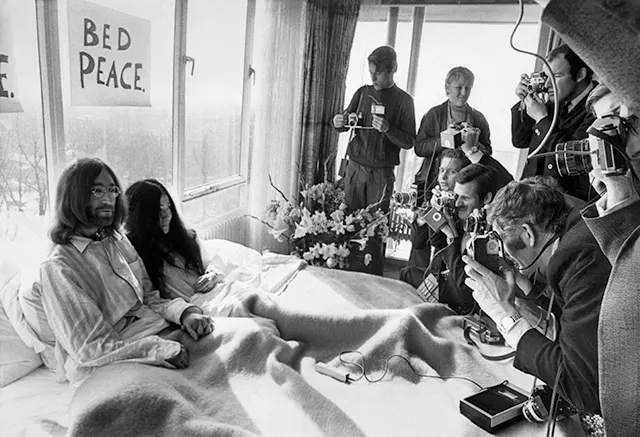
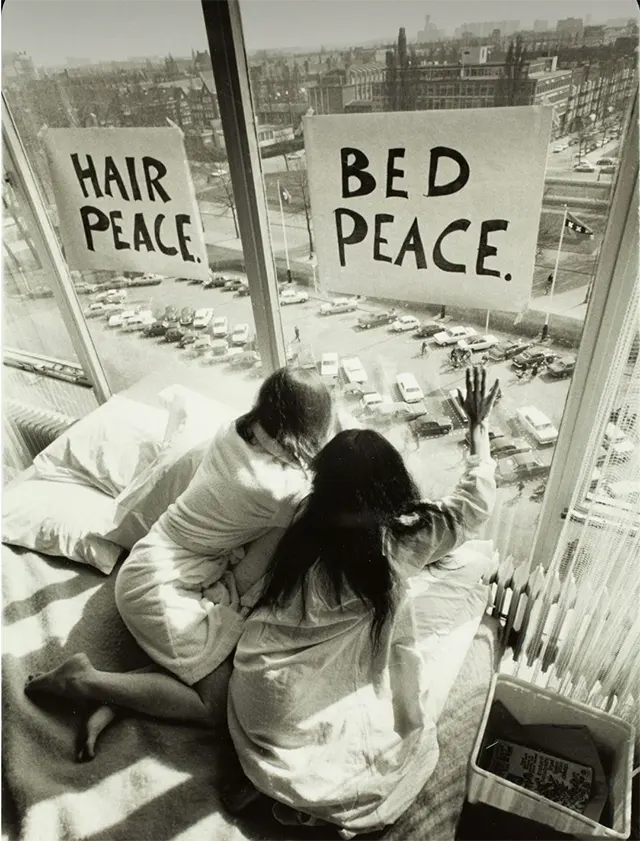
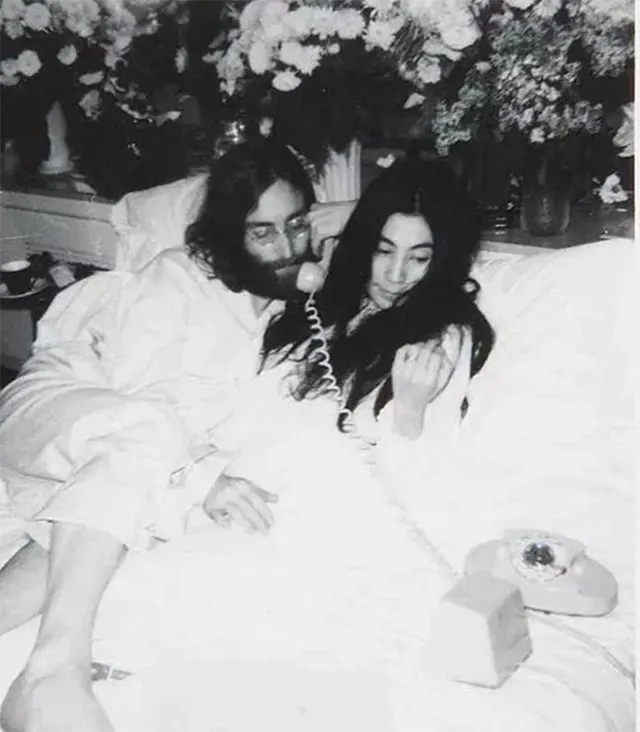
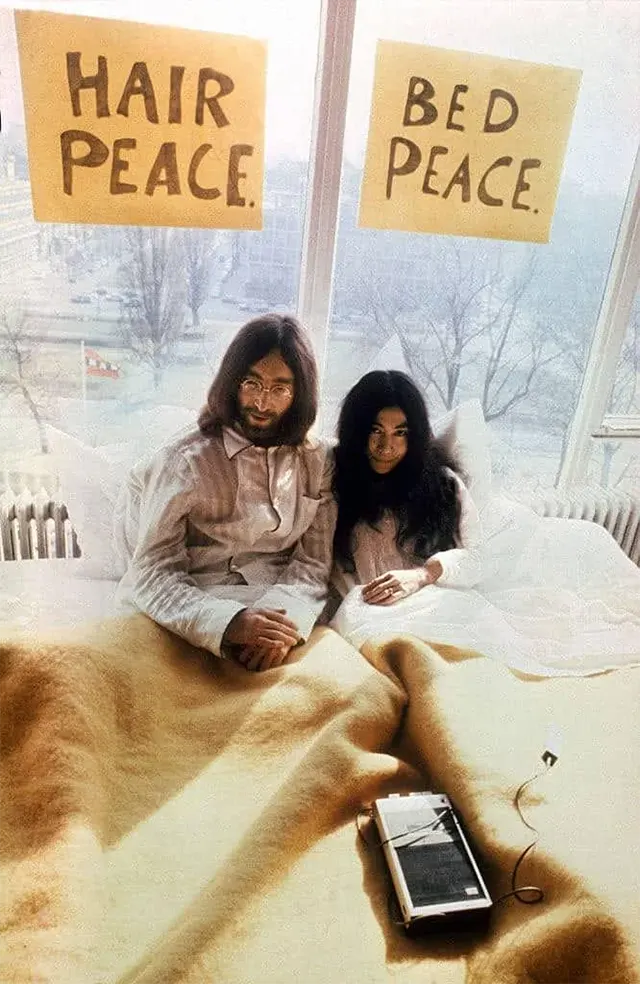
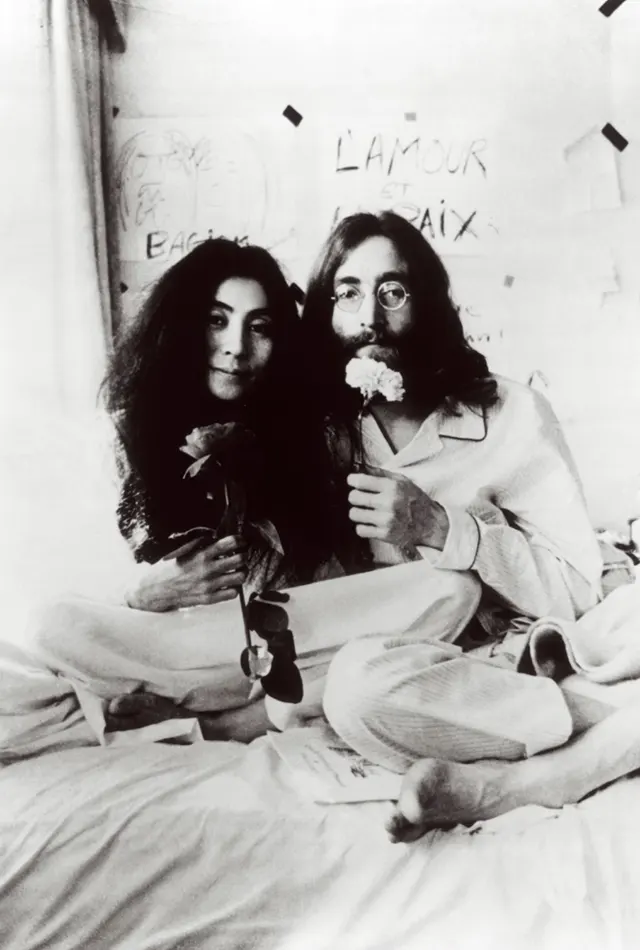
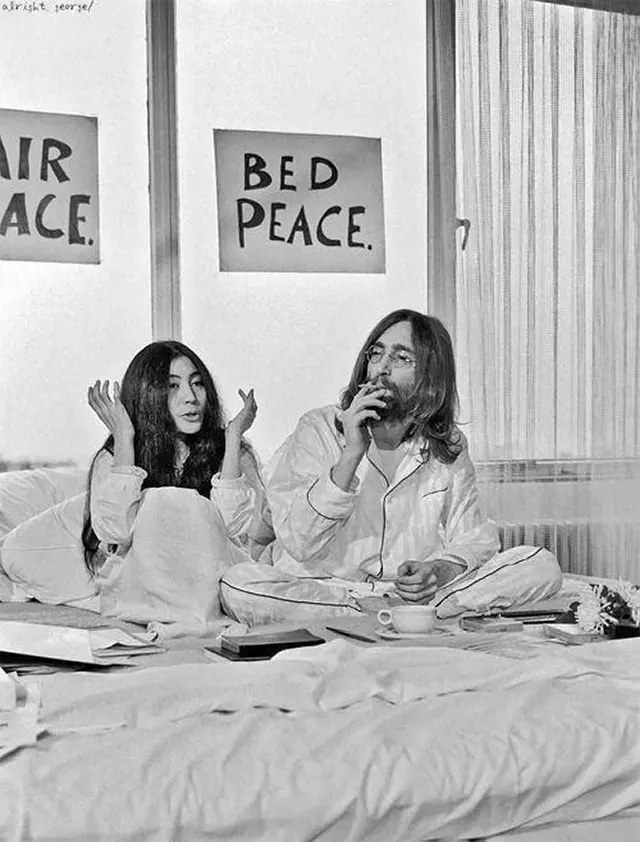
John Lennon and Yoko Ono at the first day of their Amsterdam bed-in.
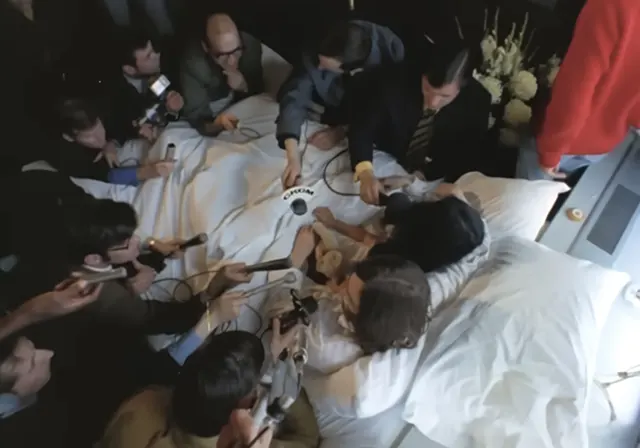
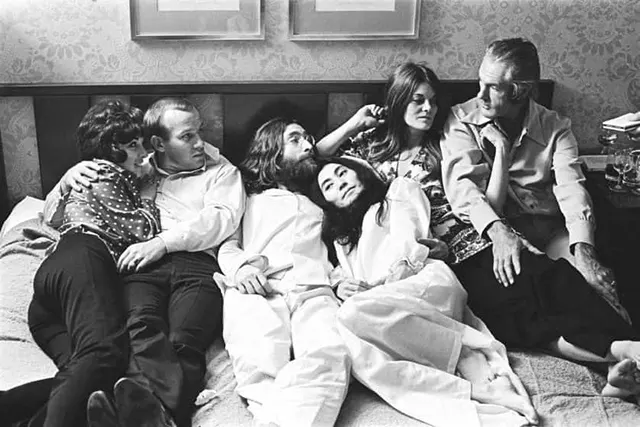
Instead of occupying public buildings or blocking entrances, the couple remained in bed, inviting journalists into their private space and redirecting the spotlight toward nonviolence and dialogue.
The first bed-in took place at the Hilton Hotel in Amsterdam, followed by a second at the Queen Elizabeth Hotel in Montreal, at a time when public frustration over the war was intensifying.
Aware that their March 20, 1969 marriage would draw global media attention, Lennon and Ono decided to turn their honeymoon into a platform for peace activism.
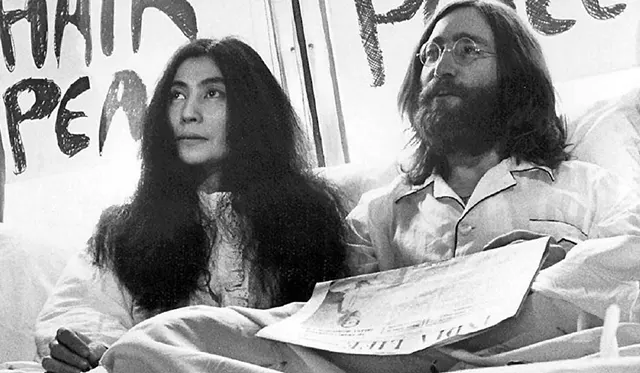 From March 25 to 31, they stayed in the presidential suite, Room 702, at the Amsterdam Hilton, welcoming reporters every day from morning until evening.
Fans gathered outside, while newspapers and television crews documented the event closely.
When questioned afterward about whether the protest had achieved its goal, Lennon expressed irritation at the press’s skepticism, arguing that being dismissed was intentional: “It’s part of our policy not to be taken seriously. Our opposition, whoever they may be, in all manifest forms, don’t know how to handle humour. And we are humorous.”
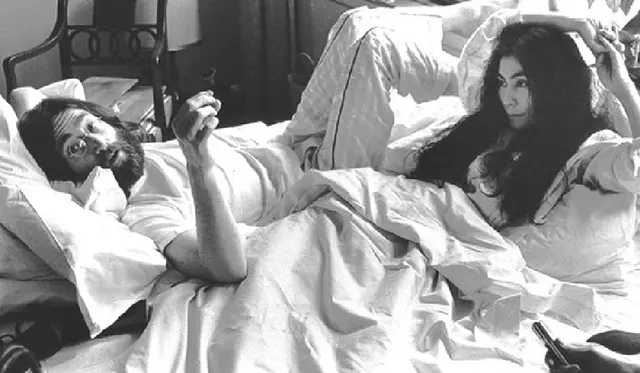 Ono also earned controversy in the Jewish community for saying during the press conference that Jewish women could have changed Adolf Hitler by becoming his girlfriend and sleeping with him for 10 days.
It was acknowledged that some Nazi officials, including Nazi “First Lady” Magda Goebbels, had at one point in their lives had Jewish lovers.
Given the couple’s history of provocative artistic gestures, including the nude cover of the Two Virgins album, many journalists arrived expecting scandal.
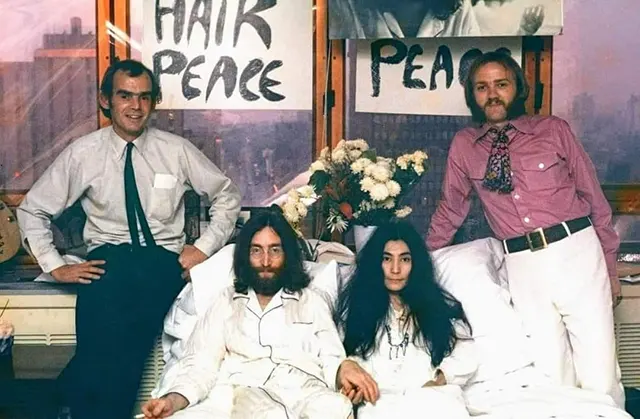
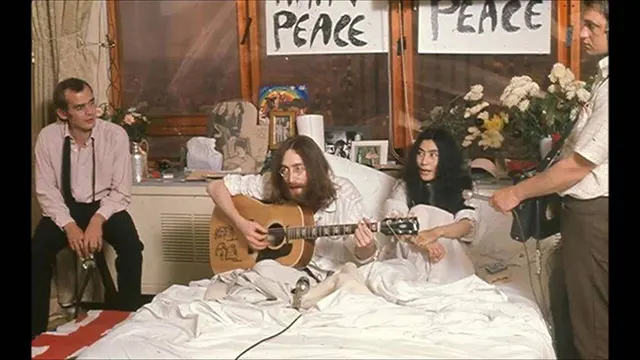
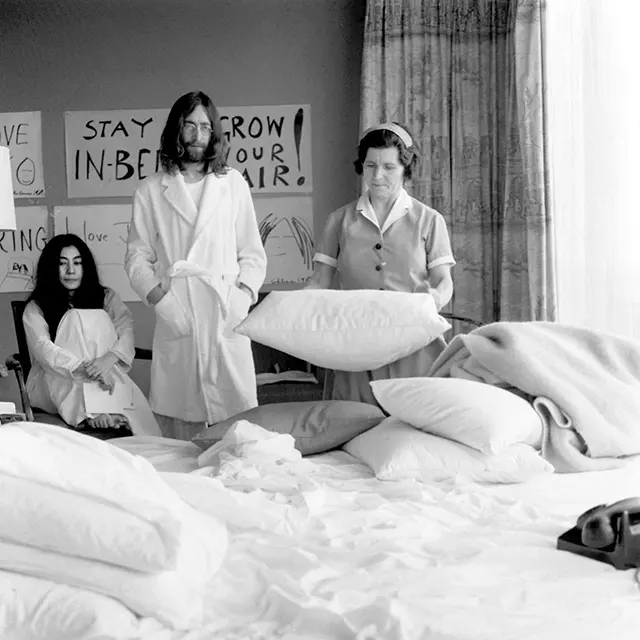 What they found instead was a deliberately calm and almost disarming scene. Lennon and Ono sat upright in bed, dressed in pajamas, speaking quietly about peace beneath handwritten signs reading “Hair Peace” and “Bed Peace.”
Lennon later described their appearance as being “like angels.” After a week in Amsterdam, the couple traveled to Vienna, where they continued their unconventional approach with a “bagism” press conference, further challenging media expectations.
During April 1969, Lennon and Ono sent acorns to the heads of state in various countries around the world in hopes that they would plant them as a symbol of peace.
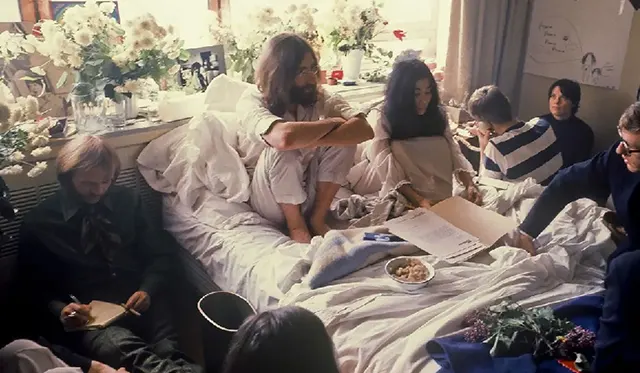 A second bed-in was initially planned for New York, but Lennon’s 1968 cannabis conviction prevented him from entering the United States.
The couple briefly attempted to relocate the event to the Bahamas, arriving at the Sheraton Oceanus Hotel on May 24, 1969, before abandoning the plan due to the heat. Canada became the alternative.
After landing in Toronto and securing a 10-day visitor status, Lennon and Ono chose Montreal over Toronto, largely because of its proximity to New York and easier access for American media.
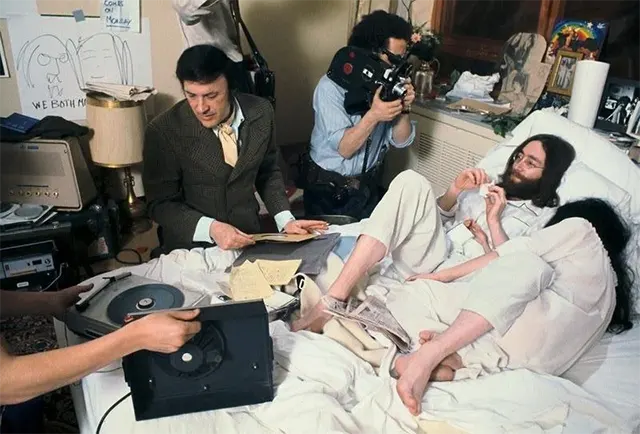 The Montreal bed-in ultimately became the more influential of the two, reinforcing the couple’s belief in using mass communication as a tool for activism.
Later that year, Lennon and Ono extended their campaign beyond hotel rooms. In December 1969, billboards appeared in eleven major cities around the world carrying the message “WAR IS OVER! If You Want It – Happy Christmas From John and Yoko.”
Designed by Apple creative director John Kosh, the posters marked a shift from intimate protest to global public messaging, cementing the Bed-In for Peace as one of the most visually distinctive and unconventional protests of the era.
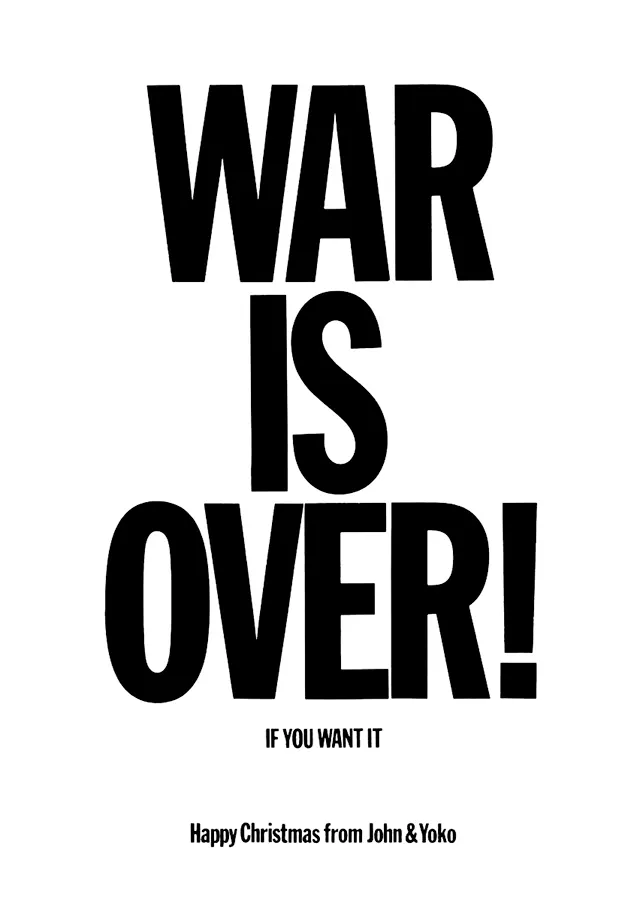
Billboard posted by Lennon and Ono in eleven major cities.

Wax figures of the Lennon’s Montreal bed-in at the former Musée Grévin Montreal.
(Photo credit: Wikimedia Commons).