
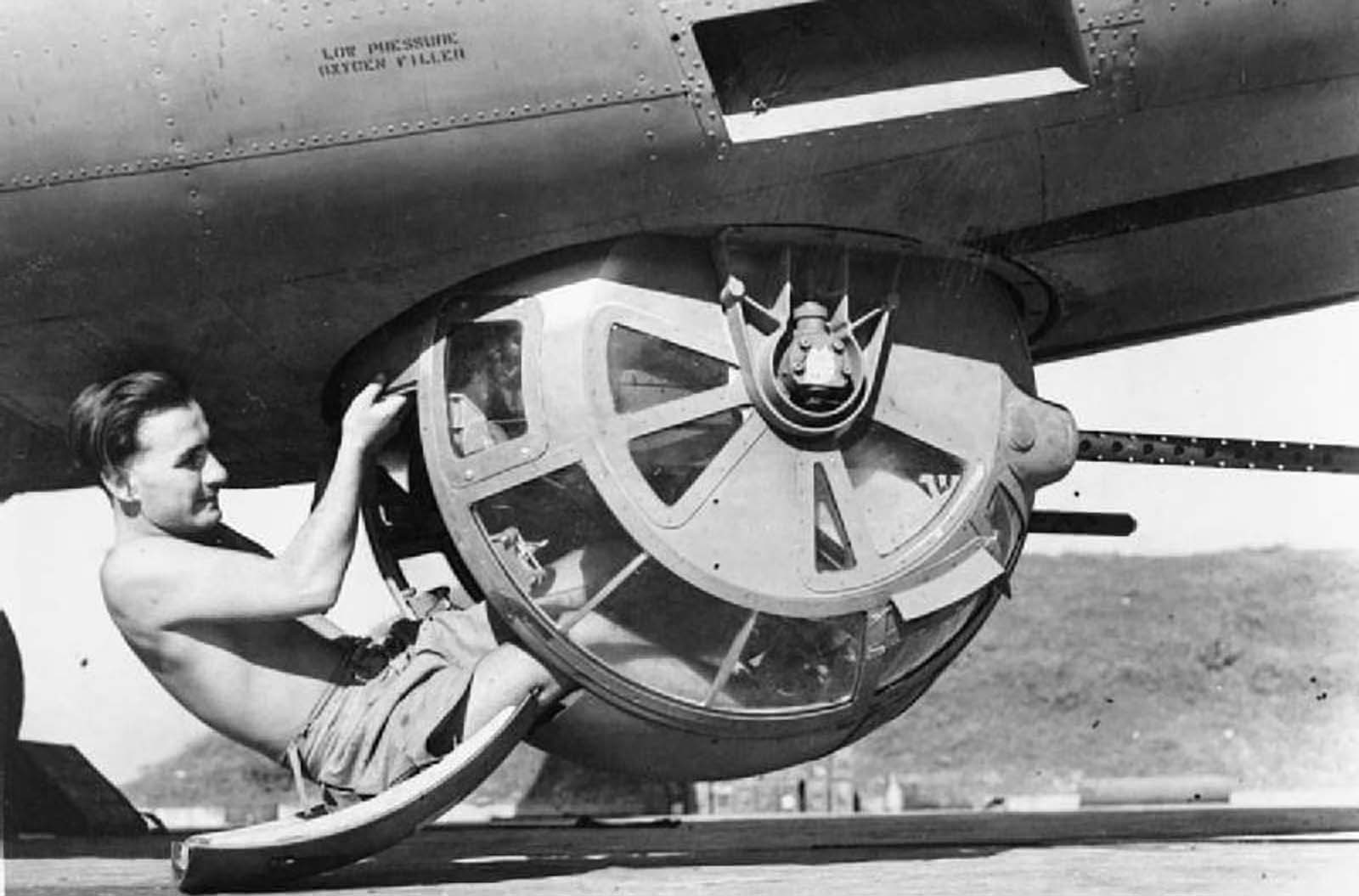
Suspended beneath the bomber’s fuselage, exposed to enemy fire and the freezing air of high altitude, the ball turret gunner occupied one of the most unforgiving positions of World War II.
Assigned to the underside of American heavy bombers such as the B-17 Flying Fortress and the B-24 Liberator, these airmen served as the aircraft’s primary defense against fighters attacking from below, operating in conditions that demanded both physical endurance and steady nerve.
Encased in a small rotating sphere with little room to move and limited means of escape, the ball turret gunner faced a level of danger that few other combat roles could match.
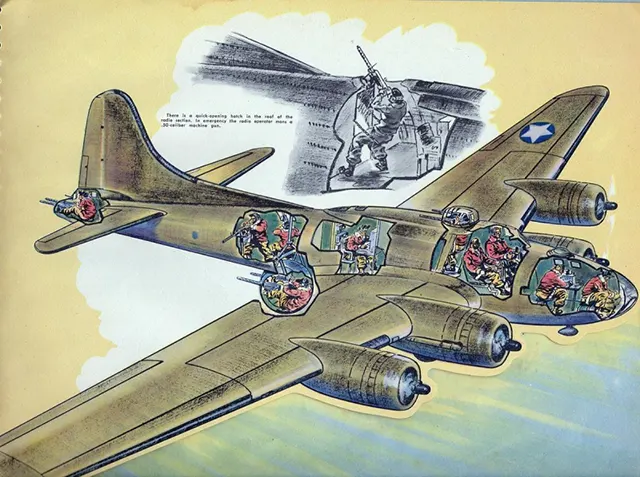
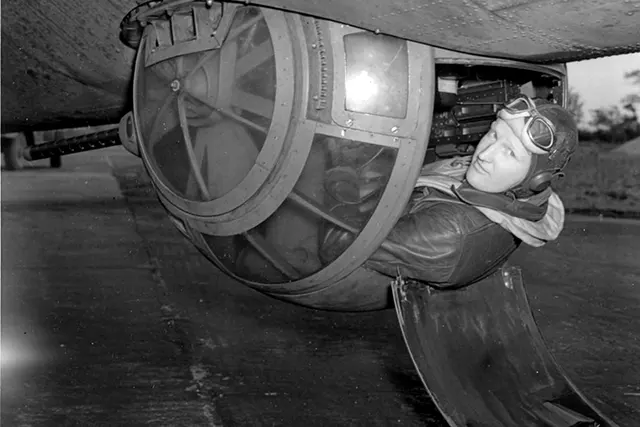 The ball turret was arguably the most perilous position on the Flying Fortress. First, enemy fighters often attacked from below, taking advantage of the limited defensive coverage against low-angle assaults.
Second, the turret’s prominent placement made it an obvious target for enemy gunners. Third, its design offered minimal protection, with virtually no armor to shield the gunner from flak or bullets.
Finally, if the aircraft suffered damage, the ball turret gunner faced the greatest difficulty in escaping a failing bomber.
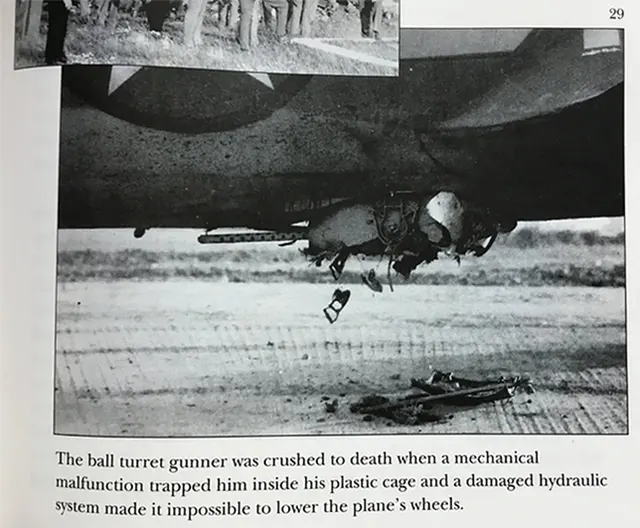
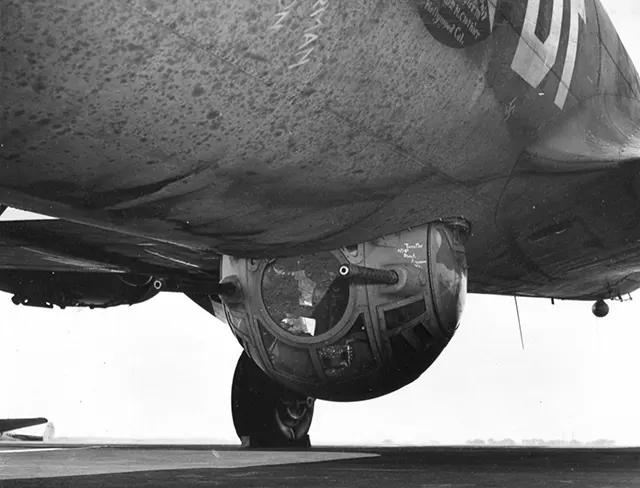
Survival didn’t require a catastrophic hit; even a safe return could be deadly. When the plane touched down, the turret hung just inches from the ground with fully inflated tires.
A flat tire, malfunctioning landing gear, or a hard landing could easily crush the trapped gunner beneath the fuselage.
For this reason, crews went to great lengths to free a ball turret gunner caught in a jammed position.
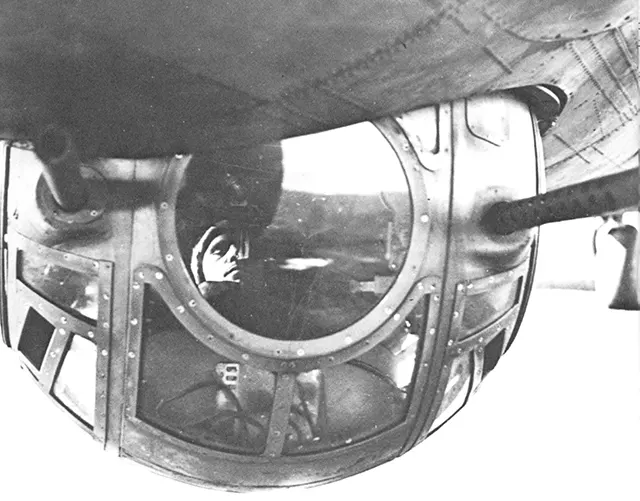
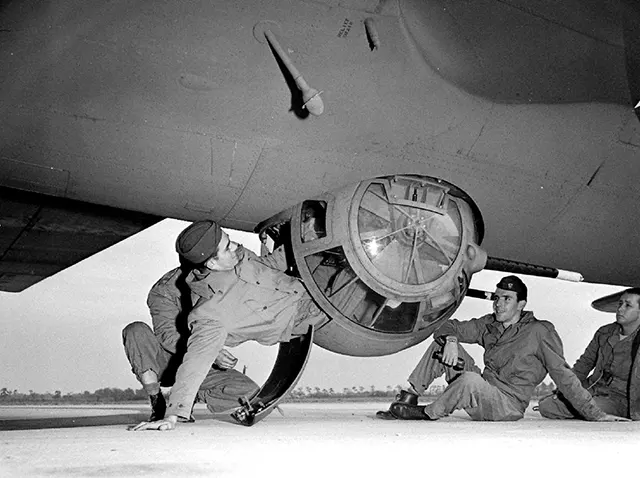
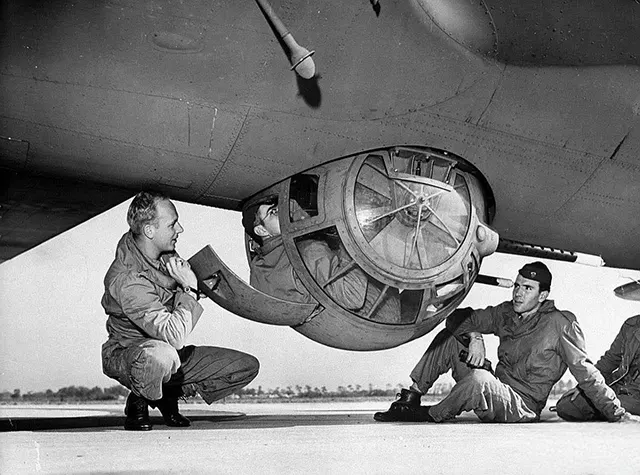
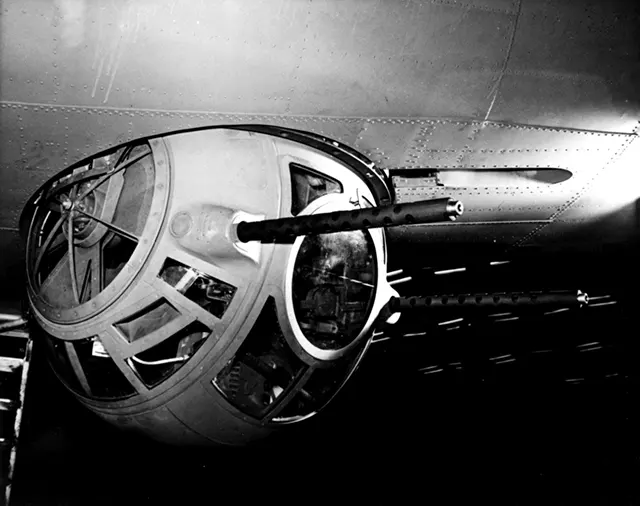
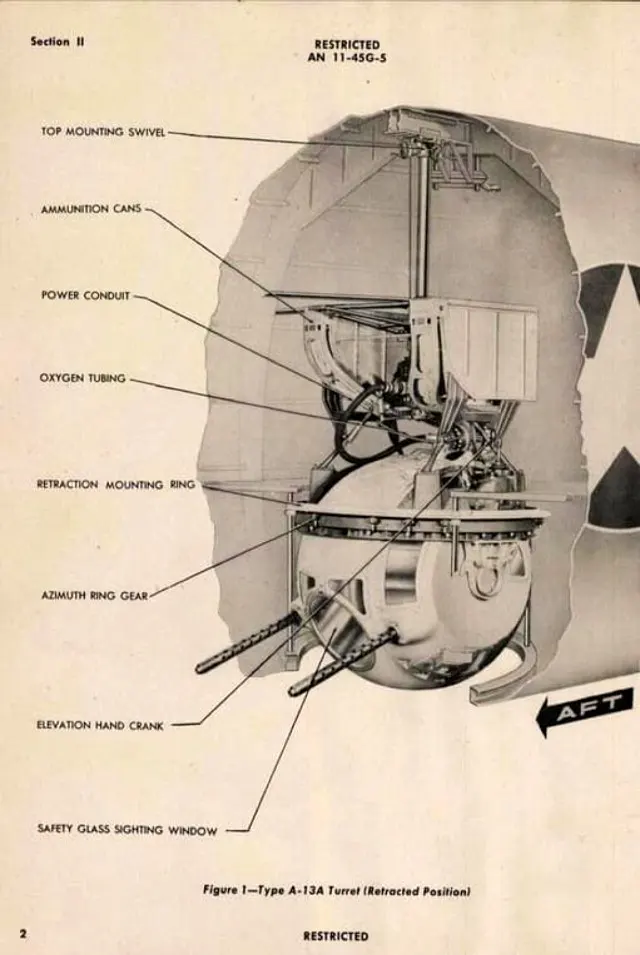
The ball turret itself was a product of wartime innovation. Developed by the Sperry Corporation and introduced in the early 1940s, it was a compact, spherical enclosure made of plexiglass and metal, measuring just over three feet in diameter to minimize drag.
Mounted to the belly of the aircraft, the turret could rotate a full 360 degrees horizontally and tilt vertically, giving the gunner a broad field of fire despite the confined space.
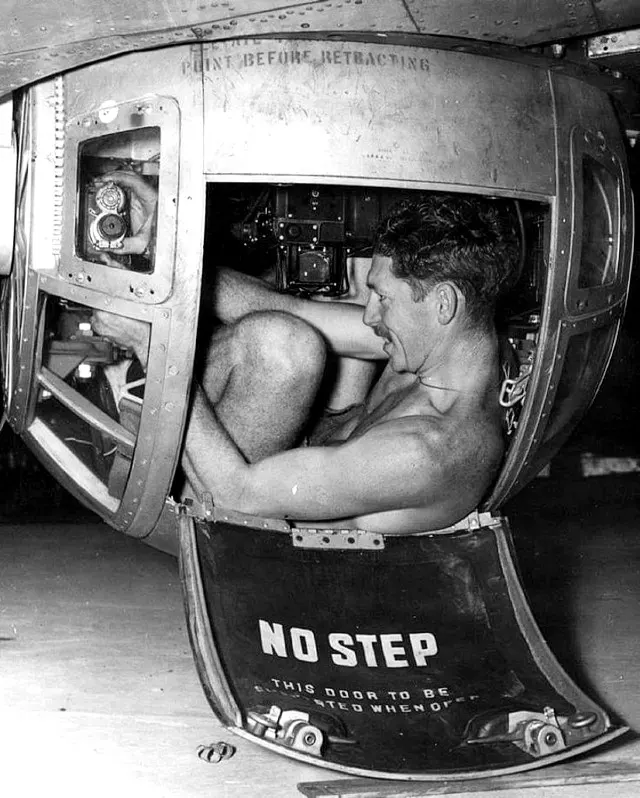
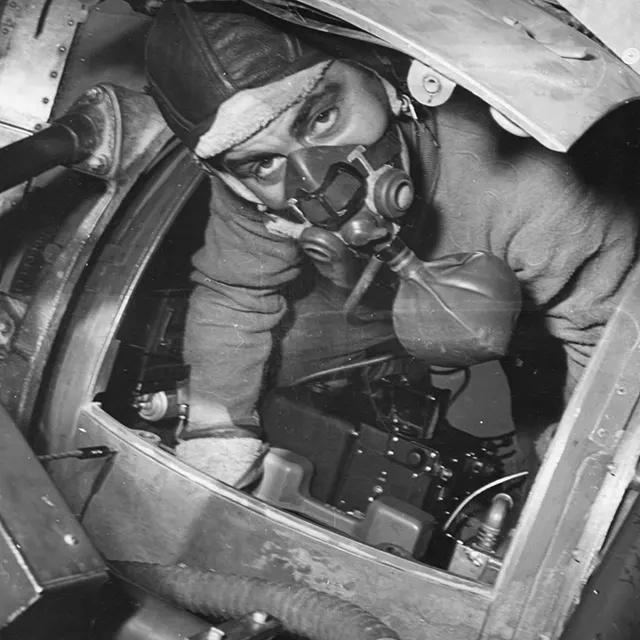
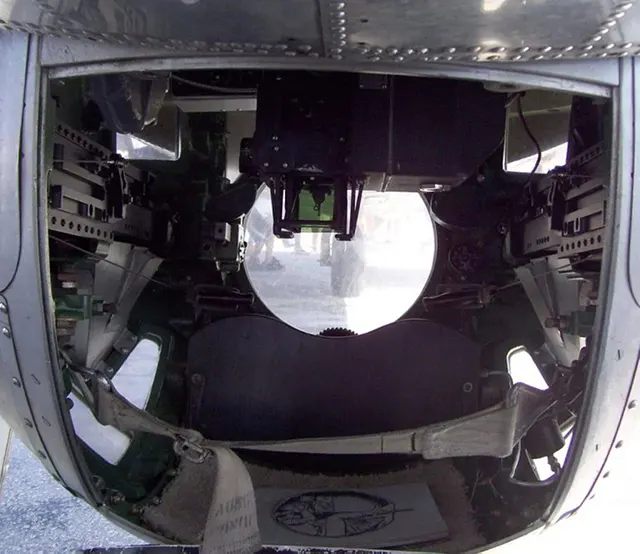
Inside the turret, the gunner worked in an almost impossibly cramped environment.
He entered only after the turret was rotated so the guns pointed straight down, stepping into heel rests and securing himself before the hatch was locked.
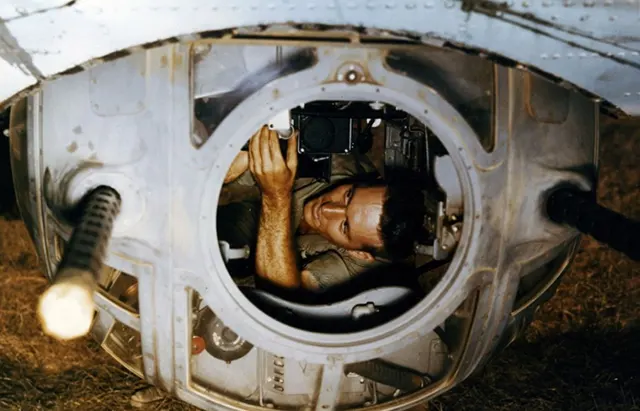
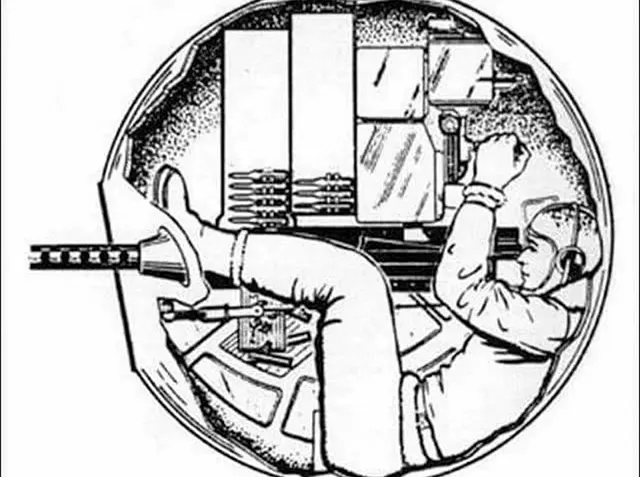
Once inside, he remained curled in a fetal position, knees drawn close to his chest, feet supported by stirrups, with his back pressed against the rear wall.
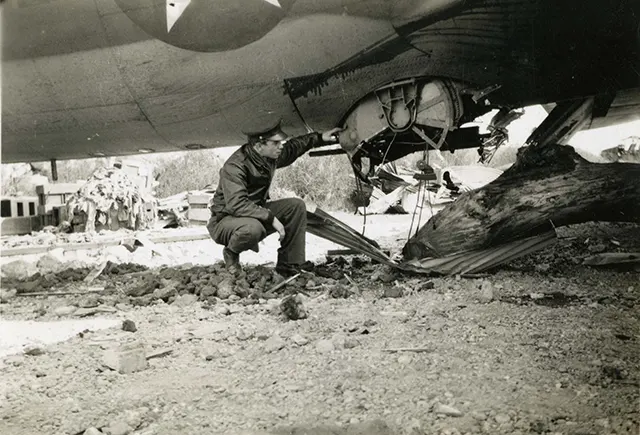
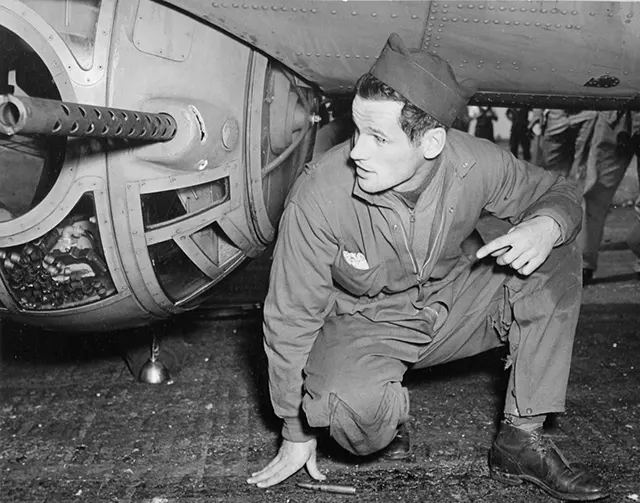
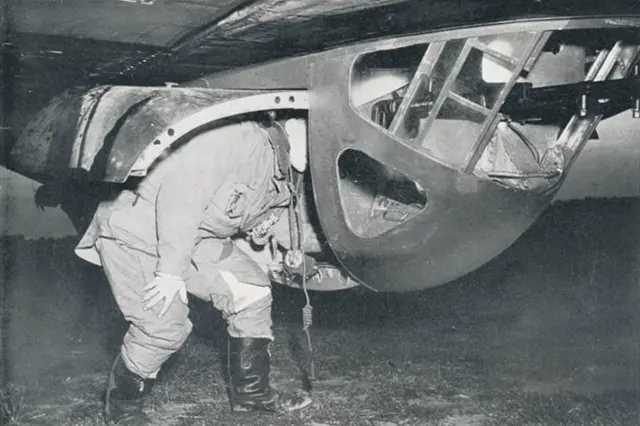
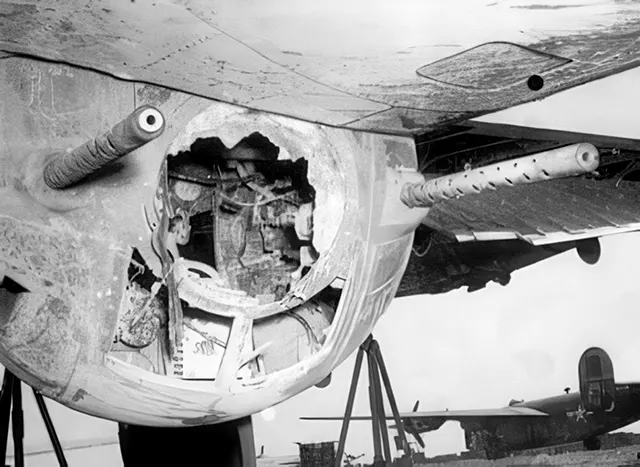
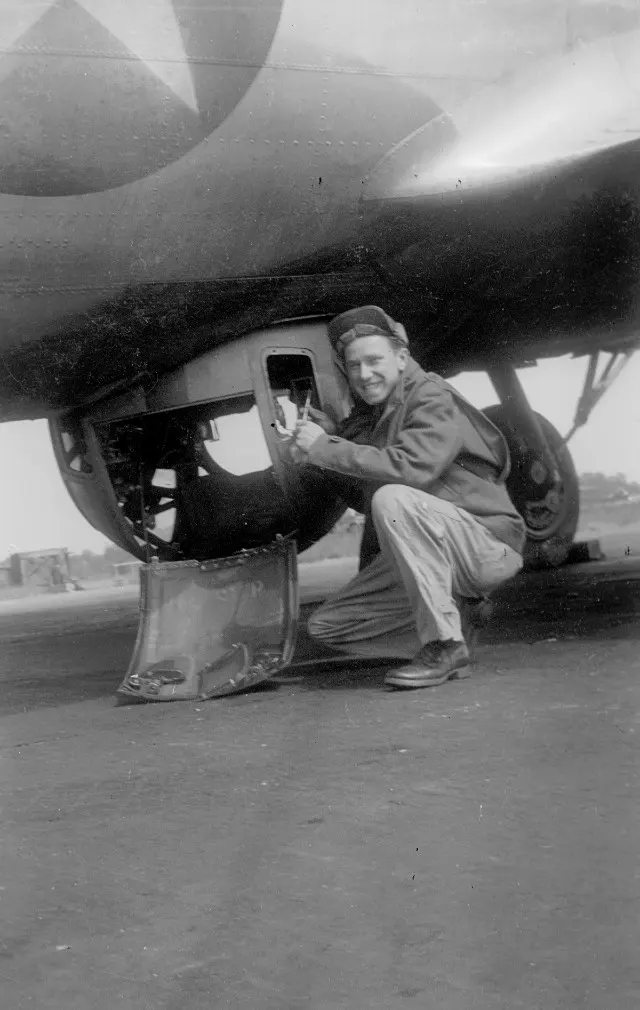
US airman examining smashed ball turret on a B-17 Flying Fortress. Thurleigh Airfield, near Bedford, England. 1943-45
Directly beside his face were the twin Browning AN/M2 .50-caliber machine guns, aimed using a reflector sight suspended from above.
Because of the limited space, the role was typically assigned to the smallest member of the crew.
Operating the weapons was physically demanding and mechanically complex. Charging handles were positioned too close to be used directly, so cables and pulleys were added to make them accessible.
Clearing gun stoppages was especially difficult, as standard access to the firing chambers was obstructed by the turret’s design.
Engineers modified the gun covers to allow removal within the tight confines, but even then, maintenance under combat conditions remained hazardous.
Ammunition was fed through chute systems from small boxes mounted above the turret, leaving little margin for error during prolonged engagements.
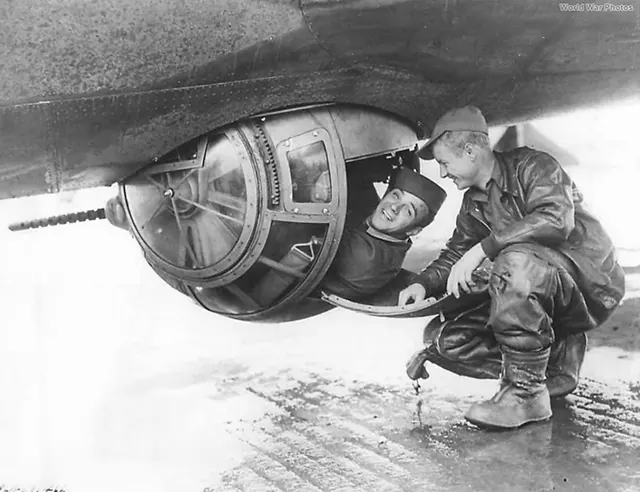
The dangers extended beyond combat itself. The turret was electrically powered and hydraulically controlled, and while it could be retracted into the fuselage of the B-17 during takeoff and landing, this was not possible on the B-24.
As a result, B-24 gunners often remained locked in place during the most vulnerable phases of flight.
There was no room for a standard parachute inside the turret; most were left just outside, forcing the gunner to climb out first in an emergency. Some wore chest parachutes, but escape was never guaranteed.
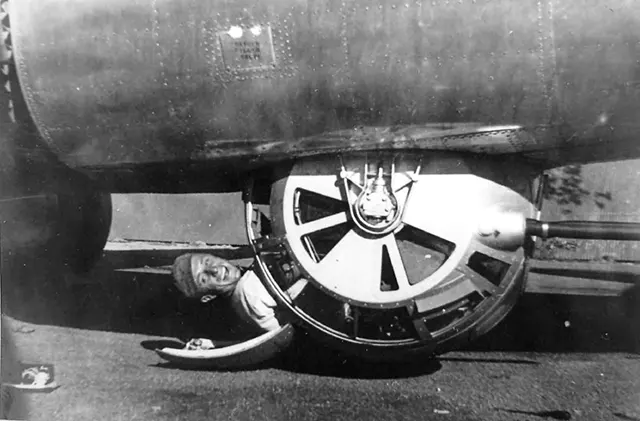
Among bomber crews, the ball turret gunner was both respected and quietly feared for.
A belly landing could mean being trapped or crushed, and mechanical failures could leave the turret stuck in the lowered position.
Fellow airmen admired the courage required to serve there, while recognizing the isolation and risk that defined the role.
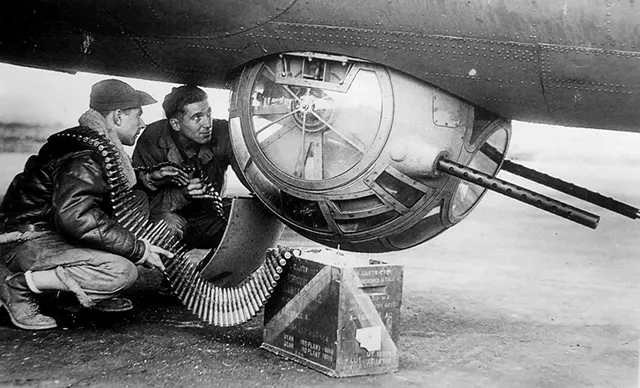
The experience was powerfully captured in Randall Jarrell’s 1945 poem The Death of the Ball Turret Gunner, which distilled the brutality of the position into a few haunting lines.
“From my mother’s sleep I fell into the State,
And I hunched in its belly till my wet fur froze.
…When I died they washed me out of the turret with a hose.”
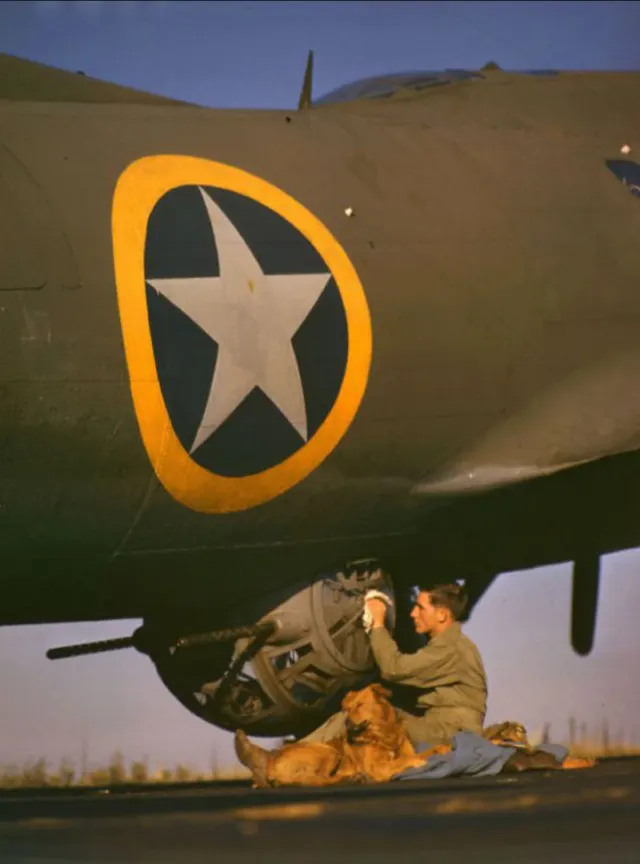
Like his fellow gunners, the ball turret gunner was an enlisted man with a rank, generally, of Sergeant or higher.
After the war, the ball turret came to represent more than a technical achievement.
It became a symbol of the human cost of strategic bombing, where young men endured extreme danger inside machines built for industrial-scale warfare.
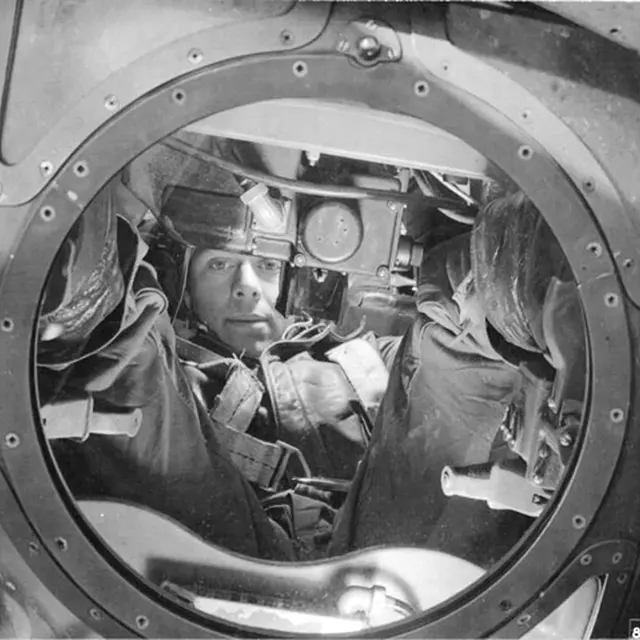
(Photo credit: US Army Archives / Library of Congress / Wikimedia Commons).