
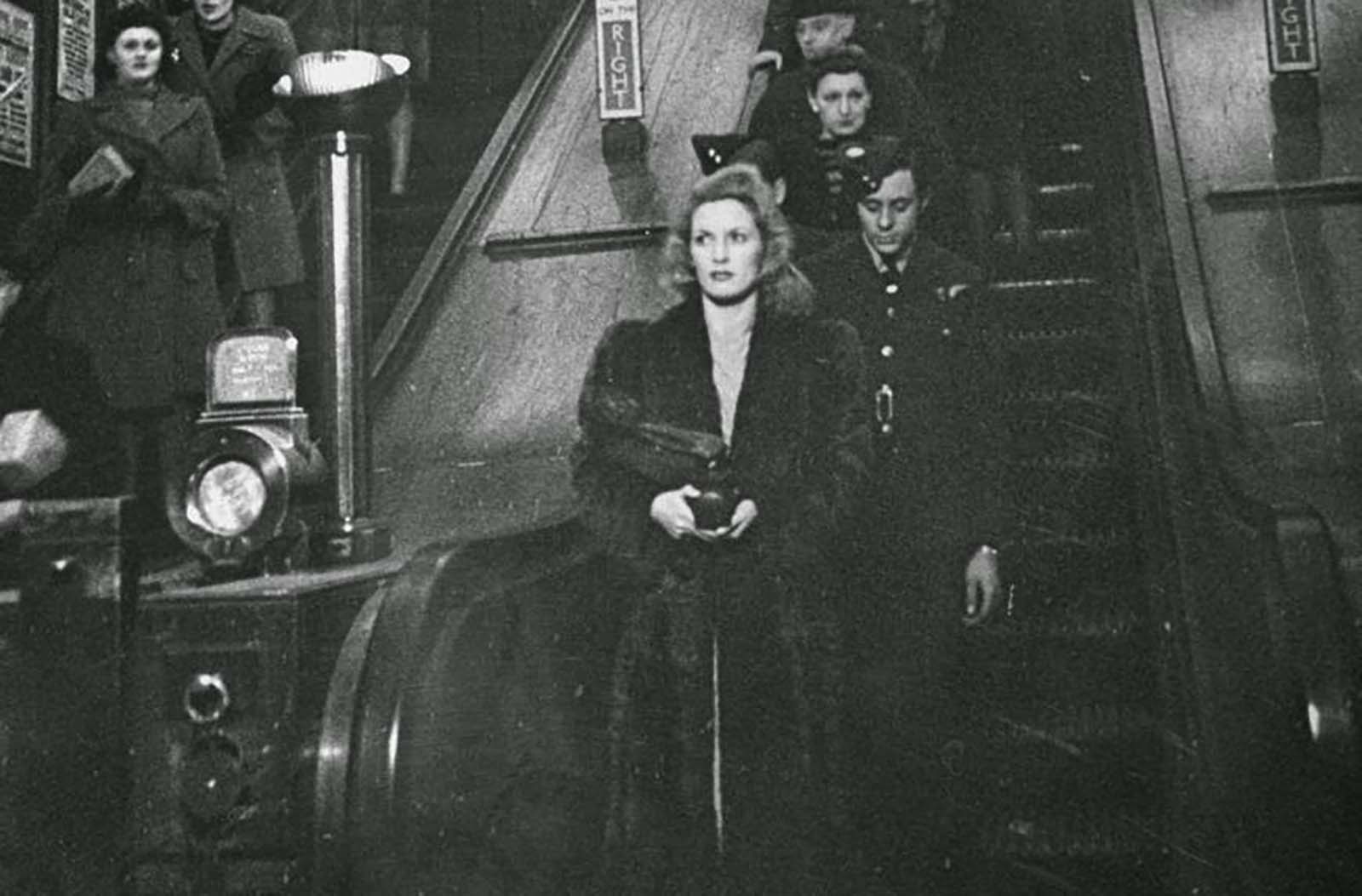
By 1944, Londoners had lived under blackout conditions for nearly five years, and the routine of covering windows each night had become second nature.
Every household and business had to cover its windows with thick black fabric or heavy wooden shutters, preventing even a single beam of light from escaping into the night sky and giving German aircraft a target.
Streetlights stayed off, vehicle headlights were fitted with metal shields that let through only narrow slits of light, and pedestrians carried small torches with their bulbs dimmed by layers of tissue paper to navigate the dark streets.
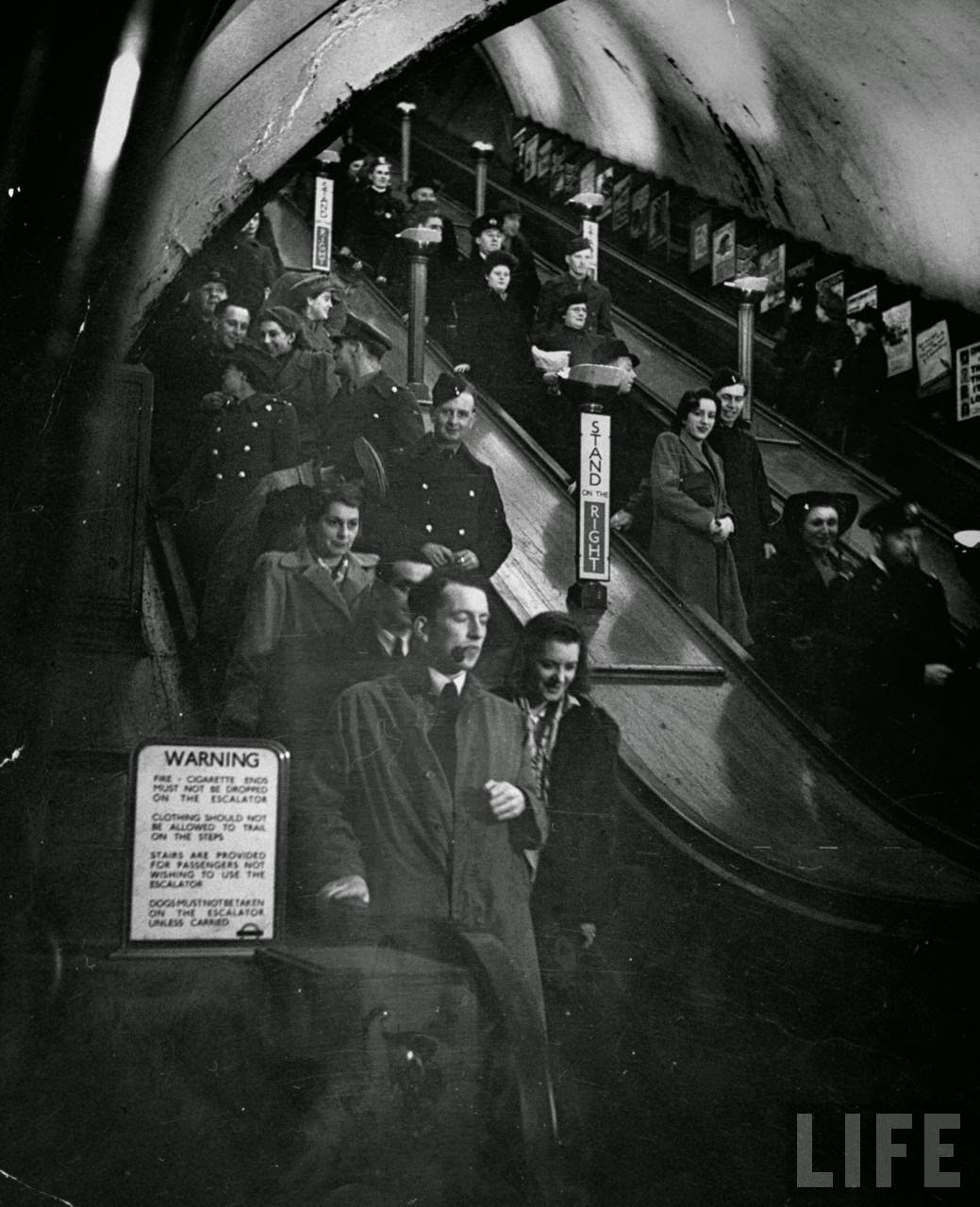
Night-lifers, servicemen & late-night war workers riding down escalators as they hurry to catch the last train home, at Piccadilly Circus underground station during WWII.
That year brought a new danger alongside the old one. Germany’s V-1 flying bombs began striking London in June 1944, followed by V-2 rockets later in the year, adding a fresh layer of anxiety to a city already worn down by years of war.
Yet the threat of air raids and the arrival of V-1 rockets did not stop the city’s nightlife.
Thousands of people sought out basement clubs and underground dance halls, drawn both by the company and by the sense of shelter these venues offered below street level.
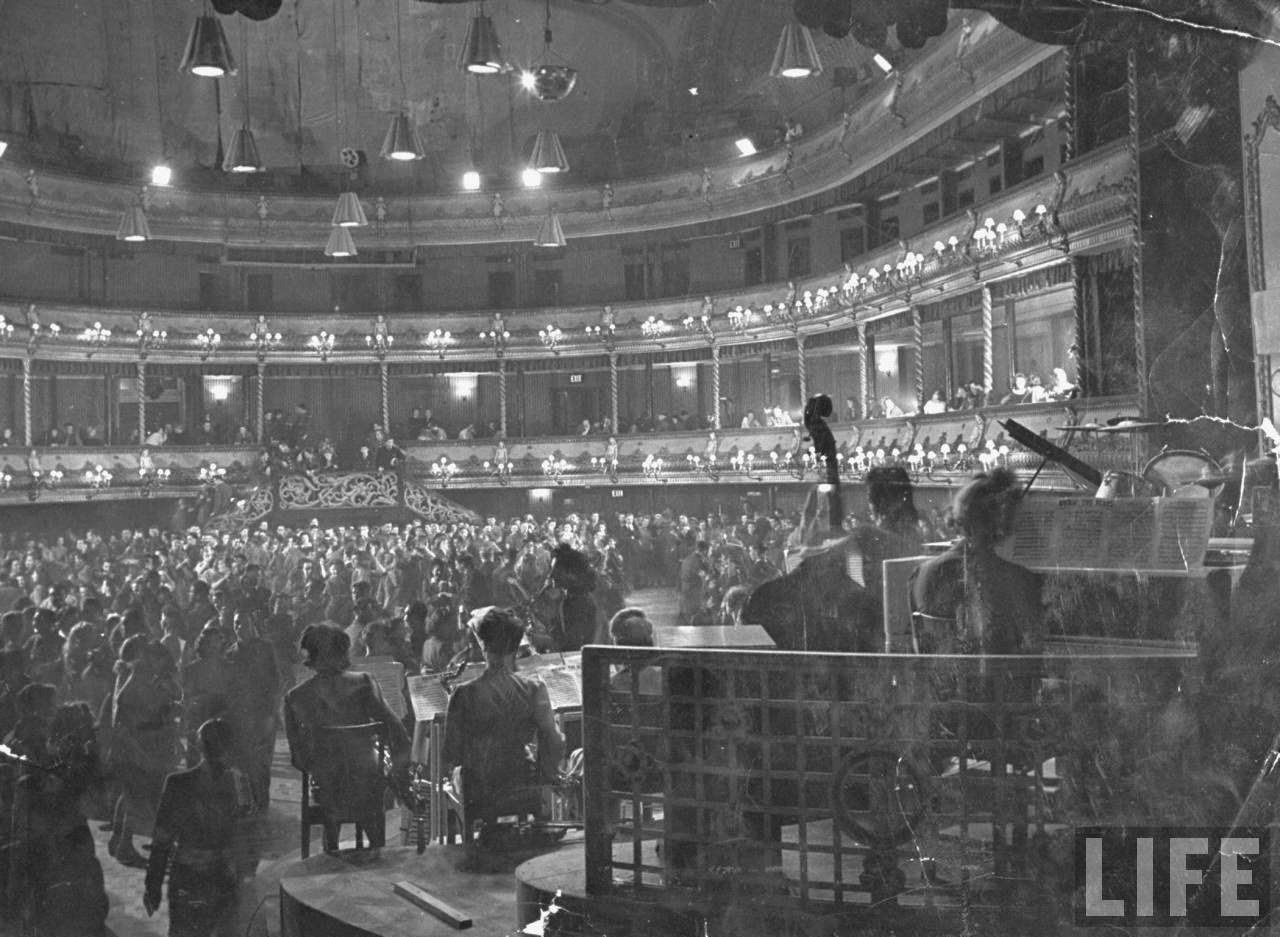
People dancing to the music of orchestra on stage of Covent Garden Opera House after its conversion to a nightclub during wartime (WWII).
Military personnel, particularly the large number of American servicemen stationed in and around London, became a defining presence in the city’s wartime social scene.
Rainbow Corner, a club run for US troops near Piccadilly Circus, offered a striking contrast to the rationing and restrictions of wartime Britain.
It ran restaurants and cafes, hosted boxing matches and film screenings, and kept a large dance hall busy most nights of the week, with dance hostesses recruited specifically for their ability to jitterbug.
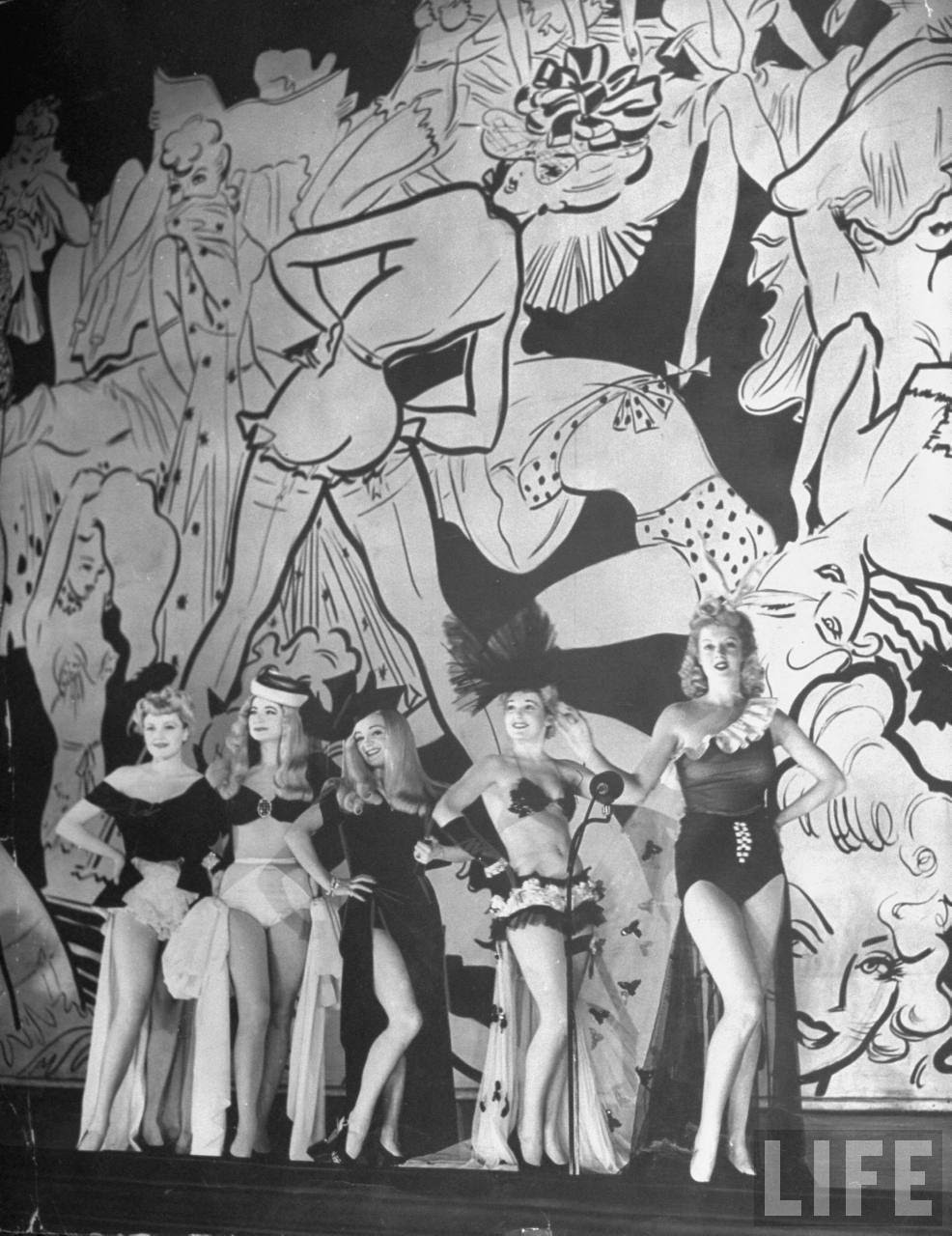
The “Blondes in the News” act in Jack Hylton’s “Hi-De-Hi” at the Stoll.
For many soldiers on leave, it functioned as a small piece of home transplanted into a blacked-out city.
Inside the crowded basement clubs across the West End, the atmosphere ran loud and energetic.
Jazz bands played popular swing music while soldiers on leave danced with local women, filling rooms that stood in sharp contrast to the darkness outside their sealed windows.
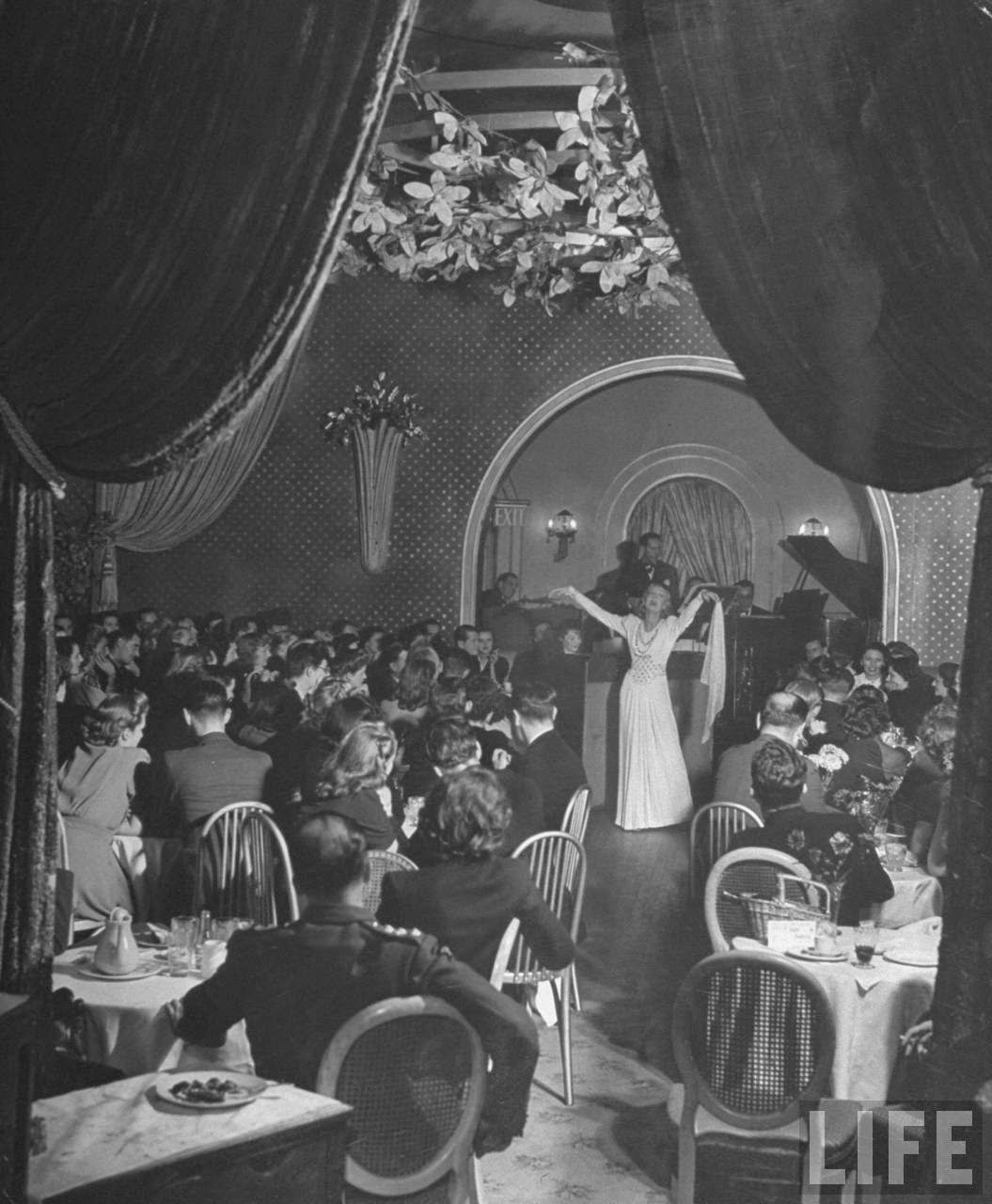
Inga Andersen singing “The General Doesn’t Like It in the Car” and “Hitler’s Gone and Lost His Secret Weapon” at “Bagatelle” Restaurant off Berkely Street.
Music and dancing carried a meaning beyond simple entertainment during these years.
Writers at the time framed the British ability to keep dancing as a form of quiet defiance, noting that in occupied countries across Europe, dancing had been restricted or banned outright, while in Britain it remained a visible expression of ongoing freedom.
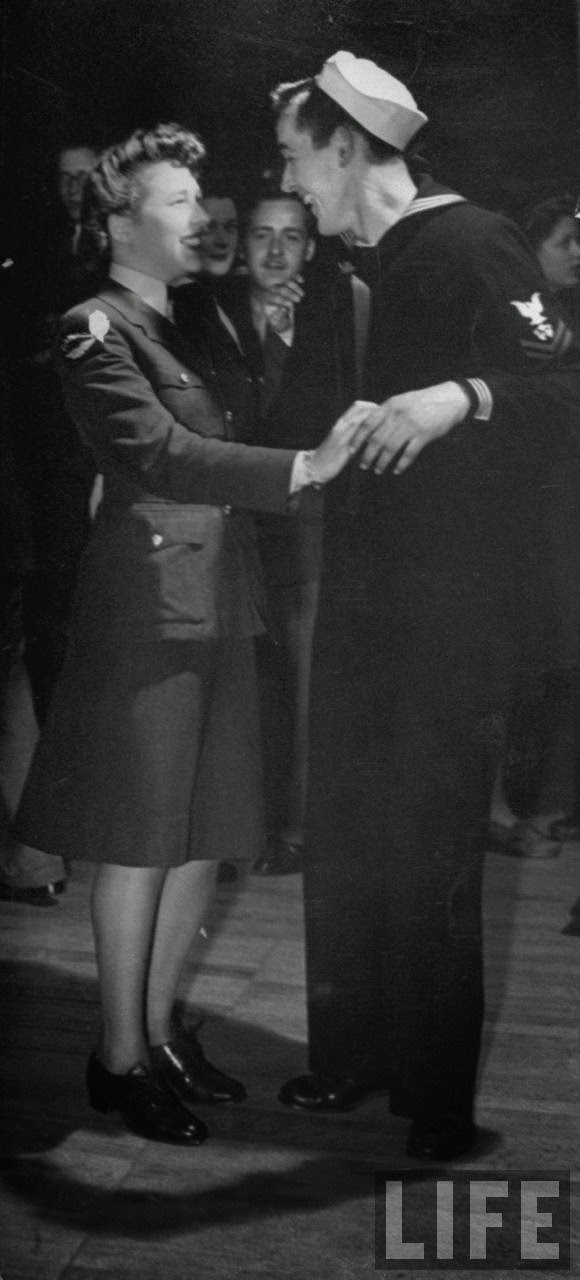
Girl talking with an American sailor.
Not every wartime venue was tucked below ground.
Large hotels including the Dorchester and the Ritz maintained dance floors and orchestras throughout the war, and underground restaurants and nightclubs became especially fashionable for the safety they offered, a reputation only shaken in March 1941 when a bomb struck the Café de Paris mid-performance, killing much of the band and many dancers on the floor.
Despite that tragedy, the appeal of underground venues held, and hotels continued expanding their basement restaurants and dance floors as the war dragged into its final years.
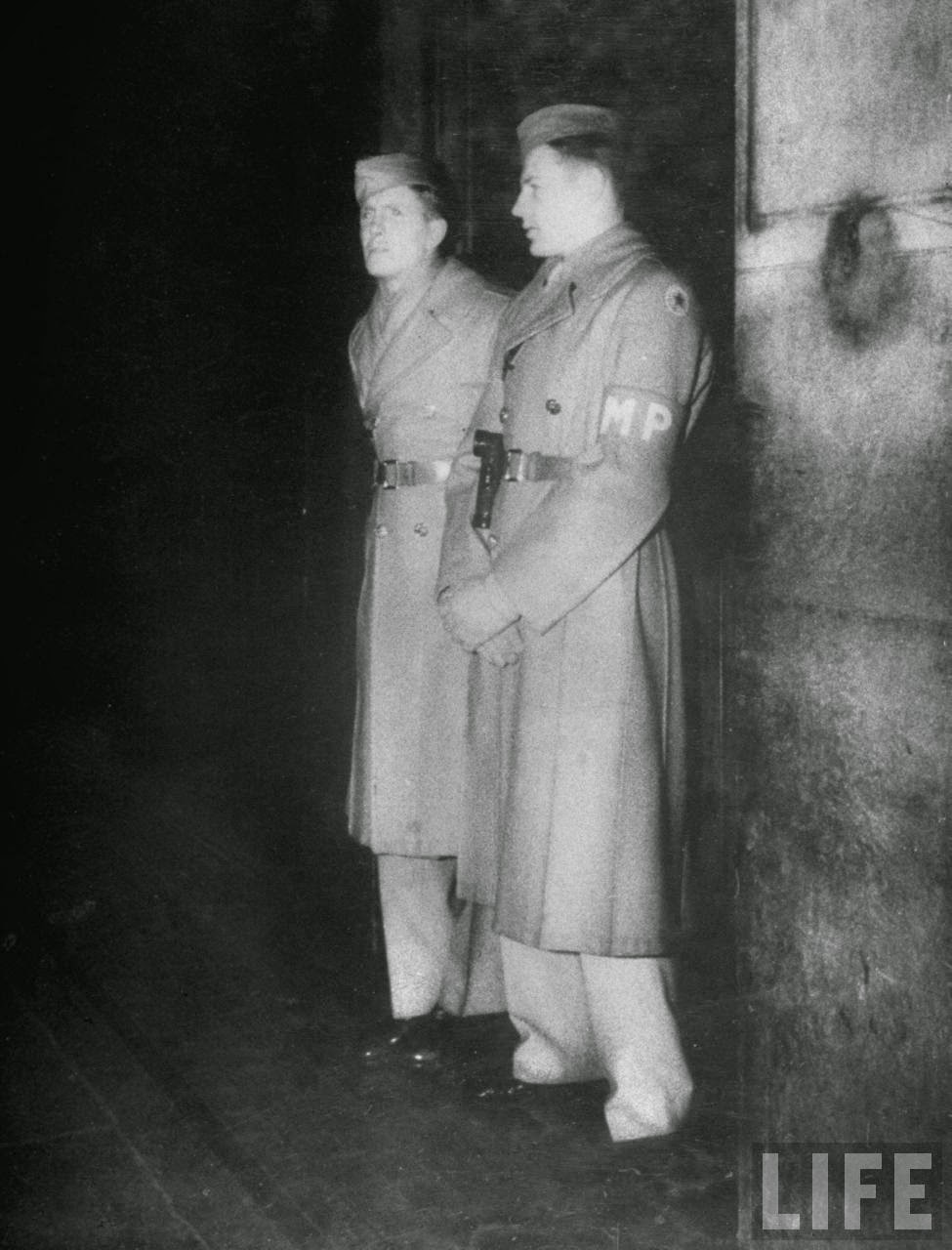
Two American MPs in Picadilly examining leave passes.
Life above ground carried its own particular strain.
Blackout conditions had never been merely inconvenient, and by 1944 they had contributed to years of traffic accidents, enforcement fines, and the general disorientation of navigating a major city with no visible lights after dusk. Some relief finally arrived that September.
On September 17, 1944, following the D-Day landings and the Allied advance across France, the government eased the full blackout in favor of a partial dim-out, permitting low-level lighting equivalent to moonlight on nights without an air raid warning.
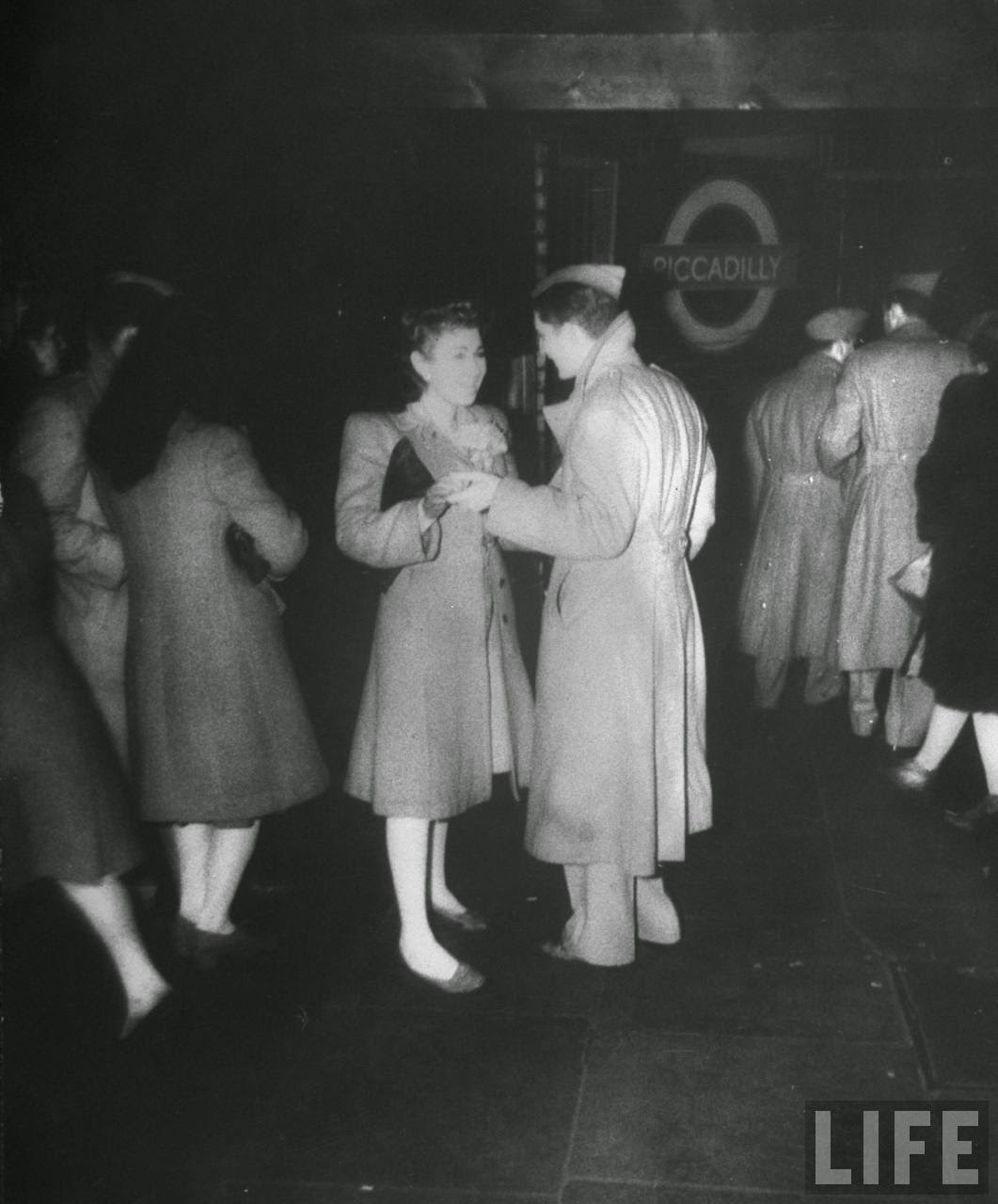
Couple saying goodbye outside the Tube station entrance.
For servicemen and civilians alike, the clubs, dance halls, and basement venues of 1944 offered something the war could not fully take away, a few hours of music, company, and normal social life conducted almost entirely by candlelight and dimmed bulbs.
Photographs from this final full year of the blackout capture that particular mix of restriction and resilience, showing packed dance floors and uniformed couples moving through rooms shielded from a city still very much at war outside their doors.
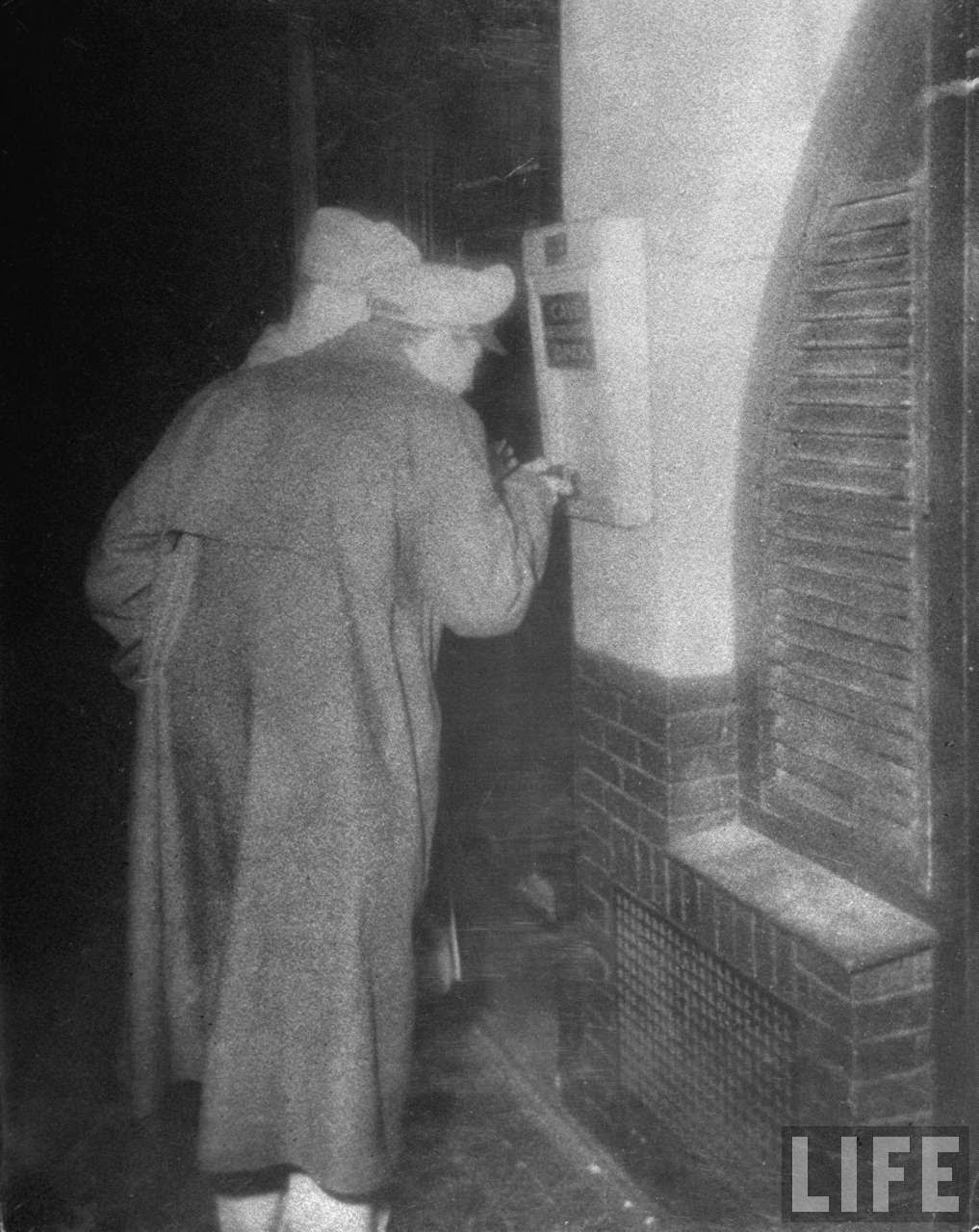
Two soldiers with their torch examine the menu of a lower Wardour Street restaurant.
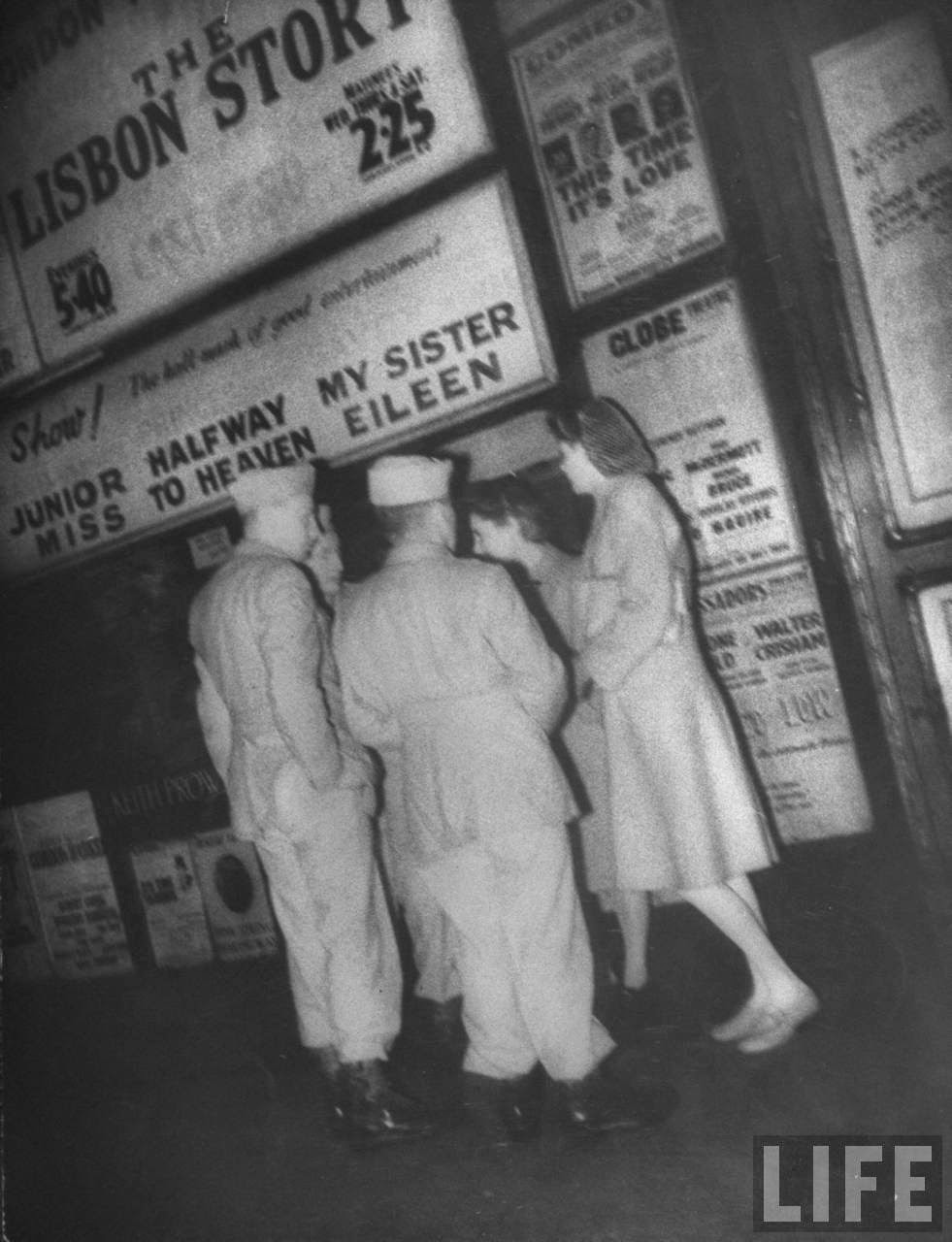
People hanging around outside Keith Prowse discussing which shows they should try to see.
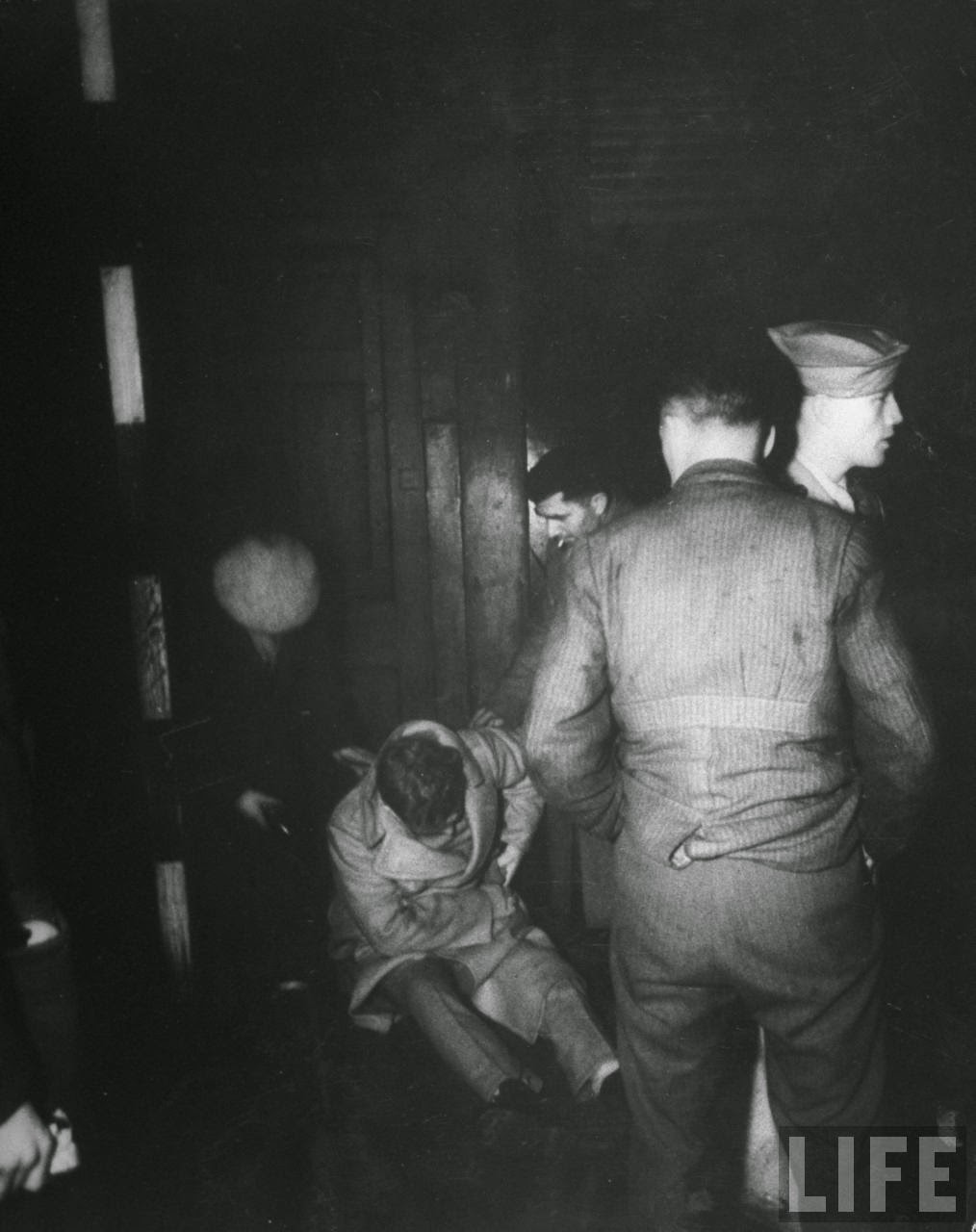
Wounded soldier passed out on the street after hitting his head on the lamppost during the blackout.
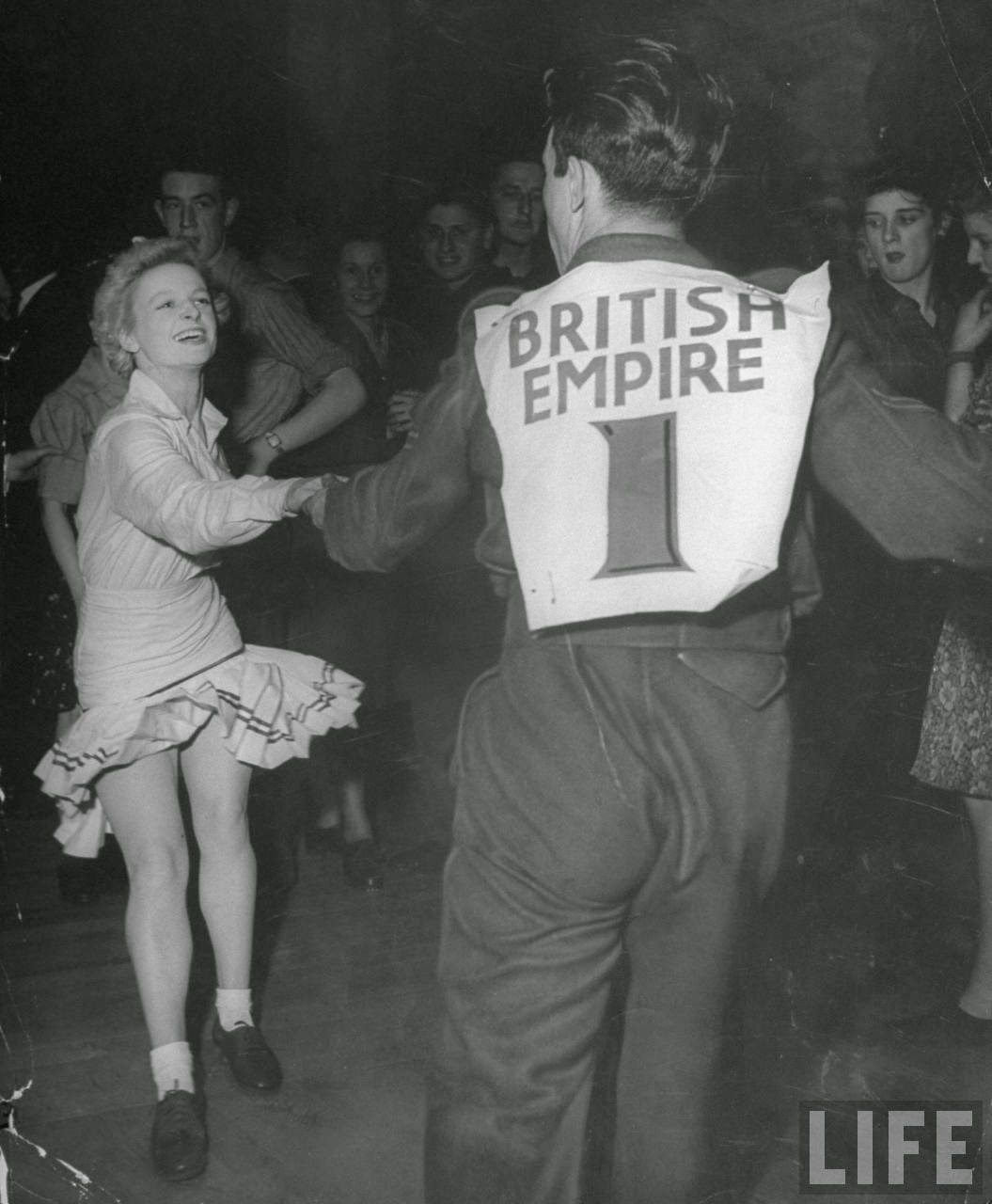
Couples dancing the Jitterbug at the Paramount Dance Hall on Tottenham Court Road.
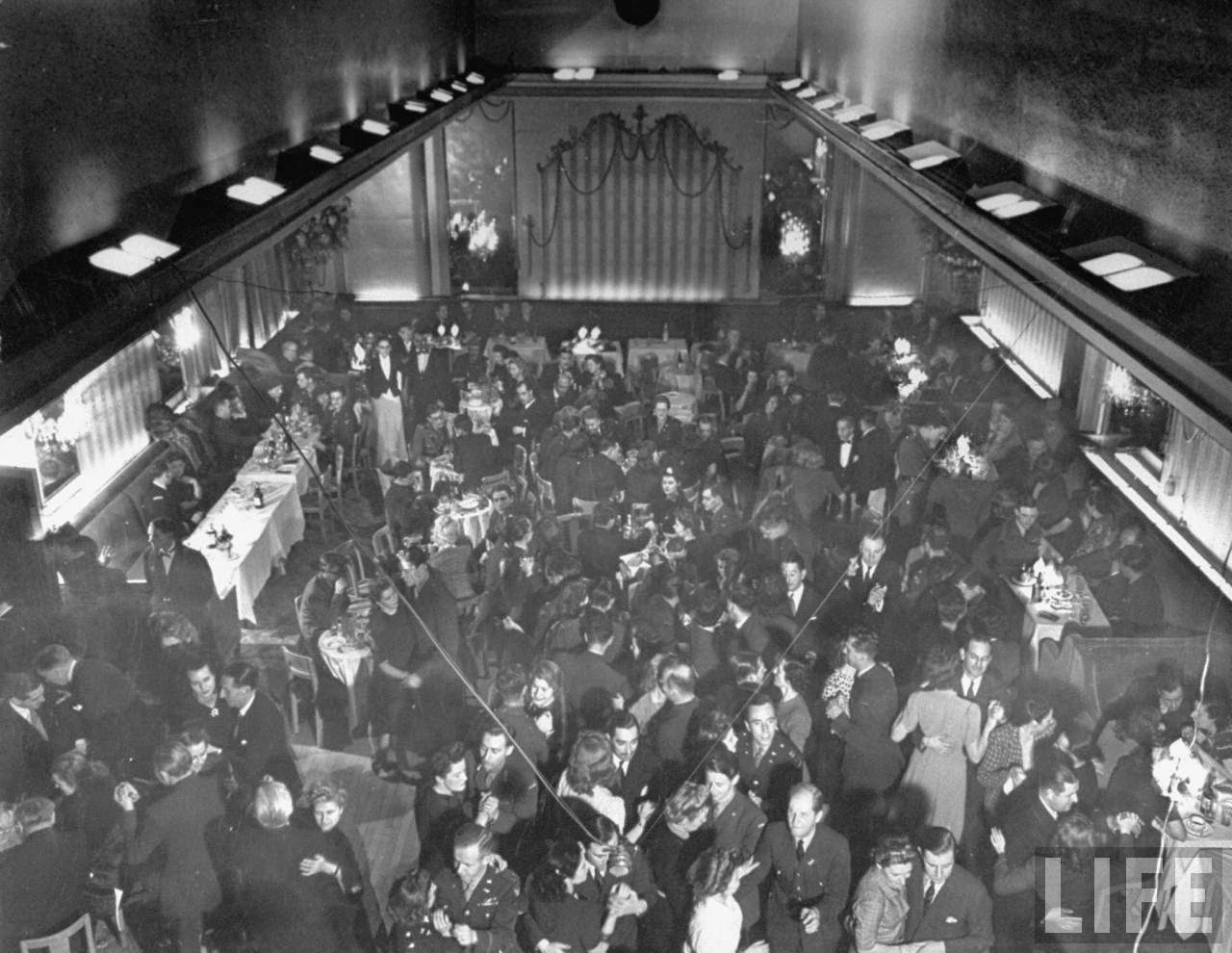
The “Embassy Club” on Bond Street.
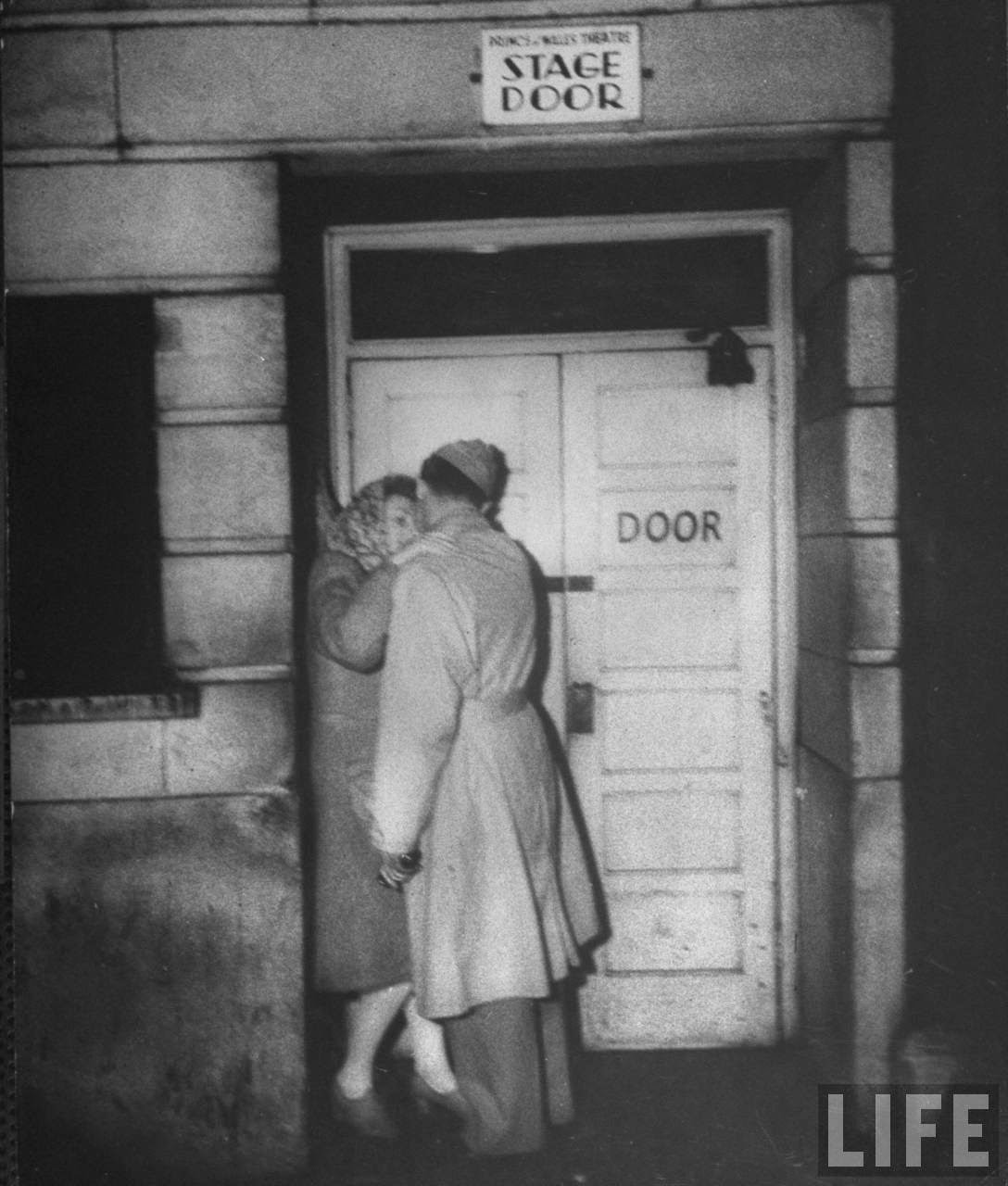
Couple embracing outside the stage door of Prince of Wales Theare in Lower Wardour Street.
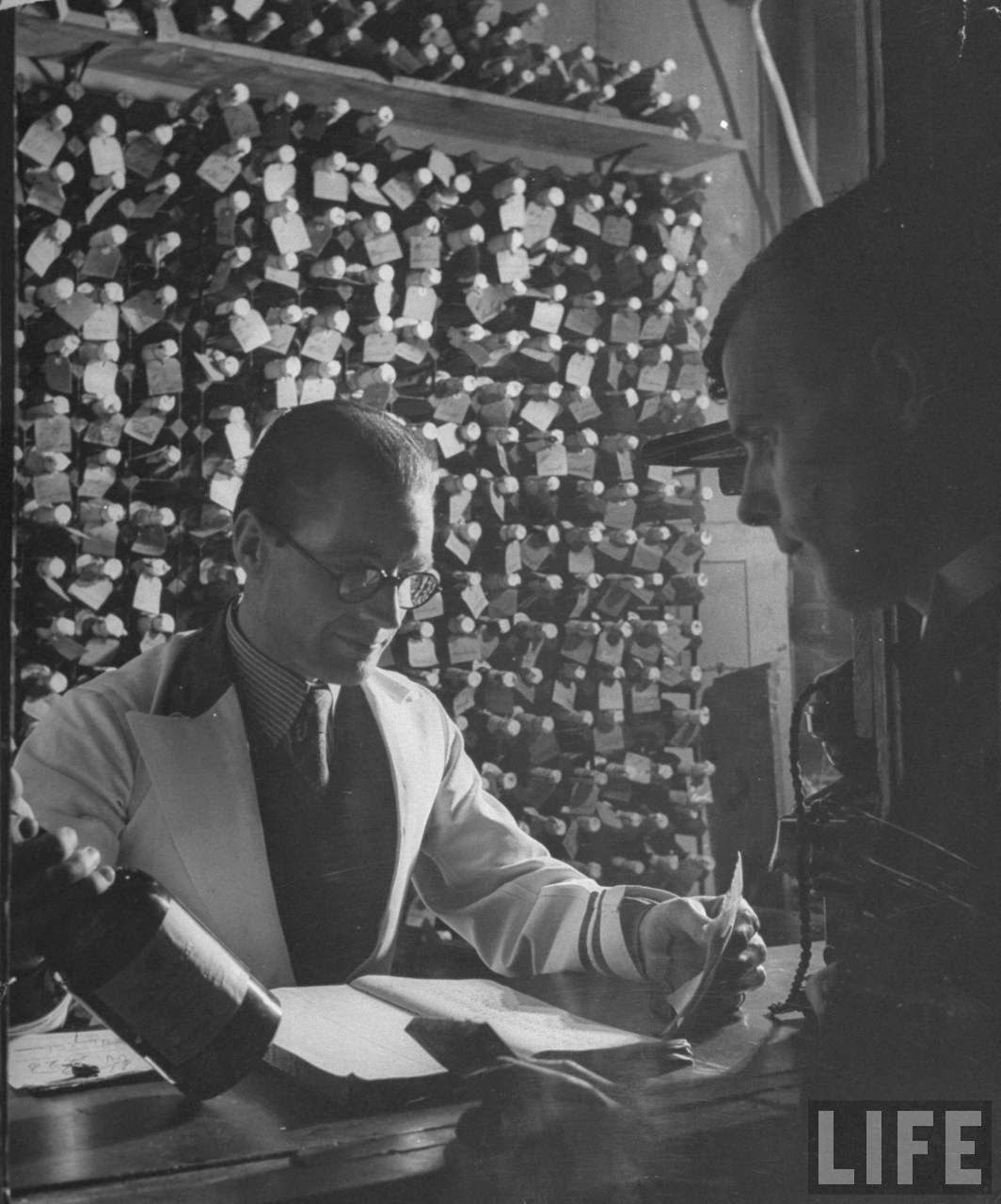
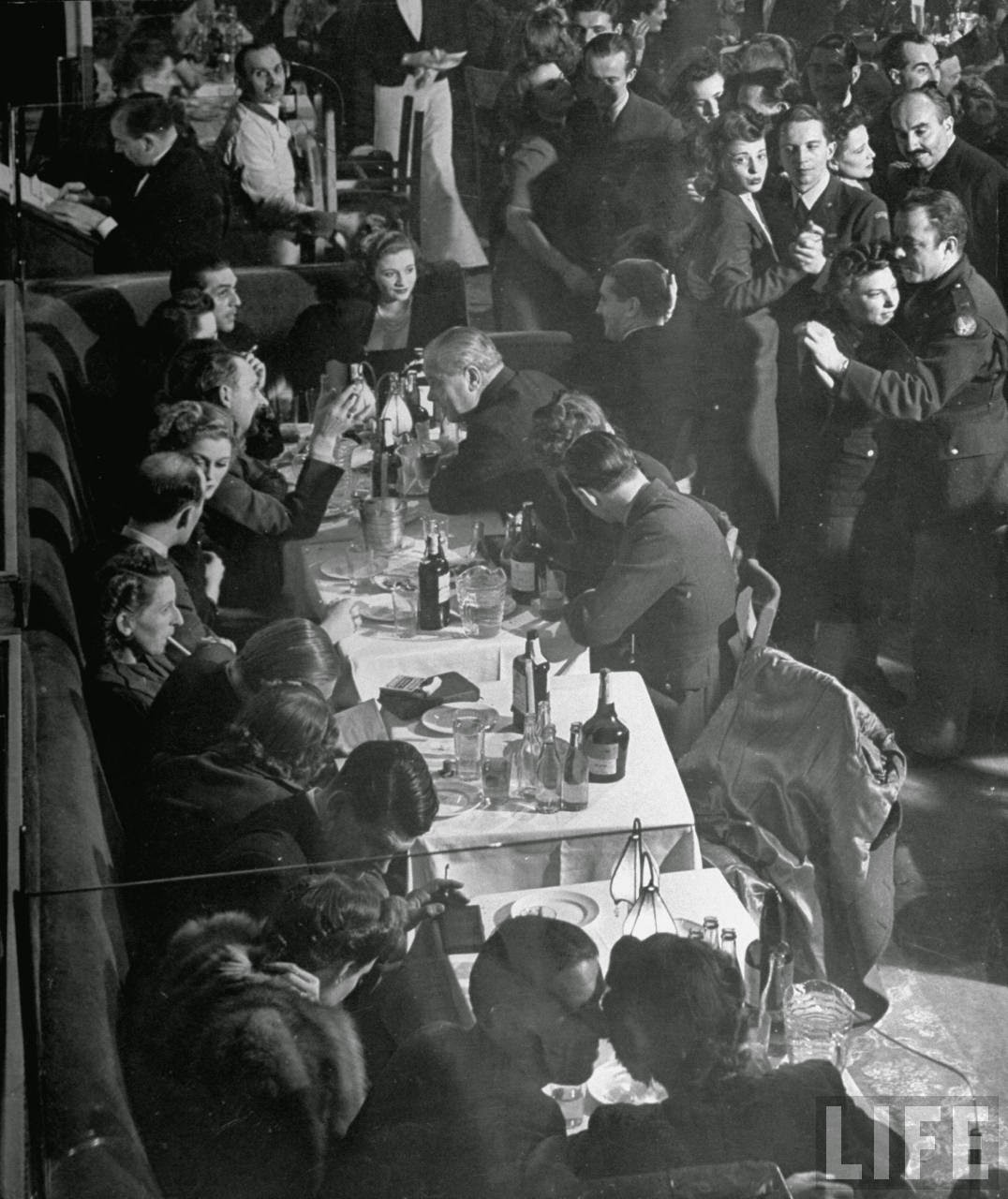
Barman checking the label on a bottle of liquor belonging to a member who has sent the waiter for it.
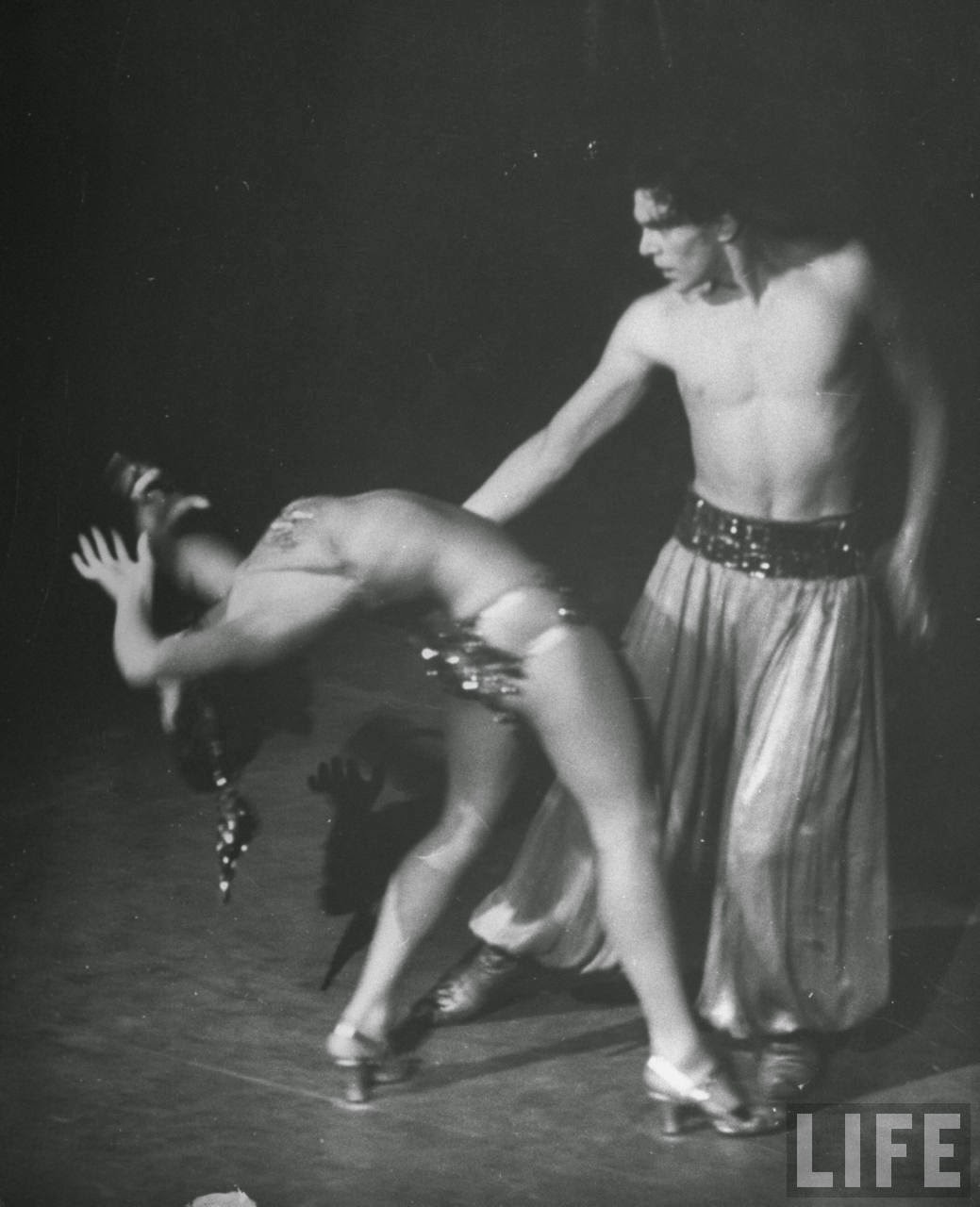
Mad dance in Phylis Dixey’s new show “Goodnight Ladies”.
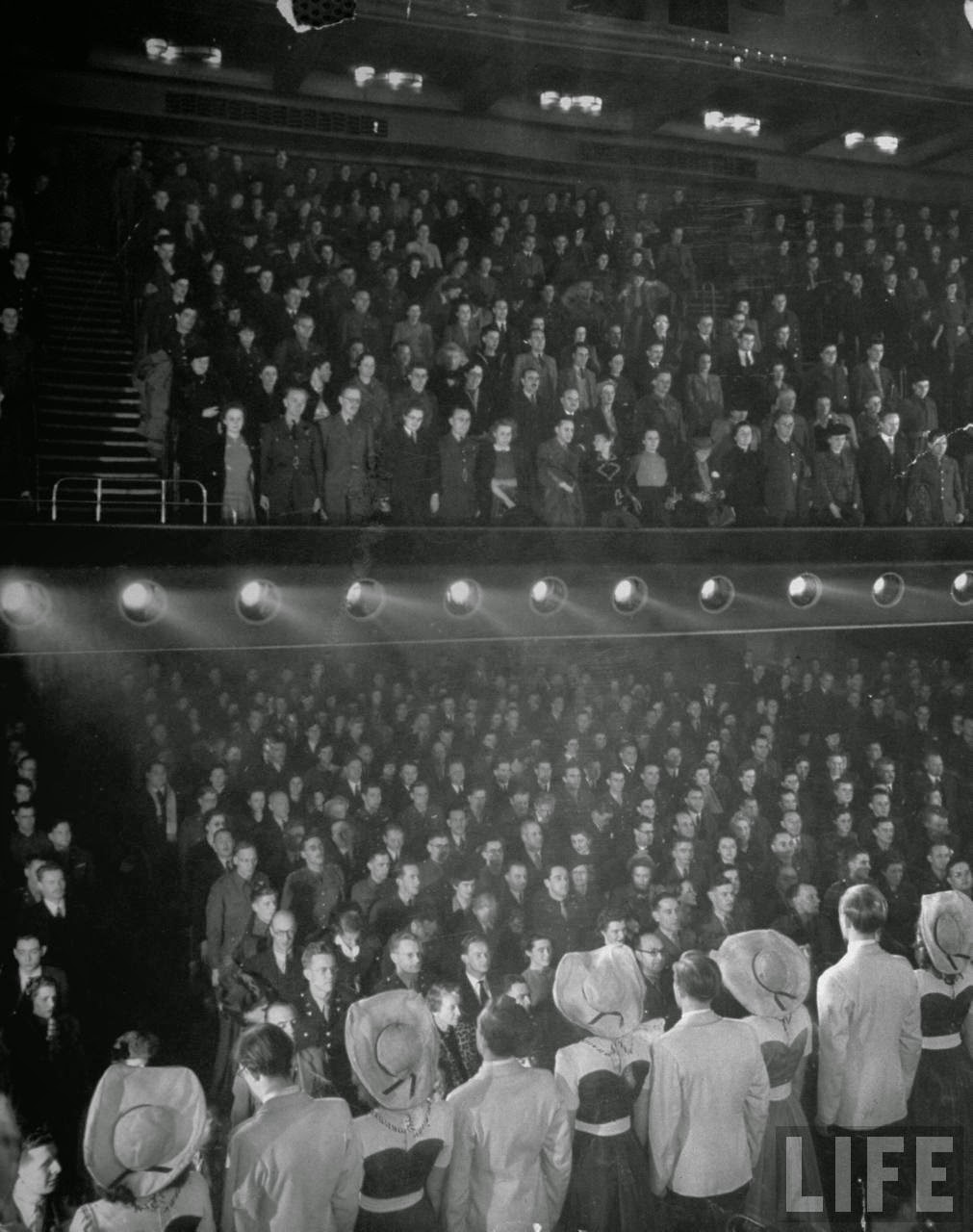
Cast and audience of “Strike a new Note” at the Prince of Wales singing “The King” at the close of every public function.
Ally and other soldiers drinking in a bar.
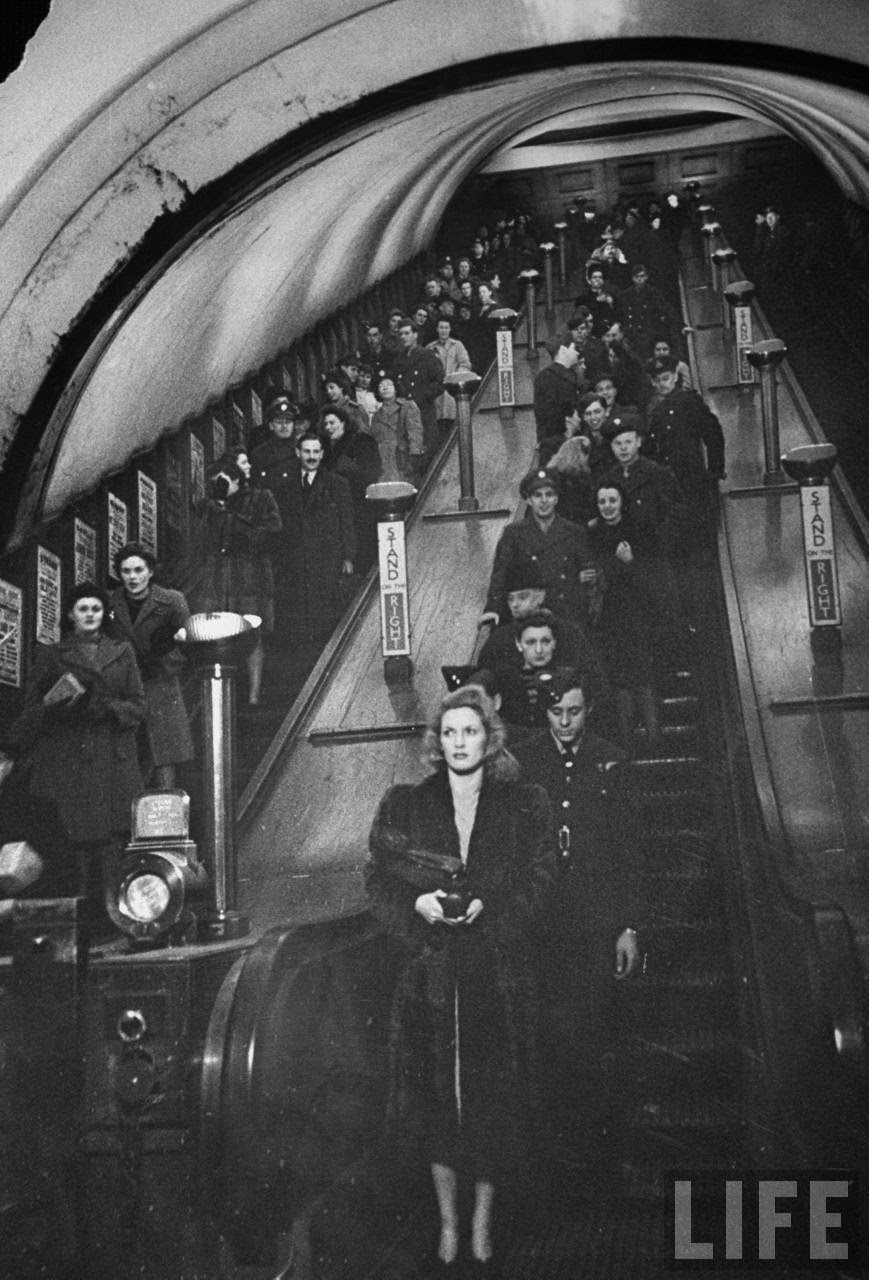
Night-lifers, servicemen & late-night war workers riding down escalators as they hurry to catch the last train home, at Piccadilly Circus underground station during WWII.
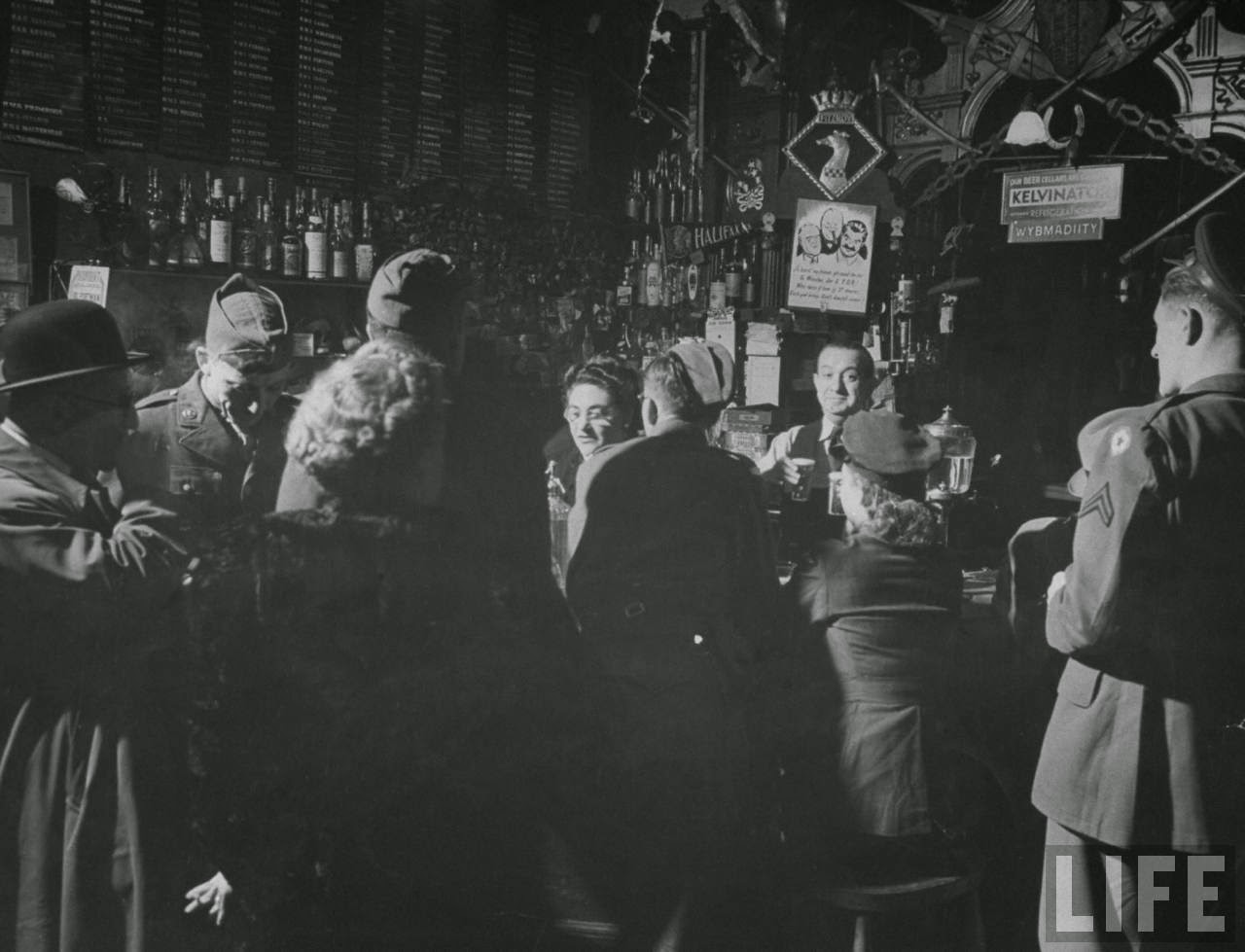
“Poor Man’s” Club featuring a flashy bohemian-type pub theme.
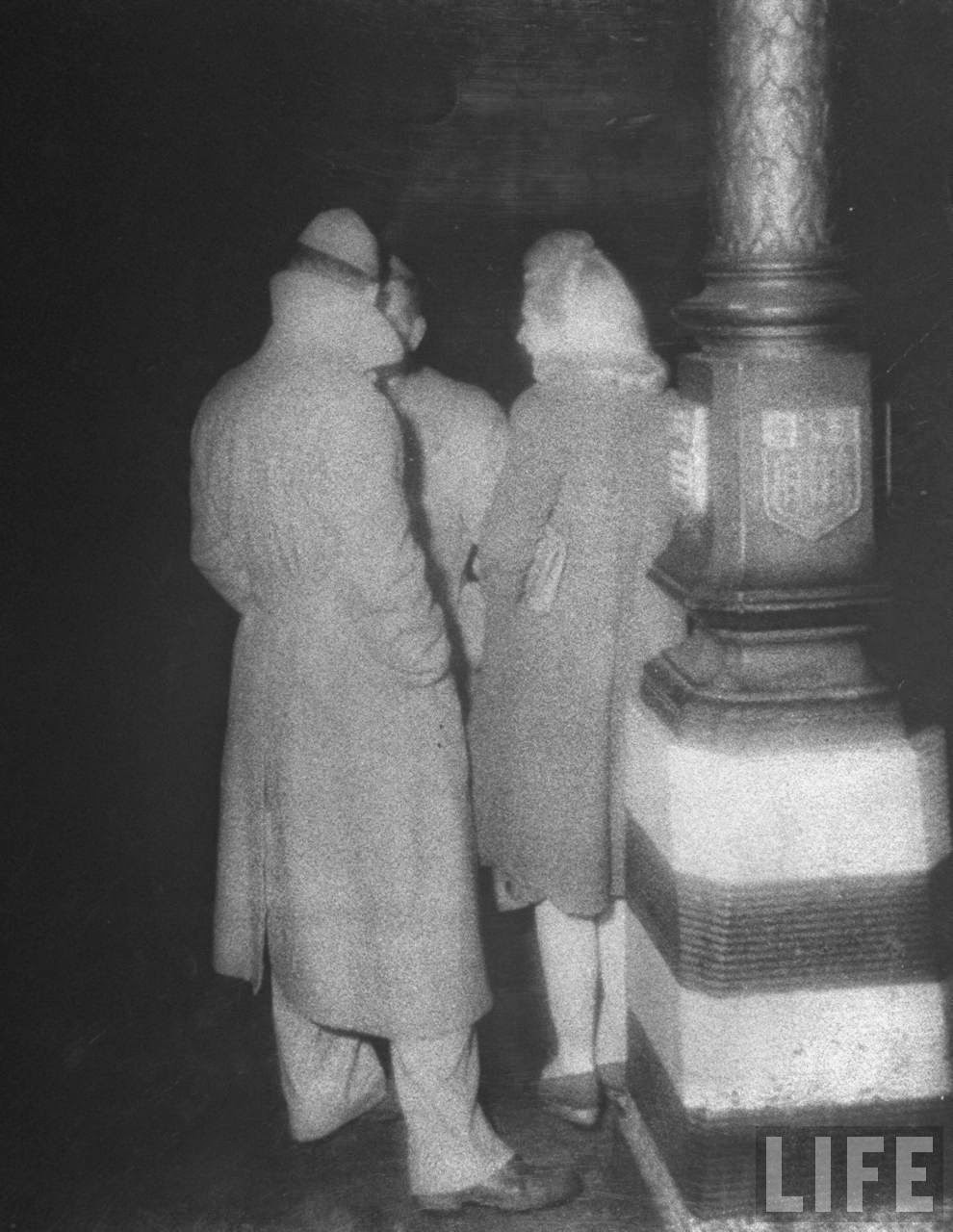
Couples talking on the corner of Shaftesbury Ave and Dean Street.
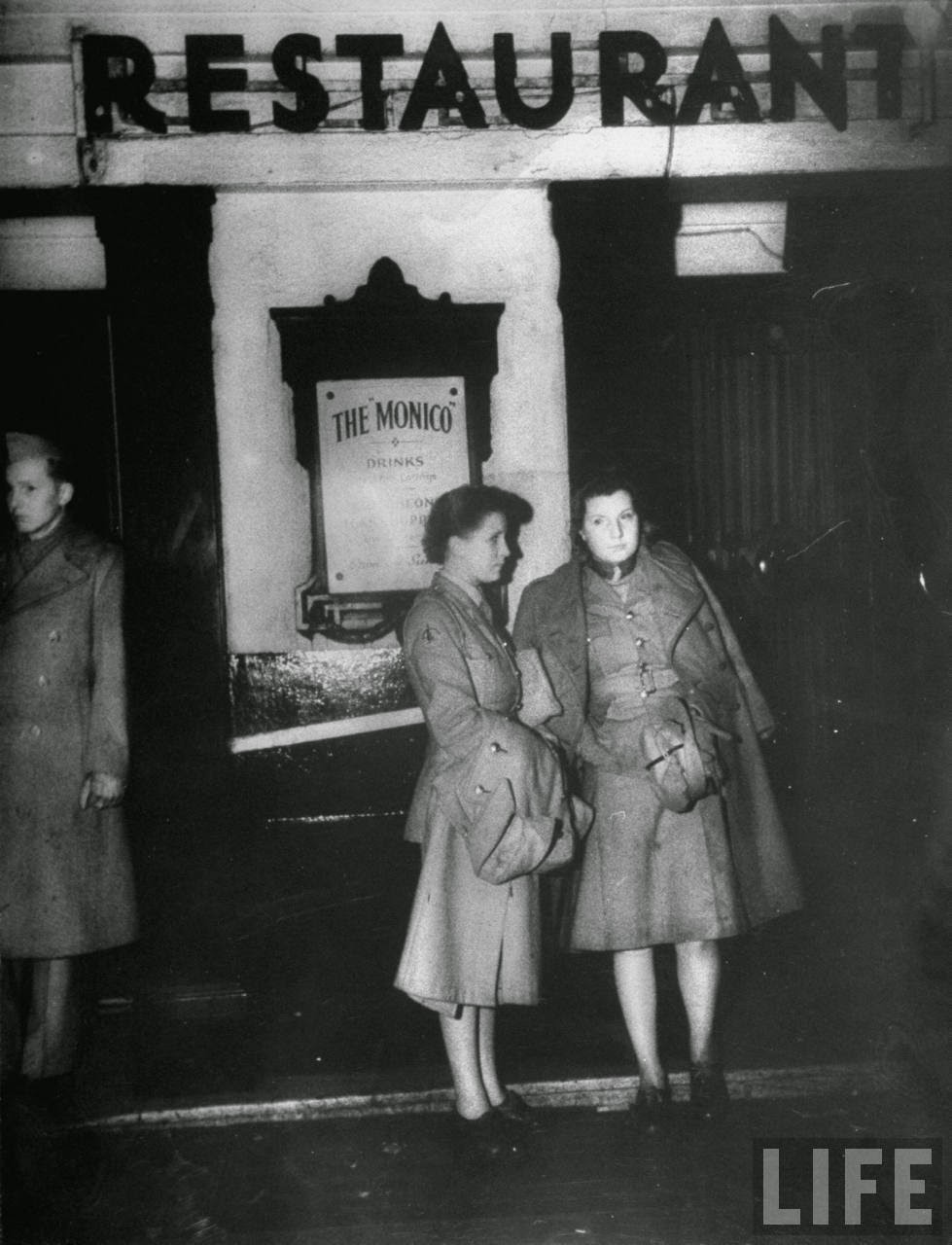
Two girls standing outside Monico’s in Picadilly.
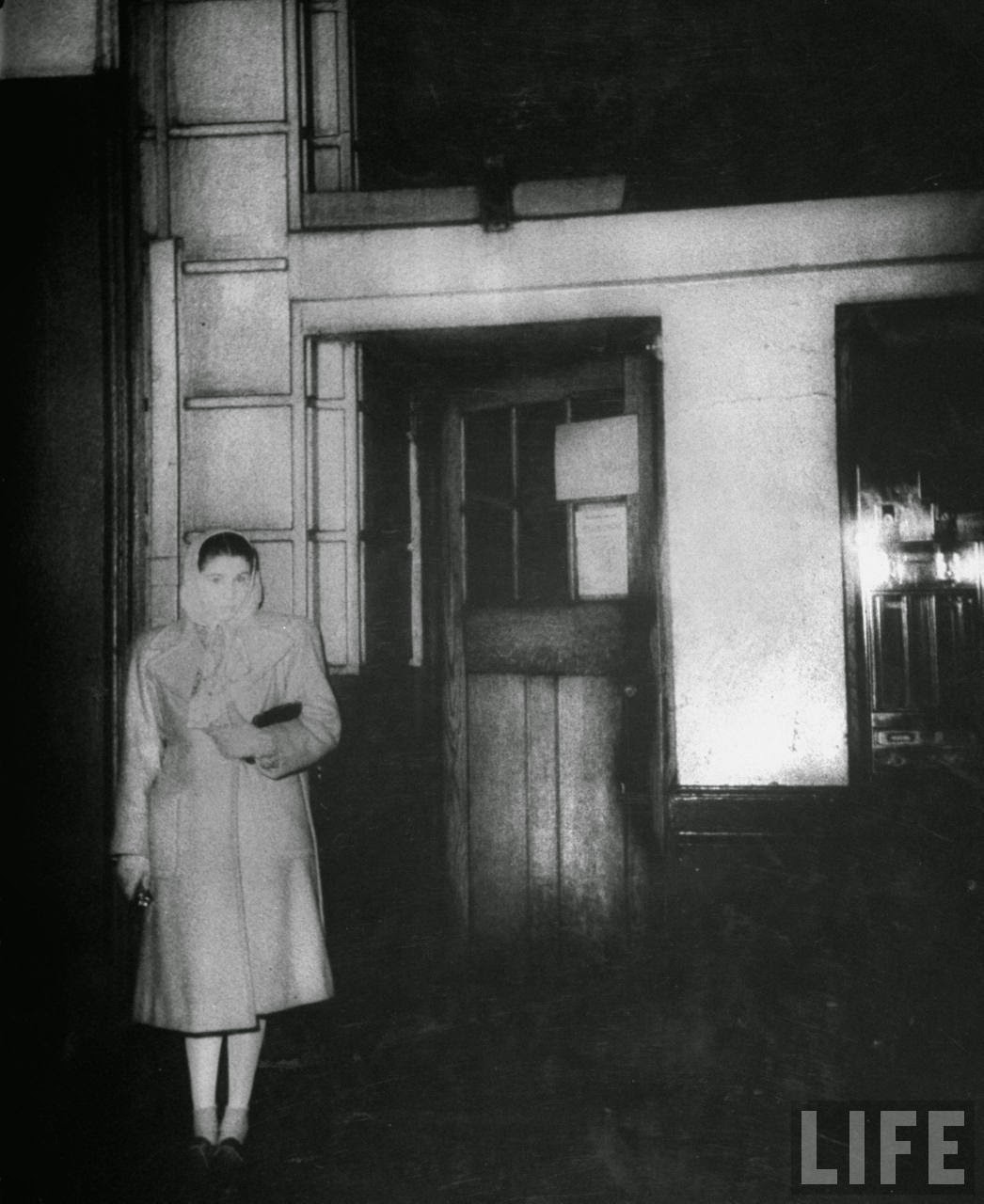
Girl waiting outside the stagedoor of Windmill Theatre off Picadilly for a friend.
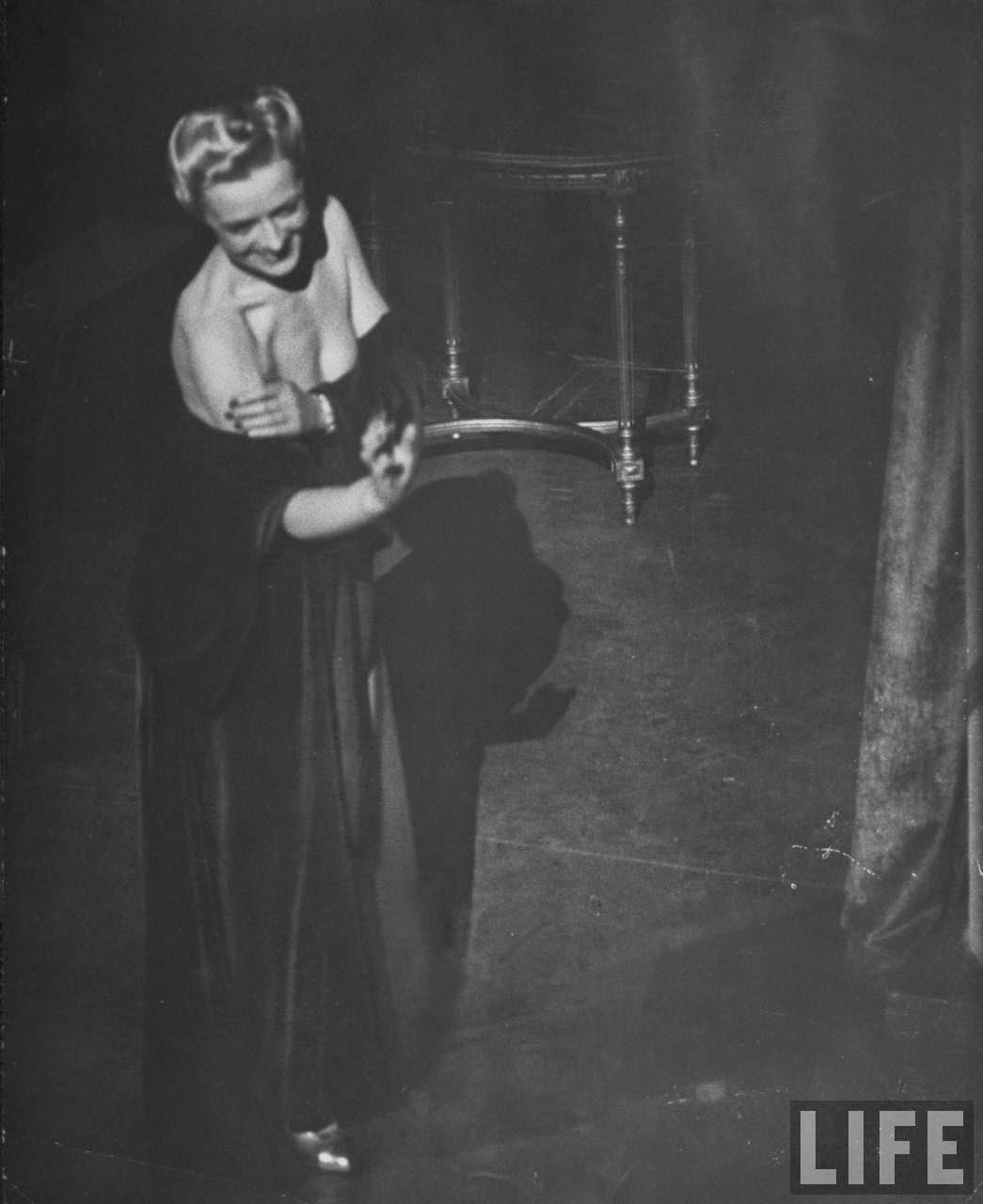
Stripper Phylis Dixey performing on stage.
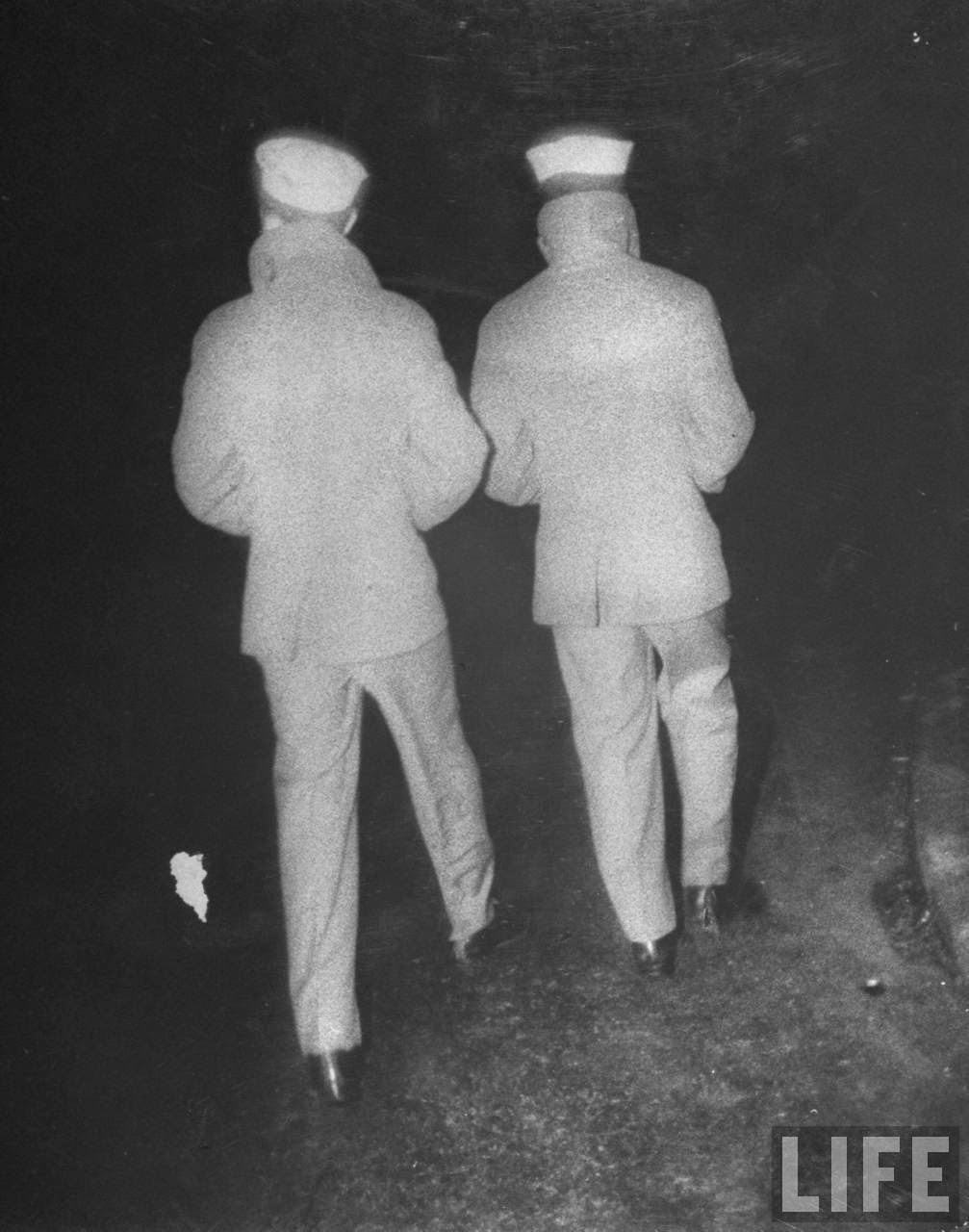
Two African American soldiers crossing the Circus.
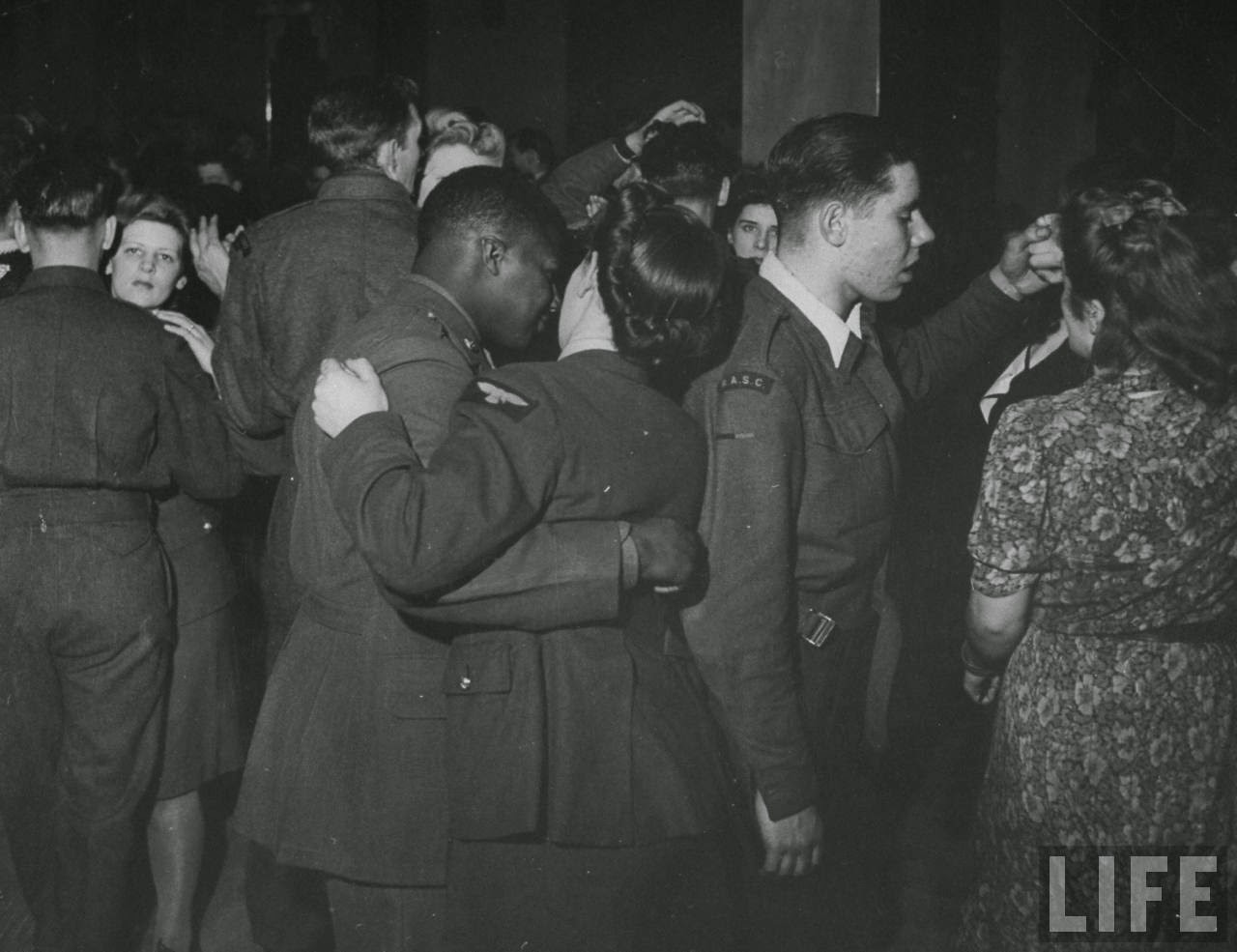
African American soldier dancing with a British Women’s Auxiliary Air Force member at Paramount Dance Hall.
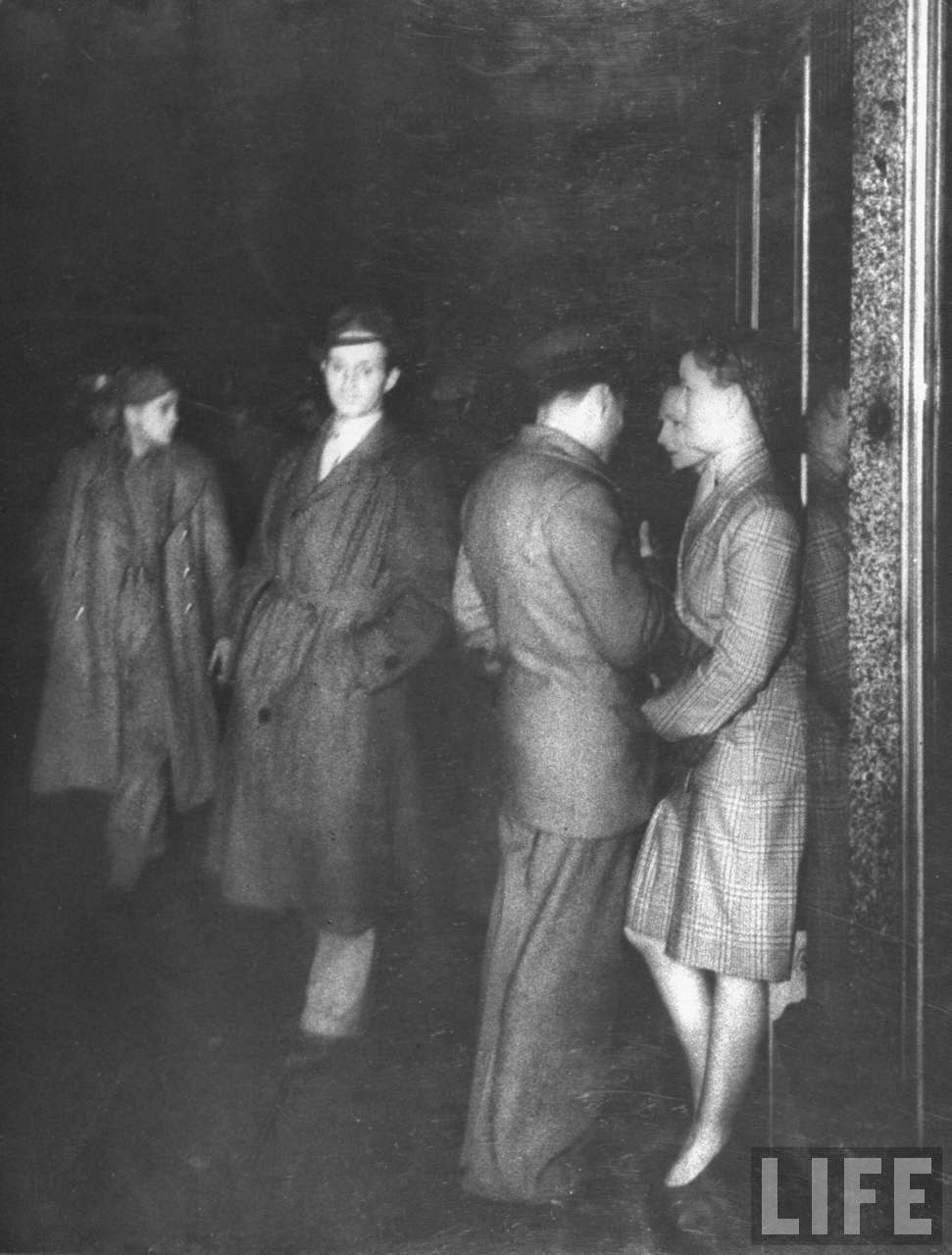
Outside the Rainbow Corner, girls talking with men.
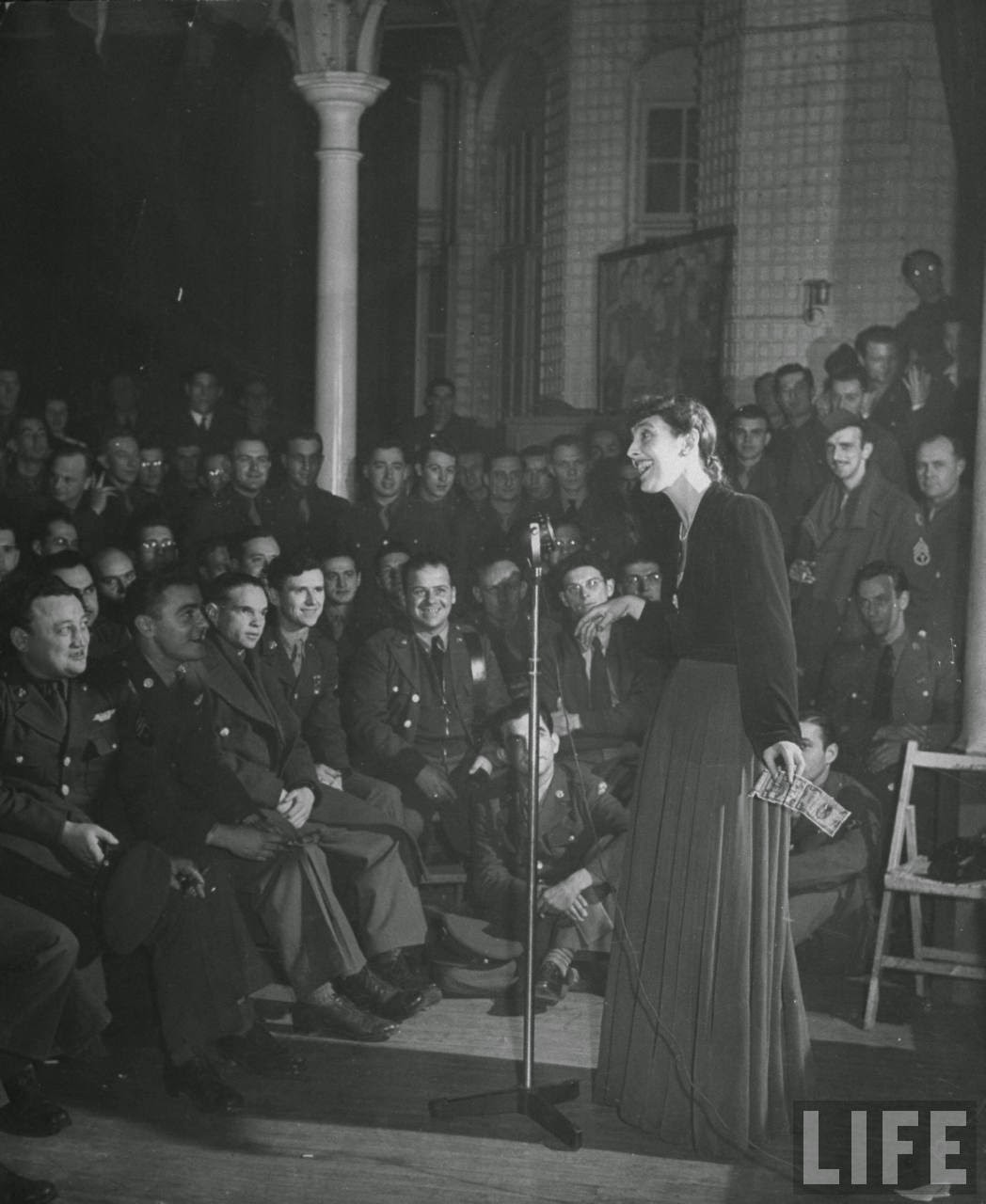
Soldiers crowding inside a Red Cross club, the Hans Crescent Club to listen to singer Joyce Grenfell.
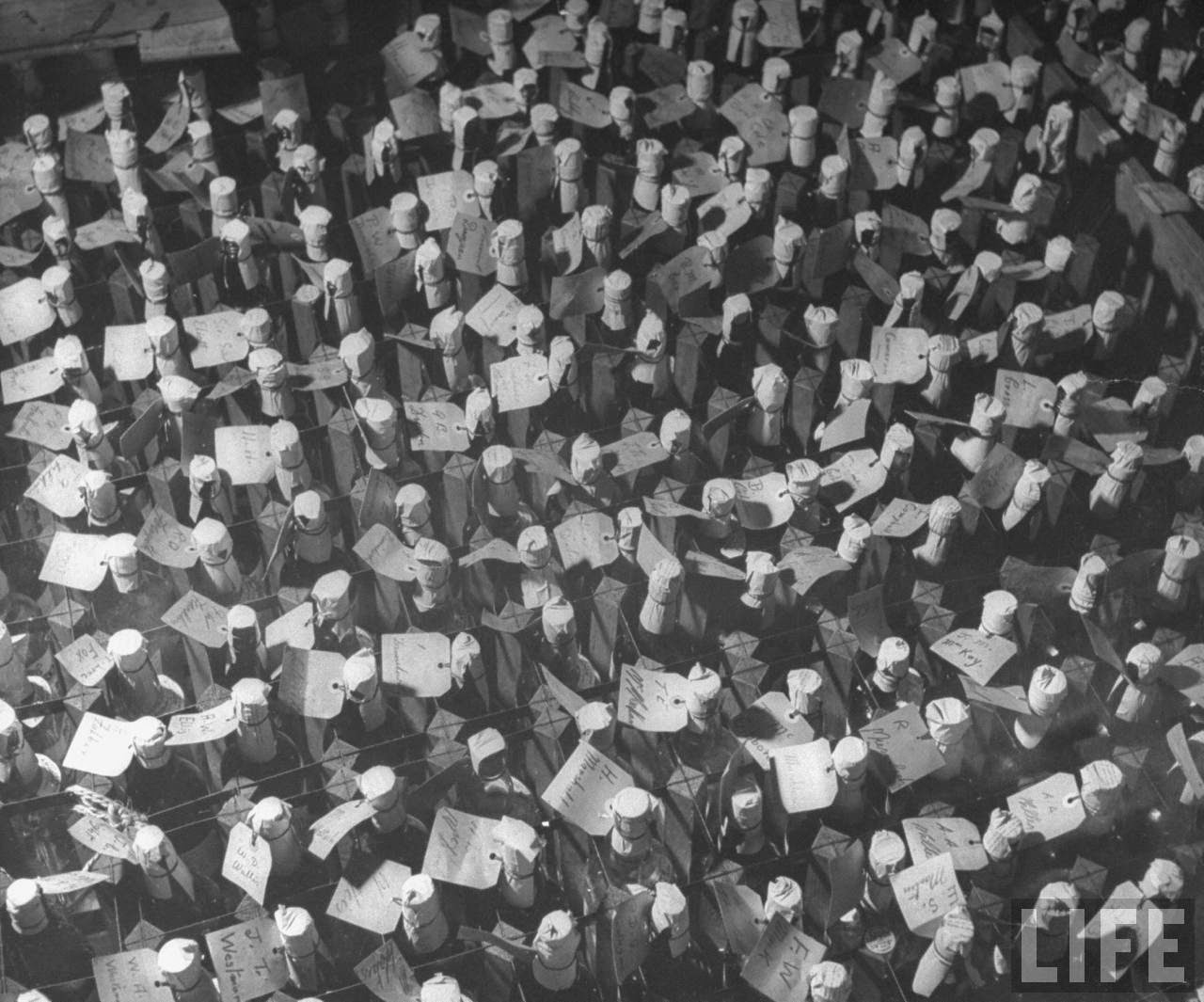
Bottles at the “Coconut Grove” labeled with their owners’ names.
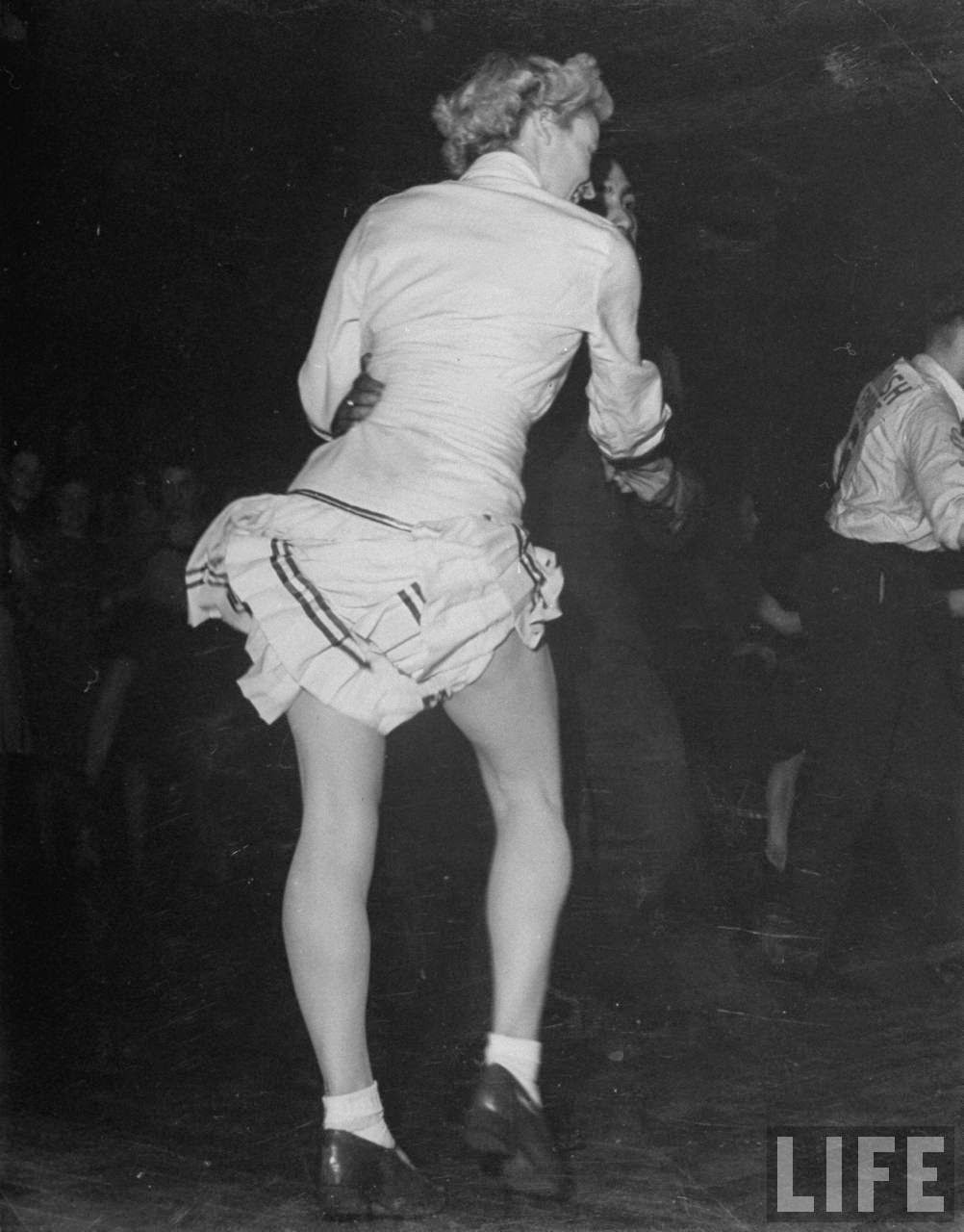
Girl dancing the Jitterbug at the Paramount Dance Hall on Tottenham Court Road.
(Photo credit: David E. Scherman via LIFE Magazine).