
In an era when a family of four is considered average, photographs of households with ten, twelve, or even twenty children seem almost unfathomable.
Yet for most of American history, sprawling families weren’t just common—they were the expected pattern of life.
From the late 1800s through the early 1970s, homes echoed with the constant footsteps of siblings, and dinner tables stretched to accommodate what today would fill an entire classroom.
The vintage portraits from this period capture a lost world where childhood meant growing up surrounded by a small army of brothers and sisters.
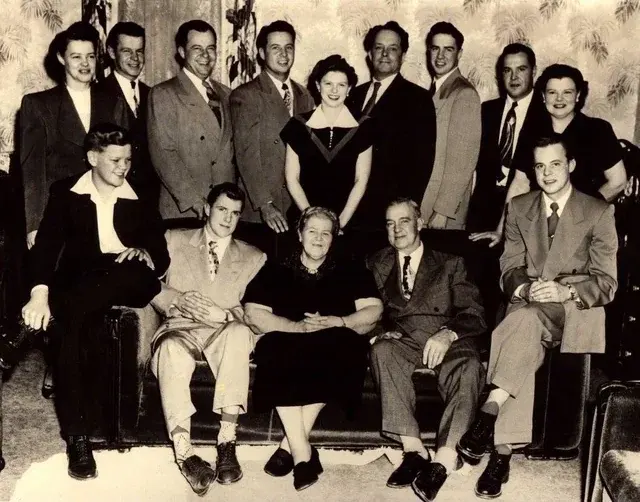
“My Grandparents and all 12 of their kids”. Photo by Sloth_grl.
The statistics tell a striking story. In 1900, the average American woman bore nearly four children, but families with eight, ten, or more weren’t unusual—particularly in rural areas where double-digit broods were commonplace.
Census records from the early twentieth century reveal households regularly listing twelve to fifteen children, with some families pushing past twenty.
These weren’t outliers or curiosities; they represented a significant segment of the population living according to vastly different assumptions about family life.
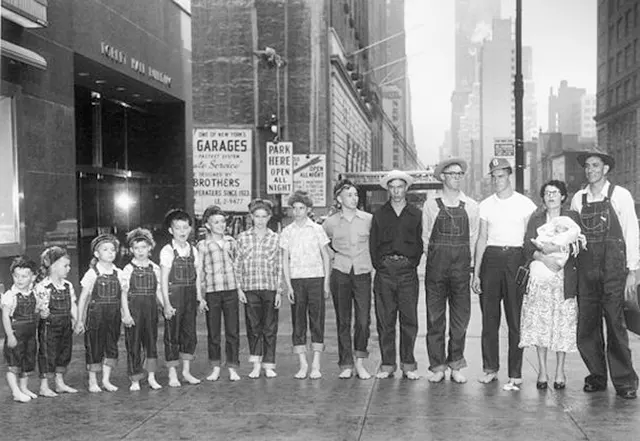
America’s largest all-boy family, barefoot in Manhattan, 1955.
The reasons behind these enormous broods were deeply interwoven with economic necessity and cultural values. In agricultural America, children represented essential labor for survival.
Each additional pair of hands meant help with planting, harvesting, livestock care, and the endless household chores that kept farm operations running from sunrise to sunset.
Children as young as five or six had assigned responsibilities, and teenagers performed work that rivaled adult contributions. Families essentially operated as small businesses where more workers meant greater productivity and security.
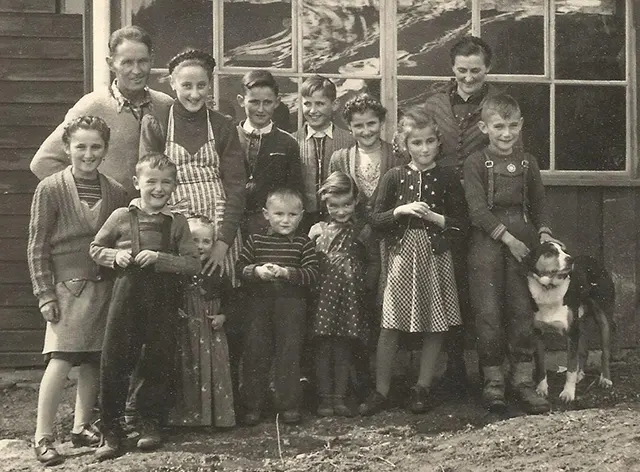
A big, happy family pictured in Germany, 1930.
Religious conviction reinforced these practical considerations. Many Christian denominations viewed large families as divine blessings and actively discouraged birth control, interpreting biblical passages as commands to “be fruitful and multiply.”
Catholic teaching explicitly forbade contraception, while Protestant traditions similarly celebrated motherhood as woman’s highest calling.
Faith and fertility became inseparable concepts in many communities, making family size a matter of spiritual obedience rather than personal choice.
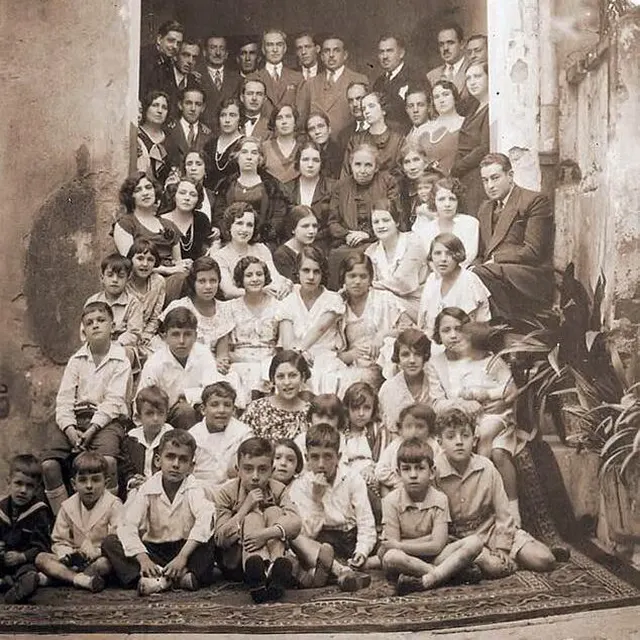
A Mexican family portrait with over 40 members, 1930s.
Surprisingly, economics worked in favor of large families during this period.
The direct costs of raising children remained relatively low when households produced their own food, sewed their own clothing, and relied on free public education that rarely extended beyond eighth grade.
Children transitioned from financial burdens to contributing members quickly, often entering the workforce by age fourteen or fifteen.
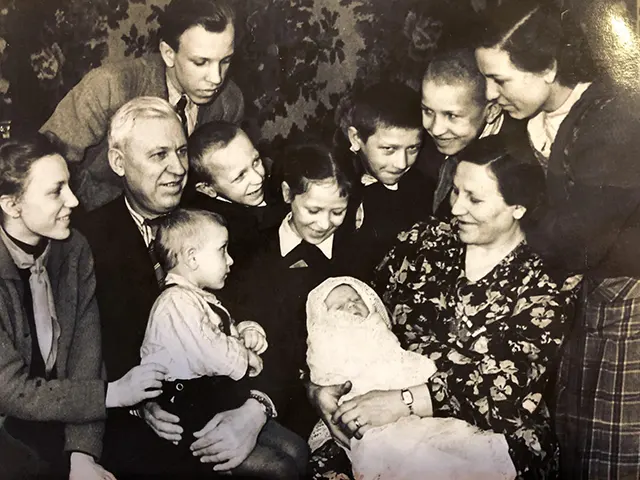
“My mom’s family pictured in Kyiv, Ukraine, 1958”.
Housing was affordable, hand-me-downs moved seamlessly down the sibling chain, and entertainment came from playing with brothers and sisters rather than purchased toys or organized activities.
The marginal cost of each additional child was minimal compared to today’s expenses.
The transformation began accelerating after World War II. America’s shift from an agricultural to an industrial and service economy fundamentally changed childhood’s economic equation.
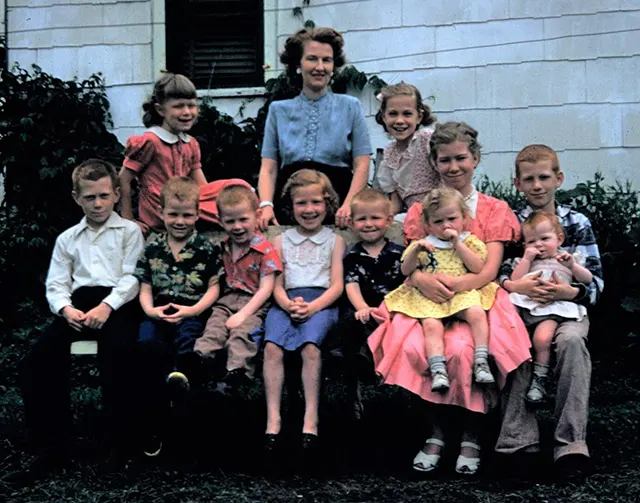
Mom was not playing around: ‘Mom and her first 11 kids in Iowa, 1957. She went on to have six more’. Photo by algonagirl.
Success now required high school diplomas, often college degrees, extending the years children remained financial dependents.
Families migrated from farms to cities and suburbs where housing costs per square foot made large homes expensive luxuries.
The FDA’s approval of birth control pills in 1960 gave couples unprecedented control over family planning, while changing gender roles opened educational and career opportunities that allowed women to define themselves beyond motherhood.
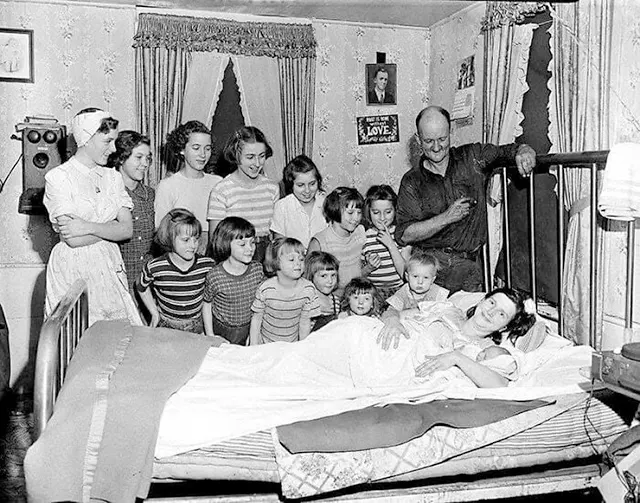
This is a heartwarming historical photograph from 1954 in Pittsfield, Massachusetts. It captures the Brooks family welcoming their only son, Leslie Benjamin, after his birth at home. Here’s the newborn surrounded by his thirteen delighted sisters.
Medical advances paradoxically contributed to smaller families as well. As infant and childhood mortality rates plummeted, parents no longer needed to bear extra children as insurance against tragic losses.
The grim calculus that once assumed not all children would survive to adulthood became obsolete, allowing families to plan with confidence.
By the 1970s, the era of double-digit families had effectively ended. The average household shrank to just over three members, and families with more than four children became noteworthy exceptions.
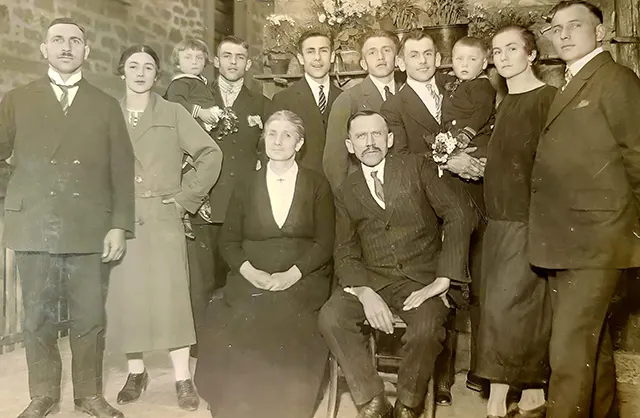
“My great-great-great grandfather’s big, handsome family, circa 1905”.
These vintage photographs preserve what modern viewers struggle to imagine—entire broods arranged in descending height order, older siblings cradling infants while middle children cluster around exhausted but proud parents, families spilling across front porches because no indoor space could contain them all.
The images capture both affection and logistics, documenting an American experience that has vanished as completely as the farms and small towns that once sustained it.
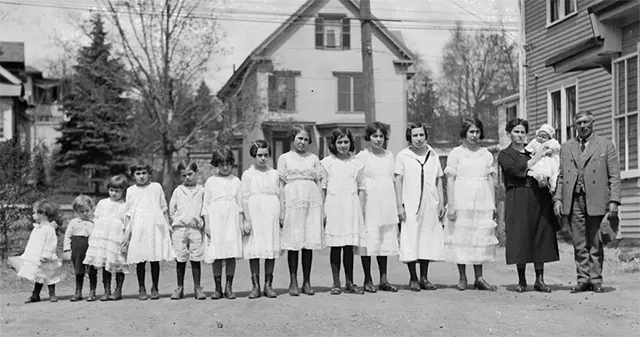
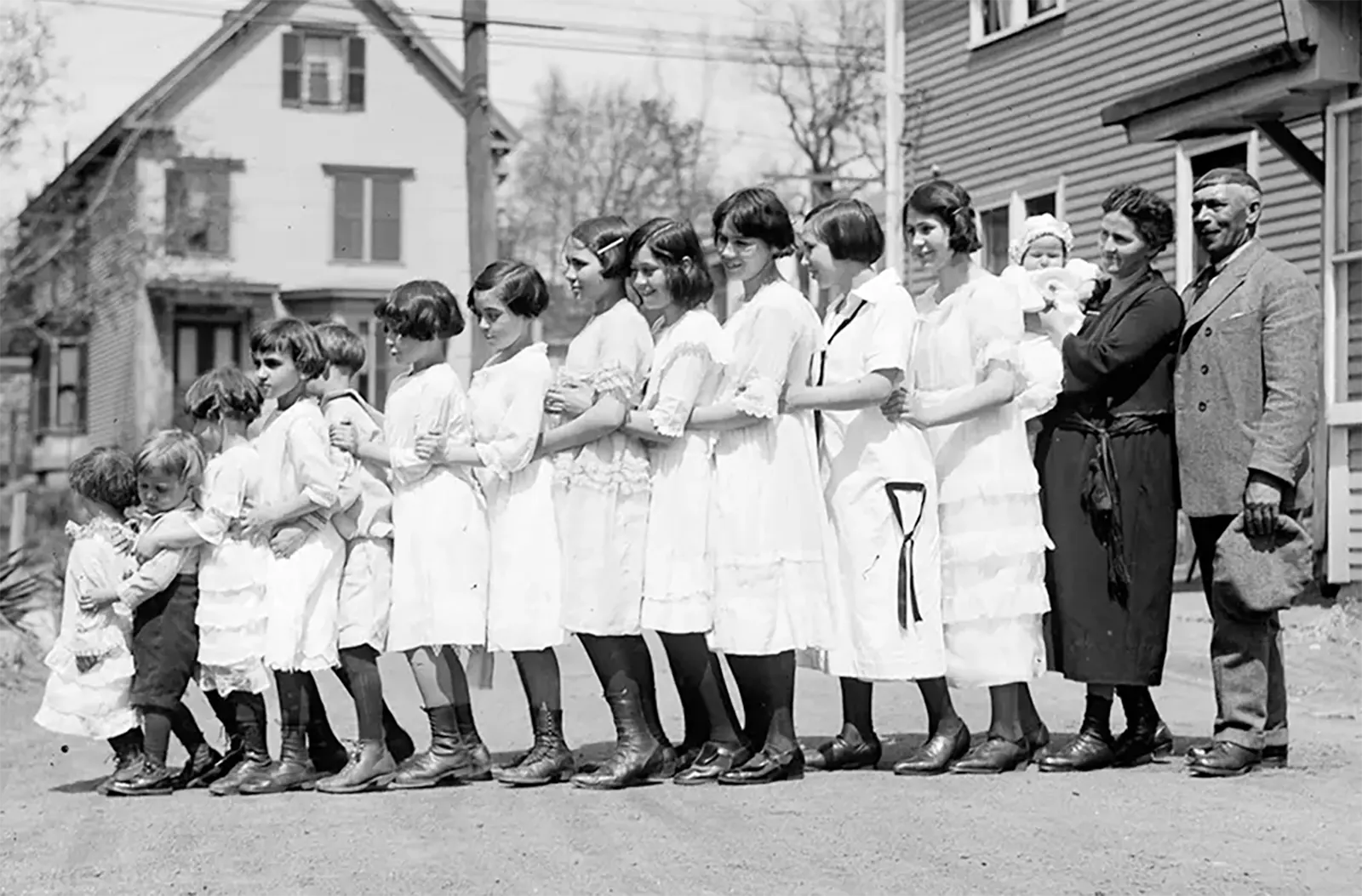
A family of 13 kids stands in order of height in Boston, 1925.
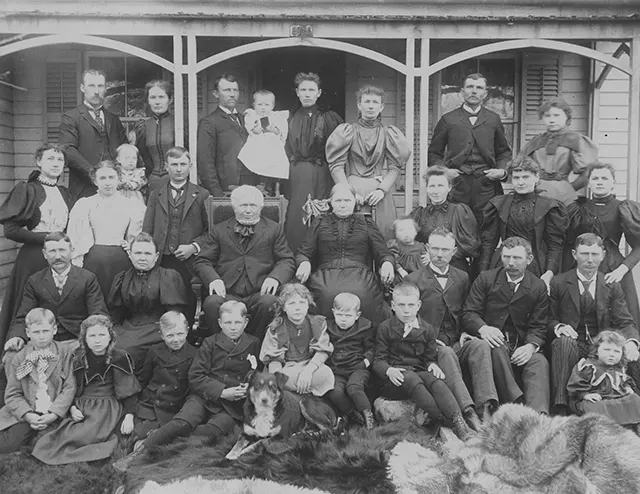
The family of John and Sophia Bohnsack, Pictured in the Thumb of Michigan, 1890s.
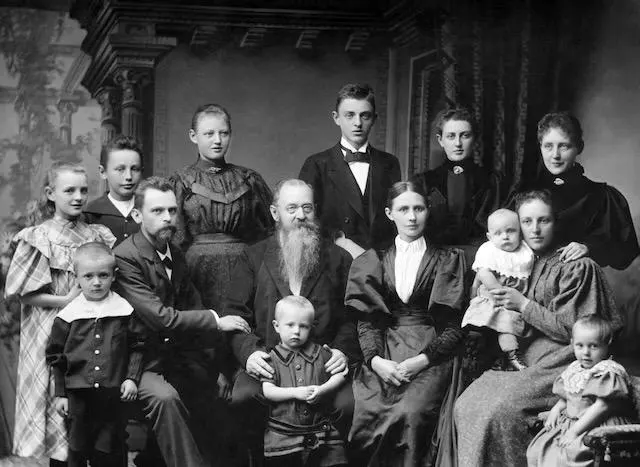
“My great-great grandparents’ family photo in Copenhagen, Denmark, 1895”.
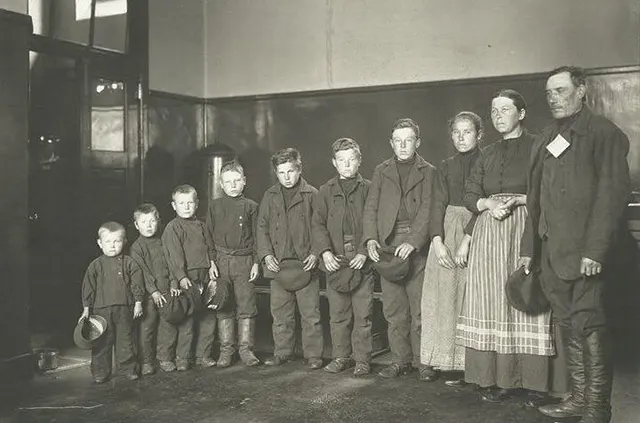
An immigrant family arriving at Ellis Island (US) from Europe, 1904.
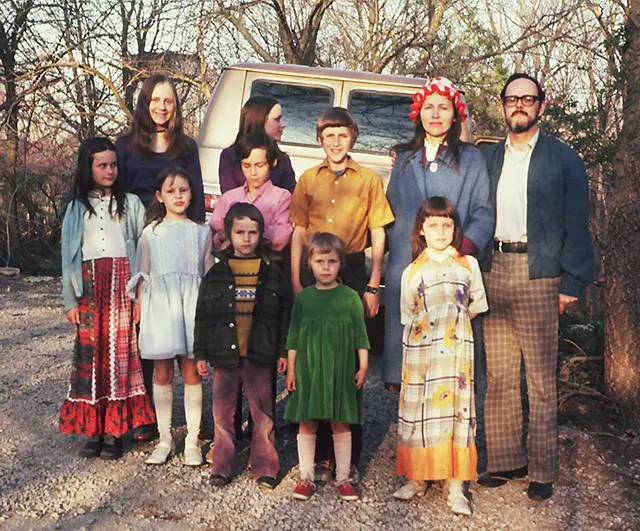
“A family portrait from the 1970s — My mom is on the far left of the second row. As the oldest of 10 children, she was the ‘third’ parent’”. Photo by seewithyoureyes.
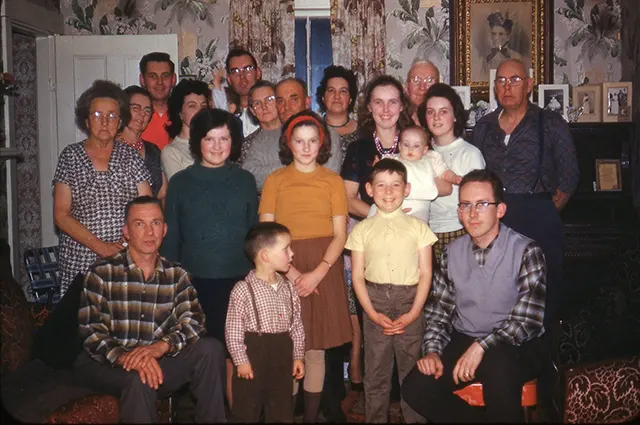
Family portrait, ‘New Years, 1964’.
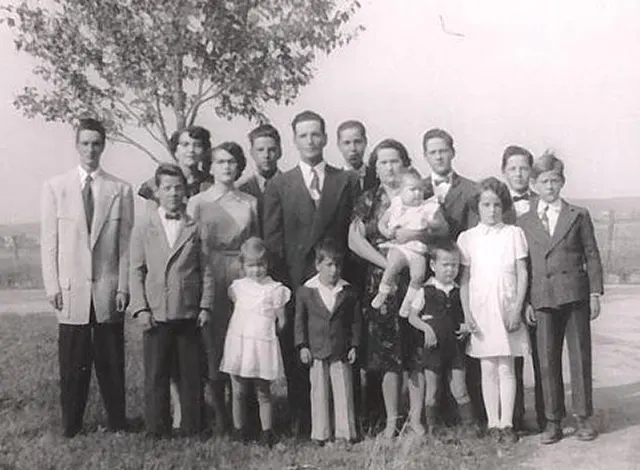
‘My great-grandparents and their 14 children’. Photo by Li-renn-pwel.
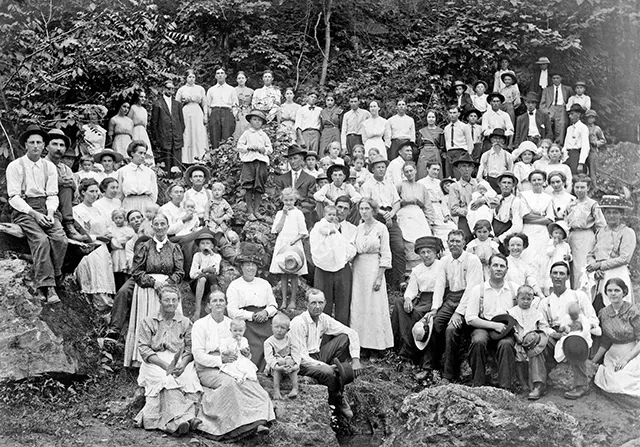
A big family reunion at Twin Springs, circa 1910’.

The big hair really gives it away: ‘My awesome 1990s family photo’. Photo by mirandaleecon.
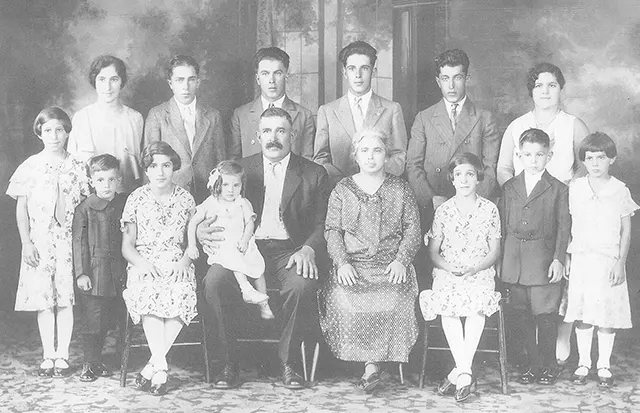
‘My great-grandfather ‘Big Joe’ and his Family, circa early 1940s’. Photo by Dorfner.
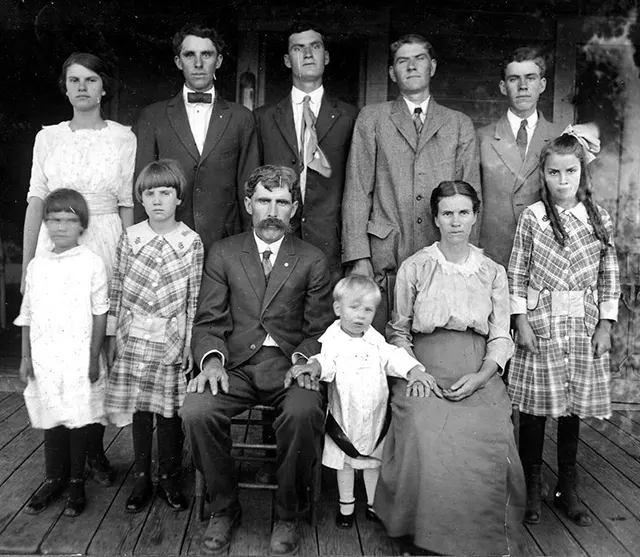
‘My great-great grandparents’ family portrait in Texas, circa 1910′.
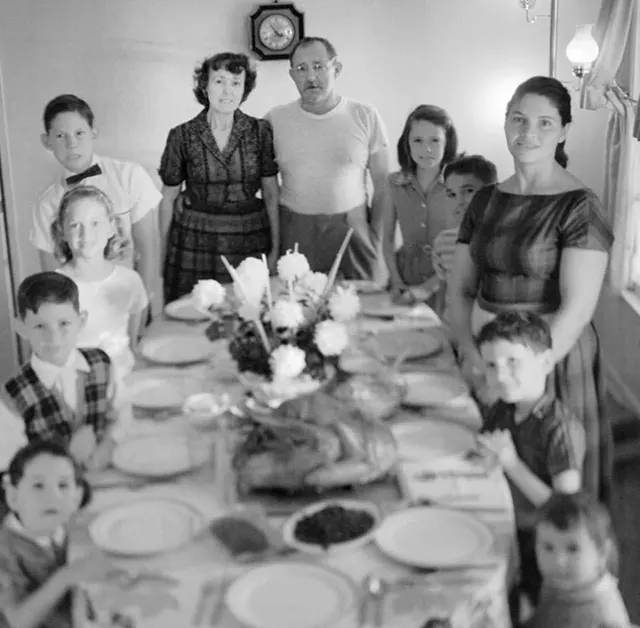
‘My great grandparents, grandma, and her kids on Thanksgiving, 1959. My grandma would go on to have 17 kids’
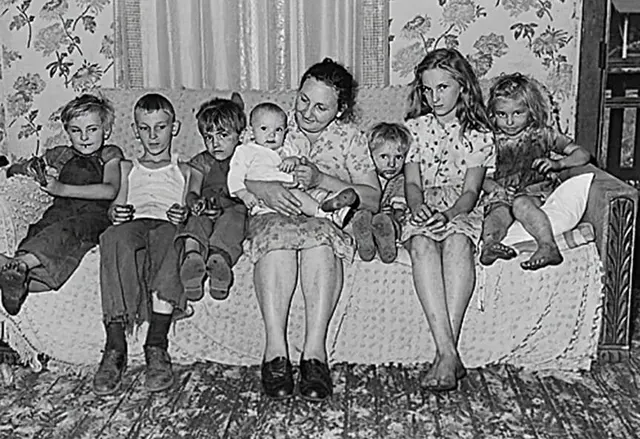
‘Mrs. Clabe Hicks with 7 of her 8 children’
(Photo credit: Pinterest / Flickr / Wikimedia Commons / Upscaled by RHP).