
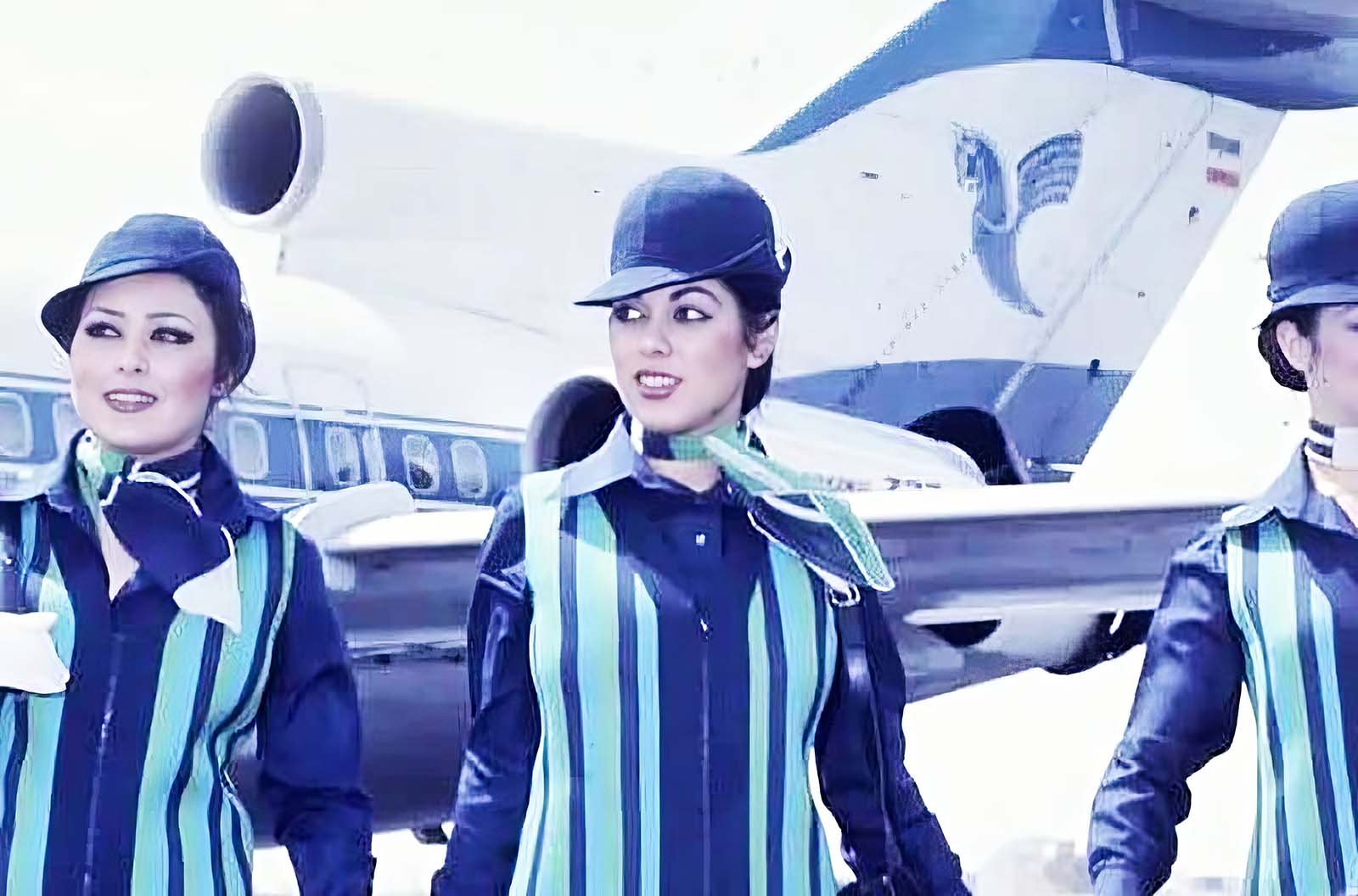
In the decades leading up to the 1979 Revolution, Iran Air—widely known by its emblem, the “Homa”—stood as a symbol of ambition, confidence, and global connection.
The airline rose rapidly to become one of the most respected carriers of the Jet Age, projecting an image of a nation eager to present itself as modern, outward-looking, and culturally refined.
At the heart of this image were its flight attendants, whose presence embodied both professionalism and the aspirations of a changing society.
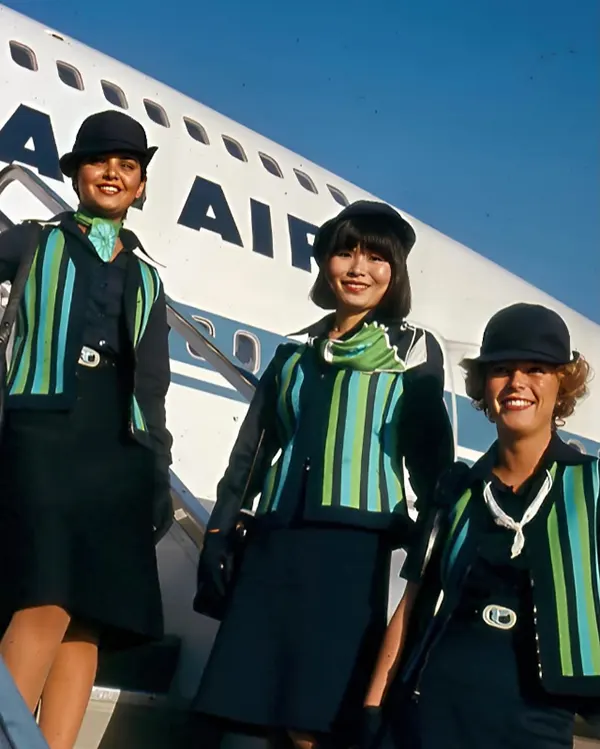
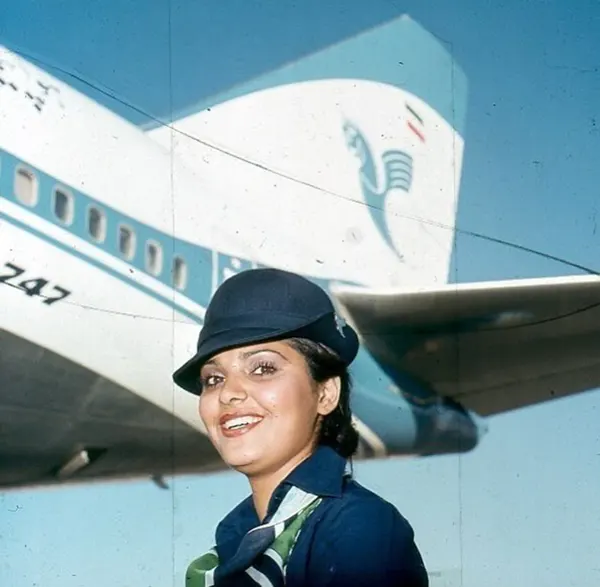
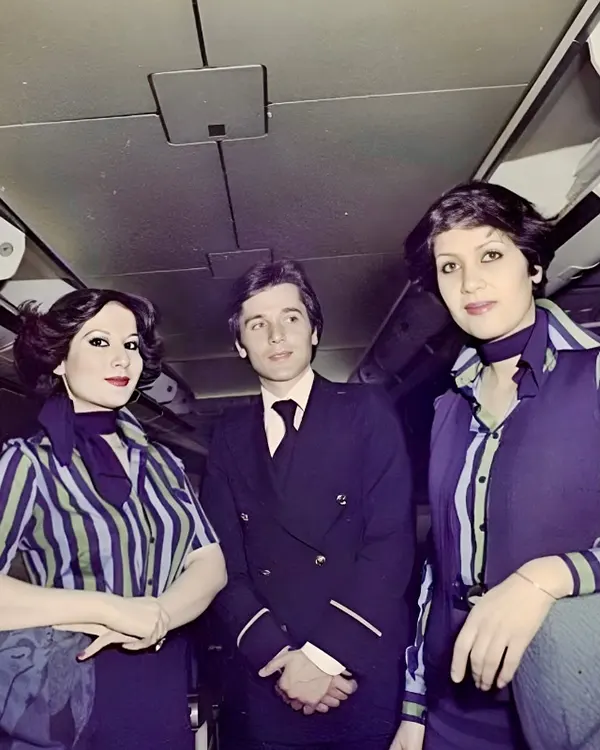
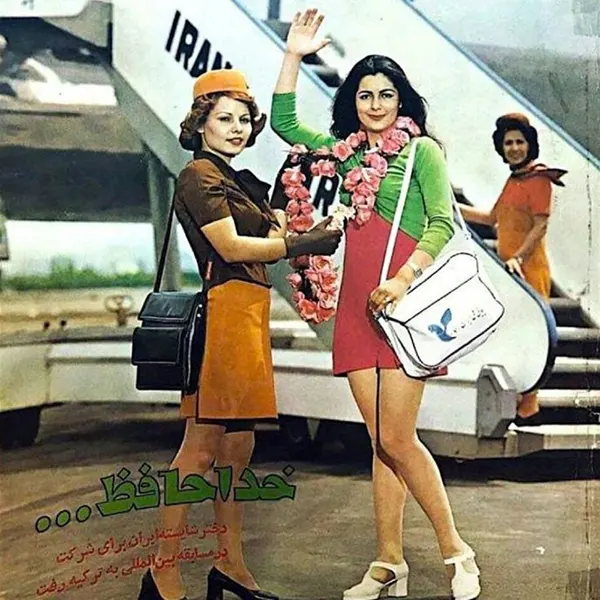
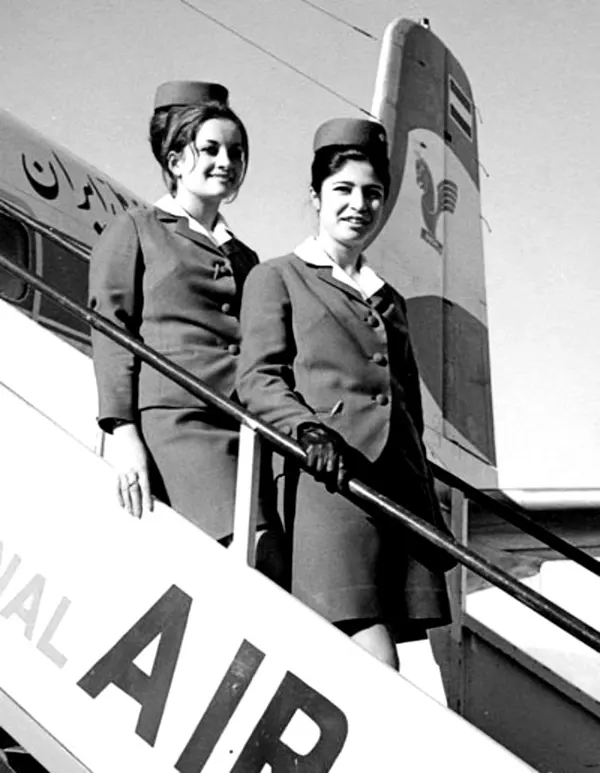
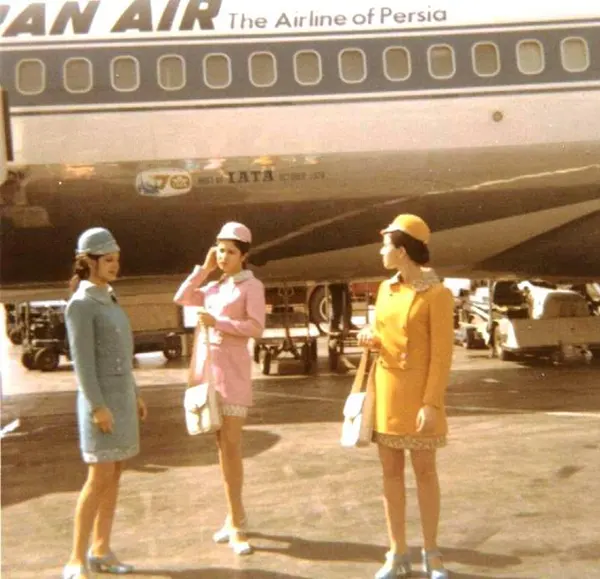
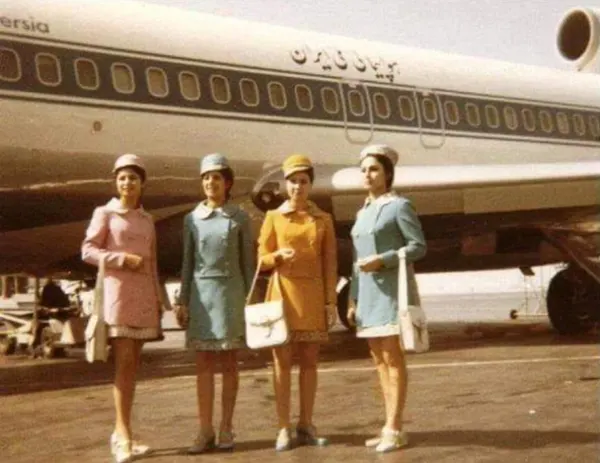
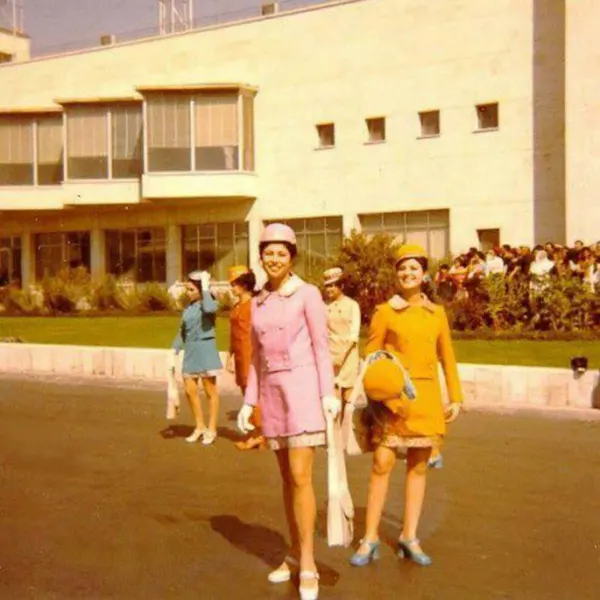
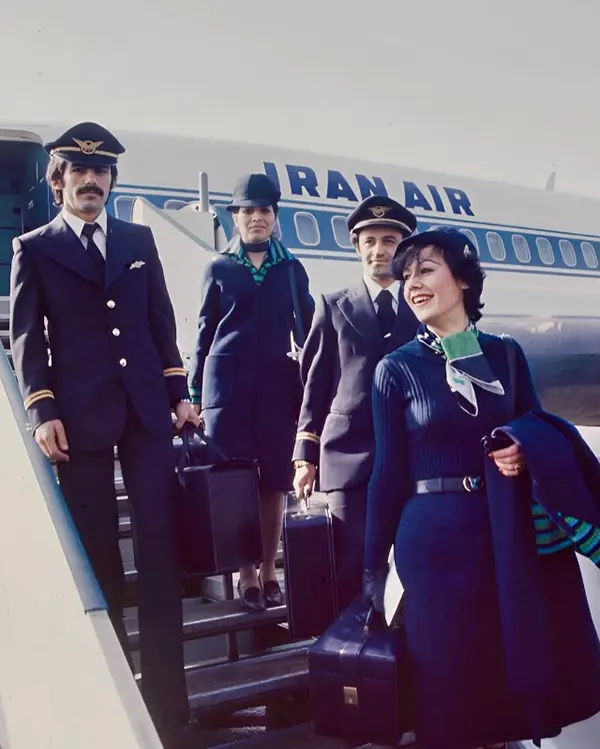 During the 1960s and 1970s, Iran Air flight attendants became visual representatives of a cosmopolitan Iran.
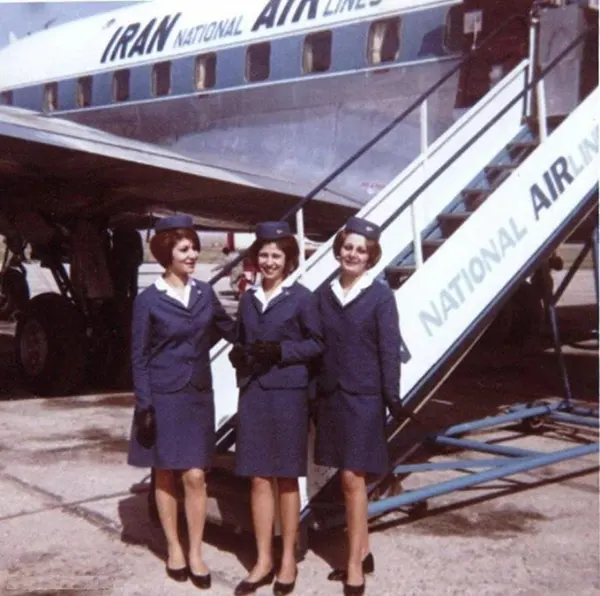
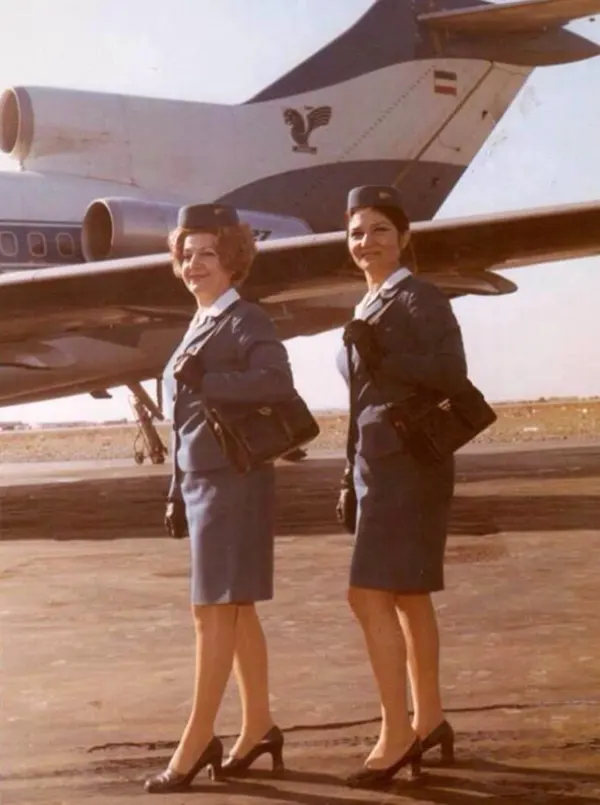
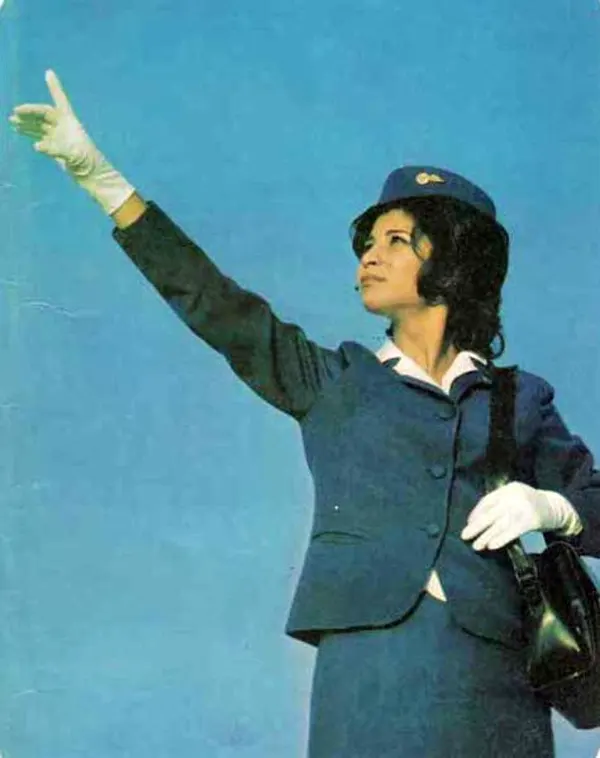
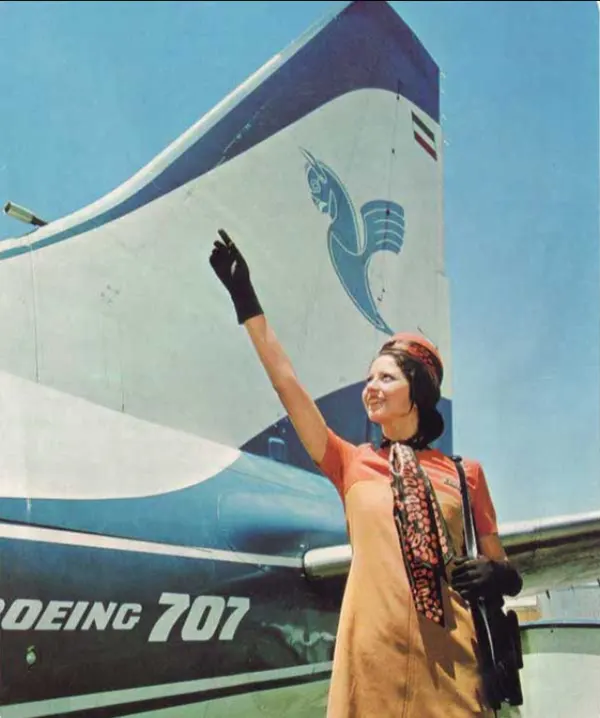
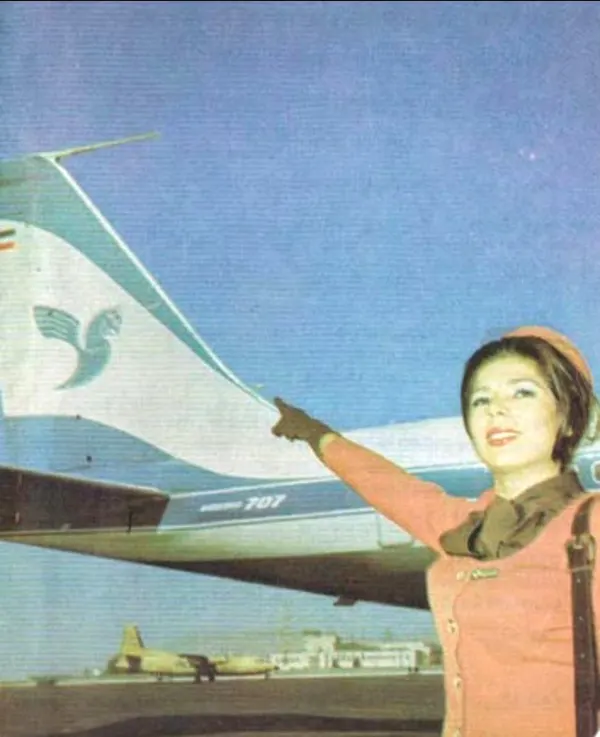
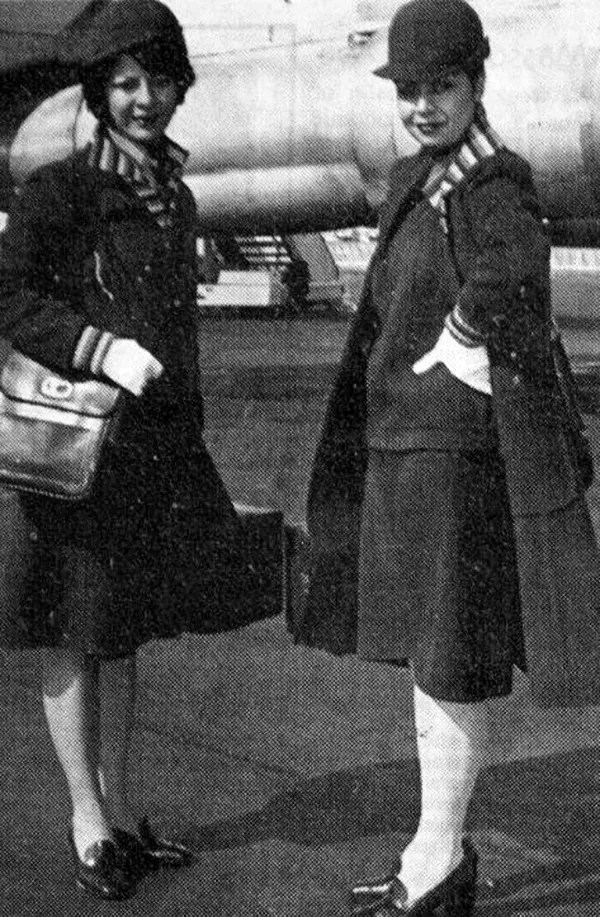
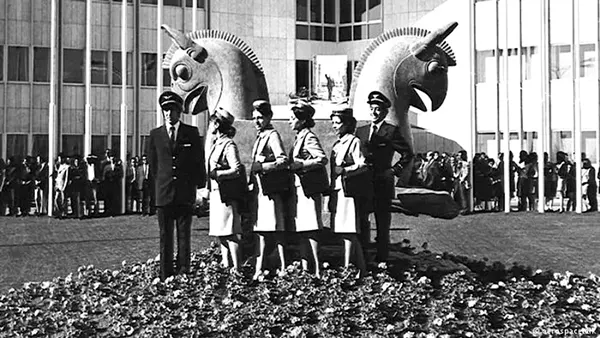
Their uniforms reflected the polished glamour seen across leading international airlines, blending Western fashion trends with understated elegance.
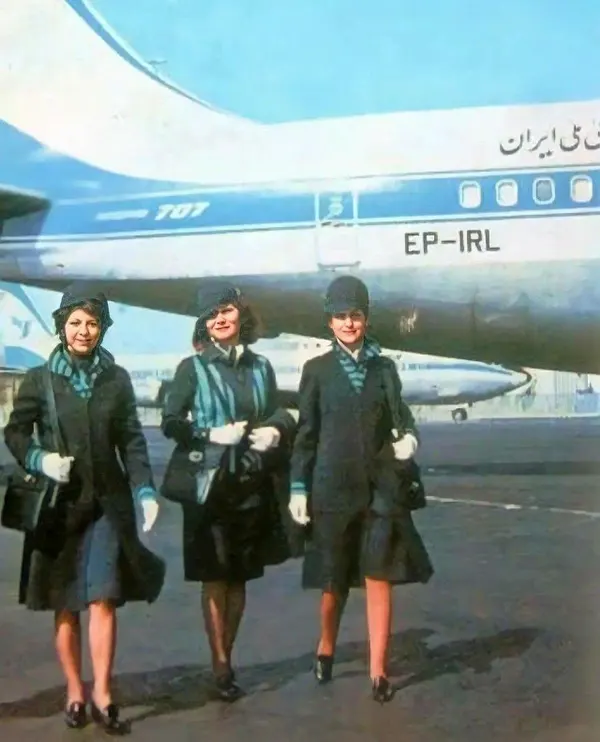
Outfits typically included tailored blazers, crisp blouses, and knee-length skirts designed for ease and authority, often paired with sheer stockings and low-heeled pumps suitable for long-haul service.
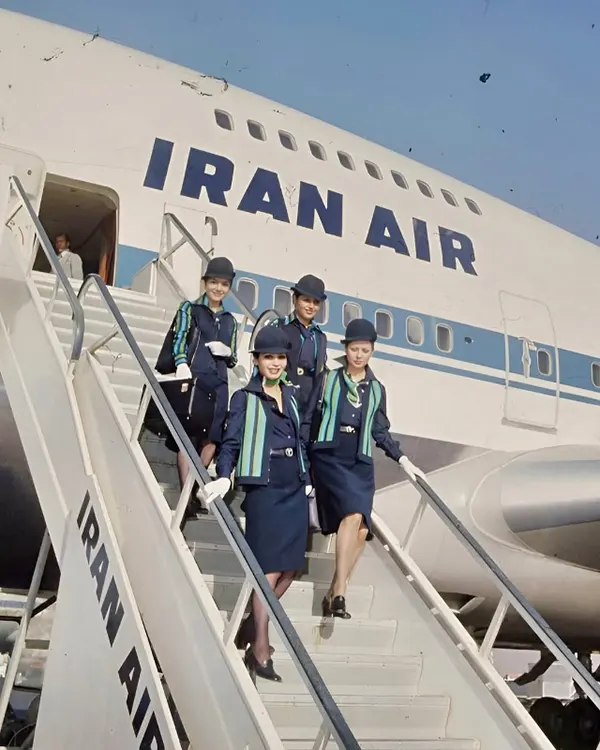 Pillbox hats, silk scarves, and coordinated gloves completed the look, while fabrics and cuts were carefully chosen to project refinement rather than excess.
Grooming standards were equally precise, with hairstyles ranging from sculpted bouffants to sleek bobs, complemented by subtle makeup that emphasized poise and confidence.
There was no requirement to cover the hair, and the overall presentation aligned closely with global Jet Age aesthetics.
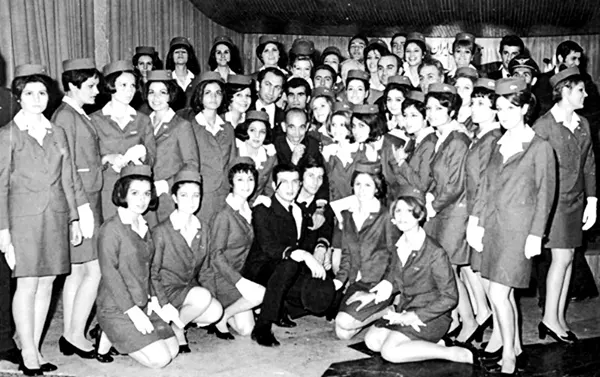
 Securing a position as a flight attendant with Iran Air was highly competitive and carried considerable social prestige.
Candidates were expected to meet rigorous educational standards and demonstrate fluency in several languages, most commonly Persian, English, and French.
Many attendants had studied abroad in Europe or the United States, bringing international experience to the role. 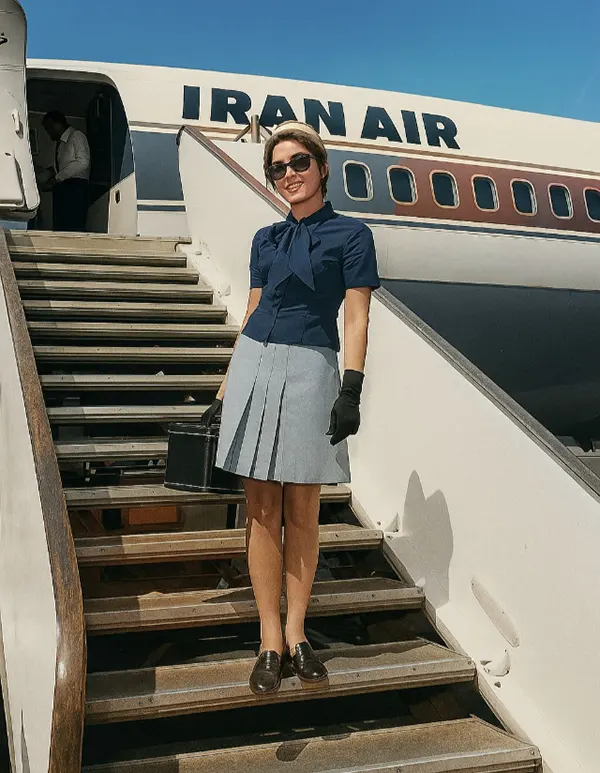
Training emphasized discipline, presentation, and the delivery of refined “Persian hospitality,” a concept that blended warmth, courtesy, and efficiency.
For many women, the position offered rare access to international travel and professional independence. By the late 1970s, Iran Air had built a reputation for luxury and technical sophistication.
Its non-stop routes between Tehran and New York were among the longest in the world, operated by advanced aircraft such as the Boeing 747SP.
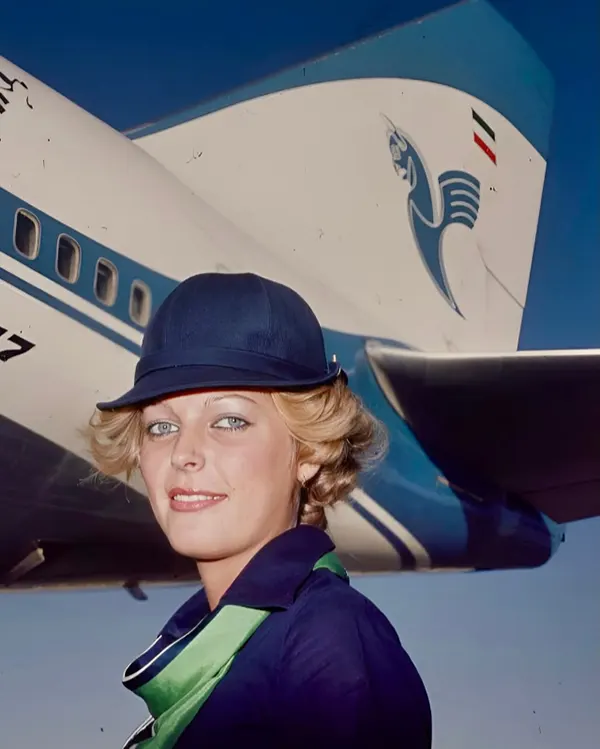
Onboard service mirrored first-class standards of the era, with gourmet meals, fine wines, and attentive cabin service that reflected the lifestyle of Iran’s urban elite.
The airline’s branding centered on the Homa, a mythical Persian griffin symbolizing fortune and excellence.
In 1978, Iran Air expanded its fleet with the acquisition of six Airbus A300 aircraft, strengthening its domestic and regional operations.
By the end of that year, the airline served 31 international destinations, stretching from New York City across Europe and Asia to Beijing and Tokyo.
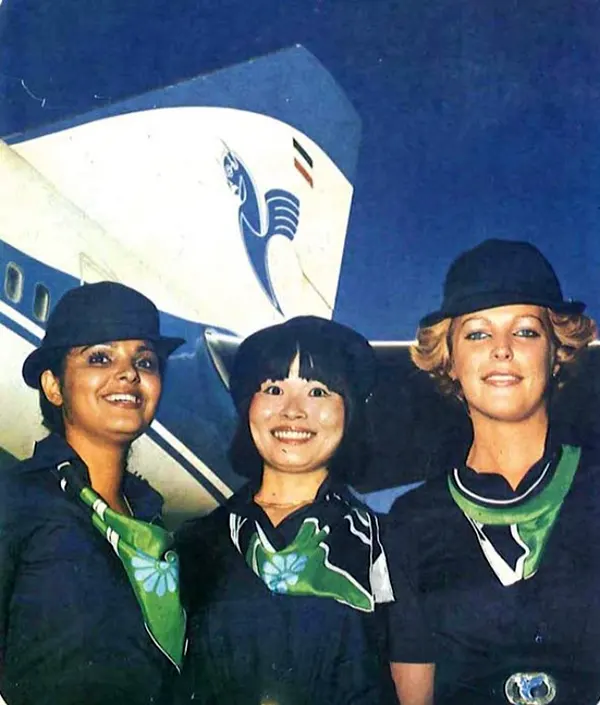
The 1979 Revolution marked a sudden and decisive shift. The visual identity of the airline was reshaped almost overnight as uniforms were replaced with modest tunics and mandatory headscarves, aligning cabin service with the values of the newly established Islamic Republic.
The familiar, Western-influenced image of the Homa flight attendant was formally dismantled.
In the years that followed, economic sanctions placed significant constraints on Iran Air’s ability to modernize its fleet. 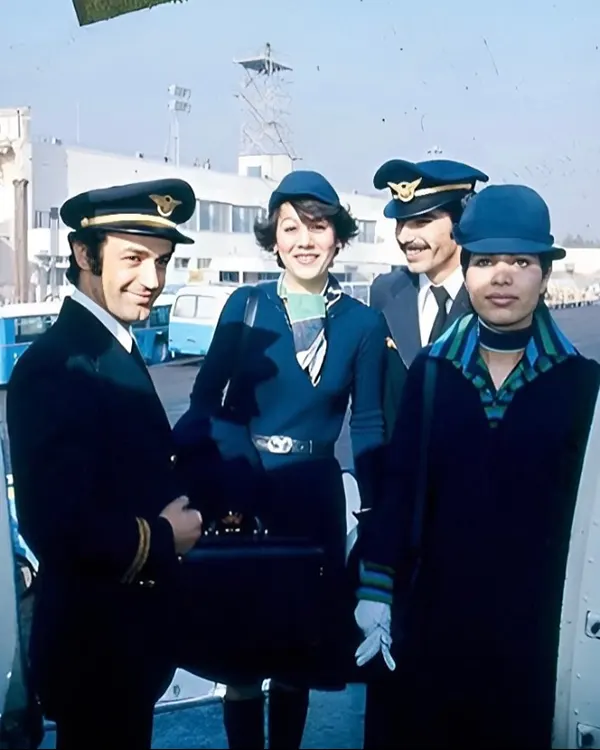 For more than two decades, the airline received no new Western-built aircraft, with the last deliveries prior to the partial lifting of nuclear-related sanctions in 2016 occurring in 1994.
These two Airbus A300-B4s were provided as compensation following the 1988 downing of Iran Air Flight 655.
Today, the rare photographs from before 1979 remain powerful visual records of a moment when aviation, fashion, and national identity briefly converged at cruising altitude.
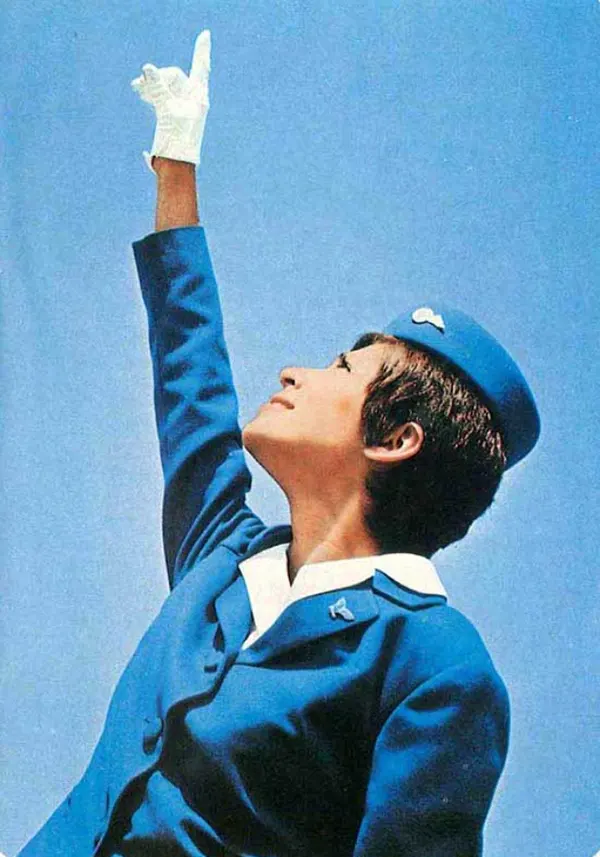
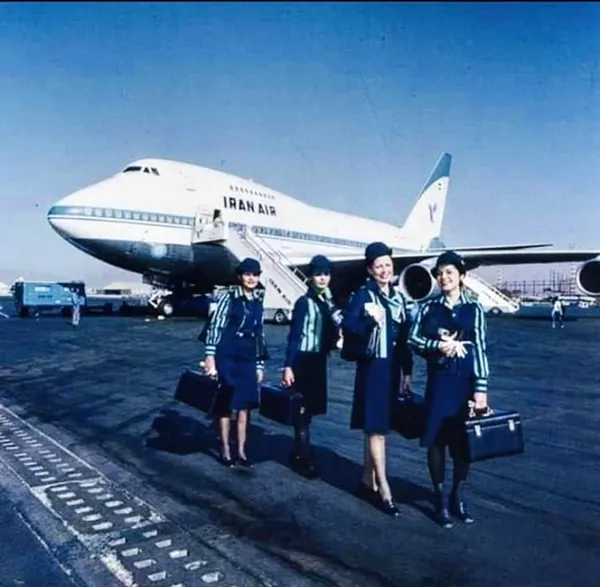
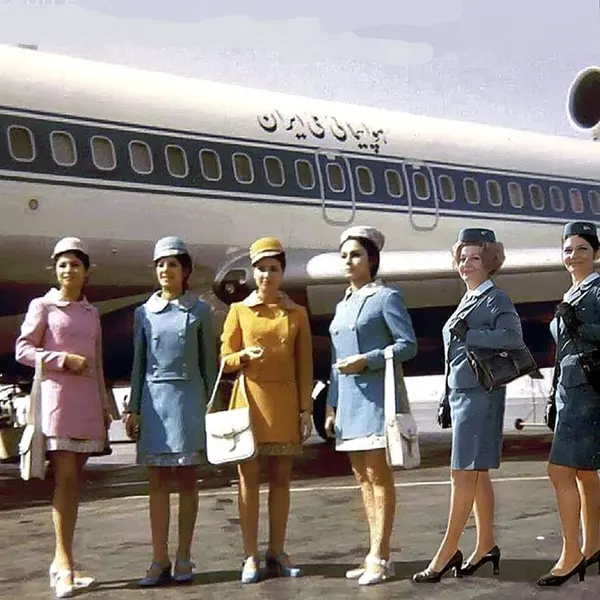
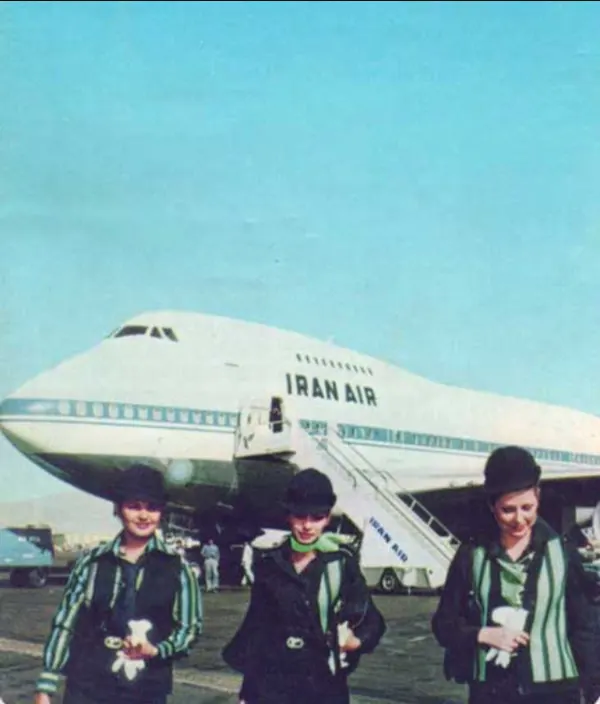
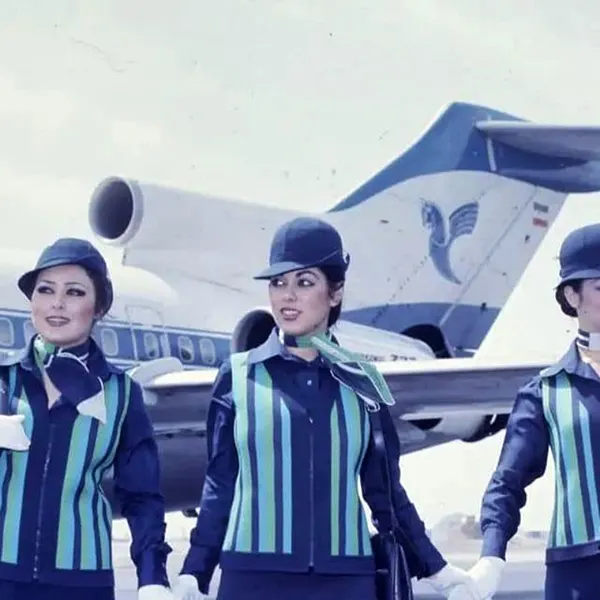
(Photo credit: Iranian Airlines by Vintage on Flickr / Wikimedia Commons).