
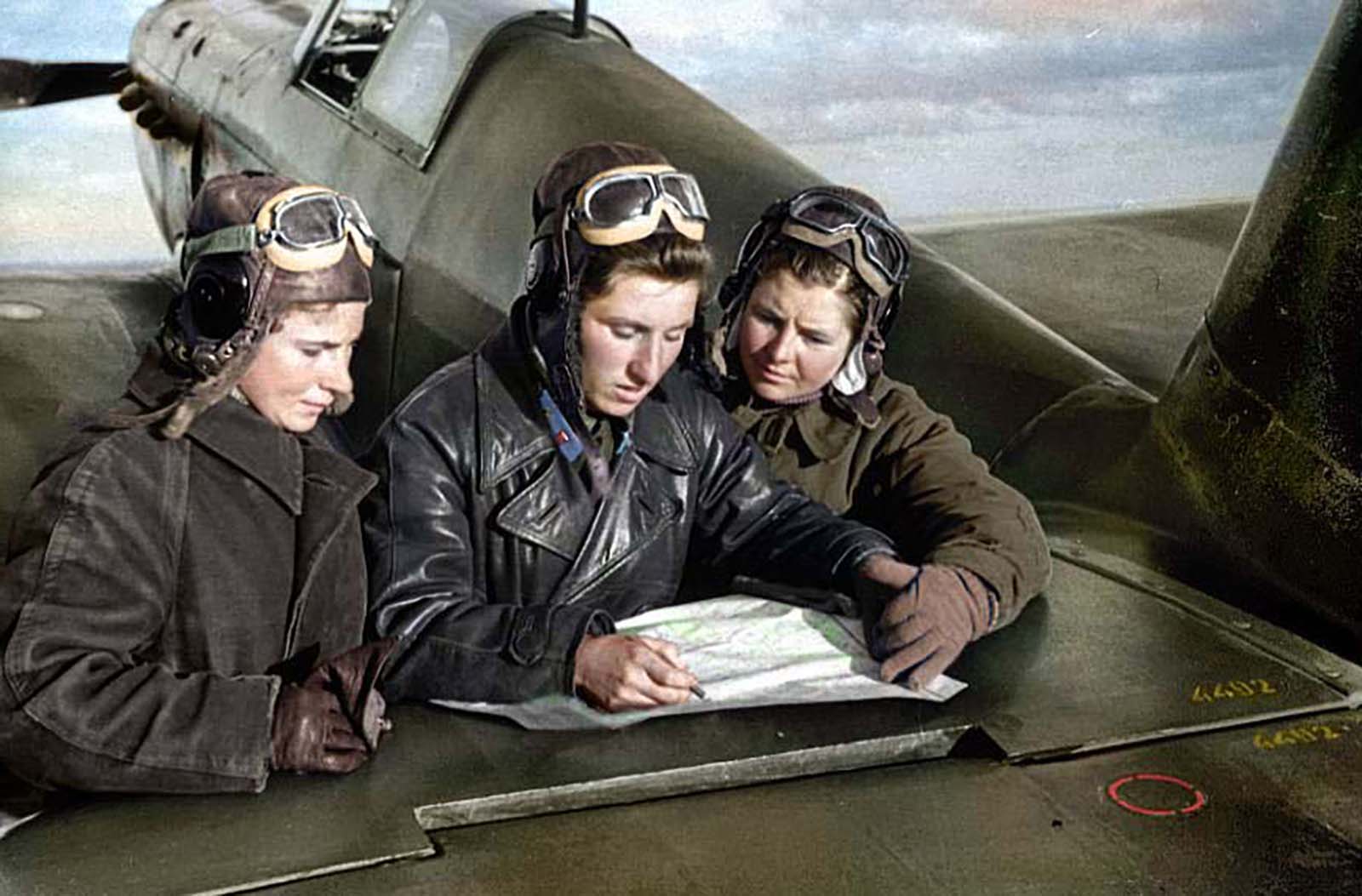
Emerging from the shadows of World War II, an astonishing chapter of aviation history comes into focus through newly colorized photographs that capture the determination and courage of the Soviet Union’s first all-female combat aviation unit.
The photographs, originally taken in black and white, have been carefully brought to life by Moscow-based colorist Olga Shirnina.
They depict members of the 588th Night Bomber Regiment, later renamed the 46th “Taman” Guards Night Bomber Aviation Regiment, as they trained, planned, and flew combat sorties for the Soviet Air Forces.
Through color, the faces, uniforms, and aircraft gain a renewed immediacy, bridging the distance between past and present.

Lydia Litvyak prepares to board her fighter plane during the Second World War. Members of the squadron were dubbed the Night Witches by the Nazis.
The regiment was formed in 1941 at the initiative of Major Marina Raskova, a celebrated aviator who leveraged her influence to secure approval for women-only combat units.
At a time when women’s participation in frontline roles was met with hesitation, necessity overrode convention.
The 588th Regiment was composed largely of volunteers in their late teens and early twenties and was commanded by Major Yevdokiya Bershanskaya. What began as an experiment soon proved its worth under fire.
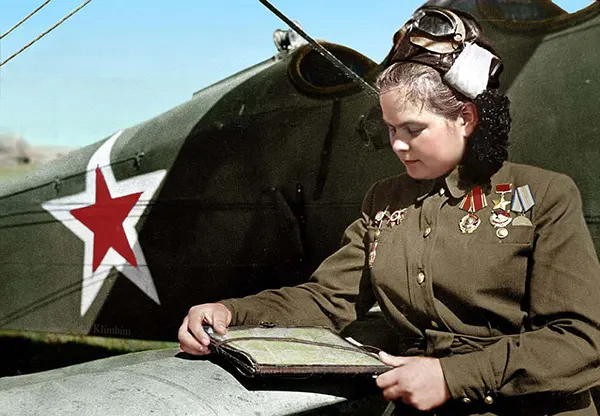
Soviet pilot Yekaterina Ryabova examines a map as she leans against the wing of her Second World War fighter plane in Russia.
Operating exclusively at night, the pilots developed a distinctive and highly effective attack method.
As they approached their targets, engines were throttled back and sometimes cut entirely, allowing the aircraft to glide silently toward bomb release points.
The faint rush of air was often the only warning of their arrival, a sound likened by enemy troops to the swish of broomsticks cutting through the dark.
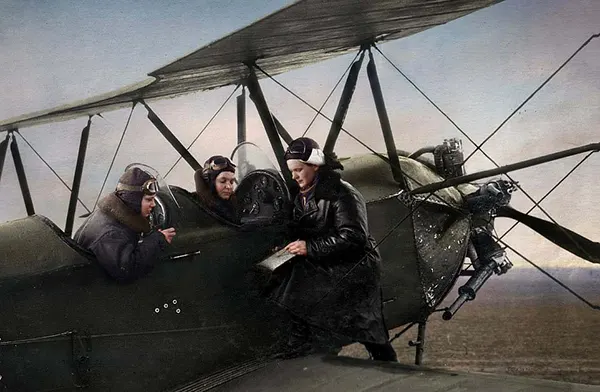
Yevdokia Bershanskaya (right), commander of the 46th Taman Guards Night Bomber Aviation Regiment, instructs her crew – Yevdokia Nosal and Nina Ulyanenko in this photograph, which was taken in 1942.
This eerie tactic earned the unit its enduring nickname, the Night Witches. The danger was constant, made worse by the fact that, due to weight limits, parachutes were not standard equipment until late in the war.
The regiment entered active combat in June 1942 as part of the Southern Front and was later integrated into the 4th Air Army.
Its effectiveness led to a series of honors and reorganizations, including the prestigious Guards designation in early 1943.
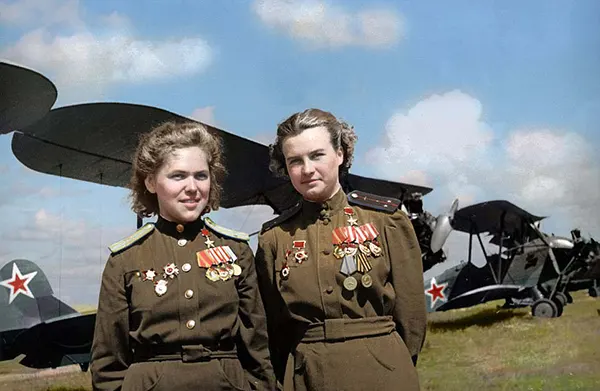
Pictures show Rufina Gasheva and Nataly Meklin – heroes of the Soviet Union’s famed Night Witches squadron.
Later that year, the unit received the honorary title “Taman” in recognition of its role in the Novorossiysk–Taman operations on the Taman Peninsula, a hard-fought campaign that further cemented its reputation.
At its peak strength, the regiment fielded around forty two-person crews. Over the course of the war, its pilots flew more than 23,000 sorties, delivering over 3,000 tons of bombs and tens of thousands of incendiary munitions.
Many crew members completed hundreds of missions, with some surpassing 800 flights.

Pilot Nina Ulyanenko.
Twenty-three aviators were awarded the title Hero of the Soviet Union, while thirty-two members of the regiment lost their lives in combat. It became the most highly decorated female unit in the Soviet Air Force.
The Night Witches flew Polikarpov U-2 biplanes, modest steel-and-canvas aircraft originally designed in the late 1920s for training and agricultural work.
Limited to a small bomb load, the planes required crews to fly multiple missions each night to achieve their objectives.
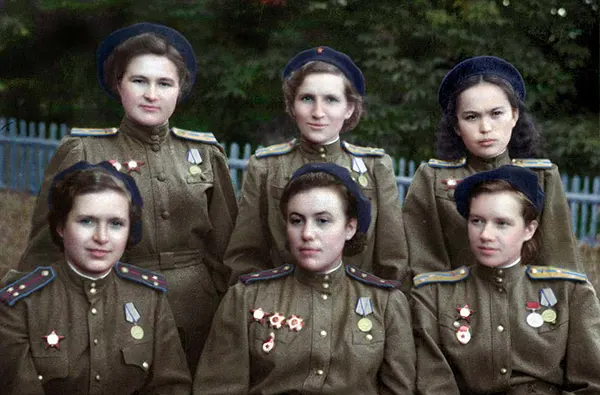
Six members of the 588 (46 Guards) Night Bomber Regiment pose for a photo.
Although the aircraft was obsolete and slow, the pilots took advantage of its exceptional maneuverability.
It also had a maximum speed that was lower than the stalling speed of both the Messerschmitt Bf 109 and the Focke-Wulf Fw 190, which made it very difficult for German pilots to shoot down.
The exception was fighter ace Josef Kociok, who grounded the regiment for an entire night by shooting down three or four of their planes on the night of 31 July – 1 August 1943.
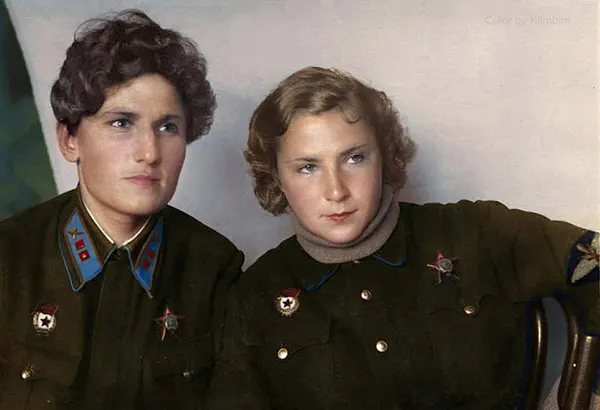
Yekaterina Budanova and Lydia Litvyak are pictured in 1942.
Irina Rakobolskaya, pilot with the 588th Regiment, rationalized the difficult reality and challenges she faced to pursue both a family and piloting career when she stated, “I think that during the war, when the fate of our country was being decided, the bringing in of women into aviation was justified.
But in peacetime a woman can only fly for sport…otherwise how can one combine a career with a family and with maternal happiness?”
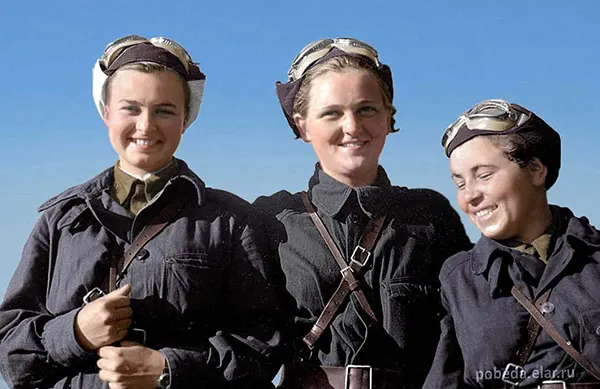
While women were originally barred from combat, Soviet leader Joseph Stalin introduced an order on October 8, 1941 to deploy three women’s force units, including the 588th regiment. Natalia Meklin, Sofia Burzaeva and Polina Gelman are pictured in this image,

Pilot Marina Raskova.
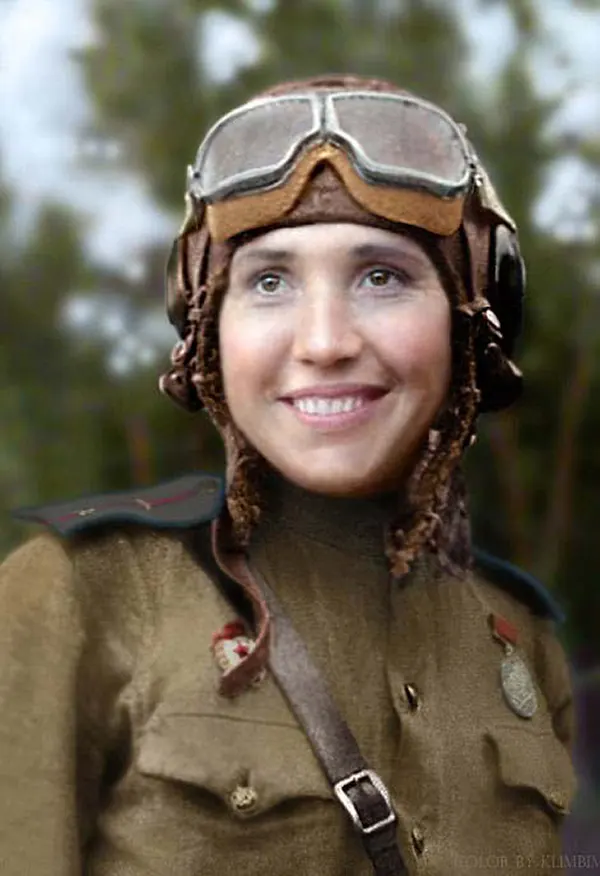
Pilot Antonina Lebedeva.
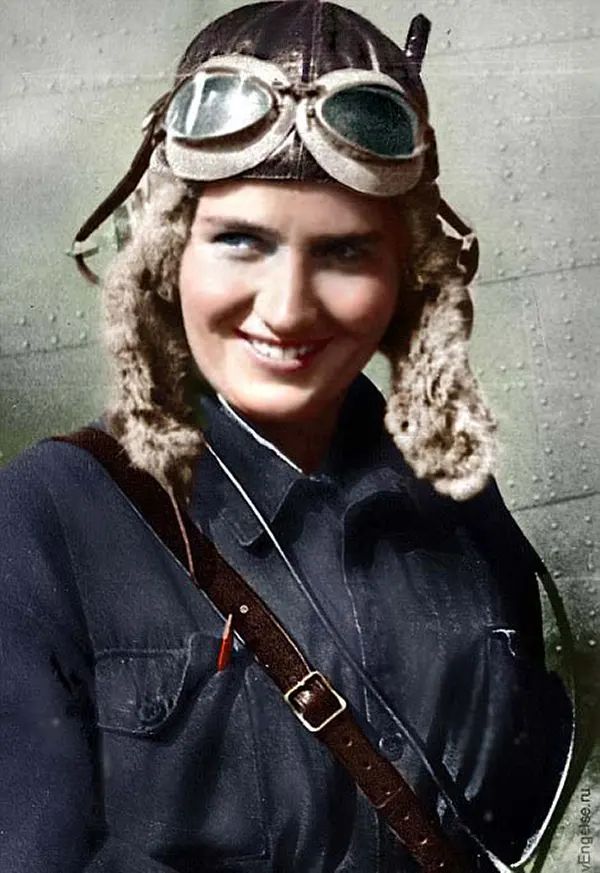
Pilot Marina Raskova.
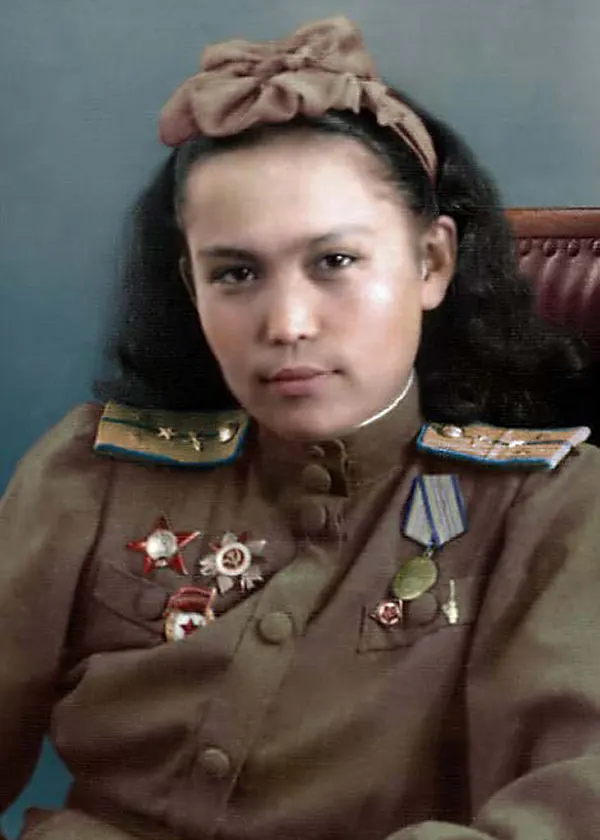
Pilot Hiuaz Dospanova.

Lilya Litvyak, Katya Budanova and Mariya Kuznetsov are pictured examining a map ahead of one of their missions in Stalingrad.
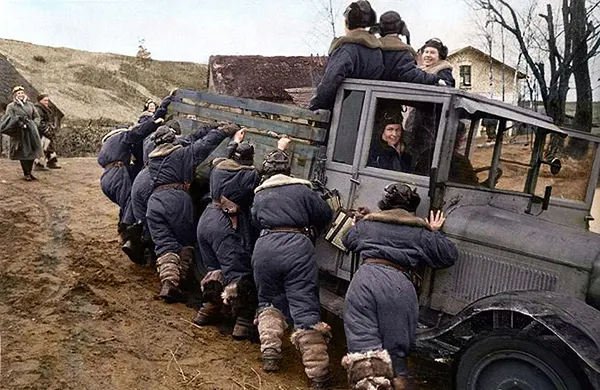
Photograph shows the feared Night Watch division in Crimea in 1944 as they push a truck up a hill.
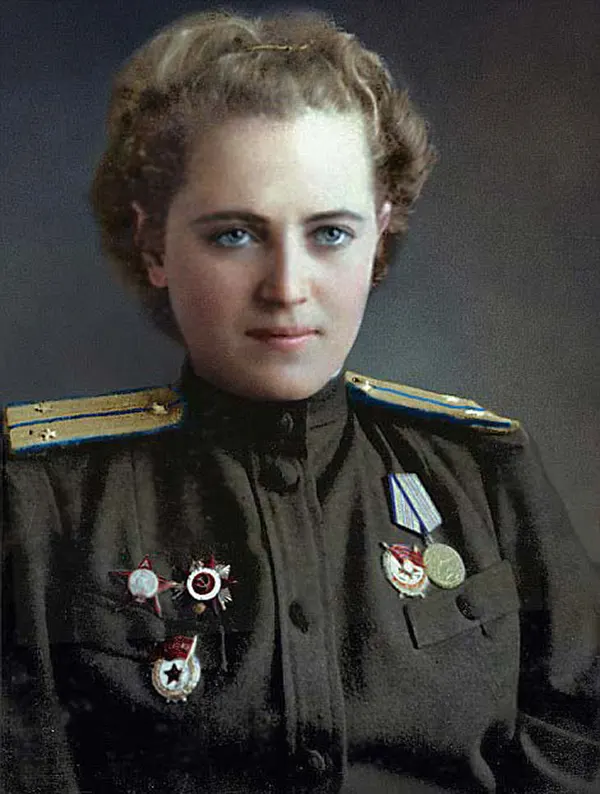
The women flew harassment bombing and precision bombing missions against the German military from 1942 until the end of the Second World War in 1945.
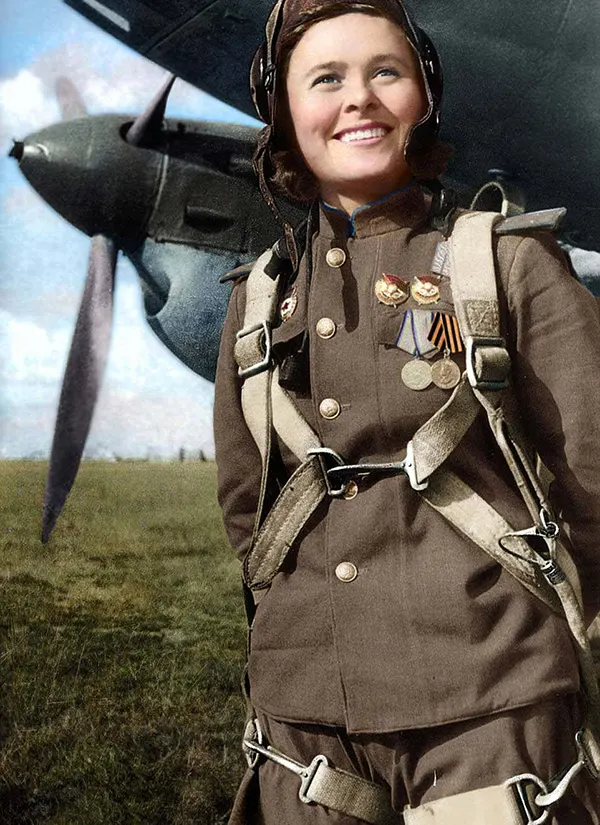
Captain Maria Dolina poses for a photograph in front of her fighter plane during the Second World War.
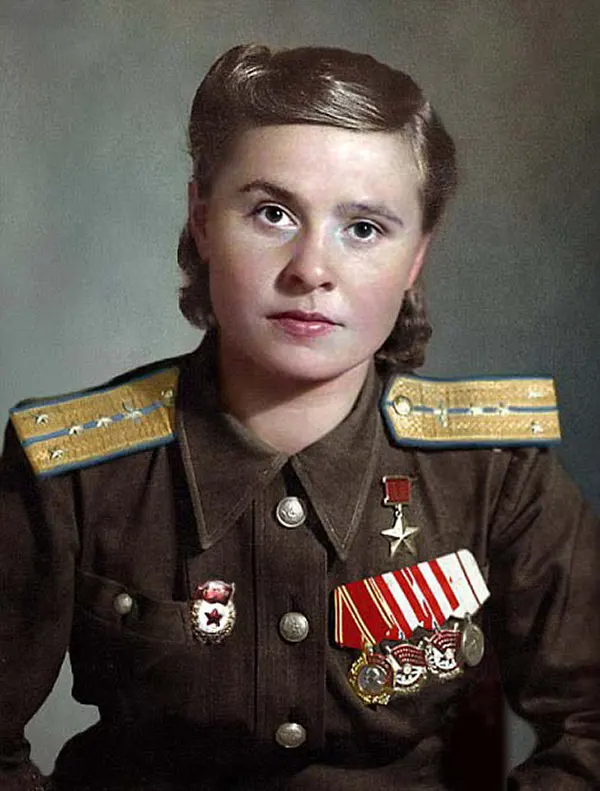
The women flew harassment bombing and precision bombing missions against the German military from 1942 until the end of the Second World War in 1945.
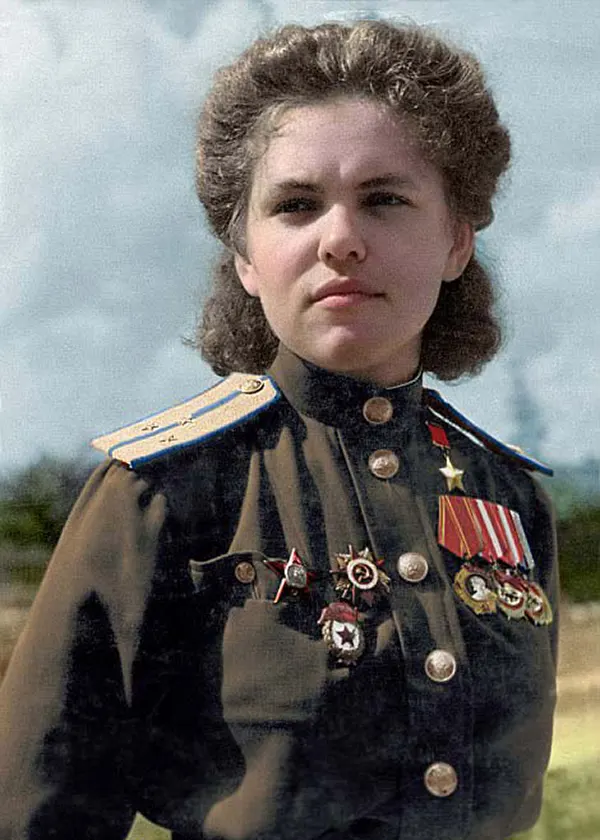
Soviet Air Force officer Rufina Gasheva flew 848 night missions as navigator in a fighter plane.

Pilot Hiuaz Dospanova is pictured in another Second World War photograph.
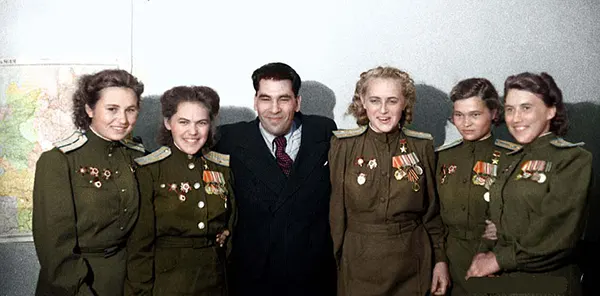
While women were originally barred from combat, Soviet leader Joseph Stalin introduced an order on October 8, 1941 to deploy three women’s force units, including the 588th regiment.
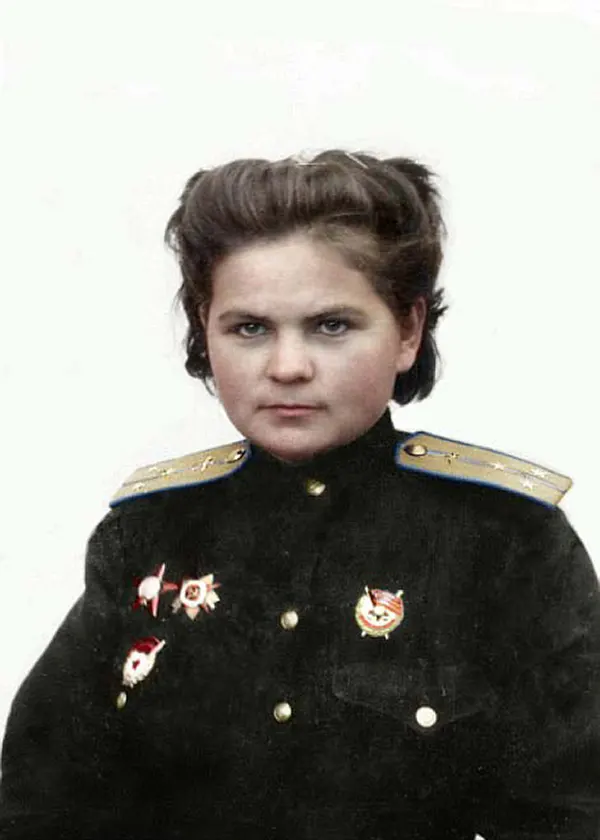
Pilot Yekaterina Ryabova.
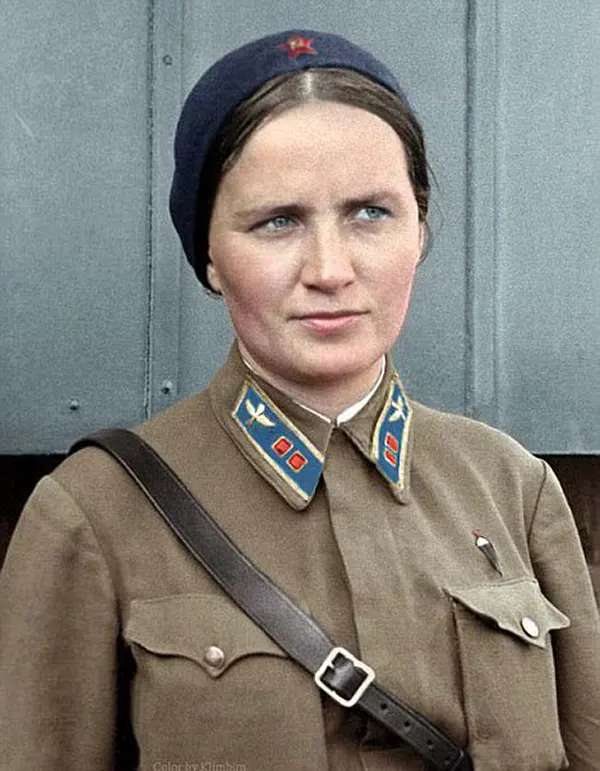
Pilot Martina Raskova.
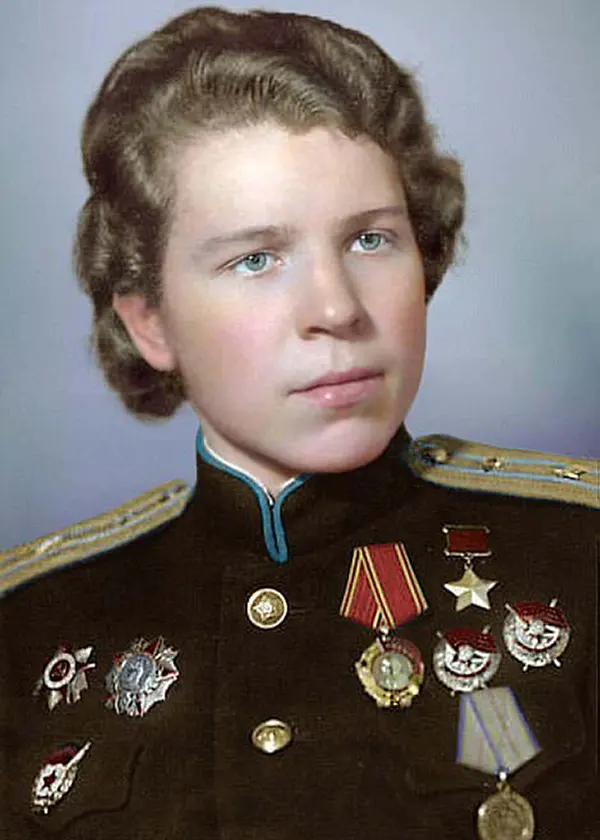
Squadron member Major Evdokia Nikulina.
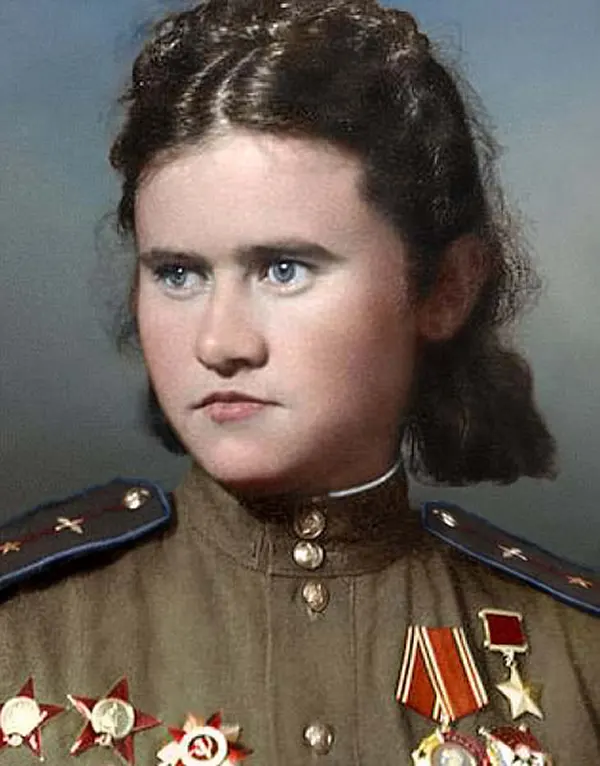
Pilot Evdokia Pasko.
(Photo credit: Colorized by Olga Shirnina / Original photos from Russian Archives / Wikimedia Commons).