
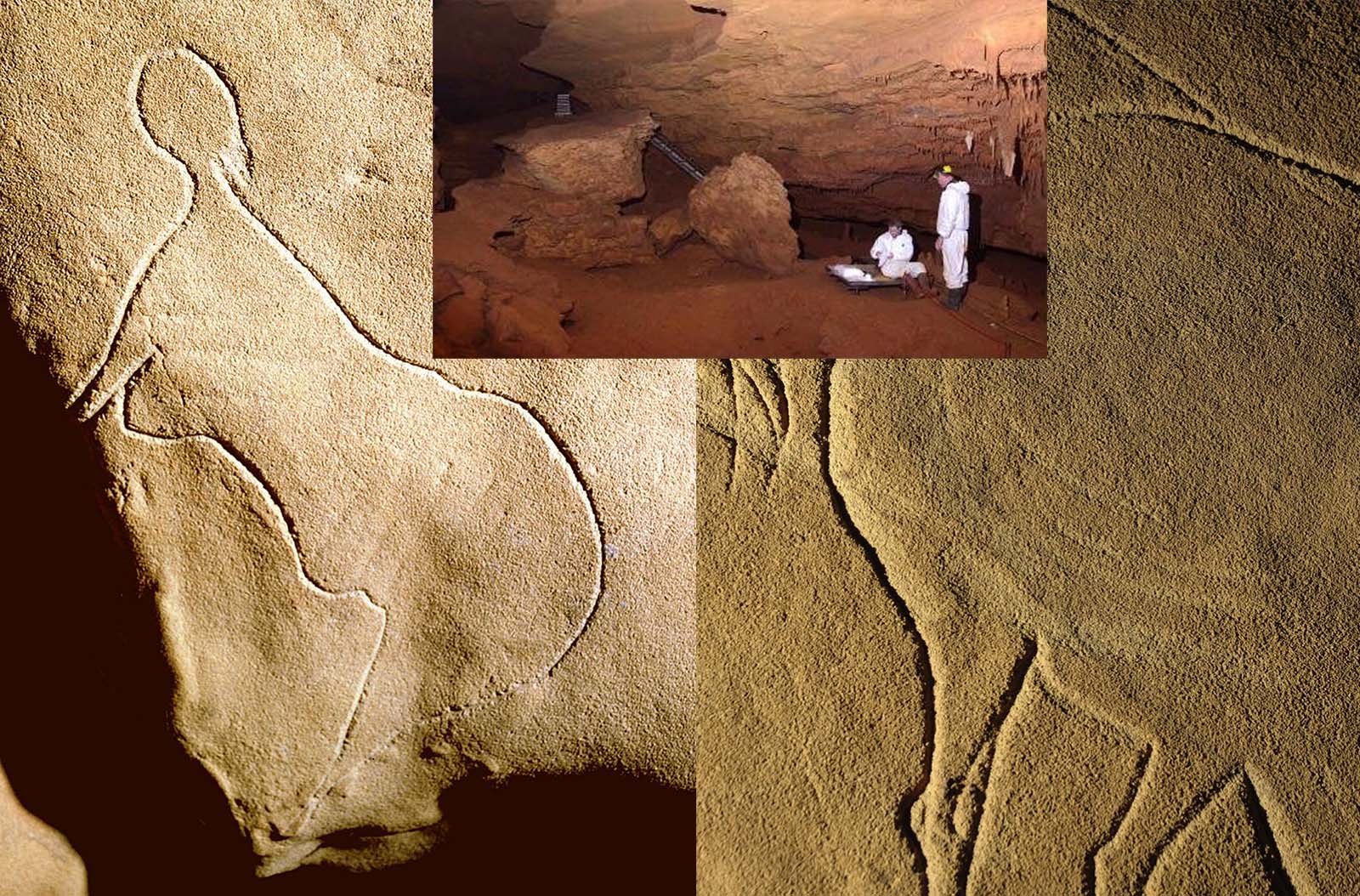
Long before paint was brushed on chapel ceilings or monuments carved in stone, humans were already shaping the walls of the earth into extraordinary art.
Hidden beneath the limestone hills of the Dordogne lies one of the most remarkable prehistoric sites in Europe, where ancient artists left behind a sweeping record of imagination, ritual, and life.
The Cussac Cave, dating to around 25,000 BCE, stands as one of the most significant places of Gravettian art, noted both for its monumental engravings and the presence of human burials deep within the chambers.
The coexistence of artwork and the dead suggests that this site held more than artistic value; it may have been a sacred landscape where images and ancestors shared the same space.
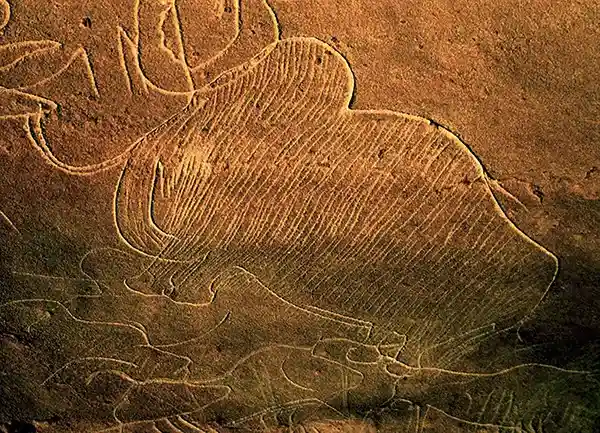
Wooly Mammoth, with the hair clearly shown. Note that the tusks are shown from the front, but on a profile of the mammoth.
Discovered in September 2000, Cussac contains more than 150 known works from the Paleolithic period, most of them created through careful engraving rather than painting.
Animals dominate the walls: woolly mammoths, bison, rhinoceroses, horses, ibex, and a handful of creatures with long, unfamiliar snouts.
Birds also appear, along with four elegant silhouettes of women and several schematic representations of vulvae.
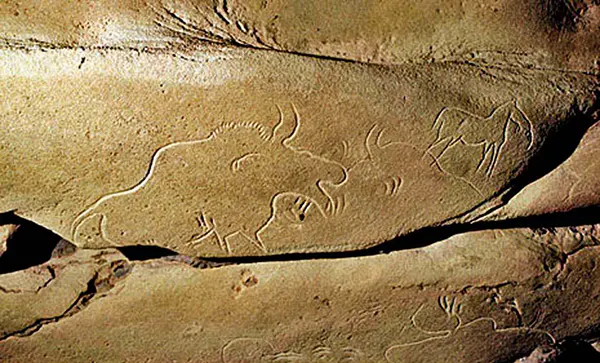
Panel with three bisons and a horse.
When compared with sites such as Pech Merle, Cougnac, and Roucadour, the similarities in subjects and style illustrate a shared visual language across the region during the Gravettian era.
The cave also contains red dot motifs, abstract signs, and finger tracings on soft rock surfaces, all of which contribute to the complexity of its iconography.
According to Norbert Aujoulat of the National Centre for Prehistory, the most striking feature of Cussac’s art is its monumental scale.
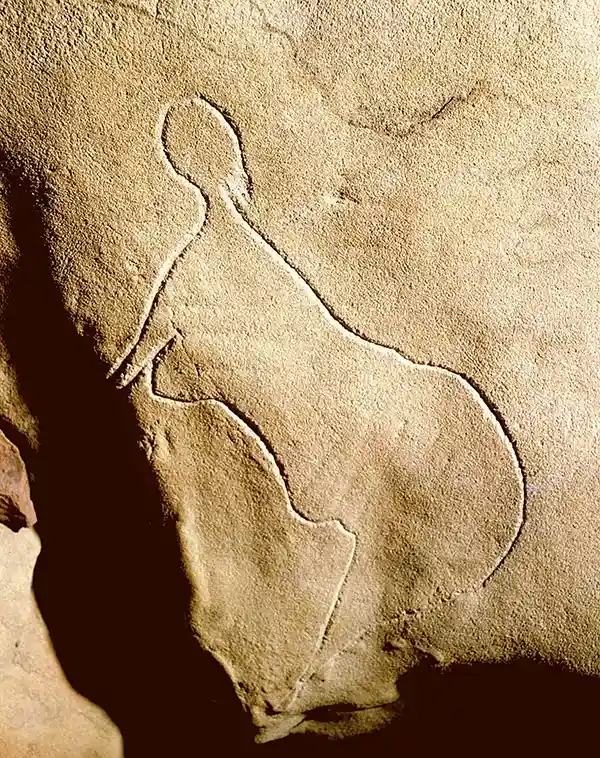
This engraving is known as the Venus of Cussac. It appears to depict an older woman who has already had a child.
Some engravings extend more than four metres in length, cut deep enough into the stone to catch light and shadow.
These lines remain vivid today partly because the walls are coated with an ochre patina: when scratched by bone, flint, or wood, the lighter layer beneath reveals itself in strong contrast, turning each incision into a lasting graphic mark.
Despite its importance, Cussac will almost certainly remain closed to the public. High levels of carbon dioxide restrict visits to short, tightly controlled intervals, with archaeologists allowed inside for only three hours at a time.
Other major sites in the Dordogne region offer a broader picture of Ice Age art, including Abri Castanet, the Venus of Laussel, Abri Poisson, Font-de-Gaume, Rouffignac, and Les Combarelles, each preserving its own chapter of human creativity.
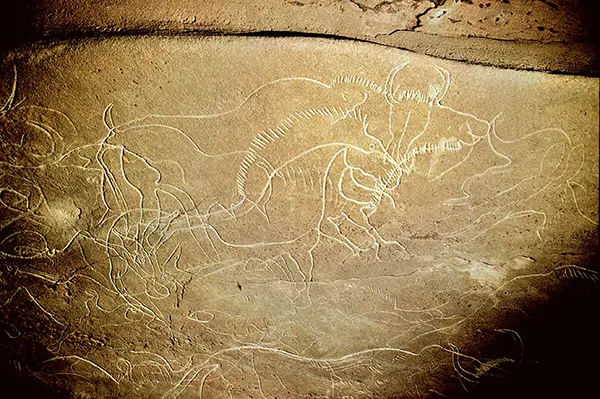
Large horse, with the erect mane characteristic of those common in the ice age, and bison, engraved at Cussac on the Grand Panel.
Location and Rediscovery
Cussac Cave lies in the Dordogne River valley near Le Buisson-de-Cadouin, close to two landmarks of ancient culture: the shelter of La Gravette, which gives its name to the Gravettian tradition, and the celebrated paintings of Lascaux.
The entrance itself had been known since 1950, when Denis Peyrony identified it but could not explore further due to a rockfall.
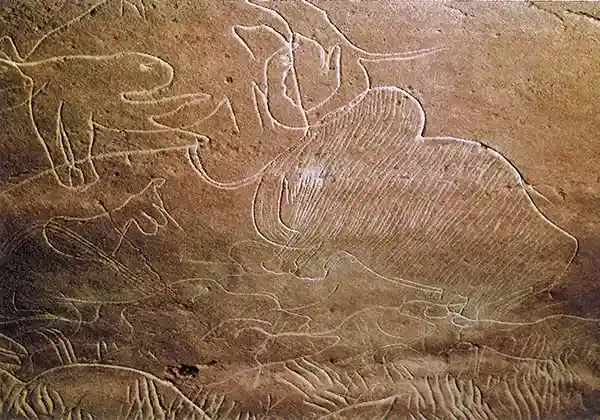
Mammoth, profile of a woman with exaggerated breasts.
Only in 2000 did amateur speleologist Marc Delluc manage to squeeze through the obstruction and reach the first chamber.
Soon joined by Herve Durif and Fabrice Massoulier of the Campagnie des Beunes, he explored roughly 600 metres of the galleries before specialists from the National Centre for Prehistory began a systematic investigation the following year. Their surveys quickly revealed the scope of the engravings and the archaeological richness of the cave.
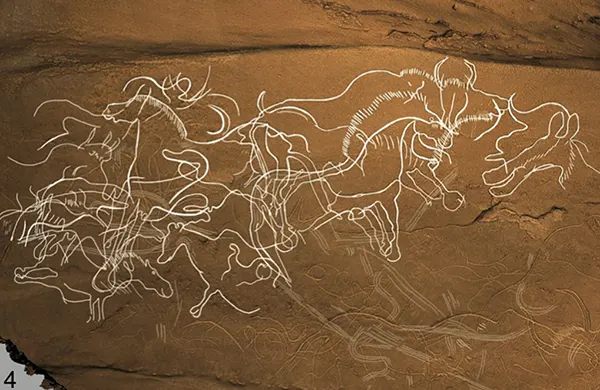
Motif: horses, bisons, points, remains and footprint.
Engravings and Their Arrangement
The main chamber, accessed through a low passage, opens into a vast room filled with stalagmites and stalactites. Here lies the Grand Panel, a sweeping composition about fifteen metres wide.
More than twenty large animals dominate the surface, including magnificent horses and bison, some stretching up to four metres.
Other panels, such as the Bison Panel and the Panel of the Discovery, continue this sense of grandeur.
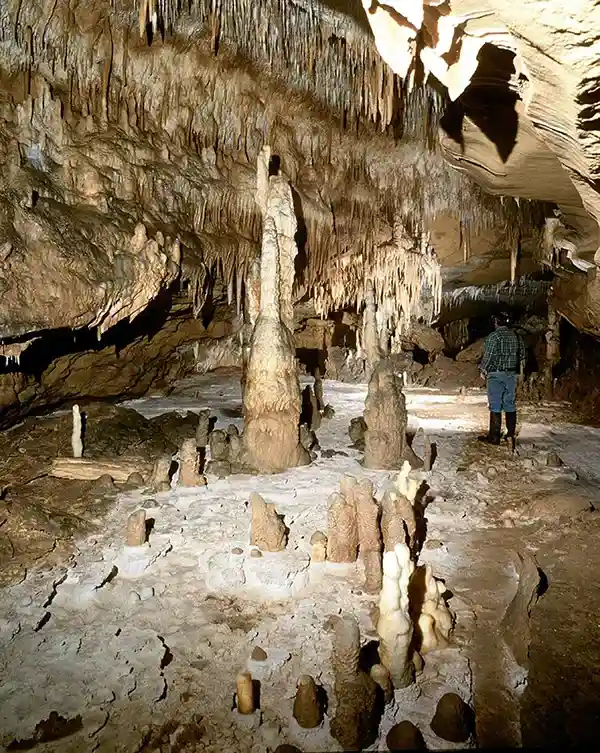
A general view of the interior of Cussac Cave, in the large room ten to fifteen metres wide and twelve metres high, with many concretions including stalagmites, stalactites and draperies. This is the large salle which is accessed close to the entry vestibule, originally via the narrow passage through the rock fall.
Beyond the central space, the cave divides into two branches. The downstream section, heading north, contains the largest concentration of imagery arranged in nine clusters.
Alongside the familiar Ice Age animals are engravings of birds thought to be geese, fish-like forms, and an enigmatic creature with an elongated snout and open mouth.
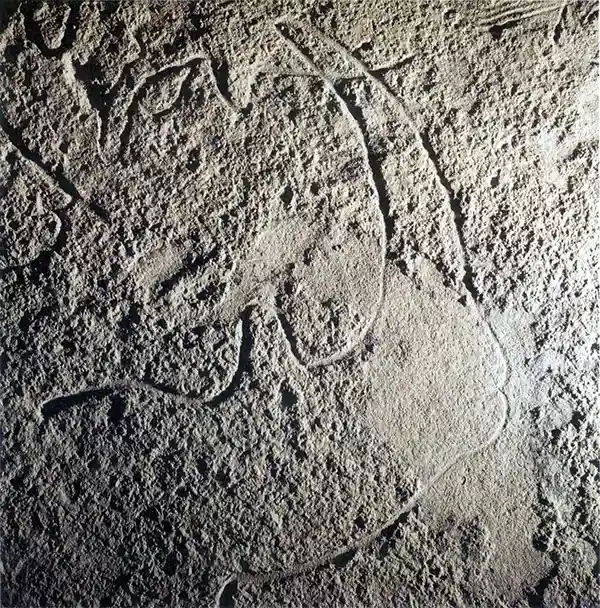
Wooly Rhinoceros.
Female figures and genital motifs also appear, echoing examples from Pech Merle. Nearby, soft rock surfaces bear trails of finger fluting, while geometric signs and small patches of abstract art add further layers of meaning.
The success of the engravings owes much to the quality of the limestone. Hard enough to preserve every stroke yet soft enough to carve, the walls provided an ideal canvas.
When the patina was cut away, the lighter surface beneath highlighted each line, creating drawings that remain crisp after thousands of years.
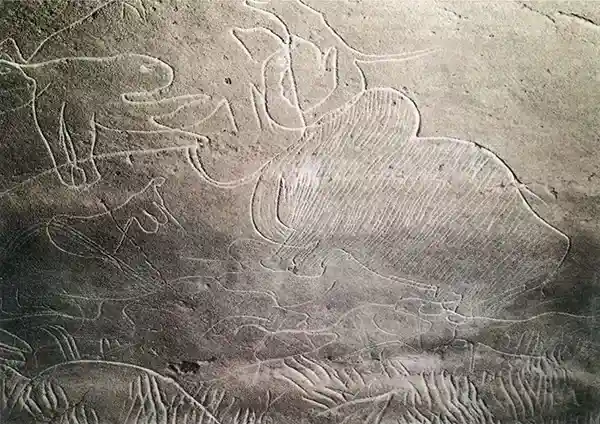
Mammoth, profile of a woman with exaggerated breasts.
Art and the Dead
Cussac is one of the rare Paleolithic sites where major art appears alongside human burials. The remains of at least five individuals — four adults and one adolescent — were found deep inside the cave.
Radiocarbon dating places them around 23,000 BCE. Researchers believe these burials were intentional, making them among the oldest and best-preserved skeletons of the period.
The association of engraved walls and human remains hints at ritual activity, although the exact meaning remains unknown.
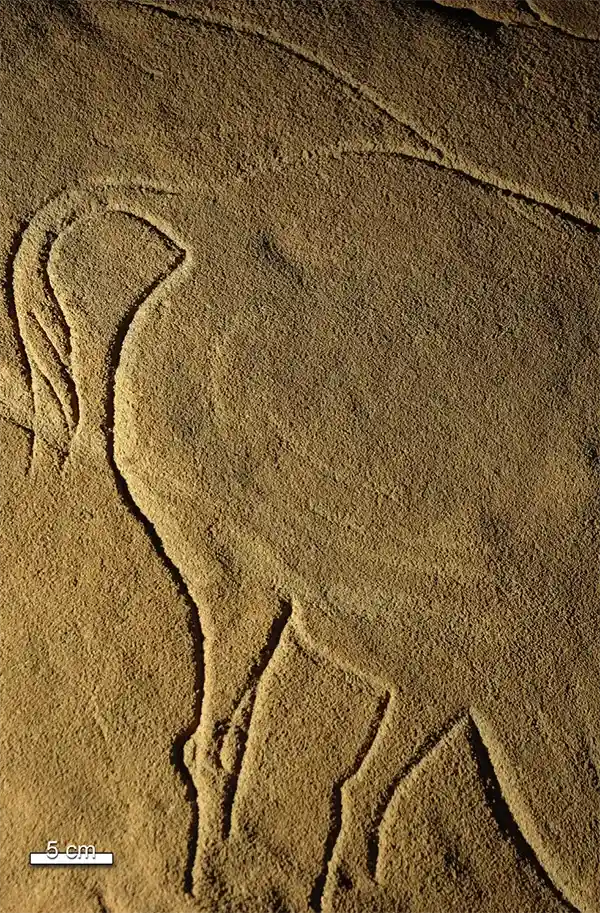 Similar cases are extremely uncommon; another example is the Cap Blanc rock shelter, where art and burial once again shared the same protected space.
As research continues, Cussac stands as a monumental testimony to early human expression.
The cave preserves a world where enormous animals moved across stone walls, where the living buried their dead beneath the same vaults that carried their art.
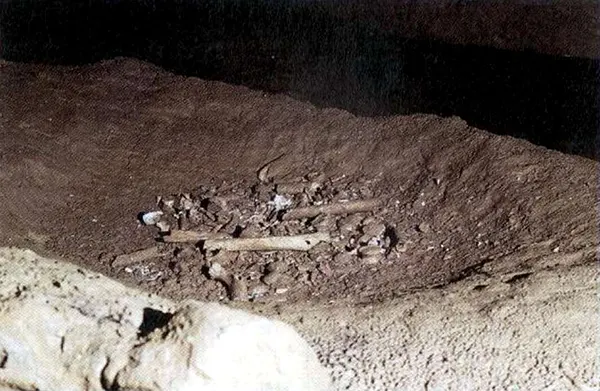
Bones littering the bottom of a cave bear wallow.
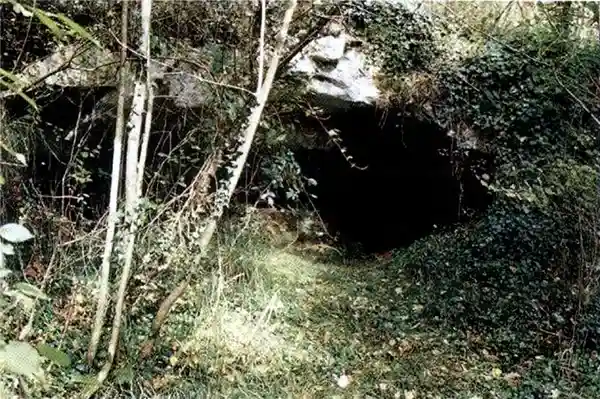
Entrance to Cussac Cave at the time of its discovery.
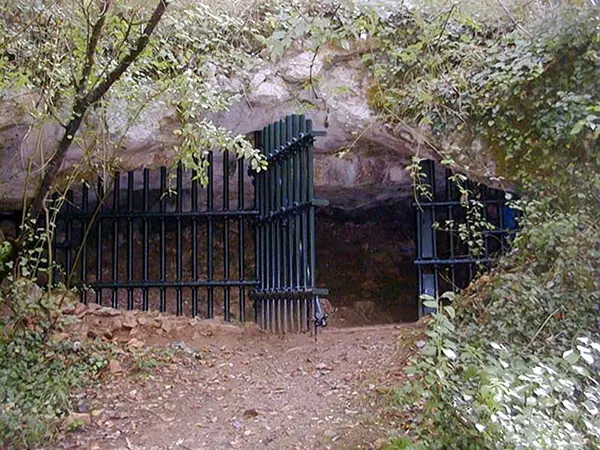
Present entrance to Cussac Cave.
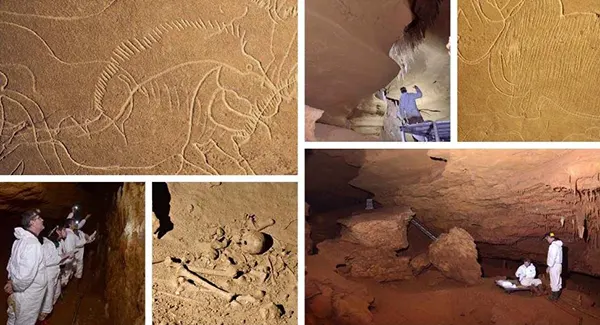
(Photo credit: CNP/ Ministère de la Culture (of France) / Don Hitchcock / Wikimedia Commons).